Key takeaways
- Chilean guava is an evergreen shrub with strawberry-scented red berries in autumn
- Berries ripen from October into November, after most other soft fruit has finished
- It needs free-draining, lime-free soil and shelter from cold winds
- Wet, heavy soil in winter kills more plants than frost does
- A large pot of ericaceous compost with grit suits most UK gardens
- Wait until berries are soft and fully coloured before picking, or they taste thin
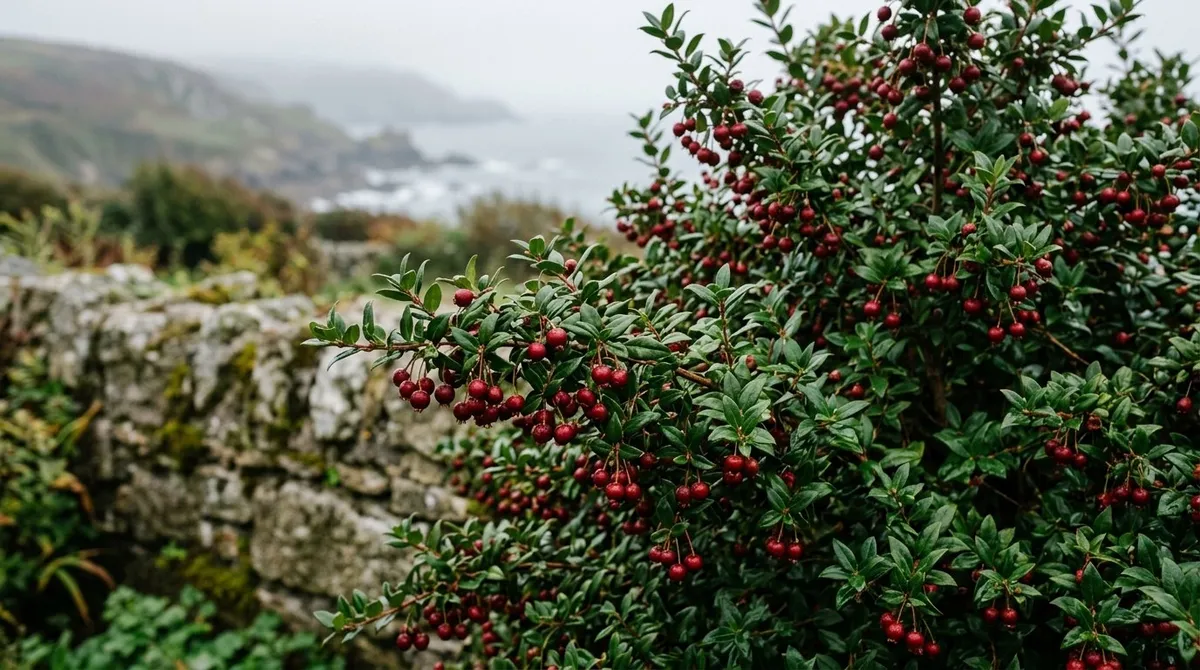
Chilean guava is a little evergreen shrub with a big reward: sweet red berries that taste of wild strawberry, ripening in autumn when most fruit has finished. It’s tidy enough for a border or a pot, and the pink bell flowers in spring are lovely too.
It’s said to have been one of Queen Victoria’s favourite fruits. Today it’s rarely seen in garden centres, but it’s not hard to grow if you get the soil right. This guide covers where to plant it, why a pot often works best, and how to tell when the berries are ready.
What is Chilean guava?
Chilean guava (Ugni molinae) is an evergreen shrub from Chile, in the myrtle family. It usually grows about 1-2m tall, with small, glossy dark green leaves that often turn bronze in cold weather. In New Zealand the berries are sold as “New Zealand cranberry”.
The plant hunter William Lobb brought it to Britain in the 1840s. It did well in the mild, damp gardens of Cornwall, and the story goes that the berries were a Victorian royal favourite.
The fruit is small, around 1cm across, and ripens to deep red. The flavour is like a wild or alpine strawberry, with a sweet, perfumed scent.
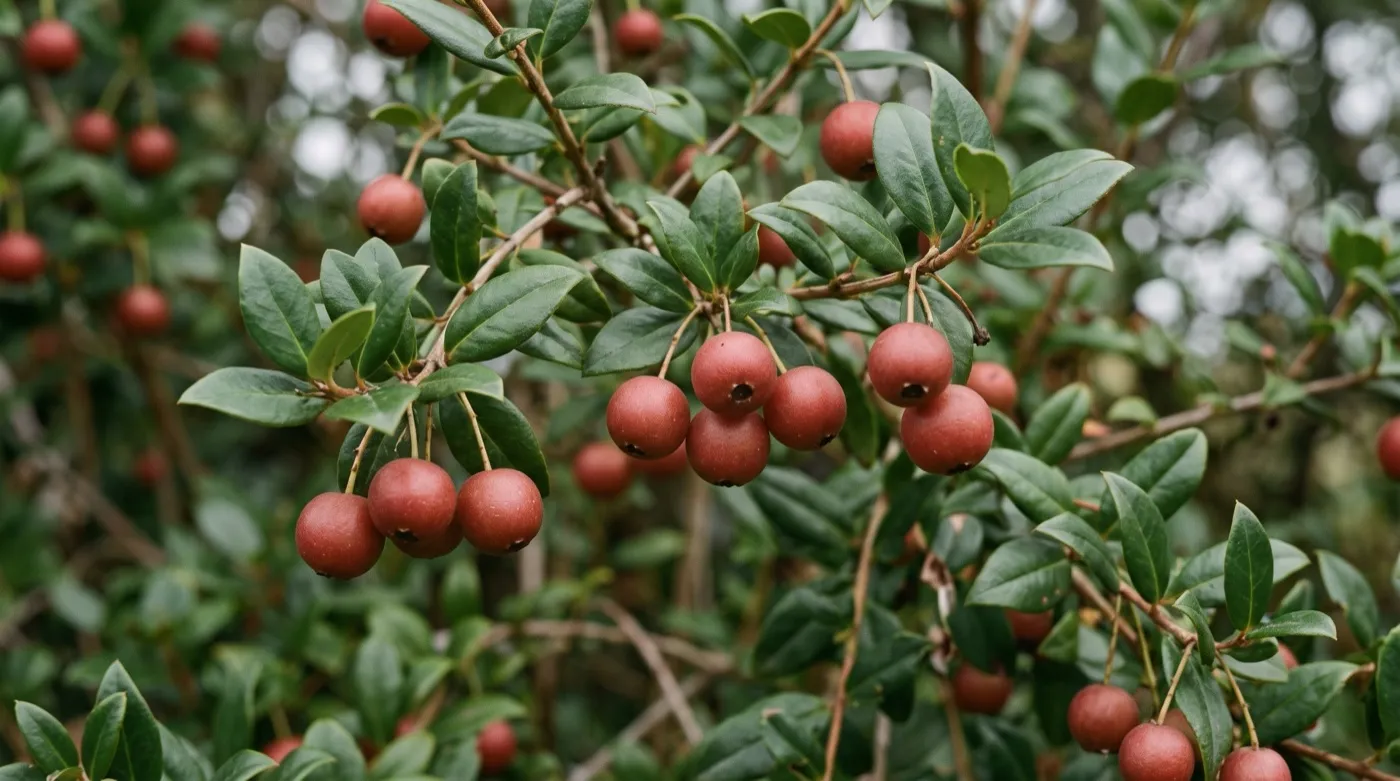
The berries are only about 1cm across. They turn from pinkish red to a deep, dark red as they ripen.
Where to grow Chilean guava
Choose a sheltered, sunny or lightly shaded spot. A south- or west-facing wall or fence is ideal. Chilean guava is evergreen, so it keeps losing moisture through its leaves in winter. Cold, drying winds can scorch the foliage, so shelter matters.
Mild, damp areas suit it best, such as Cornwall, Devon, west Wales and coastal gardens. In colder or more exposed gardens, grow it in a pot that you can move against a house wall for winter. The bronze tint on the leaves in winter is normal.
The guide to best plants for acid soil has other shrubs that enjoy similar conditions.
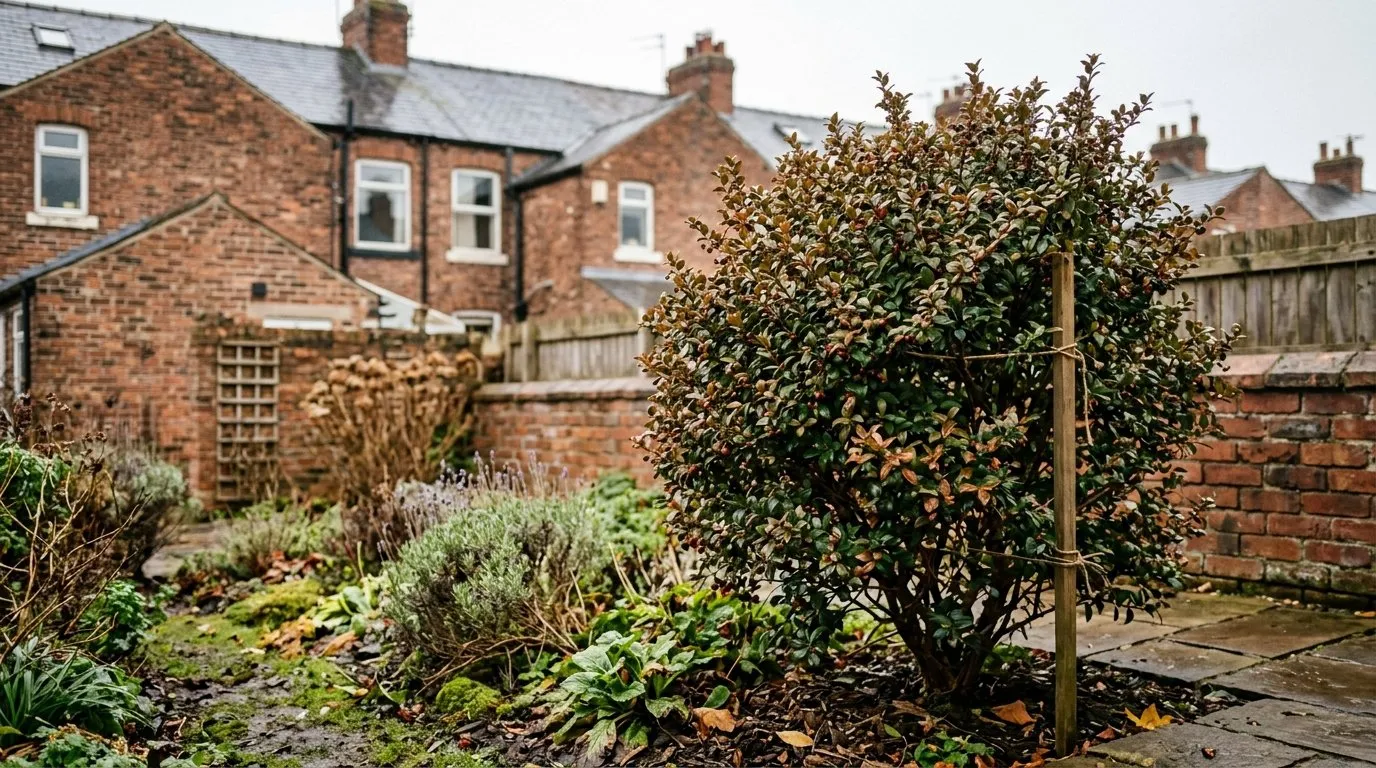
A sheltered corner against a wall helps it through winter. Bronze-tinted leaves in cold weather are perfectly normal.
Why wet soil kills more plants than frost
Most Chilean guavas that die in British gardens drown rather than freeze. The plant has shallow, fine roots. On heavy clay, those roots sit in cold, waterlogged soil for weeks in winter, run out of air and rot.
The damage often shows up late. The plant may hold its leaves through winter, then collapse in spring when it needs water and has no healthy roots left. So frost gets the blame for what was really a drainage problem.
The fix is drainage, not fleece. Grow it in a raised bed of lime-free, free-draining soil, or in a large pot.
Warning: Don’t dig a hole in clay and fill it with ericaceous compost. Water drains into the hole and can’t get out, so the roots sit in a bucket of water all winter. Raise the bed above the clay or use a pot instead.
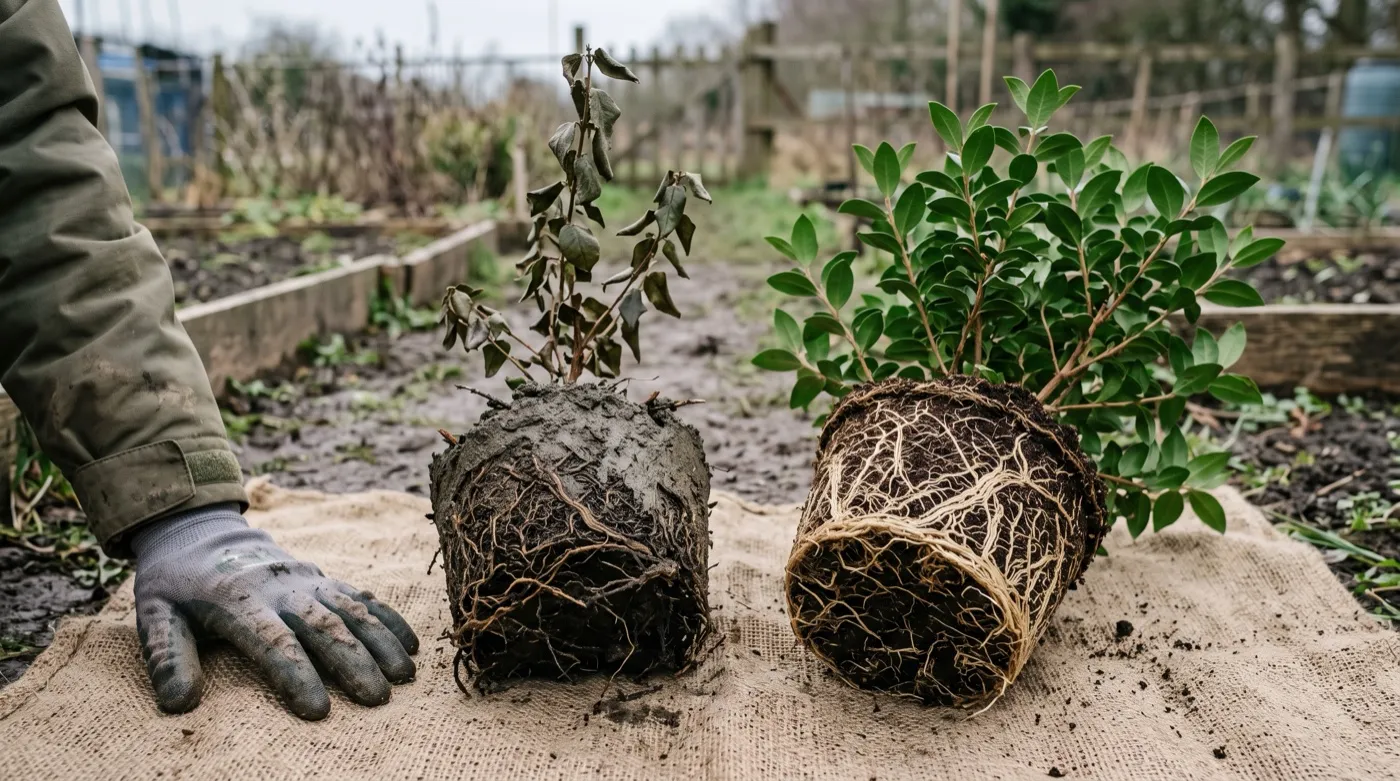
The plant on the left sat in wet clay all winter and its roots rotted. The one on the right grew in free-draining compost.
What soil does Chilean guava need?
Chilean guava likes lime-free, acid to neutral soil that drains well but doesn’t dry out in summer. On chalky or limy soil, the leaves often turn yellow between the veins, as the plant can’t take up iron.
If you garden on chalk, don’t try it in the ground. Adding ericaceous compost to chalk doesn’t stay acid for long. Grow it in a pot instead. The guide to soil pH explains how to test your soil.
- Water with rainwater where you can. Hard tap water slowly makes ericaceous compost less acid.
- Feed lightly. A liquid feed for acid-loving plants every few weeks in spring and summer is plenty. Too much feed gives soft growth that winter damages.
- Mulch with leaf mould or bark to keep roots cool and moist in summer.
Growing Chilean guava in a pot
In much of the UK, a pot is the easiest way to grow Chilean guava. It lets you control both the soil and the drainage.
- Choose a large pot. Start a young plant in something about 30cm across, then move it up to a pot around 45cm across as it grows. Small pots dry out in summer and freeze through in winter.
- Fill with ericaceous compost mixed with a few handfuls of grit to keep it open and free-draining.
- Stand it on pot feet so the drainage holes never sit in water.
- Water with rainwater in dry spells. Pots dry out fast in summer.
- Repot or refresh every two or three years. Move up a size, or scrape off the top few centimetres of compost and replace it.
In winter, move the pot against a sheltered house wall to keep off the worst rain and wind. In a hard freeze, wrap the pot in bubble wrap or hessian to protect the roots. The same ideas are covered in the guide to growing fruit in pots.
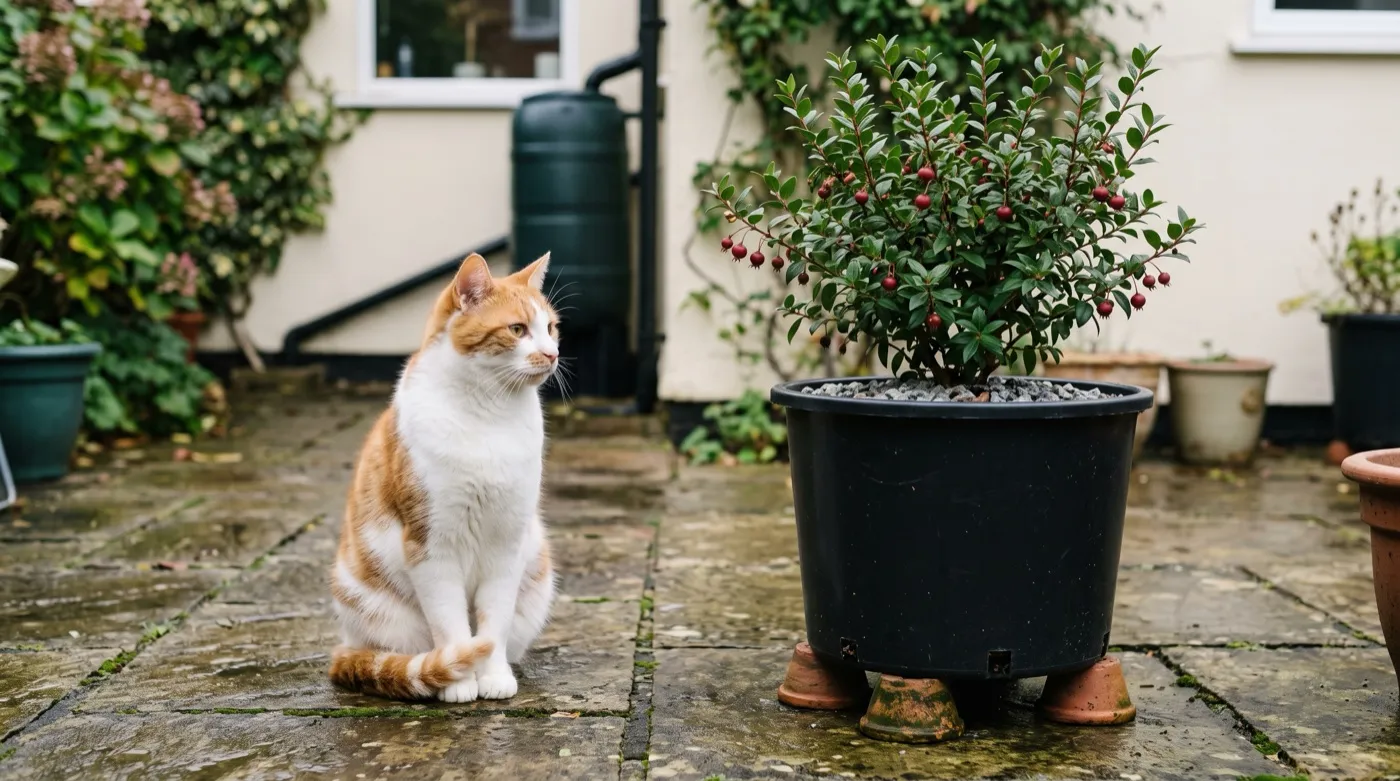
A large pot on feet, near a water butt and a sheltered wall. Pot feet stop the compost sitting in water over winter.
Flowers, fruit and when to pick
Chilean guava flowers in late spring and early summer. The small pink-and-white bells hang under the shoots and are easy to miss. It’s self-fertile, so one plant will set fruit, and bees visit the flowers.
The berries then stay green all summer. They colour up from October and ripen into November.
The key thing to know is that colour comes before flavour. Berries turn red a while before they’re properly sweet. If you pick them as soon as they colour, they taste thin and a bit resinous. That’s the main reason people give up on this plant.
So wait. Start tasting a berry or two each week from mid-October. Pick when they’re soft, deep red and come off easily. A light frost won’t harm ripening fruit.
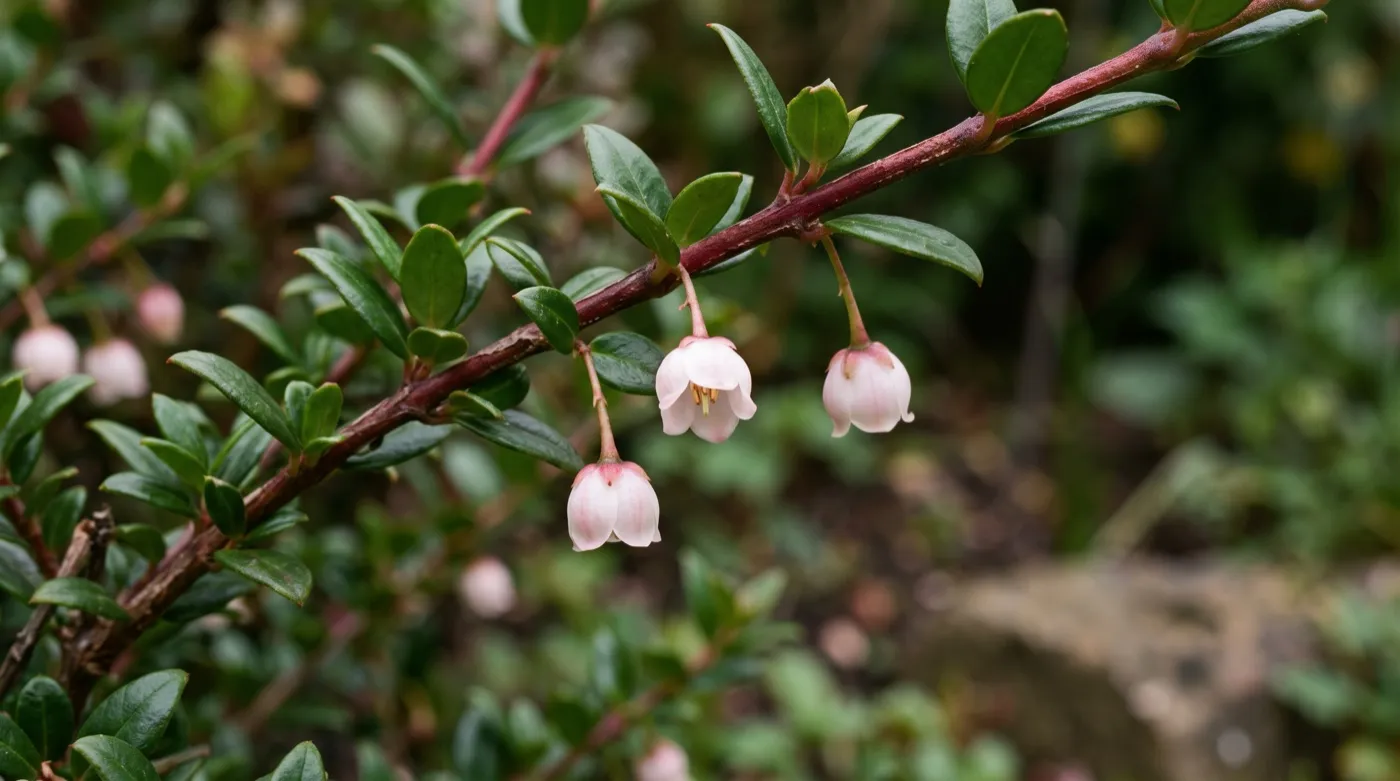
The little bell flowers hang beneath the shoots in late spring. Each one can become a berry by autumn.
How to use Chilean guava berries
The berries are best eaten fresh, straight from the bush. They’re also good in:
- Jam or jelly, often mixed with apple
- Muffins, cakes and crumbles, where they keep their shape
- Over yoghurt or porridge on an autumn morning
They don’t keep long once picked, so use them within a few days.
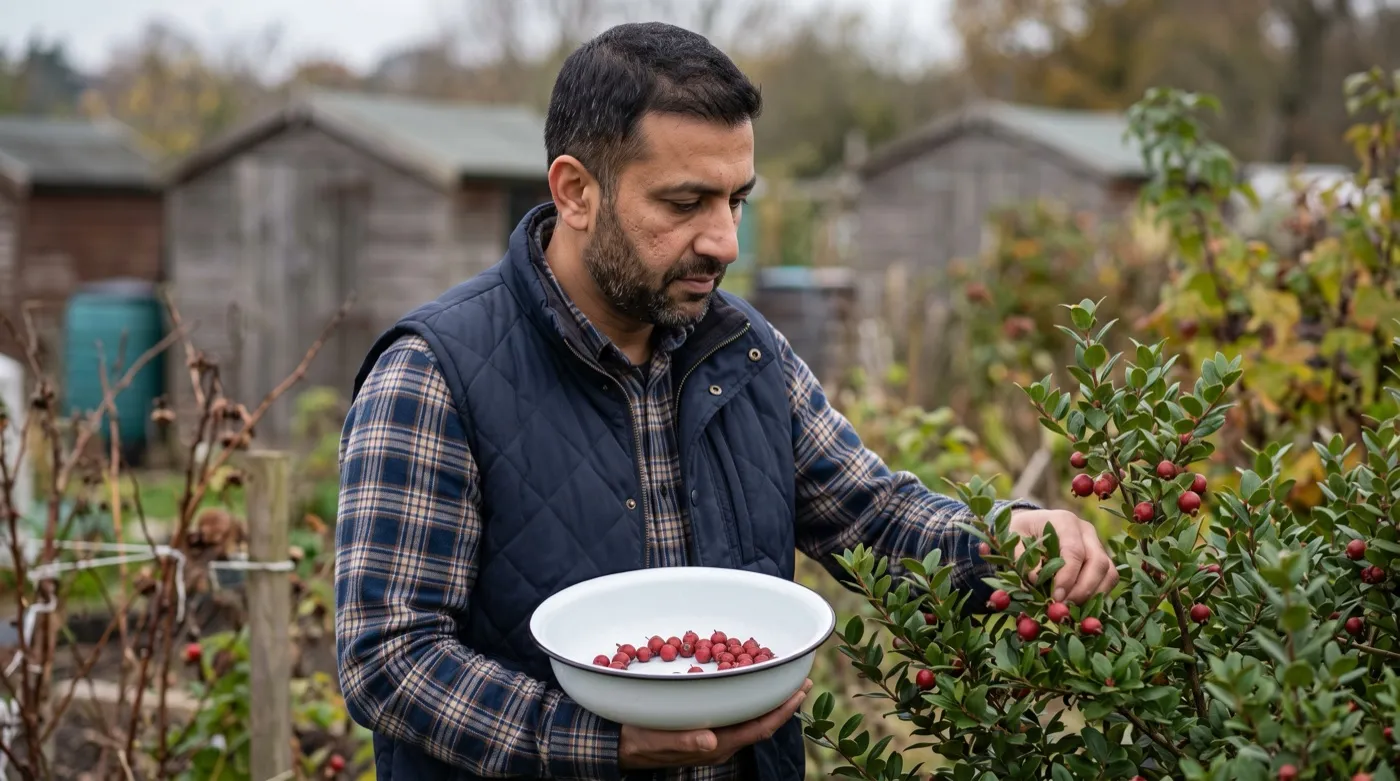
Pick when the berries are soft, deep red and come away easily. A bush gives a bowlful rather than a glut.
Pruning Chilean guava
Chilean guava needs very little pruning. It naturally forms a neat, rounded bush. If it gets straggly, trim back long shoots lightly after you’ve finished picking. Remove any dead or frost-damaged tips in spring once new growth starts.
Taking cuttings of Chilean guava
Chilean guava is easy to root from semi-ripe cuttings in mid to late summer. These are shoots that are firm at the base but still soft at the tip.
- Cut shoots about 10cm long, just below a leaf.
- Strip the leaves from the lower half.
- Push them into the edge of a pot of gritty ericaceous compost.
- Cover with a clear bag or propagator lid and keep out of direct sun.
- Pot them up once roots show, and keep young plants frost-free for their first winter.
The guide to semi-ripe cuttings explains the method step by step.
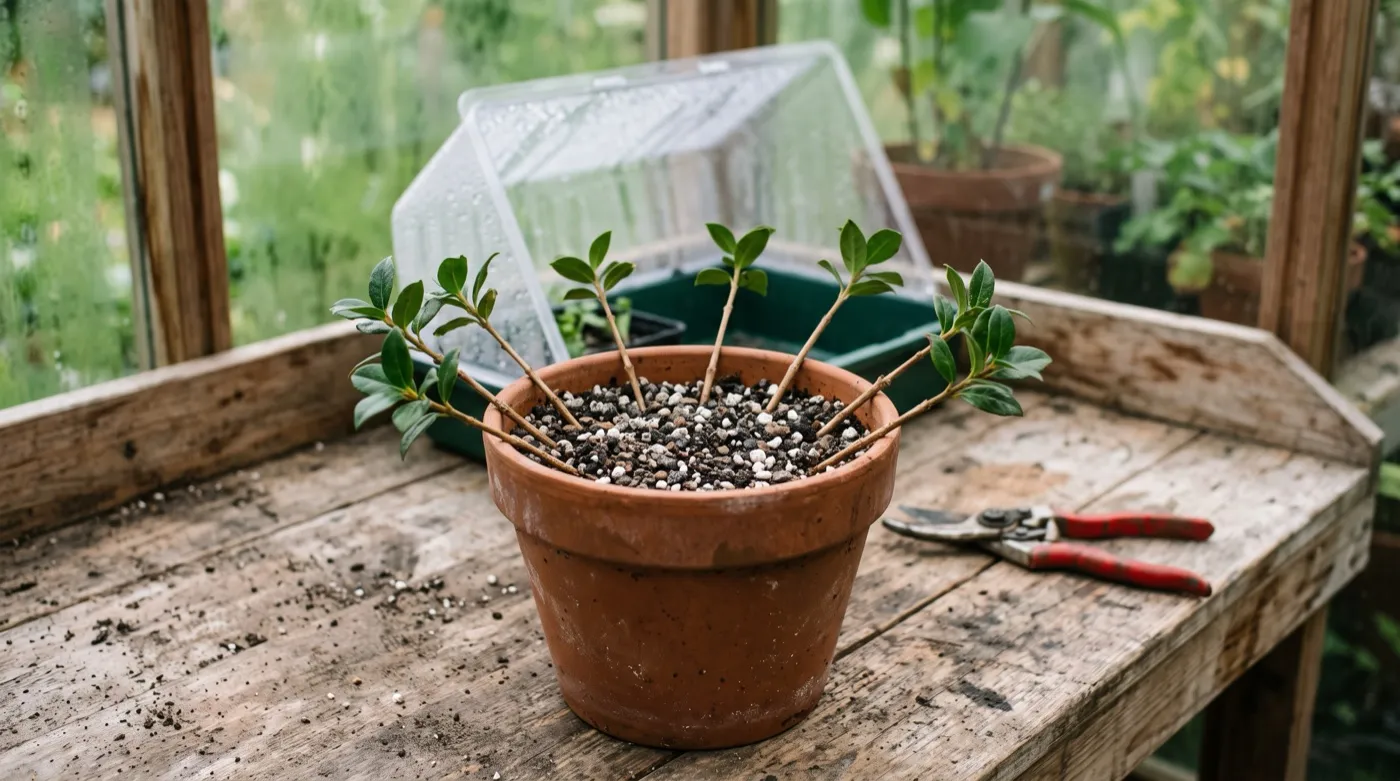
Set the cuttings around the edge of a pot of gritty compost. A clear lid keeps the air moist while they root.
Chilean guava calendar
| Month | Task |
|---|---|
| January to February | Check pots aren’t waterlogged. Wrap pots in a hard freeze |
| March | Remove frost-damaged tips. Refresh the top layer of compost in pots |
| April | Start a light feed for acid-loving plants |
| May to June | Flowers open. Keep the soil or compost evenly moist |
| July to August | Water with rainwater in dry spells. Take semi-ripe cuttings |
| September | Berries swelling but still green. Stop feeding |
| October | Berries colour up. Start tasting weekly, but don’t rush |
| November | Main harvest. Move pots to a sheltered wall |
| December | Keep pots off wet ground and out of cold wind |
Common Chilean guava mistakes
- Picking as soon as berries turn red. Wait until they’re soft and come away easily.
- Planting in wet clay. The roots rot in winter. Use a raised bed or pot.
- Growing it on chalk. The leaves yellow. Use a pot of ericaceous compost.
- Watering pots with hard tap water. Use rainwater when you can.
- Planting in a cold, windy spot. Evergreen leaves scorch in drying winds. Choose shelter.
Frequently asked questions
What does Chilean guava taste like?
It tastes like wild strawberry with a sweet, perfumed scent. The “guava” name comes from that scent more than the flavour. Fully ripe berries are sweet and a little chewy. Picked too early, they taste thin and slightly resinous, so it pays to wait.
Is Chilean guava hardy in the UK?
It’s fairly hardy and survives most winters in sheltered gardens. Mild coastal areas of the south west and west suit it best. Cold winds and wet soil cause more harm than frost alone. In colder or exposed gardens, grow it in a pot you can move to a sheltered wall.
Do I need two Chilean guava plants to get fruit?
No, Chilean guava is self-fertile, so one plant will fruit. Bees visit the small bell flowers in late spring. A second plant isn’t needed, though it does give you more berries to pick.
Can I grow Chilean guava in a pot?
Yes, and in many UK gardens a pot is the easiest way. Use a large pot of ericaceous compost mixed with some grit for drainage. Stand it on pot feet so it never sits in water, and move it against a house wall in winter.
When do Chilean guava berries ripen?
The berries ripen from October into November. Flowers open in late spring and the fruit stays green through summer. After a cool summer, ripening can run late into November. Pick when berries are soft, dark red and come away easily.
Will Chilean guava grow on chalk or clay soil?
Not well in open ground. On chalky soil the leaves tend to yellow. Heavy clay stays wet in winter and rots the roots. On either soil, grow it in a large pot of ericaceous compost or a raised bed instead.
If you’ve got the pot and compost ready, lingonberries enjoy the same set-up. Or try the guide to growing blueberries for another acid-loving fruit, and browse more in the fruit growing section.
Our team produces practical UK gardening guidance from source research, contributor records and established horticultural practice. Editorial standards are overseen by Matt W.


