Key takeaways
- Chelated and sequestered mean the same thing for gardeners
- They keep iron and other trace elements available on chalky, alkaline soil
- EDDHA chelates hold up best on limy soil, so check the label
- Yellow young leaves with green veins usually point to iron lock-up
- Epsom salts sprayed on the leaves correct magnesium shortage on older leaves
- Chelates fix the symptom; acid-loving plants still do best in acid soil or ericaceous compost
Chelated nutrients are trace elements, usually iron, packed in a form that plants can still take up on chalky, alkaline soil. If your camellias, blueberries or roses have yellow young leaves with green veins, a chelated feed is often the quick fix.
This guide explains what “chelated” and “sequestered” mean, which product to pick for your soil and how to use it. If you’re still working out what’s causing your yellow leaves, start with our chlorosis diagnosis guide, then come back here for the treatment.
What does chelated mean?
A chelate is an organic molecule that wraps around a metal such as iron and holds it like a claw. That keeps the iron dissolved in the soil water, where roots can reach it.
On alkaline or chalky soil, plain iron quickly turns into a form roots can’t absorb. The soil can be full of iron while the plant goes hungry. This is called lime-induced chlorosis, and it’s why acid-loving plants struggle on the wrong soil. A chelate stops that happening, at least for a while.
Sequestered iron is just the garden-centre name for chelated iron. You’ll also see chelated trace elements in some liquid feeds and seaweed products.

Yellow between green veins on the youngest leaves is the classic sign of iron lock-up, and the main reason to reach for a chelated feed.
Which micronutrients do plants need?
Plants need a handful of nutrients in tiny amounts. Iron, manganese, zinc, copper, boron and molybdenum are the trace elements. Magnesium is needed in larger amounts but is usually grouped with them.
In most UK gardens, two cause nearly all the trouble:
- Iron shortage shows on the youngest leaves first. It’s almost always lock-up on alkaline soil, not a true lack of iron.
- Magnesium shortage shows on the oldest leaves first. It’s common on light, sandy soils and in pots, and after lots of high-potash tomato feed.
Manganese shortage looks like iron shortage and also happens on alkaline soil. Boron shortage is rarer and causes brown hearts in swedes and cracked celery stems. Our guide to trace elements in garden soil covers boron, zinc and copper in more detail.

Magnesium shortage starts on the older, lower leaves of tomatoes. The plant moves its magnesium up to feed new growth.
Which chelate should you choose?
Match the chelate to your soil. The label usually names it.
| Chelate | Works best on | Good for |
|---|---|---|
| EDTA | Acid to neutral soil | Pots of ericaceous compost, acid beds |
| DTPA | Neutral to slightly alkaline soil | General garden use |
| EDDHA | Alkaline and chalky soil | Lime-induced chlorosis in open ground |
If you garden on chalk or limestone, look for EDDHA. A weaker chelate on limy soil locks up almost as fast as plain iron. If you’re not sure of your soil, a cheap pH test kit will tell you.
How to use chelated iron
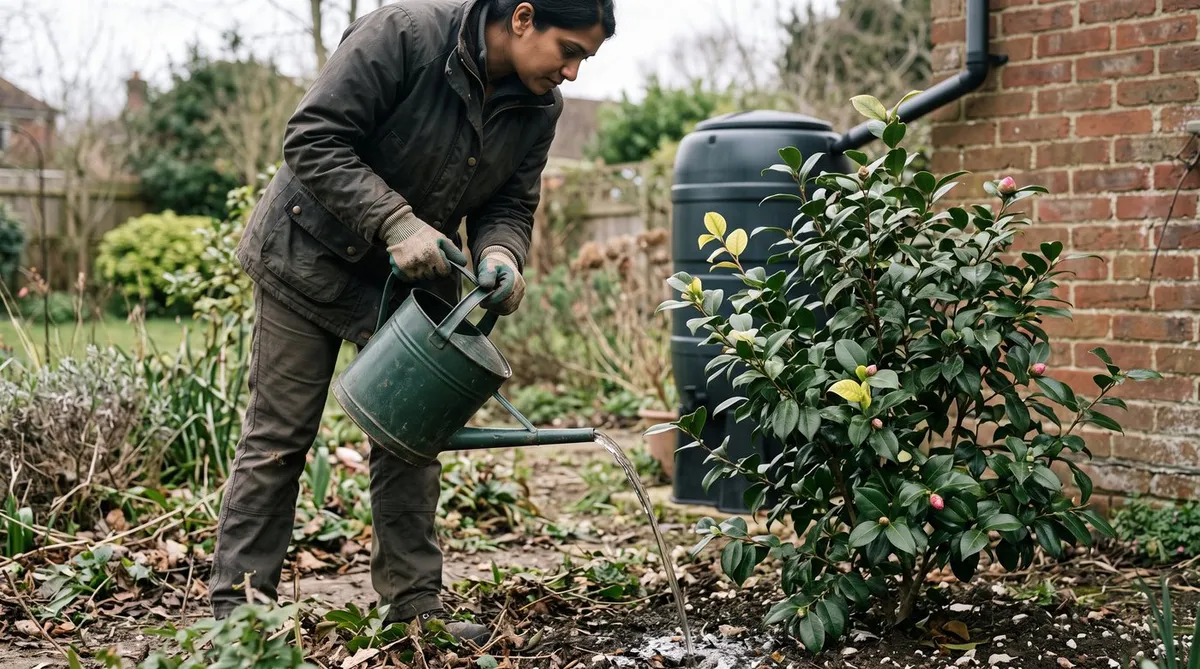
Water it into the soil around the roots, following the rate on the label. Spring, as new leaves unfold, is the best time.
- Measure carefully. Mix the product with water exactly as the label says. More is not better.
- Water it in over the root area, not just at the stem.
- Use rainwater for acid-loving plants if you can. Hard tap water adds more lime.
- Wait. New leaves should come out greener over the next couple of weeks. Leaves that are already yellow may stay pale.
- Repeat as the label suggests, often once or twice in the growing season.
Some products can also be sprayed on the leaves for a faster boost. Check the label before you do.

Measure the dose carefully and water it over the root area. Too strong a mix can scorch roots and leaves.
Foliar feeding: a quick top-up
Foliar feeding means spraying a dilute feed straight onto the leaves. Leaves take up some nutrients directly, so it can green up a plant faster than a soil drench.
It’s a short-term fix, not a cure. Use it to rescue a crop mid-season while you sort out the soil.
- Spray in the cool. Early morning, evening or a dull day. Sun on wet leaves can scorch them.
- Wet both sides of the leaf. Leaf undersides take up feed well.
- Stick to the label rate. A strong mix burns leaves.
- Repeat every week or two until new growth comes through green.
For magnesium shortage, Epsom salts (magnesium sulphate) are the standard fix. The RHS magnesium deficiency page suggests a leaf spray of about 20g per litre of water. You can also water it into the soil.

Spray on a cool, dull day so the leaves stay wet long enough to take the feed in.
Fixing the cause, not just the yellow leaves
Chelates treat the symptom. If the yellowing comes back every year, the soil is the real problem.
On chalky soil, you can’t make the ground acid for long. Lowering pH with sulphur works slowly and only on soil without lots of free lime. Our guide on how to make soil more acidic explains what’s realistic.
The easier answer is to grow lime-haters in pots or raised beds of ericaceous compost, watered with rainwater. Or choose plants that are happy on chalk. Camellias are a classic case, as our camellia growing guide explains. For magnesium, ease off the high-potash feed and add plenty of organic matter.
A balanced feed with trace elements, or a seaweed feed, helps keep pot plants topped up through the season.
Warning: Trace elements are harmful in excess. An overdose of boron or manganese damages plants just as a shortage does. Stick to the label rate.
Common mistakes with chelated feeds
Treating every year without asking why. Endless doses hide a soil pH problem. Fix the cause or move the plant.
Picking the wrong chelate. An EDTA product on chalky soil locks up fast. Choose EDDHA for alkaline ground.
Guessing the deficiency. Young leaves yellowing points to iron. Old leaves yellowing points to magnesium. Check before you treat.
Spraying in hot sun. Wet leaves in bright sun scorch. Spray in the cool of the day.
Watering acid-lovers with hard tap water. It undoes the good work. Use rainwater from a water butt where you can.

Deep green, even leaf colour is what you’re aiming for once the right nutrient reaches the roots.
For more fertiliser guides, browse our how-to section. Now you know how chelates work, read our guide to calcium, sulphur and magnesium to round out your plant-feeding know-how.
Frequently asked questions
What are chelated nutrients?
They are trace elements wrapped in an organic molecule that keeps them available to plants. The wrapper stops iron and similar metals locking up in alkaline soil. You’ll often see them sold as sequestered iron or chelated trace elements.
Is sequestered iron the same as chelated iron?
Yes, for gardeners the two terms mean the same thing. Both describe iron held in a form plants can take up. Check the label to see which chelate it uses, as some suit alkaline soil better.
What are micronutrients in gardening?
They are nutrients plants need in tiny amounts, such as iron, manganese, boron and zinc. Magnesium is needed in larger amounts but is often grouped with them. A shortage of any one can stunt growth or yellow the leaves.
How do I fix yellow leaves with green veins?
On young leaves, treat with chelated iron watered into the soil. This pattern usually means iron is locked up by alkaline soil. If older leaves show it first, it’s more likely magnesium, so use Epsom salts instead.
What does Epsom salts do for plants?
Epsom salts supply magnesium, which plants need to make chlorophyll. Use them when older leaves yellow between green veins. The RHS suggests a leaf spray of about 20g per litre of water.
Does foliar feeding work?
Yes, as a quick, short-term top-up. Leaves take up some nutrients directly, so colour can return faster than with a soil treatment. Repeat it, and fix the soil cause for a lasting answer.
Our team produces practical UK gardening guidance from source research, contributor records and established horticultural practice. Editorial standards are overseen by Matt W.