Key takeaways
- Ferment fish scraps with brown sugar or molasses and water for about four to six weeks in summer
- Fit a loose lid weighted with a brick, as foxes, rats and gulls will raid an open bucket
- Always dilute it to the colour of weak tea, and never use it neat
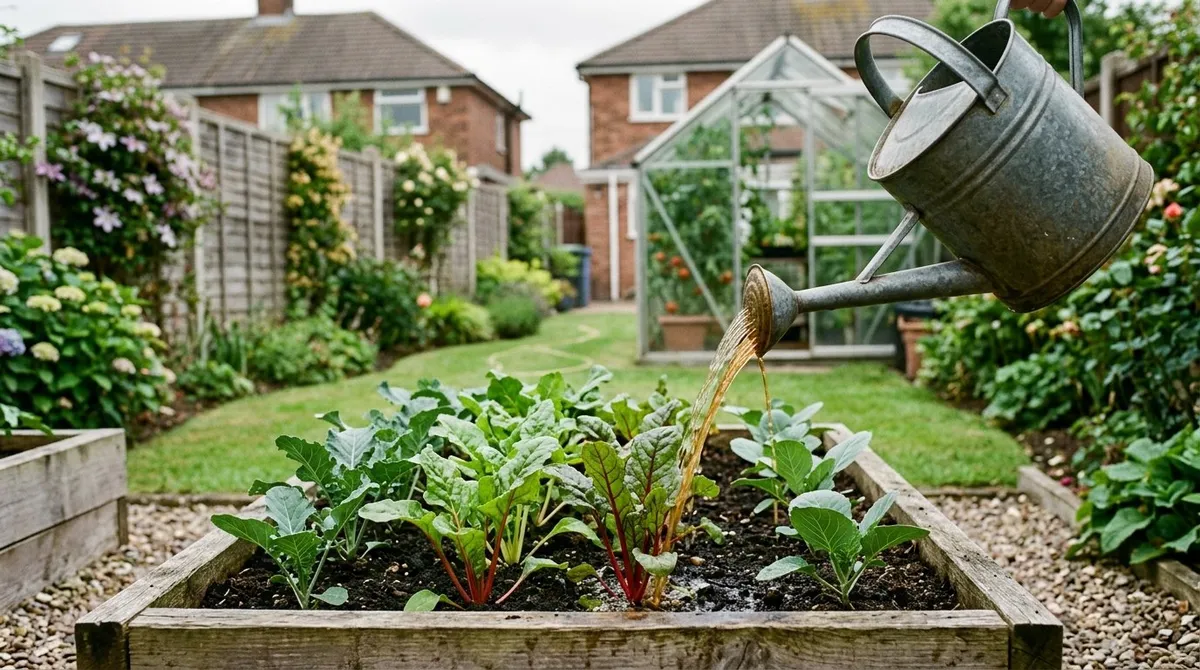
- Water it onto the soil around leafy crops such as kale, chard and sweetcorn, not onto the leaves
- Switch to a potash-rich feed such as comfrey once fruiting crops start to flower
Homemade fish fertiliser is a free liquid feed you brew from fish scraps, sugar and water. After a few weeks in a lidded bucket you strain off a dark, nitrogen-rich liquid. Diluted well, it gives leafy crops such as kale, chard and sweetcorn a real boost.
It’s smelly, there’s no getting round that. But if you have a quiet corner and a good lid, it’s a thrifty way to use fish waste. This guide covers what you need, how to brew it, how much to use and which plants like it best. For other options, the guide to natural fertilisers for UK gardens compares the lot.
What is fish fertiliser and is it worth making?
Fish fertiliser is fish waste broken down into a liquid feed. The bottled kind you buy is called fish emulsion. It’s mainly a source of nitrogen, the nutrient plants use to grow leaves and stems, with a little phosphorus and potassium too. If those letters on fertiliser packs are a puzzle, the guide to NPK explained sorts them out.
A home brew won’t have an exact strength on the label like a shop feed. The strength depends on the fish that goes in. That’s why the key rule is to dilute it well and start gently.
Is it worth it? If you can get fish scraps for free and have somewhere to keep a smelly bucket, yes. If you live in a flat or close to neighbours, a shop-bought organic feed is far less hassle.
What you need to make fish fertiliser
You need about 2kg of fish scraps, 250g of brown sugar or molasses, 8 litres of water and a 25-litre bucket with a lid.
Ask a fishmonger or fish counter for filleting waste. Many are happy to hand over heads, frames and skins. You can also save your own trimmings in a bag in the freezer until you have enough. Oily fish such as mackerel and herring make a rich brew, but white fish frames work too.
Leave out smoked, salted or cooked fish. Salt is bad for soil, and batter or sauces just make a mess. Keep a stick and sieve just for this job.
| Item | Amount | Notes |
|---|---|---|
| Fish scraps | About 2kg | Heads, frames, skins and guts |
| Brown sugar or molasses | About 250g | Helps the brew ferment and smell less foul |
| Water | About 8 litres | Rainwater is ideal |
| Bucket with lid | 25 litres | Leave plenty of space at the top |
| Stick and sieve | One of each | Keep them for this job only |
How to make fish fertiliser step by step
Layer chopped fish and sugar in the bucket, cover with water, put a loose lid on and stir often.
- Chop the scraps into small pieces, about 5cm or less. Smaller bits break down faster.
- Layer fish and sugar in the bucket, a few handfuls of fish then a sprinkle of sugar.
- Pour on the water, leaving at least 10cm of space at the top. It foams in the first week.
- Put the lid on loosely, or drill a small hole in it. The brew gives off gas, so don’t seal it tight.
- Weigh the lid down with a brick from day one.
- Stir every day or two for the first couple of weeks, then once or twice a week.
Put the bucket in a shady corner, well away from doors, windows, washing lines and your neighbour’s patio. Wear gloves when you stir, and wash your hands well afterwards. This is raw fish, after all.
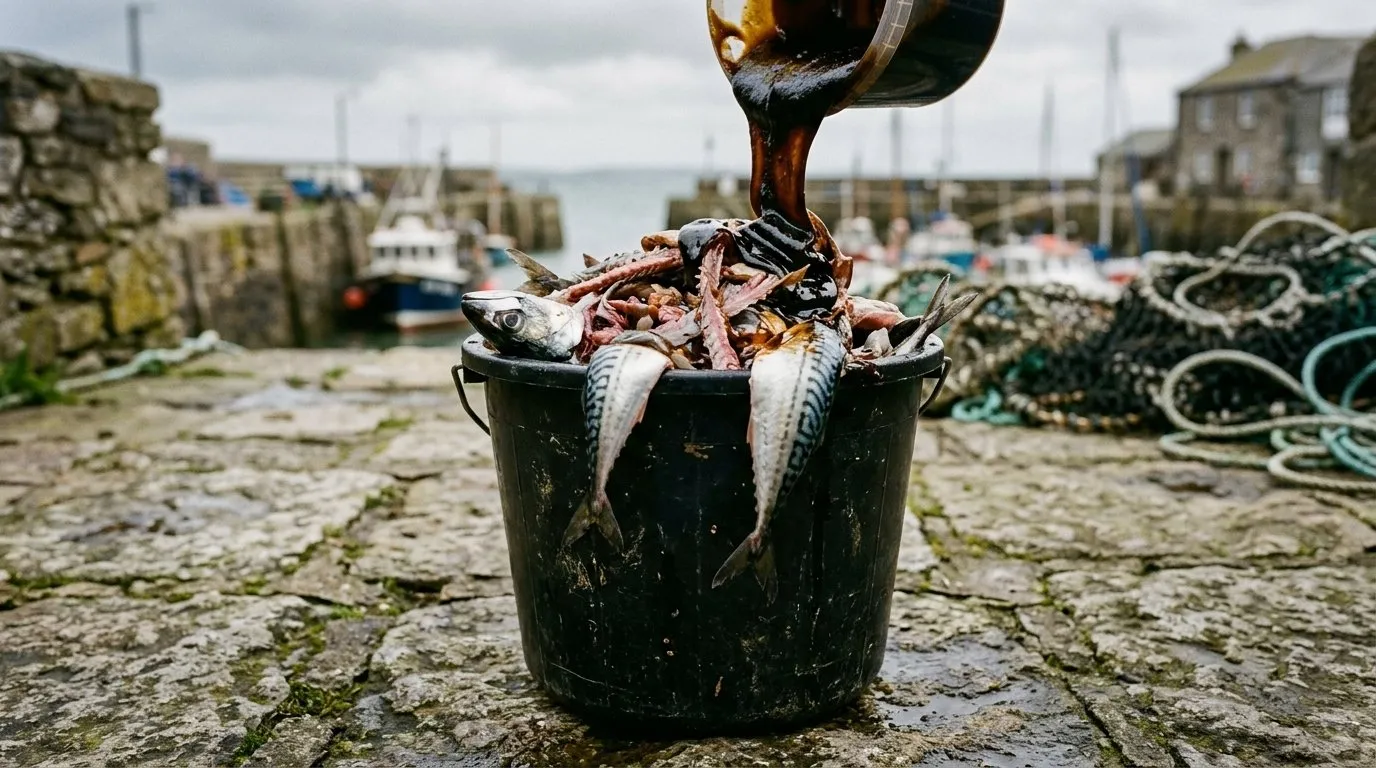
Fish trimmings and molasses go in together. A fish counter will often give you scraps for free if you ask.
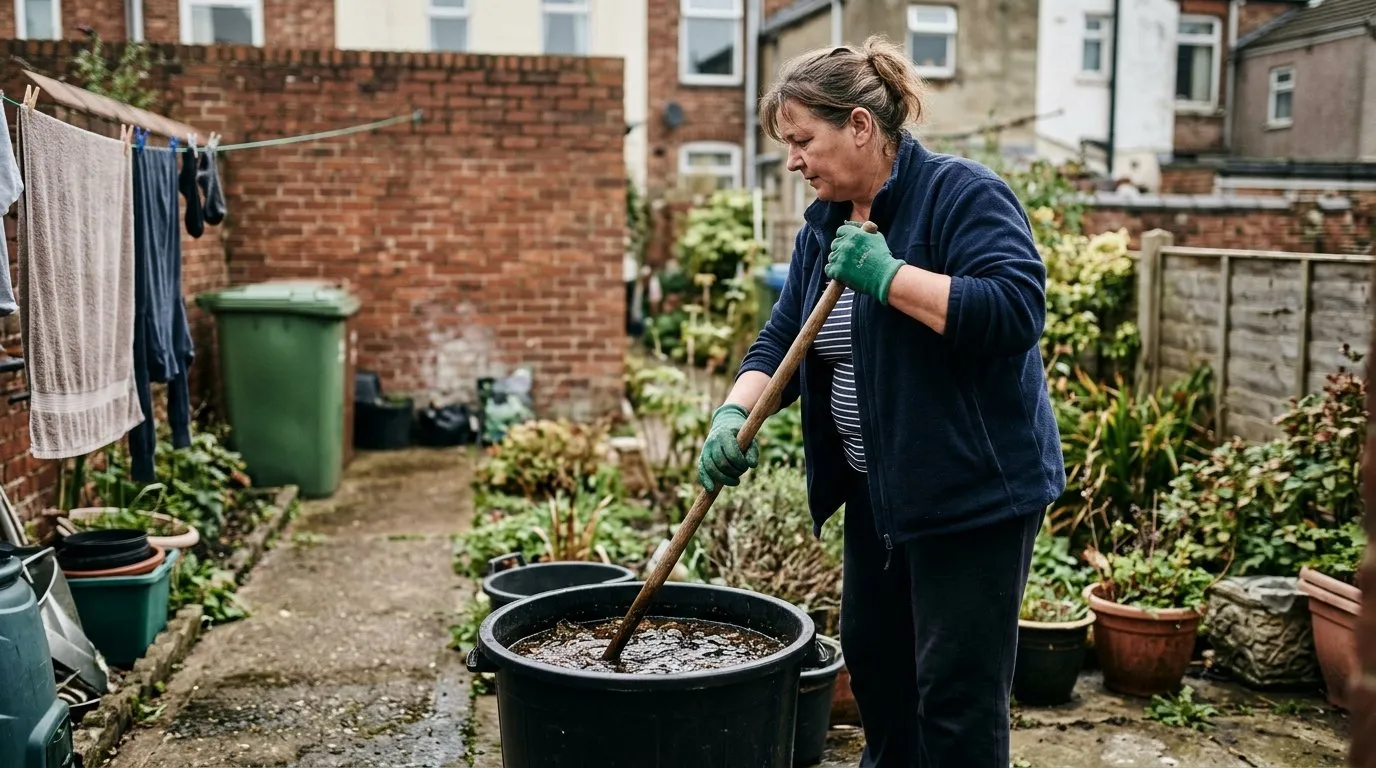
Give it a stir every day or two at first. Gloves and a long stick keep things a bit less whiffy.
How do you know when it’s ready?
Go by look and smell rather than the calendar. It usually takes about four to six weeks in summer, longer in cool weather. It’s ready when:
- The foaming and bubbling have stopped
- Most of the solids have broken down and sunk
- The smell has gone from rotten to sharp, a bit like fish sauce
Strain it through a sieve lined with an old net curtain or muslin into a second bucket. Pour the liquid into bottles with the caps left loose for the first few weeks, as it may still give off gas. Store it somewhere cool and dark, out of reach of children and pets, and use it within the season.
Don’t put the leftover sludge on an open compost heap, as it will draw rats and foxes. Put it in your council food waste caddy, or a sealed bokashi bin if you have one.
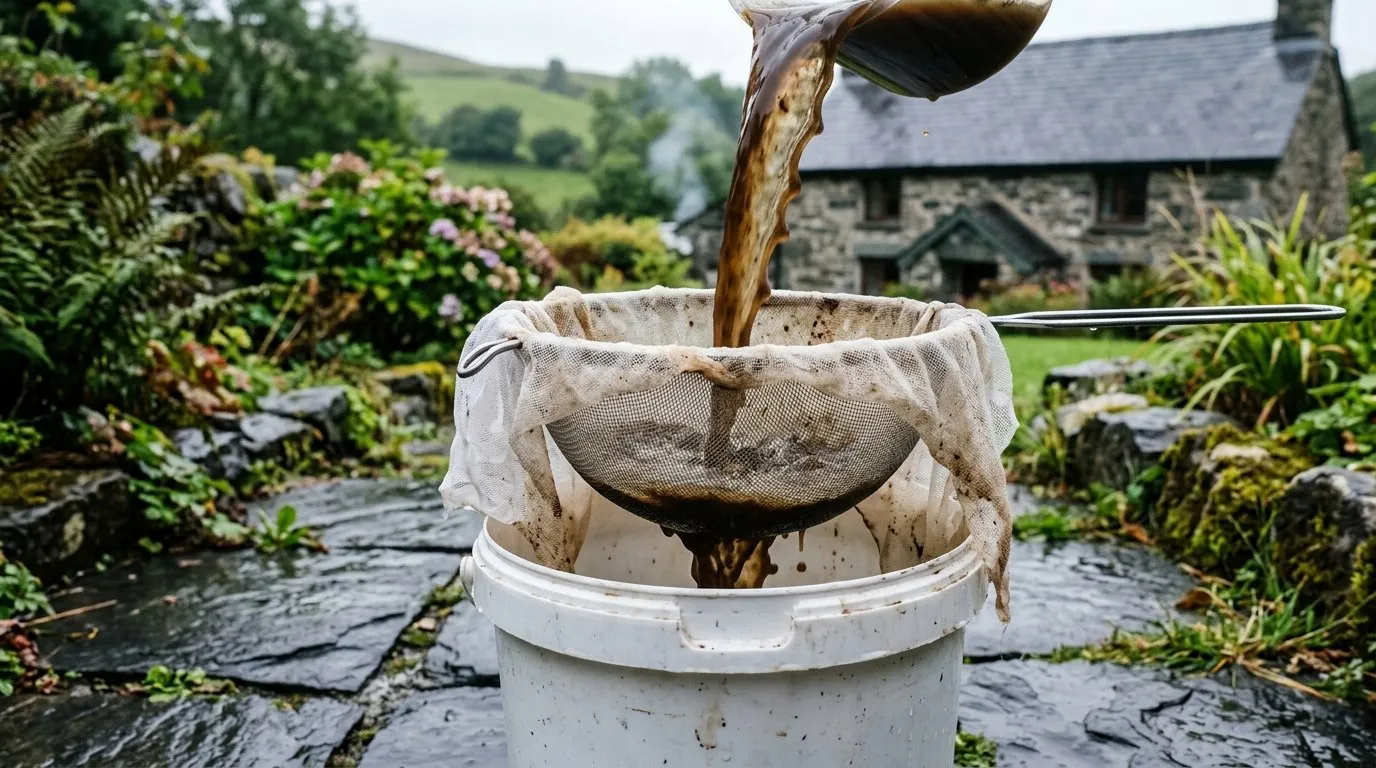
Straining through muslin or old net curtain catches the bits so the liquid doesn’t clog your watering can.
How much water to mix with fish fertiliser
Always dilute it, and start weak. A home brew is strong and can scorch roots if used neat. Begin with about 20ml of concentrate per litre of water, or 200ml in a 10-litre can. The mix should look like weak tea. If you can’t see through it, add more water.
Water it onto damp soil around the plants, not over the leaves. Feed every two weeks or so while plants are growing strongly in spring and summer. If they look lush and healthy, you don’t need to feed more. Use it weaker still on young plants and in pots, and skip seedlings altogether.
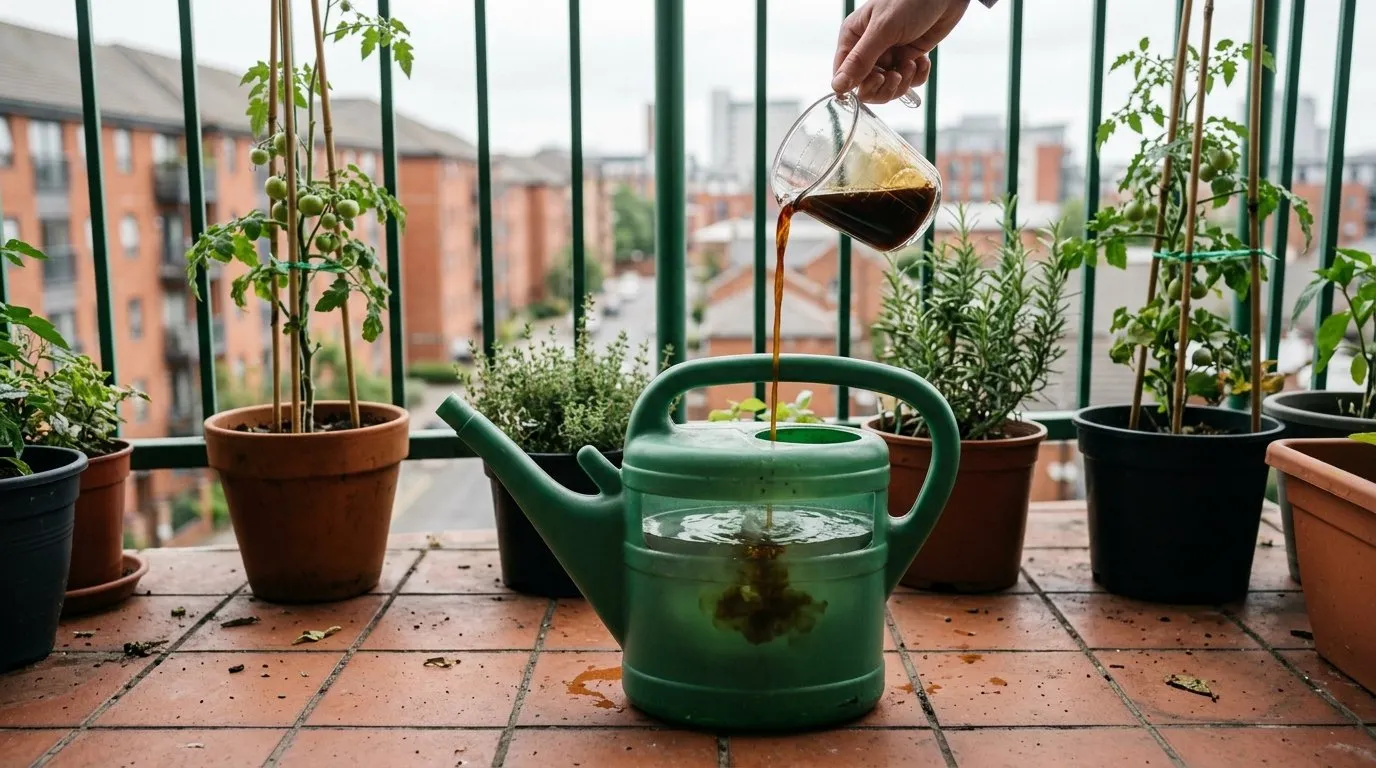
A little concentrate goes a long way. Mix it into a full can of water so it comes out the colour of weak tea.
How to stop fish fertiliser smelling and attracting animals
A good lid, a brick and a far corner deal with most of the trouble. The sugar helps too. It feeds the sour-smelling bacteria that take over the brew, so it smells sharp rather than putrid. The first couple of weeks are still the worst.
Foxes, rats, gulls and cats all love it. An unweighted lid won’t last long. Dogs may try to drink it or roll in it, so keep the bucket and bottles well out of their reach. If animals keep getting in, a lockable bin works better than a bucket.
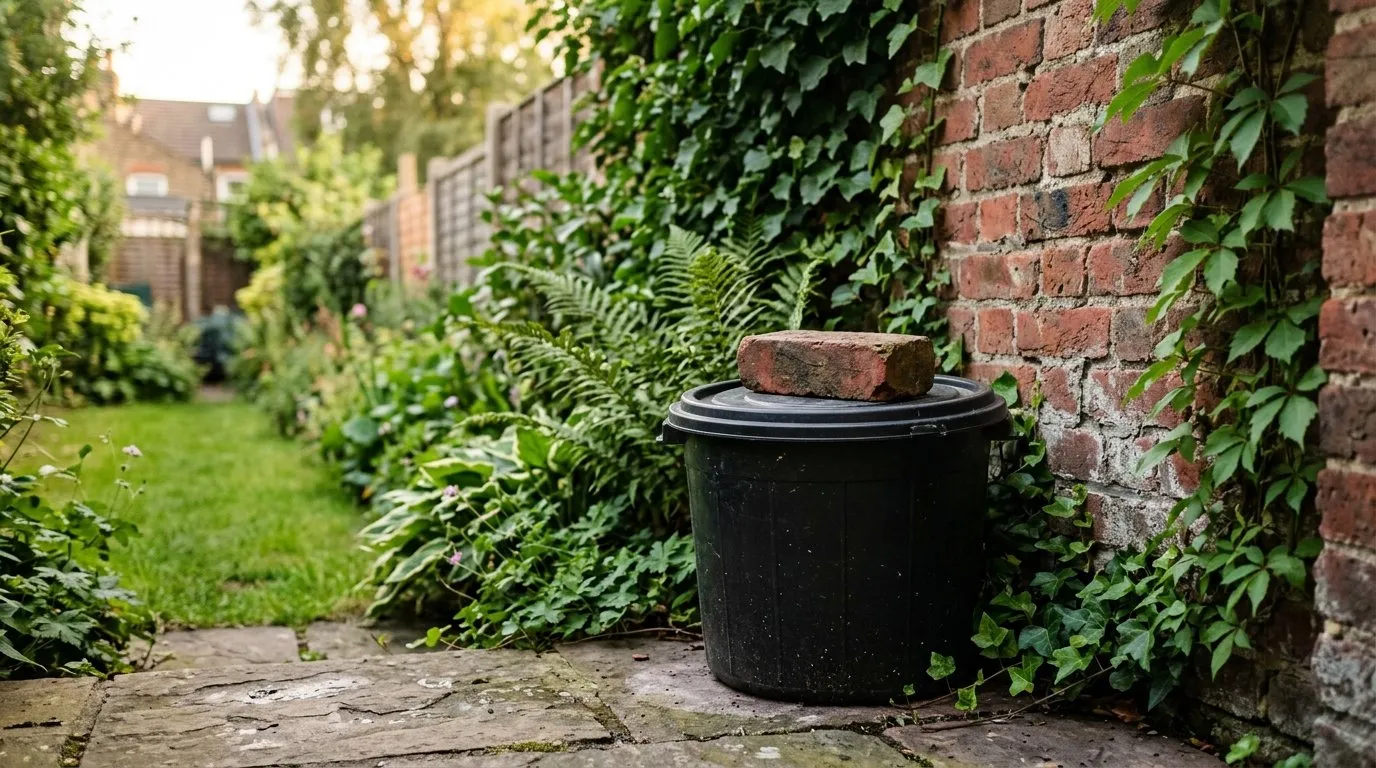
A brick on the lid and a quiet corner away from the house keep foxes out and the smell away from your back door.
Which plants benefit most from fish fertiliser?
Plants grown for their leaves and stems get the most from a nitrogen feed. Good choices include:
- Kale, cabbage and other brassicas
- Chard and leaf beet
- Sweetcorn and leeks
- Hungry plants in pots and growing bags, early in the season
- Young tomatoes, courgettes and squash, until they start to flower
Once fruiting crops start flowering, switch to a high-potash feed. Too much nitrogen gives lots of leaf and fewer flowers and fruit. Root crops such as carrots and parsnips don’t need it, as it pushes leafy tops at the expense of roots. Peas and beans make their own nitrogen, so skip them too.

Leafy crops like kale and chard make the best use of a nitrogen-rich fish feed.
Fish feed compared with comfrey, nettle and seaweed
Each home-made feed does a different job, so many gardeners use two or three over a season.
| Feed | Rich in | Best for |
|---|---|---|
| Fish | Nitrogen | Leafy crops and young plants |
| Comfrey | Potash | Tomatoes, fruit and anything flowering |
| Nettle | Nitrogen | A quick spring boost for leafy plants |
| Seaweed | Trace elements | A general tonic alongside other feeds |
Comfrey is the easy partner for fish feed, as it takes over once plants flower. The comfrey liquid feed recipe shows how to make it, and the guide to seaweed feed covers the shop and home-made versions.
Common mistakes with fish fertiliser
- Using it neat. It can scorch roots. Always dilute it to weak tea colour.
- Sealing the bucket tight. Gas builds up. Keep the lid loose but weighted.
- Leaving the lid off. Foxes and rats will find it within days.
- Pouring it over salad leaves. Water the soil instead, and stop feeding raw crops a couple of weeks before picking.
- Feeding fruiting plants all summer. Switch to a potash feed once they flower.
Now your brew is bubbling, the guide on how to feed garden plants will help you plan feeding through the year. You’ll find more thrifty ideas in the how-to guides.
Frequently asked questions
Is homemade fish fertiliser high in nitrogen?
Yes, fish feeds are mainly a source of nitrogen. That makes them good for leafy growth. The exact strength of a home brew varies with the fish you use, so always dilute it well.
How long does fish fertiliser take to ferment?
Usually about four to six weeks in summer. It’s slower in cool weather and quicker in a hot spell. It’s ready when the foaming stops, the solids have broken down and the smell is sharp rather than rotten.
How do you stop homemade fish fertiliser smelling?
Add sugar, keep a lid on and put the bucket well away from the house. The sugar helps a sour, cleaner-smelling ferment take over. It will still smell strong, especially in the first couple of weeks.
Does fish fertiliser attract rats and foxes?
Yes, an open bucket will attract rats, foxes, gulls and cats. Fit a lid and weight it with a brick. Keep it where dogs can’t get at it either, as many will happily drink or roll in it.
Is homemade fish fertiliser safe to use on vegetables?
Yes, if you water it onto the soil, not the leaves. Stop feeding crops you eat raw a couple of weeks before picking. Wear gloves, wash your hands afterwards and wash all produce well.
Can I use fish fertiliser on tomatoes?
Yes, while the plants are young. Its nitrogen helps them grow leaves and stems. Once flowers appear, switch to a high-potash feed such as comfrey or tomato feed, or you’ll get lots of leaf and less fruit.
Our team produces practical UK gardening guidance from source research, contributor records and established horticultural practice. Editorial standards are overseen by Matt W.