Key takeaways
- A ready-colonised kit or block is the easiest way to start indoors
- Keep it humid, cool and out of direct sun, and give it fresh air twice a day
- A white, shaggy ball usually forms within two to four weeks of opening
- Pick while the spines are pure white, before the tips yellow
- Rest and rehydrate the block for a smaller second flush
- Wild lion's mane is protected in Britain, so grow your own rather than pick it
Lion’s mane is the white, shaggy, pom-pom mushroom that you can grow indoors in a few weeks. The easiest way is a ready-colonised kit kept humid, cool and out of direct sun. Get the humidity right and you’ll be frying your own crop within a month.
This guide is just about lion’s mane: how to set up a kit, when to pick it, how to get a second flush and how to grow it on logs. For the basics of growing other mushrooms, see the guide to growing mushrooms at home.
What lion’s mane needs to fruit
In the wild, lion’s mane (Hericium erinaceus) grows on old and dying beech and oak trees. So at home it wants cool, damp, shady conditions with fresh air.
- Cool room temperature. A normal room that isn’t heated hard suits it. Keep it away from radiators.
- High humidity. This is where most people go wrong. Dry, centrally heated air shrivels it.
- Fresh air. Open the box twice a day. Without fresh air it grows odd, stringy shapes.
- Indirect light. A bright room is fine. Direct sun dries and scorches it.
A sunny windowsill fails on almost every count. A north-facing kitchen, utility room or shady shelf is far better.
Warning: Wild lion’s mane is a rare, protected fungus in Britain. Never pick it from trees. Grow your own from a kit or spawn instead.
Kit, sawdust block or hardwood log?
A ready-colonised kit is the easiest way to start. Here’s how the three options compare:
| Method | Time to first crop | Effort | Best for |
|---|---|---|---|
| Grow kit | A few weeks | Easy | First-timers, indoors |
| Home-made sawdust block | A couple of months from spawn | Fiddly | Repeat growers |
| Inoculated hardwood log | A year or more | Low once set up | Outdoors, patient growers |
A home-made block takes sterilising kit and clean hands, as mould easily gets in first. A log is slow, but carries on cropping outdoors for several years. Start with a kit and move on if you get hooked.

A fully grown-through block is white all over. This is the point to cut it open and start fruiting.
How to grow lion’s mane from a kit
- Cut the bag. Make a small cross or slit in the front, as the kit instructions say. The mushroom grows from this cut.
- Make it humid. Stand the block in a clear plastic box, or drape a loose clear bag over it. Don’t seal it airtight.
- Mist daily. Mist the inside walls of the box, rather than soaking the block. You want droplets on the walls.
- Air it twice a day. Lift the lid for a couple of minutes morning and evening.
- Watch for bumps. Small white cushions appear at the cut, usually within one to two weeks.
- Keep it cool and shaded. Move it away from radiators and sunny windows.
Within days of those first bumps, the long, hanging spines start to form.

These first white bumps are the start of your mushroom. Keep misting, as they dry out easily at this stage.
When to harvest lion’s mane
Pick lion’s mane while it is pure white and firm, with spines about 1cm long. Pick too late and the tips yellow, the flesh softens and the flavour turns bitter.
Ready to pick:
- The spines hang clearly and are about 1cm long
- The whole mushroom is still white
- It feels firm, not spongy
Past its best:
- The spines are yellow, orange or brown at the tips
- It feels soft and wet
- A fine white dust (spores) appears around it
To harvest, cut it off at the base with a clean knife, or twist it gently away from the block.

This one is just right: white all over, with long, even spines. A day or two later the tips would start to yellow.
Getting a second flush
Your block isn’t finished after the first harvest. With a little care, it usually gives a second, smaller crop.
- Rest the block for about a week, still in its humid box.
- If it feels light and dry, soak it in cool water for a few hours, then drain well.
- Carry on misting and airing. New bumps usually appear within a few weeks.
After two or three flushes, the block is spent. Break it up and add it to your compost heap or a leaf mould pile.
Growing lion’s mane on logs outdoors
Logs are the slow, low-effort option. They suit anyone with a shady corner who doesn’t mind waiting.
- Use freshly cut hardwood logs, such as beech or oak, about 1m long.
- Drill holes in a staggered pattern and tap in lion’s mane spawn dowels.
- Seal each hole with melted wax to keep out other fungi.
- Stand or lean the logs in deep shade, off bare soil, and water in long dry spells.
The logs take a year or more to colonise. After that they usually fruit in autumn after cool, wet weather. It’s a lovely addition to a list of unusual crops to grow.

Logs need deep shade and patience. Once colonised, they can crop for several autumns.
Cooking your lion’s mane
Lion’s mane has a mild, slightly sweet taste. When fried, the texture is often compared with crab or lobster. Tear it into chunks or slice it thickly, then fry in a hot pan with butter or oil until golden on both sides.
Always cook it before eating. Try a small portion the first time, as with any new mushroom. It keeps for a few days in a paper bag in the fridge.

Fried until golden, lion’s mane is the best reason to grow it. Tear rather than chop for crispier edges.
Common lion’s mane growing mistakes
- A sunny windowsill. It dries the block and scorches the mushroom. Choose a shady spot.
- Dry air. Central heating dries it fast. Keep it in a misted box.
- No fresh air. A sealed bag gives stringy, odd-shaped growth. Air it twice a day.
- Picking late. Yellow spines mean bitter flesh. Pick while it is white.
- Soaking the block when misting. Puddles invite mould. Mist the box walls instead.
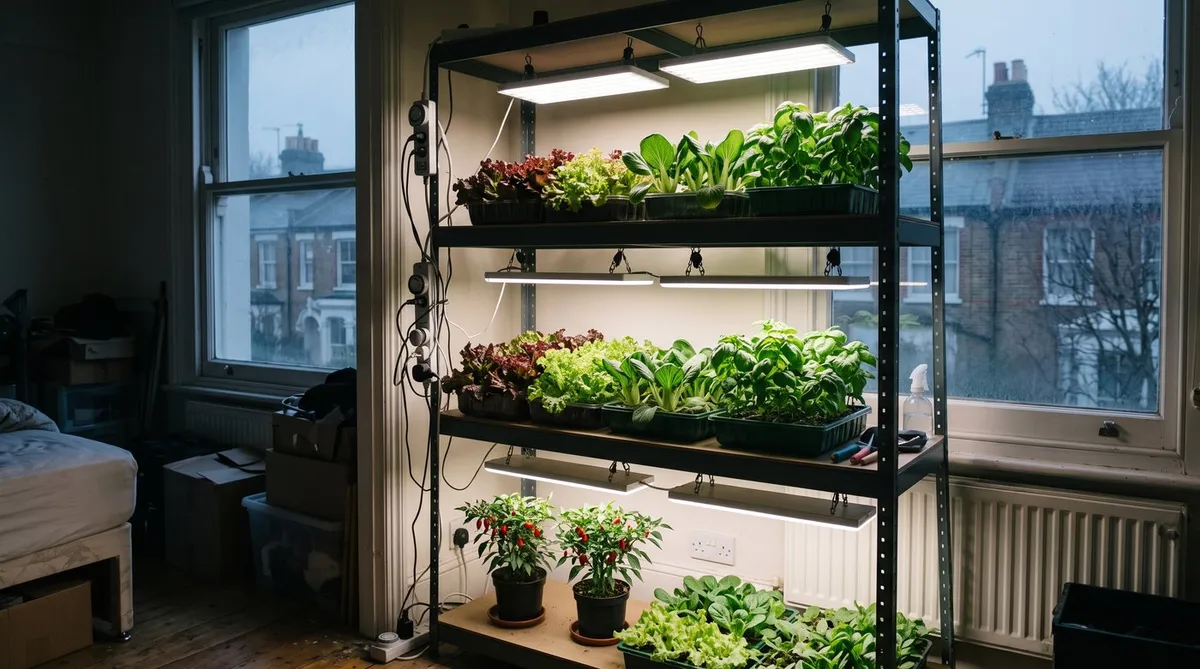
If you like growing food indoors, lion’s mane fits on a shelf next to microgreens on a windowsill, as long as it sits out of the sun.

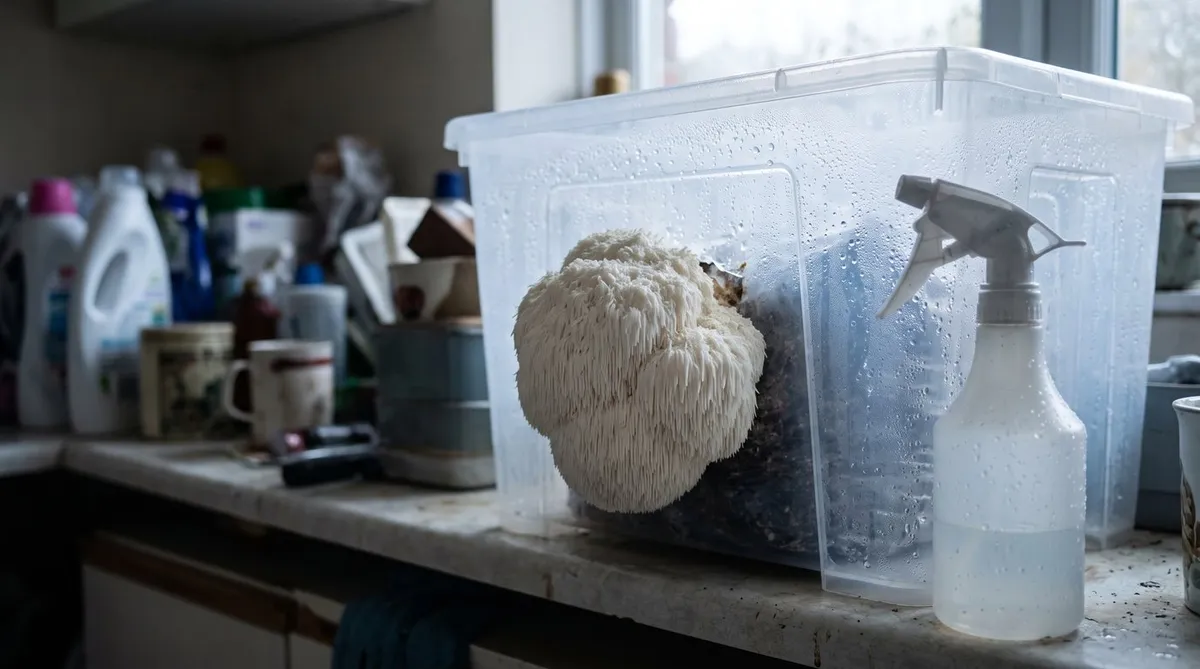
The kit sits at the shady end of the sill, away from the bright spot the herbs and microgreens need.
Lion’s mane growing calendar
| Season | What to do |
|---|---|
| Autumn to spring | Best time for indoor kits; cool rooms suit them |
| Early spring | Cut fresh hardwood logs and plug them with spawn dowels |
| Summer | Kits struggle in hot rooms; find the coolest spot or wait |
| Autumn | Established logs fruit after cool, wet spells |
Frequently asked questions
Can you grow lion’s mane mushrooms in the UK?
Yes, lion’s mane grows well indoors in the UK all year. A ready-colonised kit or sawdust block is the easiest route. Keep it in a cool room, out of direct sun, in a humid box. Outdoor logs work too, but take a year or more and usually fruit in autumn.
How long does lion’s mane take to grow?
A kit usually fruits within two to four weeks of opening. Small white bumps appear first, then grow spines over the following week or so. A smaller second flush often follows a few weeks after the first harvest. Inoculated logs take a year or more to fruit.
Why is my lion’s mane turning yellow or pink?
Usually it is past its best or drying out. Yellow tips mean the mushroom is ageing, so pick it straight away. Discoloured, dried-out spines also come from low humidity. Mist more often, keep it out of direct sun and pick earlier next time.
Do you need a kit to grow lion’s mane?
No, but a kit is by far the simplest start. A kit is a bag of sawdust already grown through with the fungus, so you just open, mist and pick. More experienced growers make their own blocks or plug hardwood logs with spawn dowels.
Can I pick wild lion’s mane in the UK?
No, wild lion’s mane is protected in Britain. It is a rare fungus of old beech and oak trees, and picking it is against the law. Buy a kit or spawn and grow your own instead.
Is lion’s mane safe to eat?
Yes, home-grown lion’s mane is a well-known edible mushroom. Always cook it before eating, and try a small portion first, as with any new mushroom. Only eat mushrooms you have grown from a known kit or spawn.
Got the bug? Try growing oyster mushrooms at home next, the quickest and most forgiving crop to put on the shelf beside it, or browse more how-to guides.
Our team produces practical UK gardening guidance from source research, contributor records and established horticultural practice. Editorial standards are overseen by Matt W.