Key takeaways
- Leucocoryne is not hardy, so grow it in pots in a frost-free greenhouse or cool conservatory
- Pot the bulbs about 5cm deep in September or October, 3-4cm apart
- A 50:50 mix of John Innes No 2 and horticultural grit gives the sharp drainage it needs
- Scented starry flowers open in spring on thin stems roughly 30-45cm tall
- Keep the pots bone dry through summer, then start watering again in early September
Leucocoryne, known as glory of the sun, is a small Chilean bulb with starry blue, violet or white flowers, many of them sweetly scented. In the UK it needs a frost-free greenhouse or cool conservatory, a gritty pot and a bone-dry summer rest. Get those three right and it’s a charming, easy spring treat.
It’s a different job from summer-flowering tender bulbs such as tuberose, which want heat and water in summer. Leucocoryne grows through the cool months and sleeps through the warm ones, so the whole routine runs back to front.
What is Leucocoryne (glory of the sun)?
Leucocoryne is a group of bulbs from the dry hills of Chile. It belongs to the same wider family as onions and amaryllis, and the grassy leaves smell faintly of onion when crushed.
Each bulb sends up a thin, wiry stem carrying a loose head of flat, six-petalled stars. The colours run from sky blue and lilac to violet and white, usually with a contrasting eye. In the middle sit small yellowish sterile stamens, which are a handy way to tell it apart from look-alikes. Several kinds have a lovely sweet scent, strongest on a warm afternoon.
In the wild the bulbs grow through mild, wet winters, flower in spring, then bake through a long, dry summer. Copy that rhythm in a pot and you’ve cracked it.

The bulbs are small and papery. Pot them in autumn into a sharp, gritty mix in a clay pot.
Which Leucocoryne to grow
For a first try, choose Leucocoryne ixioides or a pack of mixed hybrids. They’re the easiest to find and flower freely.
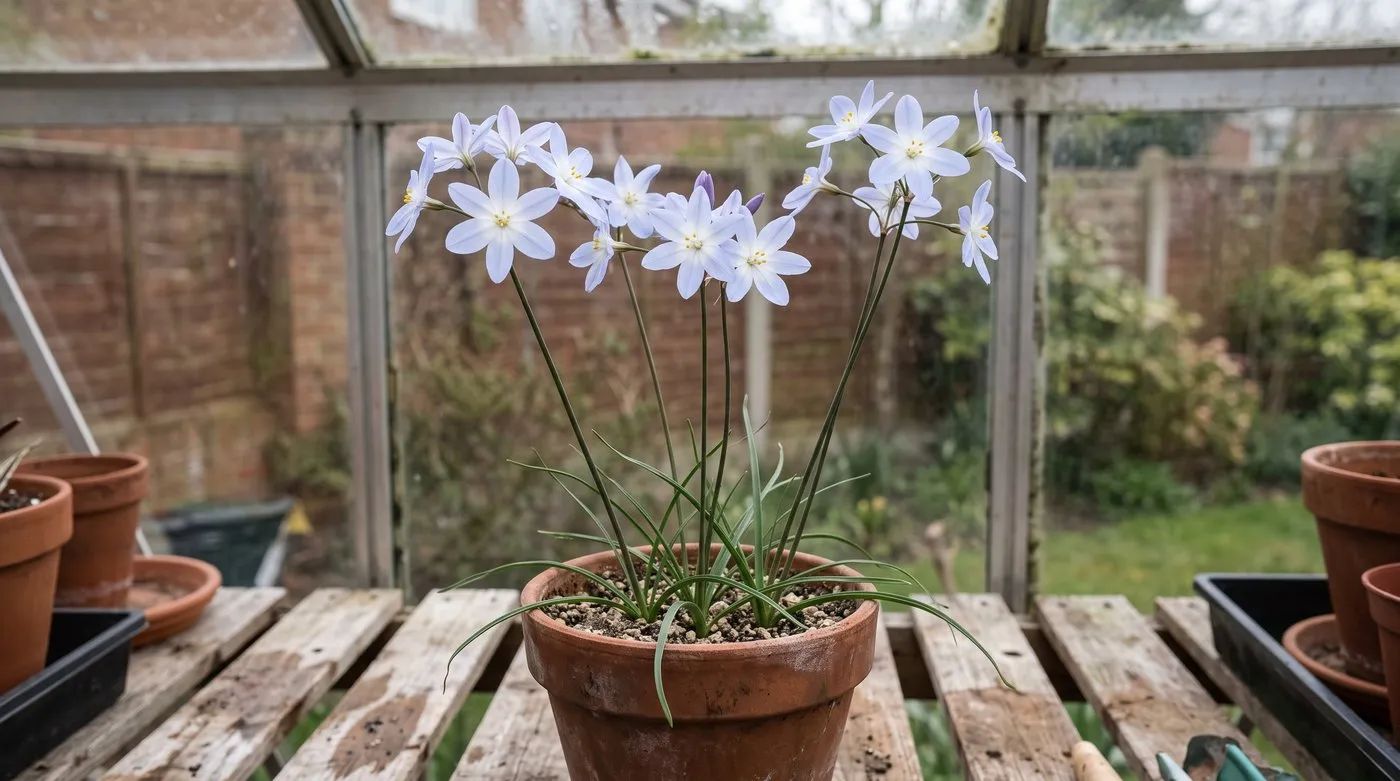
Leucocoryne ixioides is the easiest one to start with, with loose heads of sweetly scented sky-blue stars.
| Type | Flower colour | Scent | Good for |
|---|---|---|---|
| L. ixioides | Sky blue to white, pale centre | Sweet | First-time growers |
| L. coquimbensis | Blue-violet, white centre | Sweet | Deeper colour |
| L. purpurea | Lilac to violet, dark eye | Light | Bold contrast |
| Named and mixed hybrids | Blue, lilac, white | Usually sweet | Reliable display, cutting |
You’ll see the species sold by specialist bulb nurseries, often alongside named hybrids such as ‘Caravelle’. Stocks are small and sell out, so order in late summer.
Why Leucocoryne must grow under glass in the UK
Leucocoryne is not frost hardy. A hard frost kills the bulbs and the leaves, and cold, wet soil rots them. That rules out a UK border, even in mild Cornwall.
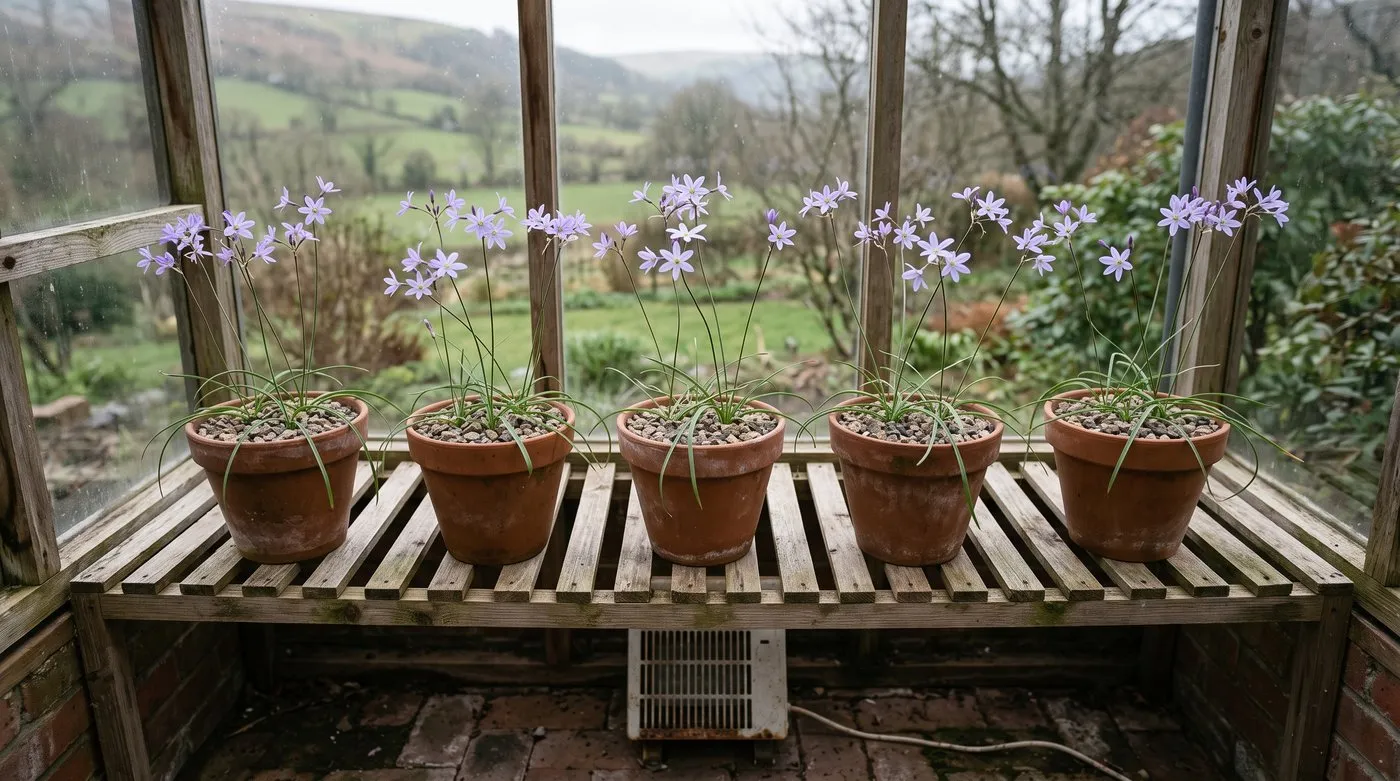
A cool, frost-free greenhouse is all leucocoryne needs in winter. Bright light matters more than warmth.
Growing in pots under glass gives you control over the two things that kill it: cold and summer wet. A frost-free greenhouse, a cool conservatory or a bright porch all work. Aim for about 5°C at night in winter, with as much light as you can give.
If you already grow freesias under glass, the routine is almost the same: cool, bright and frost-free in winter, dry in summer. A small heater keeps the frost out in a cold snap, and the greenhouse heating guide explains the options.
How to pot Leucocoryne bulbs in autumn
Pot the bulbs in September or October, as soon as they arrive. Roots start growing in autumn, so early potting gives the best show.
- Mix equal parts John Innes No 2 and horticultural grit
- Fill a clay pot, ideally 13-15cm across, to about 7cm below the rim
- Set the bulbs pointy end up, 3-4cm apart
- Cover so the bulbs sit about 5cm deep
- Top with a 1cm layer of grit to keep the necks dry
- Water once, then keep the compost barely moist until leaves appear
Clay pots are worth the effort. They breathe and dry out faster than plastic, which suits a bulb that hates sitting wet.
Watering and feeding through the year
The golden rule is simple: water while it’s growing and keep it dry while it’s resting.

Water more generously once growth speeds up in late winter, but always let the saucer drain.
- Autumn to midwinter: keep the compost just damp. In the darkest weeks, water lightly every 10-14 days.
- Late winter to flowering: growth speeds up as the light returns. Water more so the pots stay evenly moist, and tip away anything left in the saucer.
- From buds to end of flowering: give a high-potash liquid feed, such as tomato feed at half strength, every two weeks.
- After flowering: let the leaves yellow naturally and water less as they fade.
- Summer: no water and no feed at all.
A cool, airy greenhouse makes the flowers last much longer than a hot, stuffy one. Open the vents on sunny spring days.
The dry summer rest that keeps bulbs alive
This is the make-or-break stage. Once the leaves have died back in early summer, stop watering completely. Leave the pots bone dry somewhere warm and sunny, such as the greenhouse bench or a cold frame with the lid on to keep the rain off.
The summer warmth ripens the bulbs and sets up next year’s flowers. In early September, give the pots a good soak to wake them up, and the cycle starts again.
Gardener’s tip: Stand resting pots on their sides or under the staging so no one waters them by mistake. A single well-meant soaking in July can rot the lot.

Six pointed petals around a pale centre are the mark of leucocoryne. A good summer bake is what brings these flowers back each spring.
Repotting, dividing and growing from seed
Leucocoryne flowers best when left alone. Repot every two to three years in late summer while the bulbs are dry and dormant.
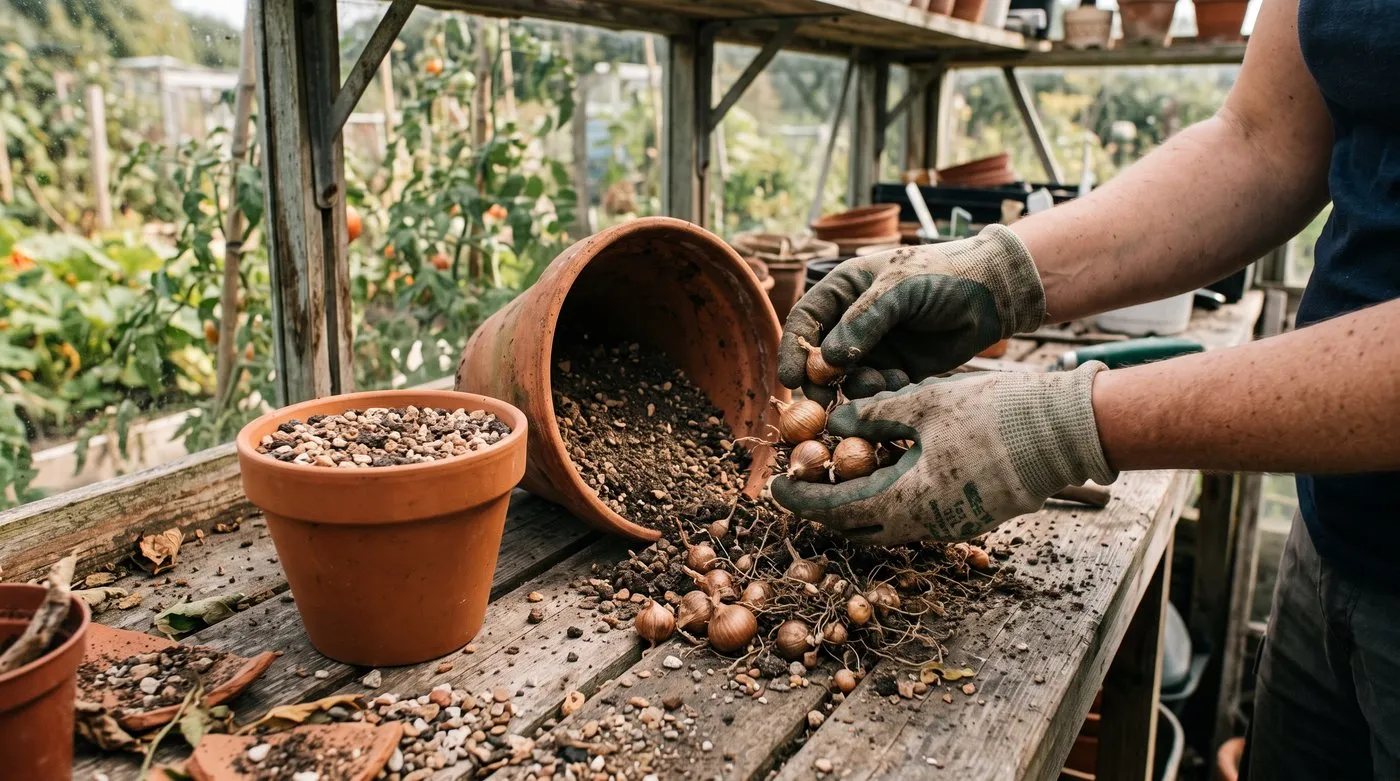
Repot in late summer while the bulbs are dry. Grow the small offsets on in their own pot.
Tip the pot out and tease the bulbs apart. You’ll find small offsets around the main bulbs. Replant the biggest bulbs in fresh gritty mix, and grow the small ones on in a separate pot. They take a couple of years to reach flowering size. In years when you don’t repot, scrape off the old grit and add a fresh top layer in autumn.
To grow from seed, sow fresh seed in autumn into the same gritty mix and keep it frost-free and just moist. The seedlings look like fine grass. Leave them undisturbed and give them the same dry summer rest as adult bulbs. Expect to wait several years for flowers. The routine is much like raising nerines under glass.
Pests and problems under glass
Leucocoryne is mostly trouble-free. Rot from summer wet is by far the biggest danger.
Aphids gather on soft flower stems and buds in spring. Check weekly from March, then squash small groups or wipe them off with a damp cloth. The guide to getting rid of aphids covers other controls. If you need a spray, use an approved product for that use and follow the label.
Basal rot makes a bulb soft at the base, and the plant then collapses. There’s no cure. Prevention is everything: gritty compost, clay pots and a dry summer rest. Throw away any soft bulbs you find when repotting.
Slugs sometimes sneak into greenhouses in autumn and graze the new shoots. Check under pots and staging on damp evenings.
Month-by-month Leucocoryne calendar
| Month | What to do |
|---|---|
| September | Pot or repot bulbs 5cm deep. Soak resting pots to start them into growth |
| October | Keep frost-free. Water sparingly as roots form |
| November | Light watering. Ventilate on mild days. Watch for slugs |
| December | Very little water. Give maximum light |
| January | Slow growth. Water every 10-14 days |
| February | Growth speeds up. Water a little more. Check for aphids |
| March | Flower stems rise. Water evenly. Start a high-potash feed |
| April | Flowering. Feed every two weeks. Ventilate well |
| May | Flowers finish. Leaves start to yellow. Water less |
| June | Stop watering. Start the dry summer rest |
| July | Keep bone dry and warm |
| August | Keep dry. Order new bulbs and plan any repotting |
Common mistakes with glory of the sun
Watering in summer. This kills more bulbs than anything else. Once the leaves die back, leave the pots dry until September.
Planting outside. Leucocoryne won’t survive a UK winter in the ground, even in a mild spot.
Keeping it too warm in winter. A hot room gives soft, floppy stems and short-lived flowers. Cool and bright is what it wants.
Using wet, peaty compost. Moisture-holding compost sits around the bulb necks and rots them. Always add plenty of grit.
Repotting every year. Constant disturbance means fewer flowers. Leave clumps alone for two or three years.
Frequently asked questions
Is Leucocoryne hardy in the UK?
No, it isn’t hardy. It needs frost-free conditions all winter, ideally 5°C or more. Grow it in pots in a cool greenhouse or conservatory. Even in mild coastal gardens, cold and winter wet outdoors will rot or kill the bulbs.
How deep do you plant Leucocoryne bulbs?
Plant them about 5cm deep in autumn. Space the bulbs 3-4cm apart in a gritty, free-draining mix. Finish with a layer of grit on top so the necks stay dry while the leaves grow.
When does Leucocoryne flower?
It flowers in spring when grown under glass in the UK. Each bulb sends up a thin stem with a loose head of starry, often scented flowers. A cool, bright, airy greenhouse makes the flowers last longer than a hot one.
Why are my Leucocoryne bulbs rotting?
Rot nearly always comes from water during the summer rest. Once the leaves die back in early summer, stop watering completely. Keep the pots warm and dry until early September. Heavy, peaty compost that stays wet in winter causes rot too.
Where can I buy Leucocoryne bulbs in the UK?
Specialist bulb nurseries sell them, mostly in late summer and autumn. Look for the species Leucocoryne ixioides or mixed and named hybrids. Stocks are small, so order early and pot the bulbs as soon as they arrive.
Can you grow Leucocoryne from seed?
Yes, but it takes patience. Sow fresh seed in autumn in the same gritty mix, kept frost-free. Leave the grassy seedlings undisturbed and give them the same dry summer rest as adult bulbs. Expect to wait several years for the first flowers.
For more ideas to fill the staging through the year, read our guide to the best greenhouse plants month by month, or browse all our plant guides.
Our team produces practical UK gardening guidance from source research, contributor records and established horticultural practice. Editorial standards are overseen by Matt W.