Key takeaways
- A sharp zigzag trail eaten into elm leaves is the giveaway sign
- It is a non-native sawfly, first found in Britain in 2017 and now spreading
- Females breed without males, with several generations from late spring to autumn
- Healthy mature elms usually recover, but young trees and hedge regrowth can be stripped
- It only feeds on elm and has nothing to do with Dutch elm disease
- Don't spray; photograph the damage and report it to Forest Research on TreeAlert
A sharp zigzag line eaten into an elm leaf means elm zigzag sawfly. This small, non-native insect was first found in Britain in 2017 and is now spreading. Its larvae can strip young elms, but healthy mature trees usually cope. The most useful thing you can do is report it.
This guide shows you how to recognise the damage, how much it matters and what to do. If your elm has whole branches turning yellow and wilting instead, that is a different problem, covered in the guide to Dutch elm disease symptoms.
What does elm zigzag sawfly damage look like?
The zigzag trail is the clue to look for. Young larvae eat a narrow, sharp zigzag line into the leaf, usually working in from the edge. Nothing else on an elm leaves a pattern quite like it.
As the larvae grow, they eat larger patches. By late summer a badly hit tree can look ragged, with some leaves stripped back to the veins.
- A sharp zigzag line eaten into the leaf, often from the edge
- Small, pale green larvae up to about 1cm long, often on the leaf underside
- Damage that builds from a few trails to heavy feeding as the season goes on
- Only on elms, including English, wych, field and ornamental elms
A single fresh trail is easy to walk past. Look for it on lower branches and hedge regrowth from early summer.

The zigzag trail is the giveaway. Look for the small pale green larva near the freshly eaten edge.
How to tell it apart from other leaf damage
The zigzag rules out most other culprits straight away.
| Damage | What it looks like | Key difference |
|---|---|---|
| Elm zigzag sawfly | Sharp zigzag line eaten into the leaf | Regular zigzag, elm only |
| Caterpillars | Ragged holes anywhere on the leaf | No pattern; caterpillar often visible |
| Leaf miners | Pale winding tunnels inside the leaf | Damage is inside, not eaten through |
| Weevils | Small rounded notches at the edge | Scalloped bites, no zigzag |
The elm zigzag sawfly life cycle
This sawfly breeds in a way that lets numbers build fast.
No males needed. Females lay eggs without mating. No males have been found in Europe, so every adult can start a new colony.
Several generations a year. In warm weather the cycle from egg to adult is quick. Generations overlap, so one tree can show fresh and old damage at the same time.
Eggs and larvae. Eggs are laid on the leaf edge. The larva hatches and starts its zigzag straight away.
Cocoons. Summer larvae spin a lacy, net-like cocoon on the leaf or nearby. The last generation spins a tougher cocoon in the soil and leaf litter to spend the winter.
Adults. The adult is a small black sawfly with pale legs. It flies weakly, but it can travel long distances on vehicles and plants.

Summer cocoons are lacy and net-like. The one that gets through winter is tougher and hidden in the soil.
| Season | What is happening |
|---|---|
| Winter | Larvae rest in tough cocoons in soil and leaf litter |
| Spring | Adults emerge and lay eggs as elm leaves open |
| Early summer | First zigzag trails appear on fresh leaves |
| Midsummer | Generations overlap and damage builds |
| Late summer to autumn | Heaviest feeding; some leaves stripped to the veins |
How much harm does elm zigzag sawfly do?
For most established elms, less than the damage suggests. A big, healthy tree usually grows new leaves after an attack and carries on.
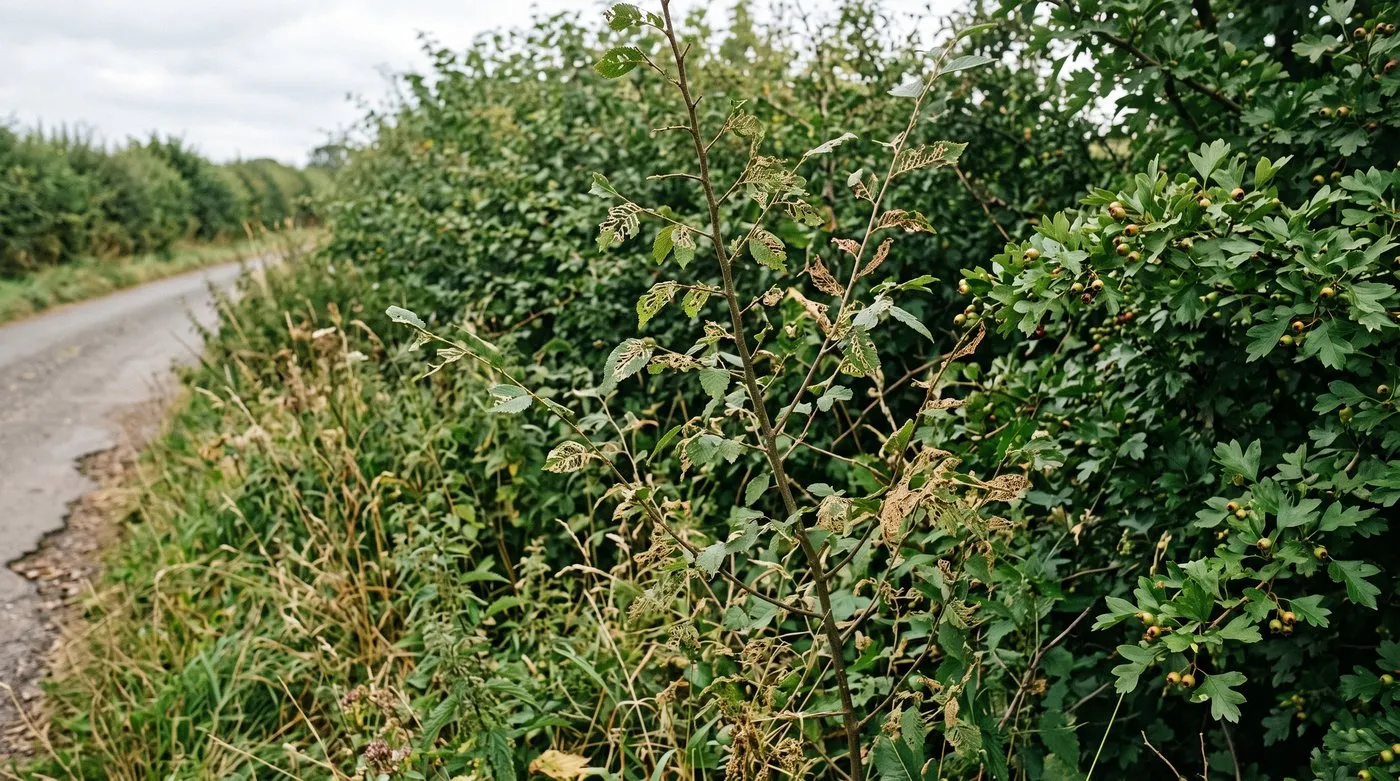
Young elms and hedge regrowth take the hardest hit. Big, healthy trees usually grow new leaves and carry on.
Heavy attacks can:
- strip young or newly planted elms of most of their leaves in a season
- weaken trees already stressed by drought or root damage
- hit hedge regrowth and coppiced elm hard
It does not:
- usually kill a healthy mature elm
- feed on trees other than elm
- carry Dutch elm disease
The real worry is repeated stripping year after year, which drains a young tree’s reserves. That matters because so much of Britain’s elm is now hedgerow regrowth. The guide to native trees for UK gardens suggests other natives if you’re choosing trees for a new boundary.
What to do about elm zigzag sawfly
There’s no spray worth using in a garden. Watching, recording and looking after the tree is the right approach.
- Learn the zigzag so you can spot it early.
- Photograph the trail and the larvae clearly.
- Note the date, the location and the type of elm.
- Report it to Forest Research through TreeAlert.
- Water young and newly planted elms in dry spells so they recover better.
Avoid insecticides. They kill the predators and parasites that already attack the sawfly, and do nothing for the tree in the long run. The same tolerant approach suits other leaf-eating pests, such as gooseberry sawfly on soft fruit.

A clear phone photo with the date and place is just what TreeAlert needs.
Why elm matters
Elm has had a hard time in Britain. Dutch elm disease killed most large elms from the late 1960s onwards. What is left is mostly hedgerow regrowth and a few resistant plantings.
Elm also supports wildlife. The white-letter hairstreak butterfly lays its eggs on elm, so losing young elm hurts it too. The guide to rare woodland butterflies explains how to help.
So this pest lands on a tree that is already struggling. That’s not a reason to panic. It’s a reason to watch, record and support the trees rather than reach for chemicals.

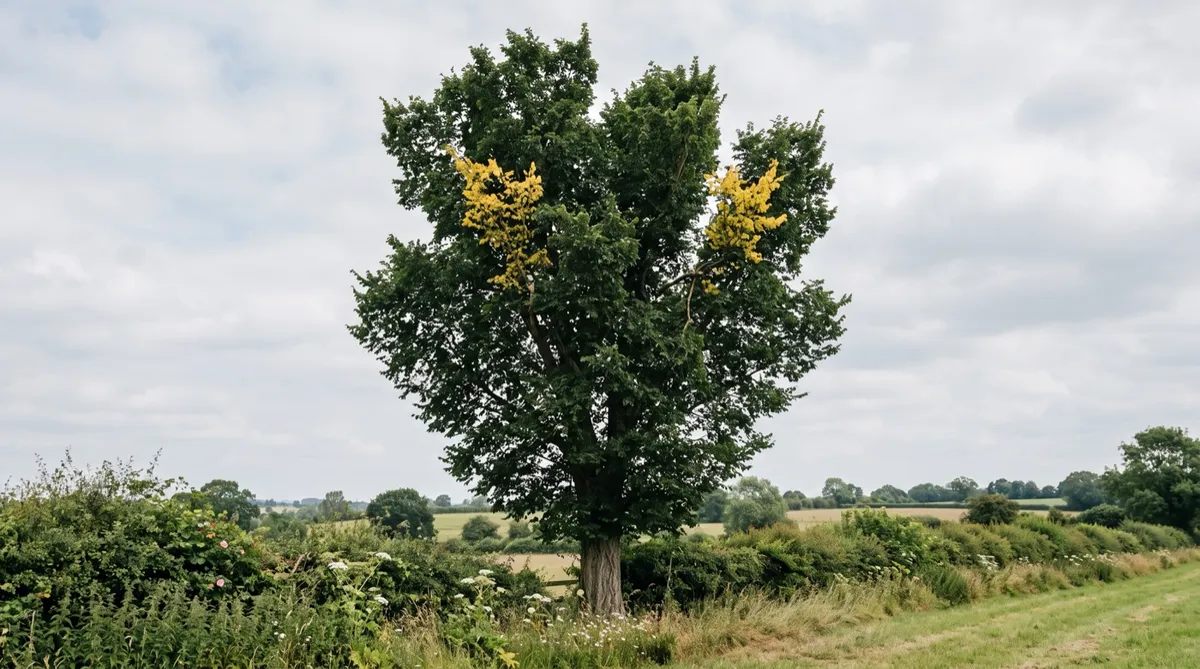
Much of Britain’s surviving elm grows in hedgerows like this, which is why tracking the sawfly matters.
Common mistakes with elm zigzag sawfly
- Looking for a big caterpillar. The larvae are small and pale. Look for the zigzag first.
- Spraying. It harms natural enemies and isn’t needed on healthy trees.
- Confusing it with Dutch elm disease. Sawfly eats leaves; Dutch elm disease makes whole branches yellow and wilt.
- Not reporting it. Each record helps map how far it has spread.
For more help with tree and plant troubles, browse the garden problems guides. If you’re planting a new tree for wildlife that this pest won’t touch, read the guide to growing silver birch next.
Frequently asked questions
What is eating my elm leaves in a zigzag pattern?
It is almost certainly elm zigzag sawfly. Its small pale green larvae eat a sharp zigzag line into elm leaves. It was first found in Britain in 2017 and only feeds on elms.
Will elm zigzag sawfly kill my tree?
It rarely kills a healthy mature elm. Heavy attacks can strip young or stressed trees of most of their leaves, which weakens them. Established elms usually grow new leaves and recover.
How many generations of elm zigzag sawfly are there a year?
There are several generations from late spring to autumn. Females lay eggs without mating, so numbers can build quickly through summer. That is one reason the pest spreads so fast.
Should I spray elm zigzag sawfly?
No, spraying isn’t recommended in gardens. It harms the predators and parasites that attack the sawfly, and healthy elms cope with the damage. Reporting your sighting is far more useful.
Who do I report elm zigzag sawfly to in the UK?
Report it to Forest Research through TreeAlert. Send clear photos of the zigzag trail and the larvae, with the date, location and type of elm. Records help track how far it has spread.
Our team produces practical UK gardening guidance from source research, contributor records and established horticultural practice. Editorial standards are overseen by Matt W.