
Key takeaways
- Mark habitats on your plan first, then fit the patio, paths and borders around them
- Seven habitats cover most garden wildlife, from pond and log pile to bare ground for bees
- Link every feature with long grass, hedge bottoms or shrubs so animals stay under cover
- Put the wildest parts furthest from the house and the people space near the back door
- Plan flowers from February to November, not just midsummer
- A 13cm gap at the base of each fence lets hedgehogs travel between gardens
Habitat-first garden design means planning the wildlife features before anything else. Instead of drawing the lawn and borders first, you mark where the pond, log pile, long grass and hedge go. The patio, paths and seating then fit around them.
The result is a garden that works as one big habitat, not a tidy plot with a bug hotel in the corner. If you’re just starting out, the guide to creating a wildlife garden covers the easy first steps. This guide is about the layout.
How is habitat-first design different?
Most wildlife gardens add features to an ordinary layout. There’s a neat lawn and borders, plus a pond in one spot and a log pile in another. Each feature helps, but they’re islands.
Habitat-first design links the features up. A frog can go from pond to long grass to log pile without crossing open, mown lawn. Hedgehogs can travel along a hedge bottom from one garden to the next. That linking cover is what most gardens miss.
It’s also different from rewilding, which mostly means stepping back and letting nature take over. Here you’re still designing and gardening, just with wildlife as the brief. The rewilding guide covers the more hands-off approach.
Gardener’s tip: Sketch your garden on squared paper before you buy a single plant. Mark the pond, log pile, long grass and hedge line first. Borders and seating go in the spaces left over.
The seven habitats to put on your plan
Seven habitats cover what most garden wildlife needs. Mark each one on your plan.
Water: a pond with a shallow edge
A pond brings in the most wildlife of any single feature. Dig it about 60cm deep at the middle, with most of it much shallower. Give it at least one gently sloping side so frogs, birds and hedgehogs can get in and out.
Leave fish out, as they eat tadpoles and insect larvae. You don’t need a pump or filter. Fill and top up with rainwater where you can.

A pebbly, sloping edge lets wildlife climb in and out, and it’s a safe spot for a bit of pond-dipping too.
Dead wood: a log pile in the shade
A log pile is home to beetles, woodlice, fungi and the wrens and hedgehogs that hunt them. Stack a few thick logs in a shady corner. Bury the bottom layer partly in the soil so it stays damp.
Stag beetle larvae spend several years feeding in rotting wood underground. Leaving an old stump in the ground helps them too. The guide to building a wildlife log pile has more tips.

Damp, rotting logs in the shade are a magnet for beetles and fungi. The older and mossier they get, the better.
Long grass and a mini-meadow
Long grass is the cheapest habitat of all. Just stop mowing part of the lawn. It shelters caterpillars, grasshoppers, frogs and small mammals.
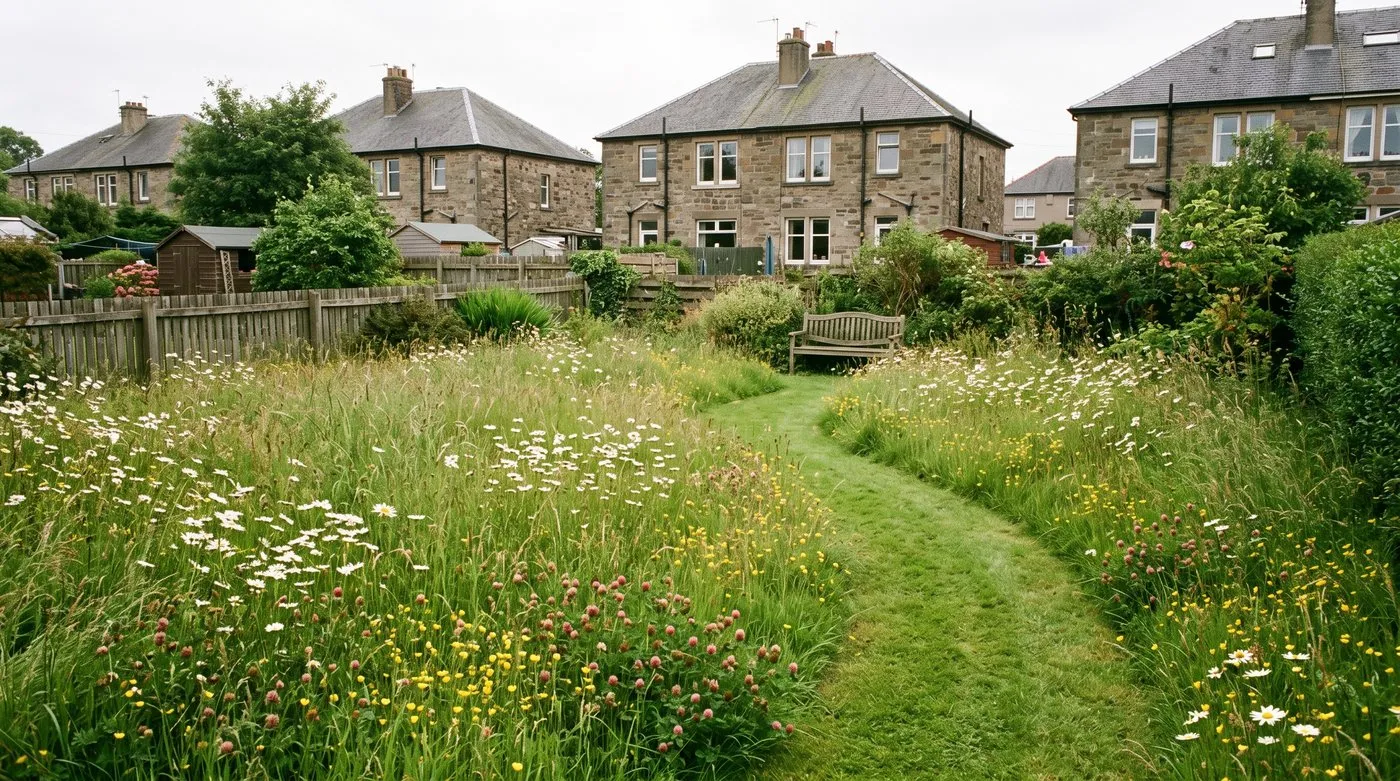
A mown path through long grass makes it look deliberate, and the uncut patch becomes home to caterpillars and grasshoppers.
Mow a path through it so it looks deliberate. For more wildflowers, cut it once in late summer and rake off the cuttings. Sowing yellow rattle helps weaken the grasses. The guide to turning a lawn into a wildflower meadow explains how.
A native hedge
A native hedge gives birds nesting spots, insects food and everyone a safe route around the garden. Good mixes include hawthorn, blackthorn, hazel, field maple and dog rose.
Plant bare-root whips between November and March, about five to seven per metre in a staggered double row. Trim it in winter, every other year if you can, so it carries flowers and berries. The native hedgerow species guide helps you pick a mix.
Bare ground for solitary bees
Many solitary bees nest in burrows in bare, sunny soil or sand. They can’t dig through thick mulch, gravel or dense planting. Leave a sunny bank or patch of bare soil, or build a small sand bank.

A sunny bank of bare soil next to flowers gives mining bees a place to dig their nests. Those little holes are their front doors.
The guide to solitary bees covers the different nesting types.
Flowers from February to November
Plan something in flower for as many months as possible. Queen bumblebees wake on mild days in late winter and need food straight away. Late hoverflies and wasps feed on ivy into November.
Single, open flowers are best. Many double flowers have little nectar or pollen that insects can reach. See the planting table further down.
Cover that links everything
Cover ties the other six together. Hedgehogs, frogs and beetles need it to move safely between water, food and shelter. An open lawn is a barrier. Long grass, a hedge bottom or a strip of leaf litter is a road.
Zoning a typical back garden for wildlife
Work from the far boundary back towards the house. Here’s a simple layout for a typical suburban back garden.
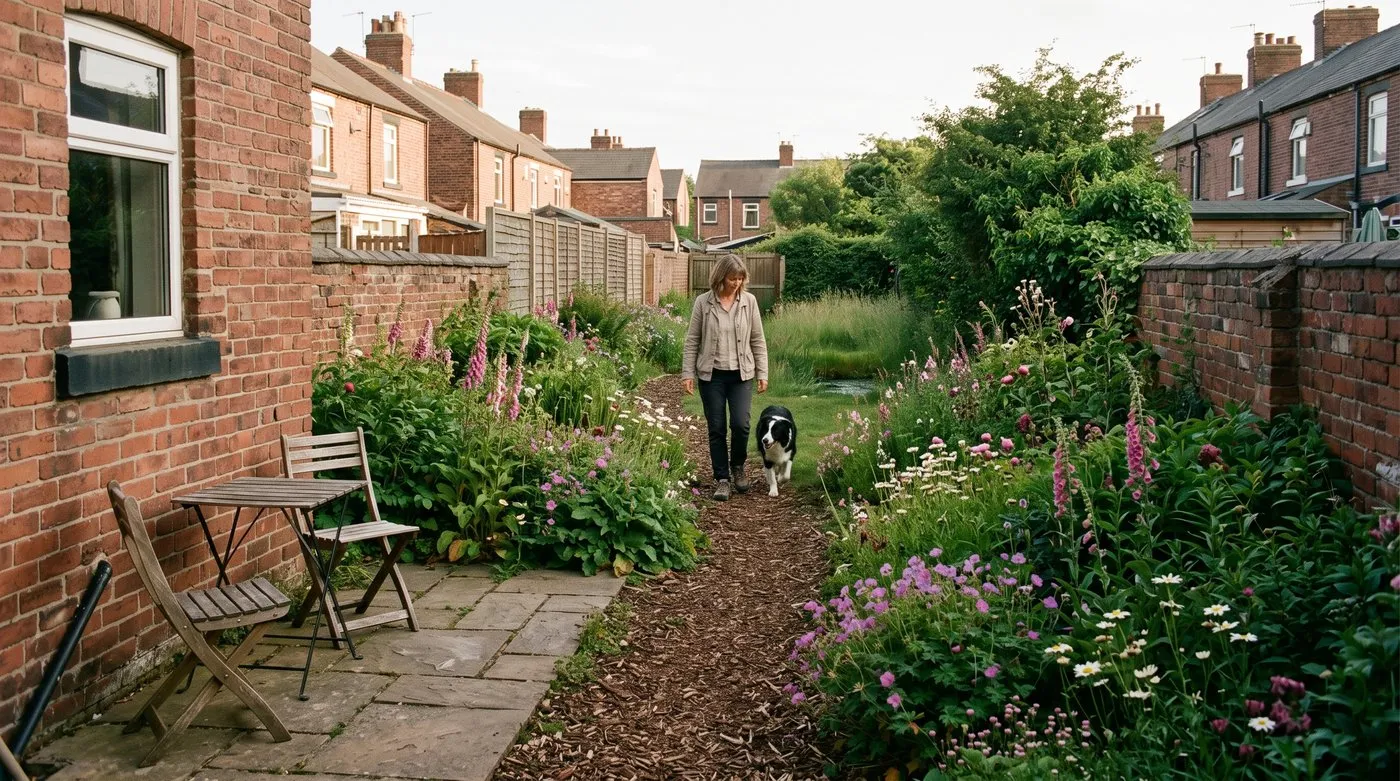
People space by the house, flowers in the middle and the wildest bits at the far end. It’s a layout that suits most back gardens.
- Boundaries: native hedge where you have room. On fences, grow climbers such as honeysuckle and ivy.
- Far end: the wild zone. Pond, log pile, bare ground and long grass, all linked by cover.
- Middle: flowering borders either side of a mown grass or bark path. This is the bit you’ll enjoy most.
- Near the house: patio, seating, washing line and shed. Keep paving to what you really need.
Where you need a hard surface, gravel, bark paths or paving with planted gaps let rain soak in and give low plants a foothold.
Linking your garden to the neighbours
One garden on its own is an island. Linked gardens act as one big habitat. Hedgehogs show why this matters: they travel around a mile a night looking for food and mates.
Cut a 13cm square gap at the base of each fence. That’s a hedgehog highway, and frogs, toads and beetles use it too. Agree it with your neighbour first if the fence is shared. The hedgehog highway guide shows how to make one neatly.

A neat gap at the bottom of the fence is all a hedgehog needs. Leaf litter on either side gives it cover on the way through.
Warning: Skip slug pellets and broad insecticides in a wildlife garden. They kill the bugs that feed hedgehogs, frogs and birds. Let the predators keep pests in check instead.
Native plants and nectar through the year
Use native plants as the backbone of your garden. Our insects grew up alongside them, so native hedges, trees and wildflowers feed a lot of wildlife. Garden plants with long flowering seasons and simple flowers fill the gaps.
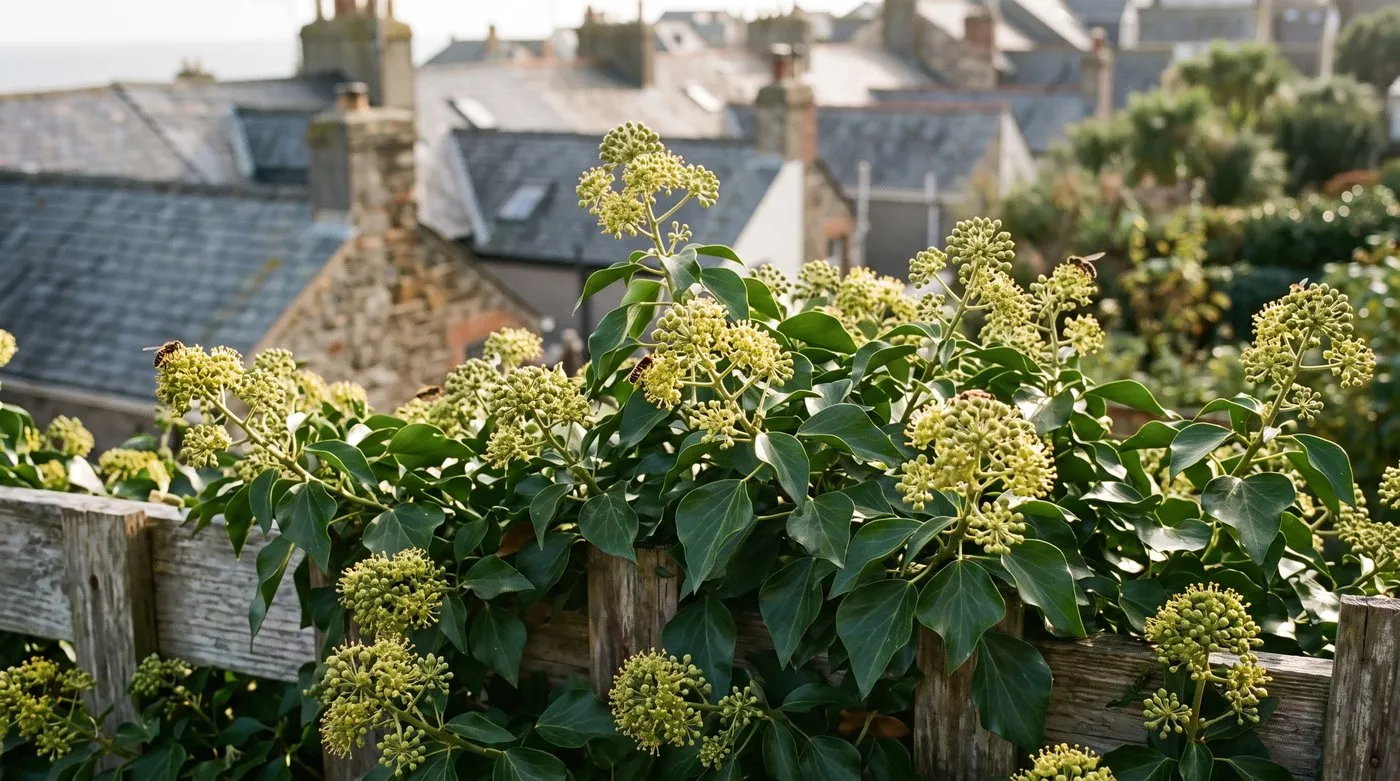
Let a patch of ivy flower and it’ll feed hoverflies, wasps and late bees right into November.
- Hedge: hawthorn, blackthorn, hazel, dog rose, field maple
- Trees: crab apple, rowan, silver birch, or another small native
- Long grass: native wildflowers plus yellow rattle
- Borders: foxglove, field scabious, knapweed, viper’s bugloss and single-flowered garden plants
| Month | Good nectar plants |
|---|---|
| February | Snowdrop, crocus, hellebore, winter aconite |
| March | Pulmonaria, willow catkins |
| April | Primrose, flowering currant, blackthorn |
| May | Hawthorn, comfrey, geum |
| June | Foxglove, viper’s bugloss |
| July | Field scabious, knapweed |
| August | Marjoram, lavender, Verbena bonariensis |
| September | Sedum, Michaelmas daisy |
| October to November | Ivy, single dahlias |
| December to January | Mahonia, winter honeysuckle |
Ivy is one of the best late nectar plants there is. Let a patch flower rather than trimming it every year.
Month-by-month habitat garden calendar
| Month | Main job |
|---|---|
| January | Plan new habitats; trim hedges once the berries are eaten |
| February | Plant bare-root hedge whips before buds break |
| March | Clear excess pond debris before frogs spawn |
| April | Leave hedges alone for nesting birds |
| May | Mow paths only; let long grass grow |
| June | Top up the pond with rainwater in dry spells |
| July | Keep bare ground clear of weeds |
| August | Cut and rake off meadow areas once flowers have set seed |
| September | Plant spring bulbs; add to log piles |
| October | Leave leaf litter under hedges; plant trees |
| November | Leave seedheads standing for birds and insects |
| December | Check fence gaps are still open |
Two rules matter most. Avoid cutting hedges from March to August, when birds nest, and remember that damaging an active nest is against the law at any time. Don’t tidy the whole garden in autumn, either: seedheads and leaf litter shelter insects through winter.
Common mistakes in wildlife garden design
- Isolated features. A pond surrounded by mown lawn is harder for frogs to reach. Link every feature with cover.
- Summer-only flowers. A border that peaks in July leaves early bees and late hoverflies hungry.
- Double and showy bedding. Many double flowers have no reachable nectar. Choose simple, open flowers.
- Mulching everything. Thick mulch and gravel everywhere stop ground-nesting bees. Leave some bare, sunny soil.
- Tidying too much. Leaf litter, seedheads and old stems are winter homes. Leave some until spring.
Frequently asked questions
What is habitat-first garden design?
It means planning wildlife habitats before borders and patio. You place the pond, log pile, long grass, hedge and bare ground first. Seating and borders then fit around them. The result is a whole garden that works for wildlife, not just one wild corner.
How much of a wildlife garden should be native plants?
Use native plants as the backbone, with garden plants mixed in. Native hedges, trees and wildflowers feed lots of local insects. Long-flowering garden plants with simple, open flowers fill nectar gaps. There’s no need for a strict ratio.
How deep should a wildlife pond be?
Around 60cm at the deepest point is plenty for most gardens. Most of the pond can be shallow, with at least one gently sloping side. That lets frogs and hedgehogs climb out and gives tadpoles warm shallows. Leave fish out.
Do I need to remove my fences for wildlife?
No, just cut a small gap at the bottom of each fence. A hole about 13cm square lets hedgehogs pass between gardens. Ask your neighbours first if it’s a shared fence. A native hedge is even better where you have room.
How long until a habitat garden fills with wildlife?
You’ll see the first visitors within weeks. Pond insects arrive quickly, and frogs often find a new pond within a spring or two. Birds and pollinators come as soon as there’s food and shelter. Things keep improving as plants grow.
Can I design for wildlife in a small garden?
Yes, just shrink each habitat. Use a sunk washing-up bowl or half barrel for water, a few logs in a shady corner and a strip of long grass. Climbers on fences add cover and flowers without taking up floor space.
Once your plan is drawn, start with the feature that brings in the most wildlife: follow the guide to building a wildlife pond, or browse more garden wildlife guides.
Our team produces practical UK gardening guidance from source research, contributor records and established horticultural practice. Editorial standards are overseen by Matt W.


