Key takeaways
- Use a shallow container at least 30cm across with drainage holes
- Mix about three parts compost to one part grit so it drains well
- Mind-your-own-business, creeping thyme and sedum are easy plants that stay small
- Spring is the best time to plant, and the job takes about an hour
- Keep tiny accessories away from toddlers, who may put them in their mouths
- Water when the top 1cm of compost feels dry, which can be daily in a hot spell
Making a fairy garden is a lovely family project. You need a shallow container, a handful of tiny plants and about an hour. The result is a little living scene that children will want to visit, water and rearrange for months.
This guide covers an outdoor fairy garden in a pot or trough, step by step. For quick indoor projects on a windowsill instead, try our windowsill mini-gardens for kids.
What is a fairy garden?
A fairy garden is a miniature planted scene built in a container. It mixes real plants that stay small with tiny paths and features, so it looks like a little world. Think of it as a living doll’s house made of moss, pebbles and groundcover plants.
The best ones use plants that are small by nature, rather than ordinary plants kept trimmed. A 30cm container has room for four to six plants, a pebble path and a few accessories. Fairy gardens are also a nice touch in a sensory garden, because children can touch the soft plants and smell the thyme.
What is the best container for a fairy garden?
A wide, shallow container at least 30cm across, with drainage holes. Bigger containers dry out more slowly and give you more room for paths and features.
| Container | Size | Good for |
|---|---|---|
| Broken terracotta pot | 30-50cm | Natural terraces and pockets |
| Stone trough | 40-60cm | A permanent feature |
| Hollow tree stump | 30-50cm | A woodland scene |
| Wooden crate, lined | 30-40cm | A rustic, movable garden |
| Window box | 60-80cm long | Windowsills and balconies |
| Old sink | 40-60cm | A sturdy, deep base |
A broken terracotta pot makes a charming scene, because the broken edge creates steps and terraces. Lay the broken pieces inside to make levels. A hollow tree stump works too, though check it has a way for water to drain out.

A broken pot makes a ready-made fairy garden. The cracked edge turns into a wall and the shards become terraces.
Which plants stay small enough for a fairy garden?
Choose plants that stay low and spread sideways, and that can cope with a shallow pot outdoors. Group plants that like the same light together.
| Plant | Height | Light | Role in the scene |
|---|---|---|---|
| Mind-your-own-business (Soleirolia soleirolii) | 1-3cm | Shade or part shade | A tiny green lawn |
| Golden mind-your-own-business (‘Aurea’) | 1-3cm | Part shade | A golden lawn |
| Creeping thyme (Thymus serpyllum) | 2-5cm | Full sun | Scented paths and banks |
| Sedum, such as Sedum acre | 3-5cm | Full sun | Rocky, dry corners |
| Maidenhair spleenwort (Asplenium trichomanes) | 5-15cm | Shade | Tiny ferns for a woodland |
| Dwarf mondo grass (Ophiopogon japonicus ‘Nanus’) | 5-10cm | Part shade | Grassy tufts and hedges |
| Moss from your own garden | 1-2cm | Shade | A forest floor |
Mind-your-own-business, also called baby’s tears, is the star. It makes a dense, bright carpet that looks just like a miniature lawn. It can die back in a hard frost but usually regrows from the roots. Keep it in its container, as it can spread into lawns and borders.
Creeping thyme is best for sunny spots. It smells lovely when touched and has tiny purple flowers in summer. Sedums cope with very little soil and plenty of sun. Our guide to growing sedum has more varieties to try.
Use moss from your own garden or buy it. Don’t take moss from woods or the wild. Teach children that fairy garden plants are for looking at, not eating.

Tiny plants around a mirror pond. Everything here stays under about 5cm, apart from the little fern.
How do you make a fairy garden step by step?
The whole job takes 30 to 60 minutes. Children aged four and up can do most of the planting with a grown-up nearby.
What you need:
- A container at least 30cm across, with drainage holes
- Peat-free multipurpose compost and horticultural grit
- Four to six small plants from the table above
- Fine gravel or small pebbles for paths
- A few accessories, such as a tiny door, fence or bench (optional)
Step 1: Prepare the container. Cover the drainage holes with a bit of mesh or a broken crock so the compost doesn’t wash out.
Step 2: Fill it. Mix about three parts compost to one part grit. Fill the container to 2cm below the rim and press it down gently. The grit stops the compost packing down and helps thyme and sedum, which hate wet roots.
Step 3: Plan the layout. Stand the plants, still in their pots, on top of the compost. Move them around until you like the look. Put taller plants at the back or sides, and low groundcover at the front.
Step 4: Plant. Tip each plant out of its pot and loosen the roots a little. Make a hole with your fingers, pop the plant in and firm it. Leave a few centimetres between plants for paths and features.
Step 5: Add paths and features. Press fine gravel or tiny pebbles into the surface for paths. Add the accessories last. A small plastic mirror sunk flush with the surface makes a convincing pond.
Step 6: Water it in. Give it a gentle soak with a fine-rose watering can. This settles the roots and rinses compost off the paths. Then move it to its spot, ideally in part shade.

Planting a fairy garden together. Small plants suit small hands, and the whole thing takes about an hour.
What accessories work best in a fairy garden?
Natural bits and pieces look best and last longest. A few well-chosen items look better than a crowded scene.
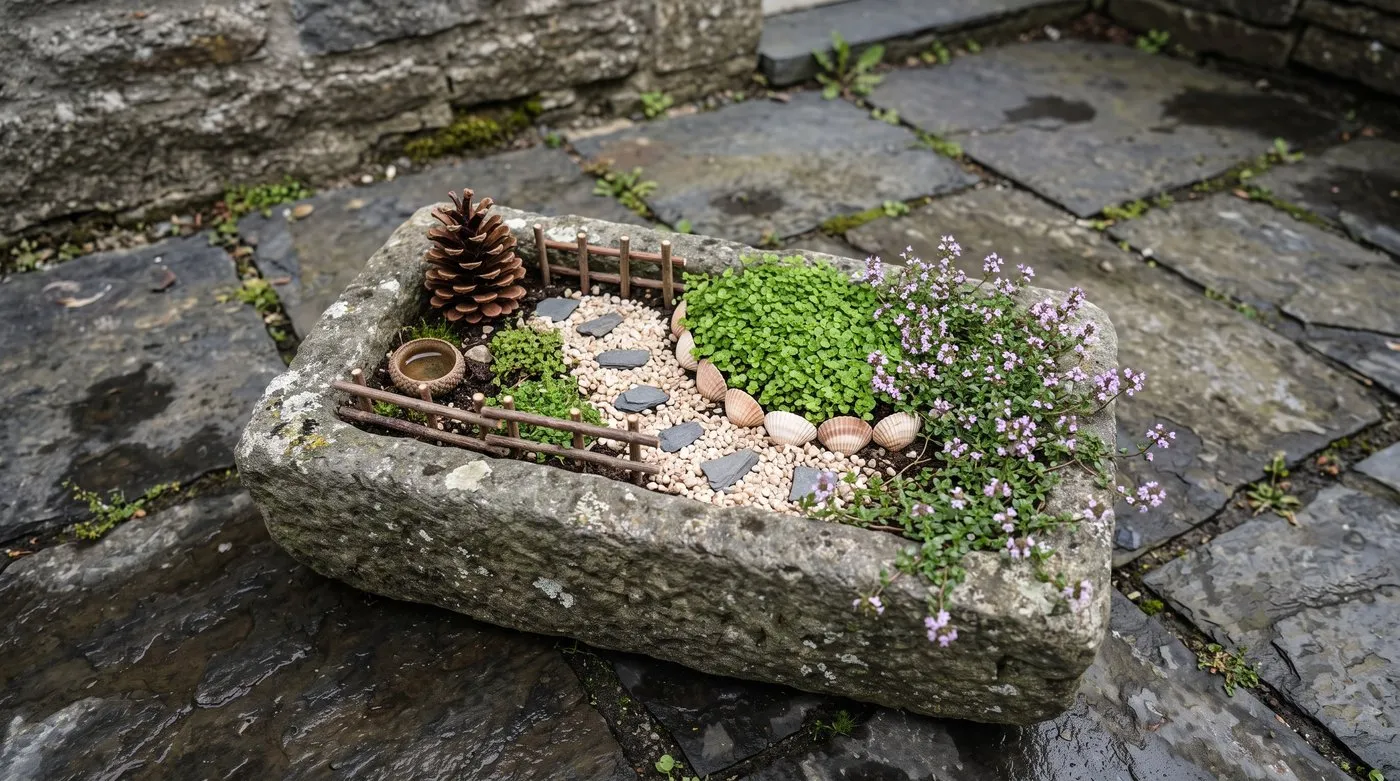
Pebbles, slate, twigs, shells and pine cones cost nothing and survive the weather better than plastic.
- Pebbles, shells and small pieces of slate for stepping stones
- Pine cones and twigs for trees and fences
- Acorn cups as tiny bird baths
- A small plastic mirror for a pond
- A little wooden door or fence, which will weather over a year or two
- Battery-powered fairy lights for evenings
Safety: small pieces are a choking risk for toddlers. If you have very young children, use bigger features, and keep the fairy garden where you can see it.
How do you look after a fairy garden through the year?
A little care each season keeps it tidy. Without it, the creeping plants soon swallow the paths.

A spring tidy keeps the paths clear. Trim back anything that has crept over them and top up the compost.
| Season | What to do |
|---|---|
| Spring (March to May) | Top up compost, divide or trim plants that have spread, replace any that died over winter |
| Summer (June to August) | Water when the top 1cm is dry, which may be daily in hot spells. Trim thyme after it flowers |
| Autumn (September to November) | Pick off fallen leaves. Water less. Move the container near a house wall before hard frosts |
| Winter (December to February) | Water only if the compost is dry. Raise the container on feet so it doesn’t sit in water |
Most of the plants above are hardy. Sedum and thyme hate sitting wet more than they mind the cold, so good drainage is what gets them through winter.
Common fairy garden mistakes
Using plants that grow too big. A “dwarf” plant can still reach 30cm. Check the label and pick ones that stay under 15cm.
Mixing sun and shade lovers. Thyme wants sun and ferns want shade. Pick plants that suit the spot the container will live in.
Too many accessories. A dozen figures crowds out the plants. Pick three or four favourites.
Letting it dry out. Shallow containers dry fast in summer. Check them every day in hot weather.
Can you make a fairy garden with children?
Yes, it’s one of the best garden projects for children. Everything is small enough for little hands, and the creative side keeps them interested for longer than ordinary planting.
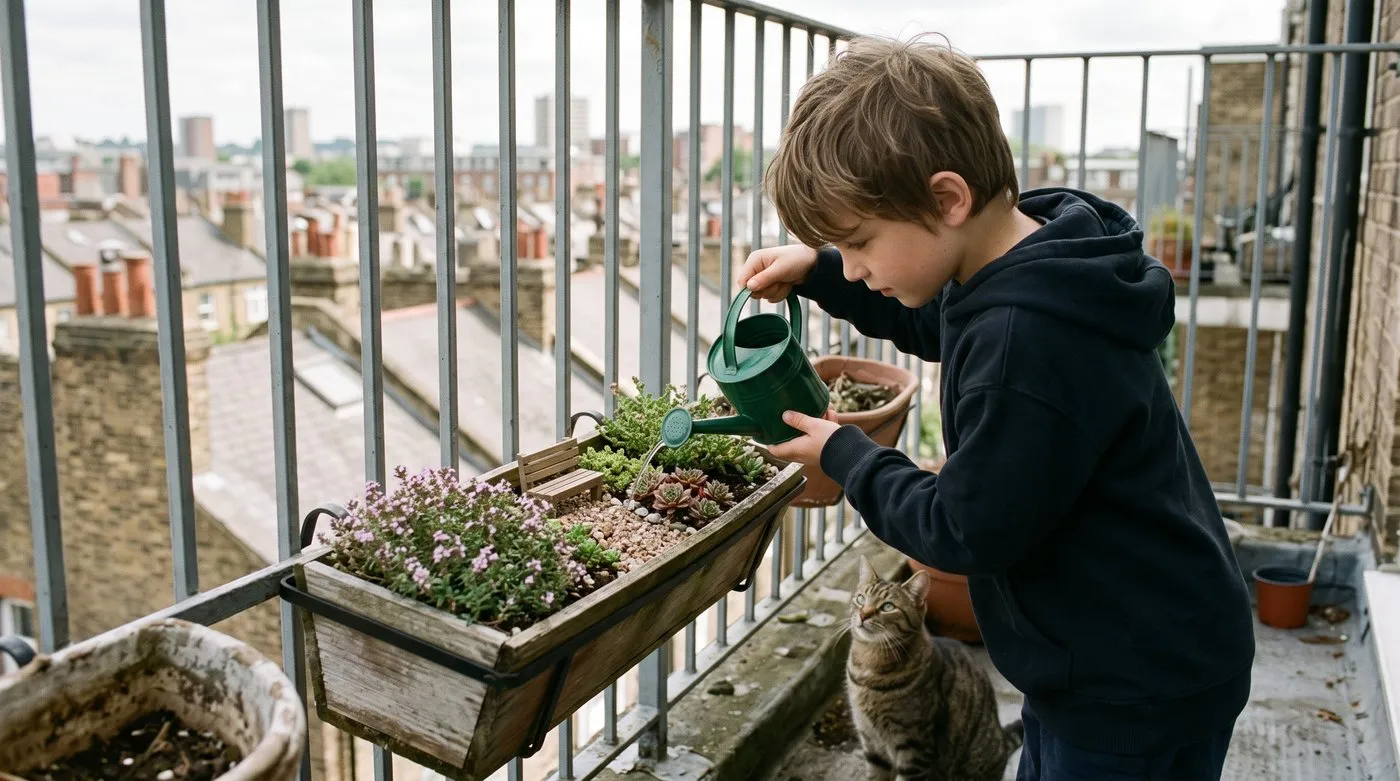
Older children can take charge of the watering. A small can with a fine rose won’t wash the paths away.
Four to six year olds can plant, lay paths and place accessories with a little help. Seven to ten year olds can plan the layout, choose the plants and take charge of watering. Our gardening projects for kids have more ideas once the fairy garden is finished, and our children’s garden design ideas help you plan a whole family-friendly space.
For a bedroom version, a terrarium works well with indoor plants such as Fittonia and Selaginella. If the mirror pond goes down well, a real container pond makes a great next project. Browse more ideas on our garden design hub.
Frequently asked questions
What plants are best for a fairy garden?
Mind-your-own-business, creeping thyme and sedum are the easiest choices. They stay low and spread to fill gaps. Add dwarf mondo grass or maidenhair spleenwort for height. Avoid ordinary mint, which swamps a small scene.
How do you make a fairy garden step by step?
Pick a container, fill it, plant, then add paths and accessories. Use a container at least 30cm wide with drainage holes. Fill it with three parts compost to one part grit, plant the tallest plants first, then add groundcover, a pebble path and a few small features.
What is the best container for a fairy garden?
A wide, shallow pot or trough at least 30cm across. A broken terracotta pot gives you ready-made terraces. Stone troughs, old sinks and hollow tree stumps also work. Whatever you choose, it needs drainage holes.
How long does a fairy garden last?
Usually two or three years before it needs replanting. The creeping plants slowly take over and need trimming or dividing. Wooden accessories rot outdoors, while stone and resin ones last much longer. Refresh the compost each spring.
Can you keep a fairy garden indoors?
Yes, but use houseplants instead of outdoor plants. Fittonia, small ferns and Selaginella suit an indoor fairy garden in bright light out of direct sun. Thyme and sedum need full sun and fresh air, so they struggle indoors.
Do fairy gardens need full sun?
No, part shade suits most fairy gardens best. Morning sun and afternoon shade stop the shallow compost drying out. Thyme and sedum like sun, while ferns and mind-your-own-business prefer shade.
How often should you water a fairy garden?
Water whenever the top 1cm of compost feels dry. In a hot spell that can be every day, while in winter it may need nothing for weeks. Use a small can with a fine rose so you don’t wash the paths away.
Our team produces practical UK gardening guidance from source research, contributor records and established horticultural practice. Editorial standards are overseen by Matt W.