Key takeaways
- Draw the layout on paper before you spend anything
- Spend on structure that lasts, such as paths, edges, soil and one good tree
- Fill borders with divisions, seed-grown plants, cuttings and swaps
- Buy perennials in small 9cm pots; they soon catch up with bigger ones
- A cheap surface on a good base beats an expensive one laid badly
- Stage the work over two or three seasons so nothing is rushed
The secret to designing a garden on a budget is simple: spend on the structure that lasts, and get the plants cheap or free. Paths, edges, soil and one good tree make a garden look designed. Plants can be grown, divided, swapped and added over time.
This guide is about the planning side. It covers the layout, where your money matters most and how to spread the work over a few seasons. For example shopping lists at different price points, see our £500 garden makeover guide.
Why should you plan the layout before buying anything?
Because a clear plan stops you wasting money on things that don’t fit. Most budget gardens go wrong at the garden centre, with a trolley of plants and no idea where they’ll go.
Start with paper and a pencil, or a photo of the garden printed out:
- Measure the plot and draw it roughly to scale.
- Mark what stays, such as trees, a shed, a good fence or the washing line.
- Note the sun and shade at different times of day. Our guide to garden aspect shows how to work out which way your garden faces.
- Draw the paths first, using the routes you actually walk, such as back door to shed or bins.
- Add the spaces: a place to sit, a lawn or gravel area, and the borders.
- Pick one focal point, like a tree, bench or large pot, where the eye lands.
Simple, bold shapes look more designed than lots of fussy curves. They’re cheaper to build too.
Why does structure come before plants?
Structure is the permanent bones of the garden: paths, edges, levels, boundaries and trees. It’s what makes a plot look finished, and it’s the hardest part to change later. So it earns the money.
Plants are the opposite. They’re cheap to grow, easy to move and can be added bit by bit. A garden with strong bones and sparse planting looks better than one with weak bones and packed borders.
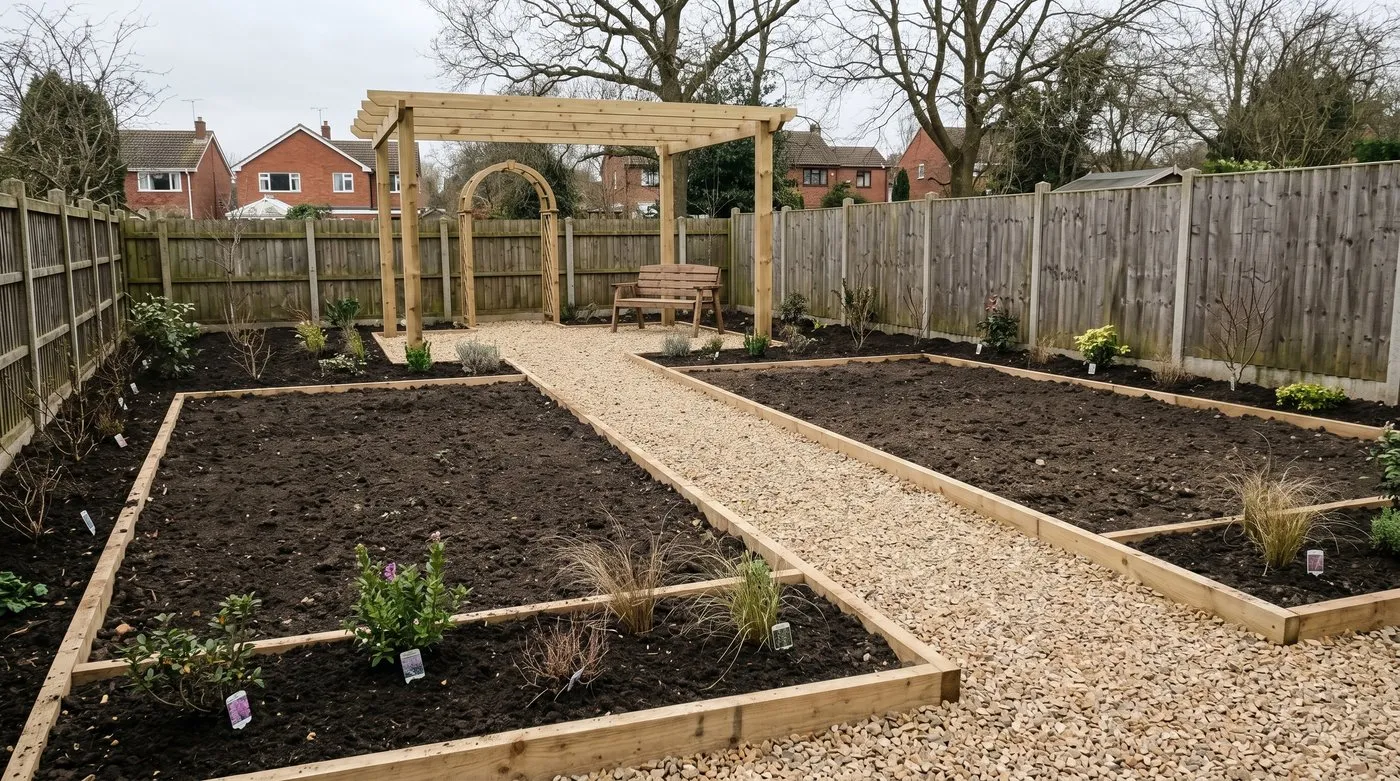
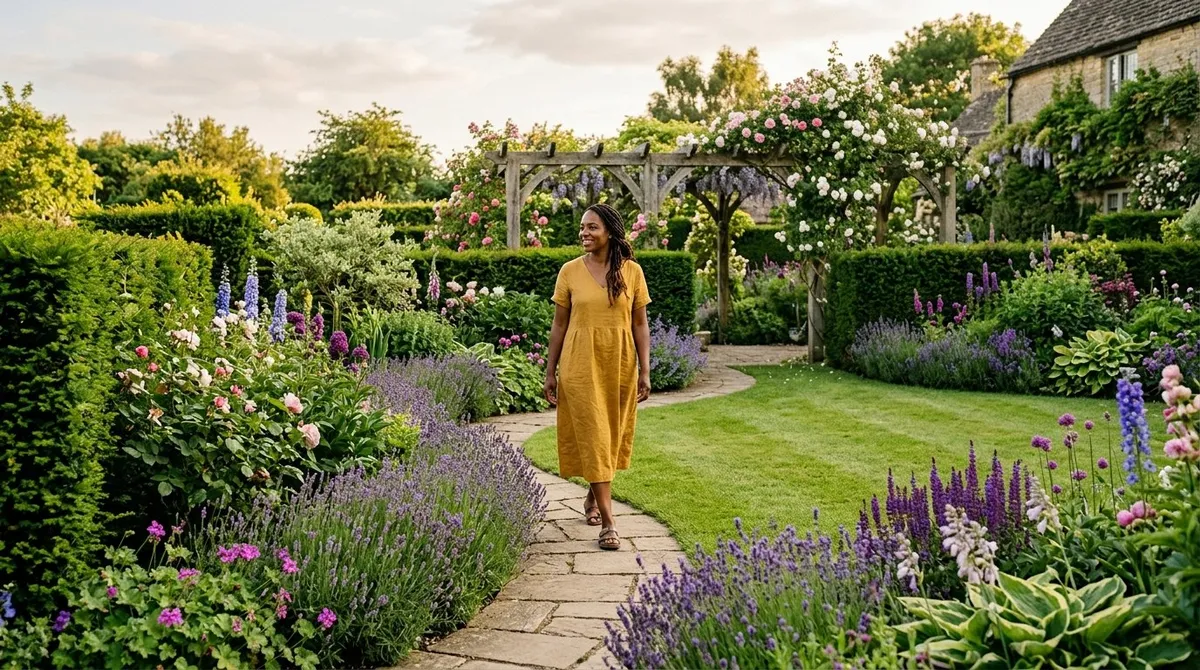
Structure first. A clear path, crisp edges and a simple pergola make this plot look designed before the borders are even filled.
Where should you spend and where should you save?
Spend on what lasts and sets the design. Save on what grows, fades or can be swapped easily.
| Spend here | Why | Save here | How |
|---|---|---|---|
| Path base and edging | Hard to redo, holds the shape | Border plants | Divide, sow, take cuttings |
| Soil improvement | Every plant does better | Pots and containers | Reuse old pots, tins and crates |
| One focal tree | Anchors the garden for years | Decoration | Make it, find it or skip it |
| A good tool or two | Lasts for years | Furniture | Second-hand or reclaimed |
For a focal tree, choose one that earns its space in several seasons. Amelanchier, crab apples and rowan suit small gardens. Our guide to the best trees for small gardens has more options.
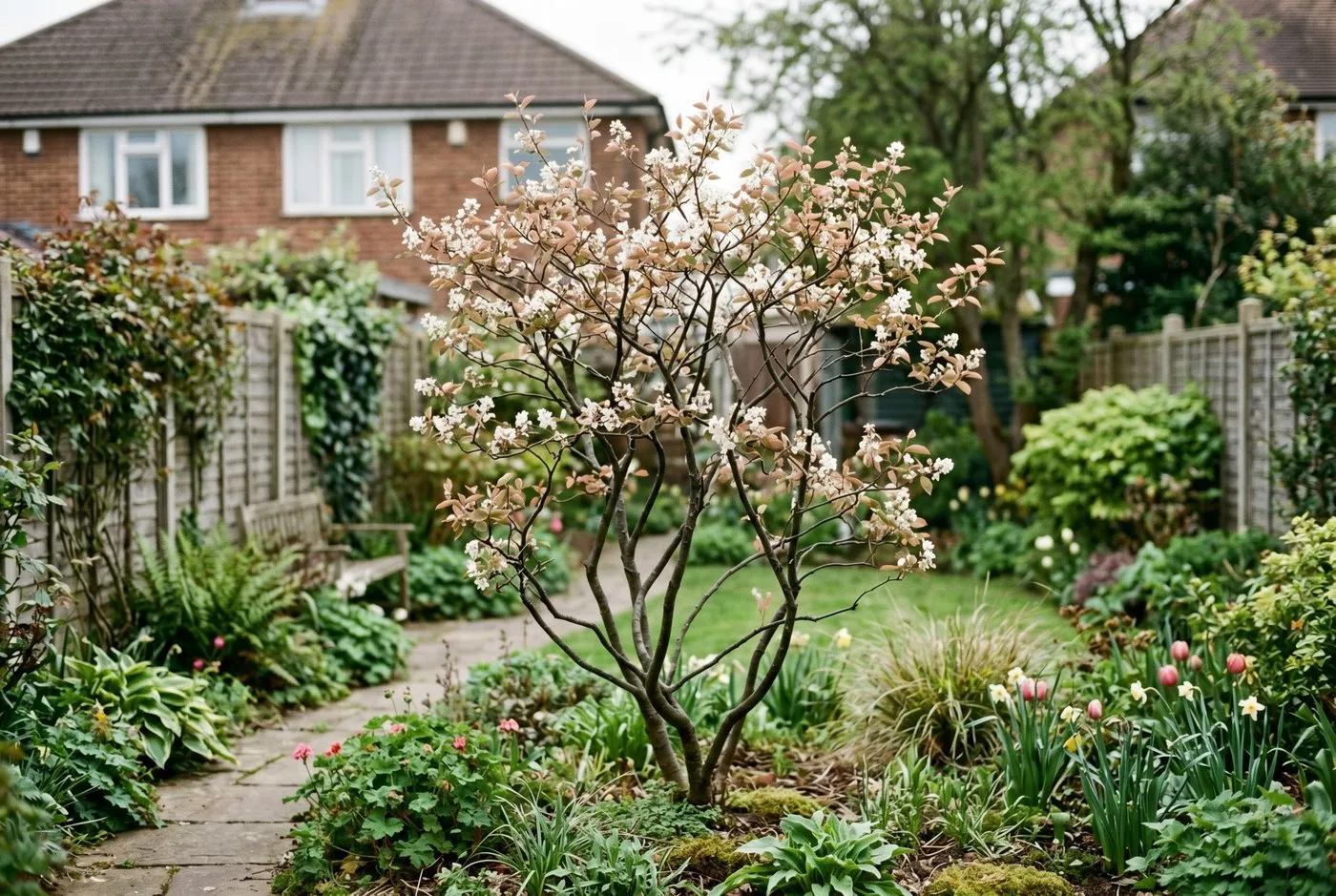
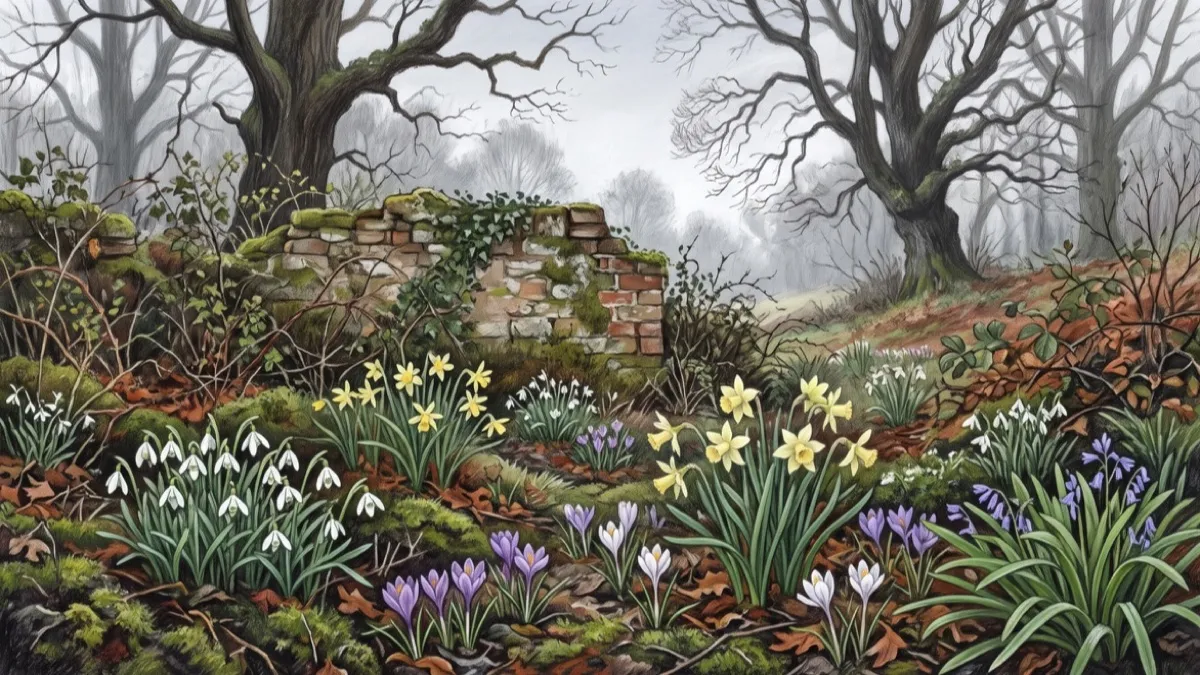
One good tree, like this Amelanchier, gives the whole garden a focal point and looks good for years.
How do you get plants for almost nothing?
Grow them yourself. Filling a border with big pots from the garden centre adds up fast. The same border filled with divisions, seedlings and cuttings costs very little.
Divide perennials
Many clump-forming perennials, such as hardy geraniums, hostas, daylilies and many grasses, can be lifted and split into several pieces. Each piece grows into a new plant. Do it in autumn or early spring. Ask friends and neighbours if they have a clump that needs splitting.
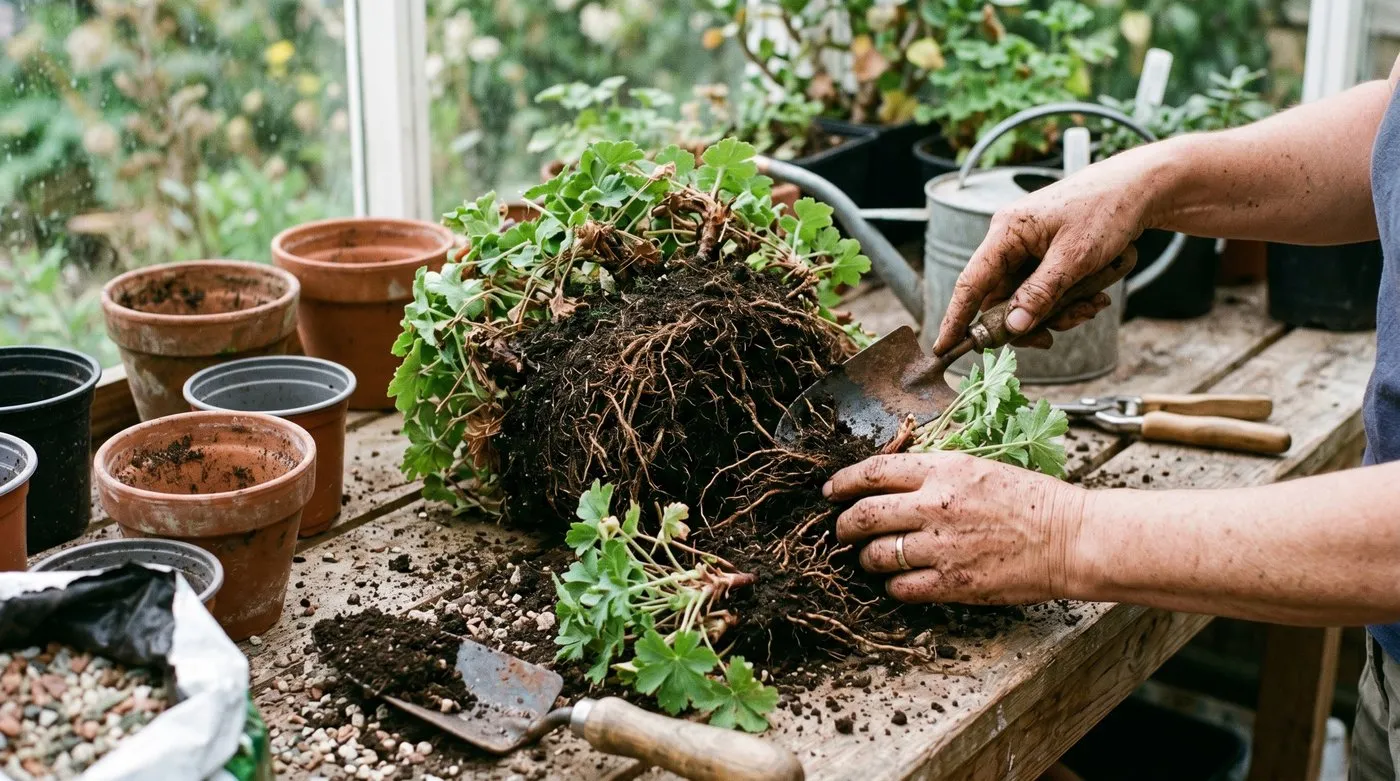
Split one big clump into several pieces and you’ve filled a stretch of border for free.
Sow seed
A packet of hardy annuals, such as cosmos, calendula or nigella, fills gaps all summer. Sow from March to May. Many self-seed, so they come back for free. Our list of the easiest flowers to grow from seed is a good place to start.
Take cuttings
Lavender, rosemary, salvias and penstemons root well from cuttings taken in summer. Shrubs like dogwood and willow root from hardwood cuttings in winter. Our guide to plant propagation by cuttings, division and layering walks you through each method.
Swap and share
Gardeners love giving plants away. Look out for local plant swaps, allotment sites and neighbours with surplus seedlings and divisions.
Gardener’s tip: When you do buy, choose perennials in small 9cm pots. They cost much less than big pots and usually catch up within a season or two. Spend the difference on improving the soil.
How do you make cheap hard surfaces look good?
Put a proper base under a cheap surface. A well-made base under gravel or reclaimed brick lasts for years. Cheap slabs laid on a thin bed of sand soon sink, rock and crack.
Gravel on a firm, compacted base with a weed membrane is one of the cheapest lasting surfaces. Edge it with timber or brick to keep it in place. Reclaimed bricks and slabs from salvage yards, skips (ask first) or online listings make paths and seating areas full of character.
For simple projects using old timber, crates and pots, see our recycled garden projects.
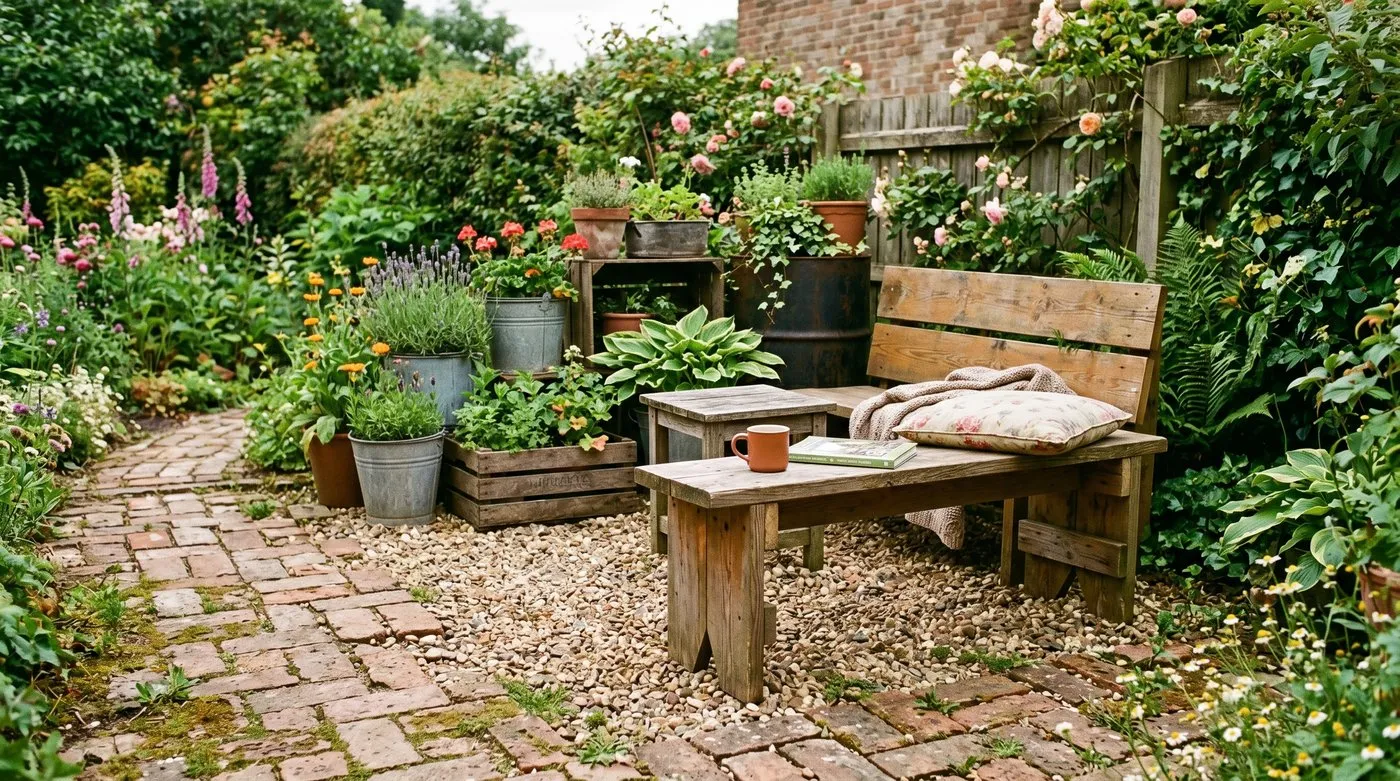
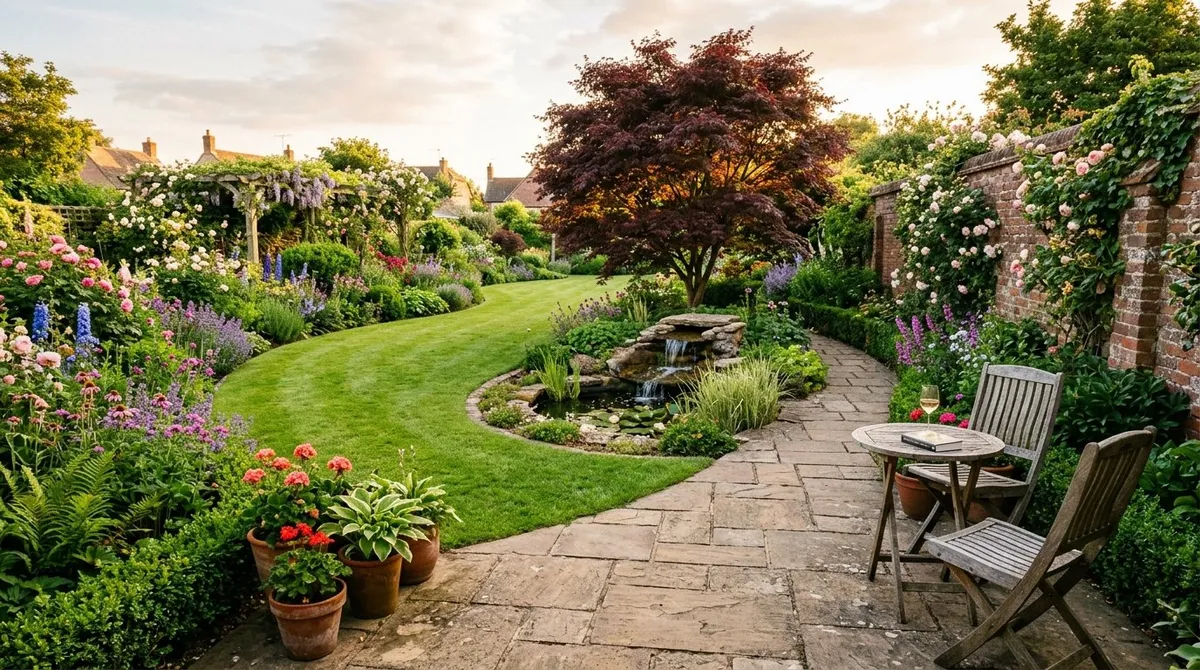
Reclaimed brick, gravel and a few planted buckets make a cosy seating area for far less than new paving.
How do you stage the work over several seasons?
Split the project into stages and finish each one well. Trying to do it all at once usually means buying full-price plants in a hurry to fill space.
- Year one: structure. Lay paths, set edges, improve the soil and plant the focal tree. Start seeds and cuttings for next year.
- Year two: main planting. Fill the borders with your divisions, seedlings and cuttings. Buy only what you can’t grow.
- Year three: finishing touches. Add pots, furniture and any final plants. By now you’re filling gaps, not starting from scratch.
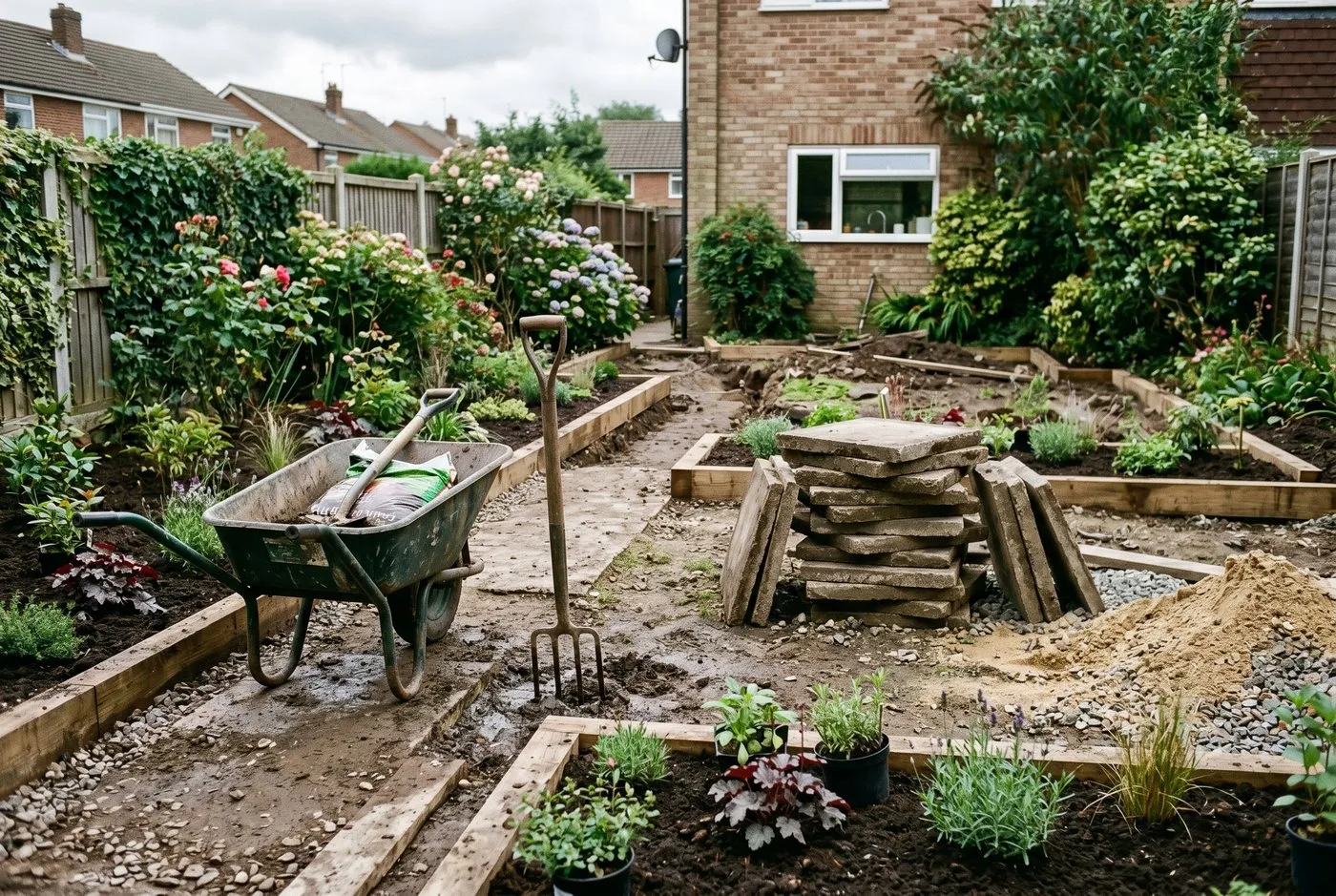
Finish the structure and one area properly before moving on. Half-done projects cost more in the end.
Improve the soil as you go. Homemade compost and leaf mould are free, and they make cheap plants grow like expensive ones. Our guide on how to make compost shows how to start a heap.
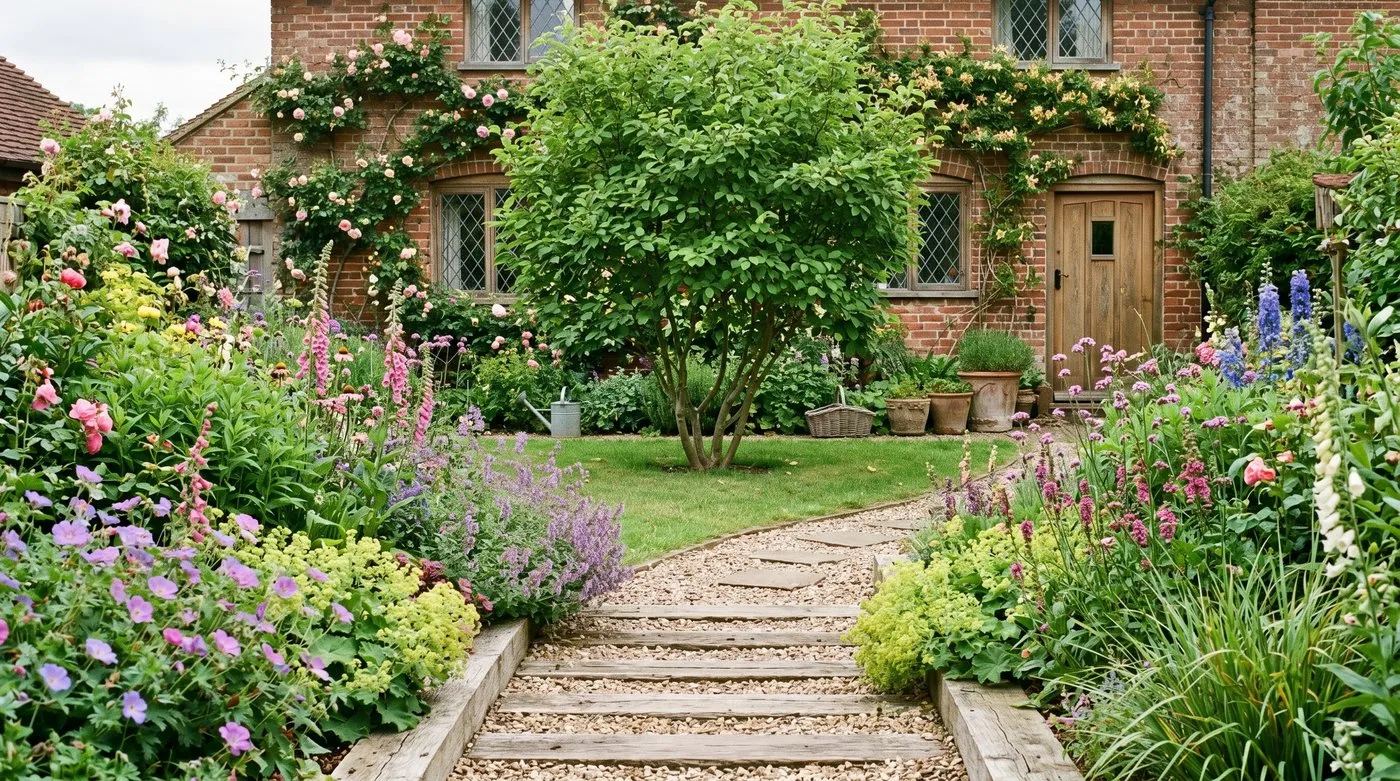
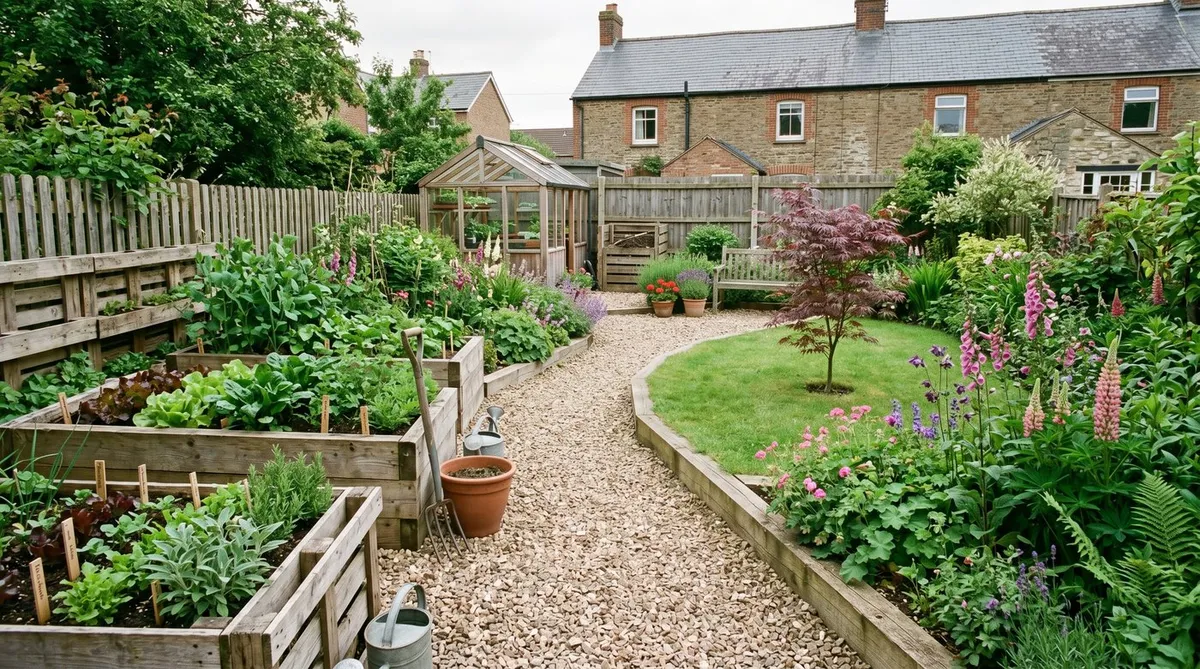
A couple of seasons on, home-grown perennials fill the borders around a simple path and one focal tree.
Common budget garden mistakes
Spreading the money too thin. A little spent on everything leaves nothing looking finished. Put the money into structure and one focal point.
Buying plants before the design. Impulse buys rarely fit the plan and often end up in the wrong spot. Plan first, grow to suit and buy last.
Cheap surface, no base. Slabs on sand sink and crack. Spend on the base and save on the surface.
Dotting small plants about. Single plants scattered across bare soil look sparse. Plant in bold groups of three or five instead.
Skipping the soil. Spending on plants while ignoring poor soil wastes money. Dig in compost or leaf mould first.
Frequently asked questions
How can I design a garden cheaply?
Spend on permanent structure and save on everything else. Draw the layout first, then lay paths and edges. Fill the borders with plants grown from seed, division and cuttings. Use reclaimed materials where you can and spread the work over several seasons.
What is the cheapest way to transform a garden?
Do the work yourself and grow your own plants. Labour and bought plants are usually the biggest costs. Gravel on a firm base is one of the cheapest lasting surfaces. A crisp lawn edge and a tidy path make a big difference for very little money.
Where should I spend money in a budget garden?
Spend on the things that last and are hard to change later. That means a well-laid path, firm edging, good soil and one quality tree or focal point. Save on plants, pots and decoration, which are easy to get cheaply or free.
How do I get plants for free?
Divide perennials, take cuttings, sow seed and swap with other gardeners. Many clump-forming perennials can be split into several plants every few years. Local plant swaps, allotment sites and neighbours often have surplus plants to give away.
Is it cheaper to buy small plants or large ones?
Small plants are much cheaper and usually catch up quickly. A perennial in a 9cm pot often matches a much bigger potted plant within a season or two. The exception is a focal tree, where buying a decent size can be worth it.
How long does a budget garden makeover take?
Plan for two to three seasons. Do the structure in year one, the main planting in year two and the finishing touches in year three. Rushing usually means buying full-price plants to fill gaps, which is the cost you’re trying to avoid.
For quick, low-cost projects to start this weekend, read our garden ideas for every budget, or browse more garden design guides.
Our team produces practical UK gardening guidance from source research, contributor records and established horticultural practice. Editorial standards are overseen by Matt W.