Key takeaways
- Monty Don is leaving Gardeners' World after the 2026 series but carrying on with other BBC work
- Longmeadow is a private garden, and no sale, closure or opening has been announced
- A BBC contribution towards two gardeners' wages is ending, so anything else is guesswork
- A four-zone review helps you keep what matters and simplify the rest
- Autumn is a good time to spot the jobs that eat up your week
Monty Don leaving Gardeners’ World has everyone asking what happens to Longmeadow next. The honest answer is that nobody knows yet. No closure, sale or abandonment has been announced. What will change is the support behind a garden kept camera-ready every week.
That’s the interesting bit for the rest of us. A lovely, mature garden hides a lot of work: mowing, edging, watering, pruning, sowing and path care. When time or help changes, the answer is a simple plan, not panic.
What has actually been announced about Longmeadow?
Monty Don will leave Gardeners’ World after the 2026 series. The BBC’s announcement says he’ll carry on with other BBC programmes. It says nothing about Longmeadow closing, being sold or being redeveloped.
Longmeadow has been the programme’s home garden since 2011. Monty and Sarah Don started it in 1991 from a neglected field. It grew into a series of separate garden rooms.
The new detail came from a public talk at the Malvern Autumn Show. The Guardian reported that the BBC helps pay two gardeners’ wages, and that this will end with the current arrangement.
He said he needs to think about how the garden could cover that cost. He didn’t announce job losses or any plan to make money from the garden. Those questions are still open.
On 8 October 2026 he filmed his final Gardeners’ World visit to Longmeadow. For the advice he leaves behind, see our round-up of Monty Don’s best gardening tips.
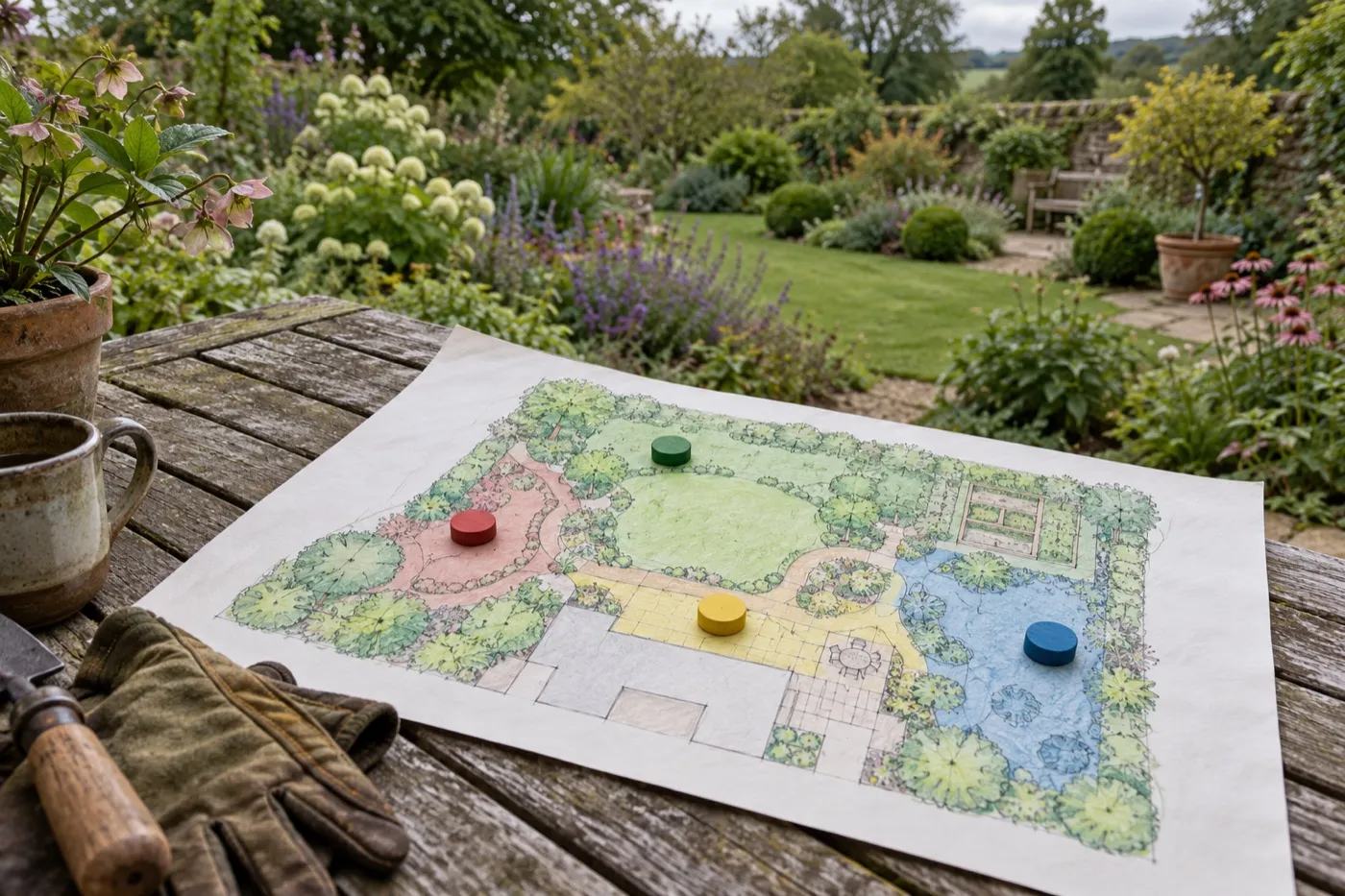 Illustrative image: splitting a garden into four zones shows what matters and what’s just background work. This is not Longmeadow.
What might change at Longmeadow?
The only safe guess is that priorities might shift. A garden can still look like itself with lighter upkeep. Big trees, hedges, paths and established shrubs don’t vanish when the cameras stop.
The busiest areas in any garden are veg beds, pots, seasonal displays and crisp edges. None of these has been earmarked for change at Longmeadow. They just involve more repeat jobs than mature shrubs do.
Television adds its own work too. Jobs get filmed when they suit viewers, not always when the garden needs them. Paths and views have to stay clear for camera crews. Without that timetable, some jobs can slip back to their natural season.
Longmeadow is also somebody’s home. Being on telly doesn’t make it a public garden.
Please note: Longmeadow isn’t a visitor attraction. Don’t look for the address, turn up uninvited or share how to get there.
Use a four-zone garden maintenance audit
Sorting your garden into four zones protects its character before you cut any work. It stops you simplifying everything equally. Some areas are worth the effort because they make the garden what it is. Others can change without anyone noticing.
| Zone | What it is | Keep doing | Simplify first |
|---|---|---|---|
| Signature | The views and planting that make the garden special | Key pruning, care of star plants, clear paths | Fussy edging, short-lived fillers, extra pots |
| Productive | Veg, fruit, herbs and cut flowers | Crops you actually eat, soil care, rotation | Huge sowing lists, empty beds, thirsty pots |
| Support | Compost, propagation, storage and access | Safe paths, useful propagation, sound sheds | Duplicate kit, awkward routes, scattered stuff |
| Lower-input | Lawns, rough grass, hedges and outer edges | Safety, access and the main seasonal cuts | Weekly mowing, needless tidying, constant shaping |
Start with a simple sketch of the garden. Note every job you do over a normal month. Don’t redesign anything yet, just watch and write.
The big idea is to protect what makes your garden yours first. If the layout itself is causing extra work, our guide to designing a garden from scratch can help.
How to review your garden in an hour
An hour is plenty for a useful first look. Pick a dry day and split it into four 15-minute chunks. Take paper, a pencil and your phone. No gardening allowed!
First, walk the main routes. Note slippery bits, wobbly steps, stuck gates and anything that needs fixing soon. Safety and access come before looks.
Next, mark your favourite areas. Take a photo from each important viewpoint. Jot down the one thing each view needs to keep, such as privacy, colour or an open path.
Then list the jobs you do over and over. Mowing, edging, watering, staking, deadheading, pot care and lugging things about all count. Note how often each happens. Ten minutes three times a week adds up to more than one afternoon a year.
Finally, put each area into one of the four zones. Pick one job to stop, cut back or combine with another. Don’t rip anything out until you’ve seen the area in another season.
Handy tip: Take the same photos in winter and summer. Together they show which plants give shape all year.
Keep your plan to one page, with a second page only for plants that need special pruning or protection. A short plan actually gets used when things get busy.
Share it with anyone who helps you. Agree which zone comes first when time is short, so easy jobs don’t crowd out the important ones.
Protect your favourite areas first
Give your best areas the time they deserve. In a garden of rooms, that might be one border, a clipped entrance or the veg patch. It’s your call.
Write down why each one matters. It might be the best view from the house, a special plant collection, or simply the bit the family uses most.
Then decide the least care it needs to stay that way. A rose border needs pruning, feeding and tying in each year. It doesn’t need bare soil, constant deadheading or bedding plants round every rose.
Trim the jobs, not the garden. Keep the mature shrubs and trees and drop the fiddly tasks that add little. Our 70-30 planting rule helps balance planting with paths, seats and other practical space.
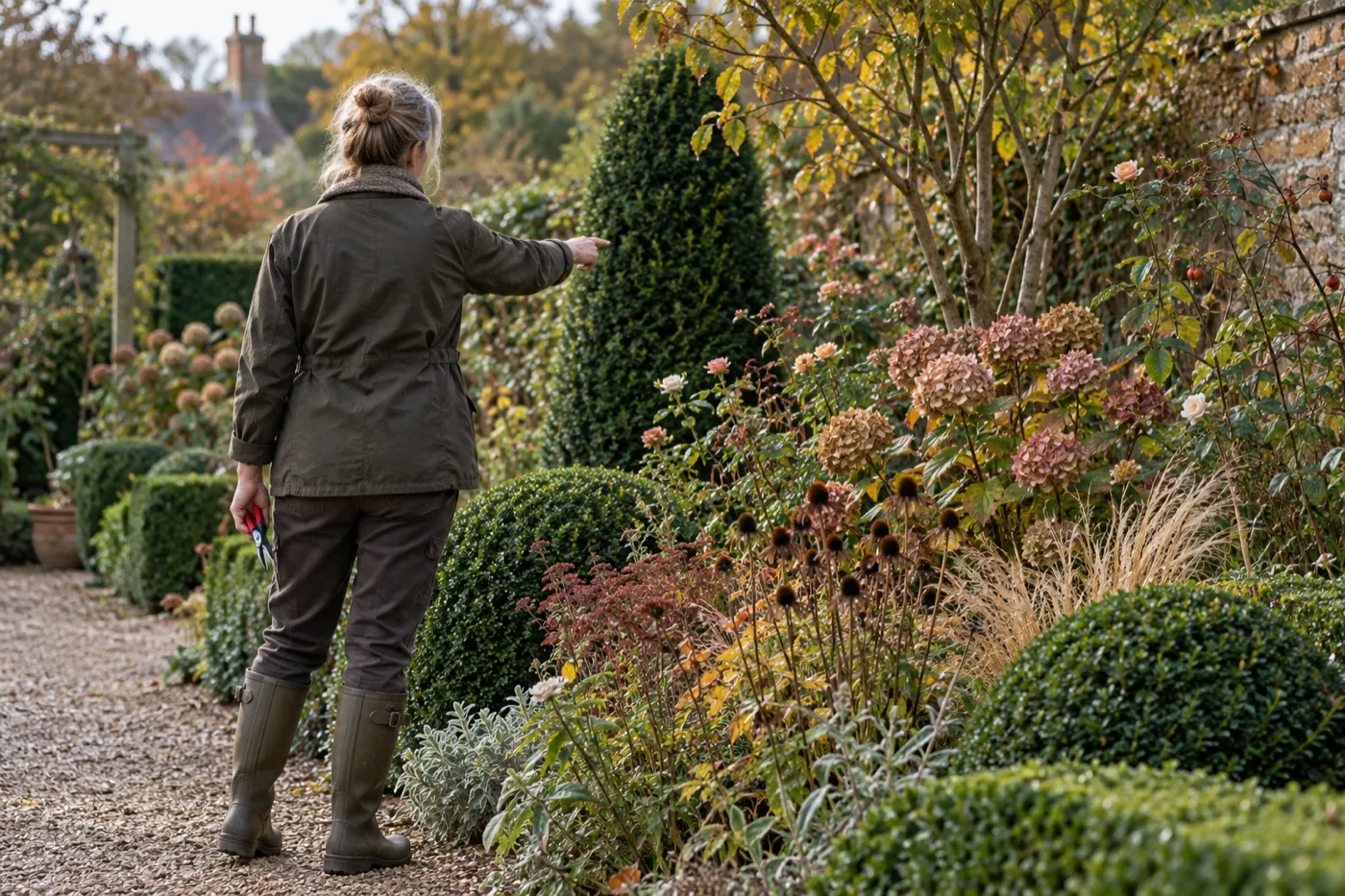 Illustrative image: keep the main shrubs and star plants, and drop the fiddly jobs. This is not Longmeadow.
Cut down mowing, edging and path work
Edges make more work than you’d think. Thin strips of lawn round beds need trimming, edging and awkward mowing. Small island beds and tight corners are just as bad.
Join small beds together where the planting already looks like one group. Only widen a border if you’ll fill it with plants. A bigger bare bed isn’t any easier.
Decide which bits of lawn you walk on or sit on, and keep those short. Mow the rest less often, or let it grow longer like a meadow. Mow a path through so it looks deliberate.
Paths should go somewhere useful and be wide enough for a barrow. A fiddly route to the compost heap wastes time every week. A good rule is to keep the busiest features, like pots and veg, near the house or shed.
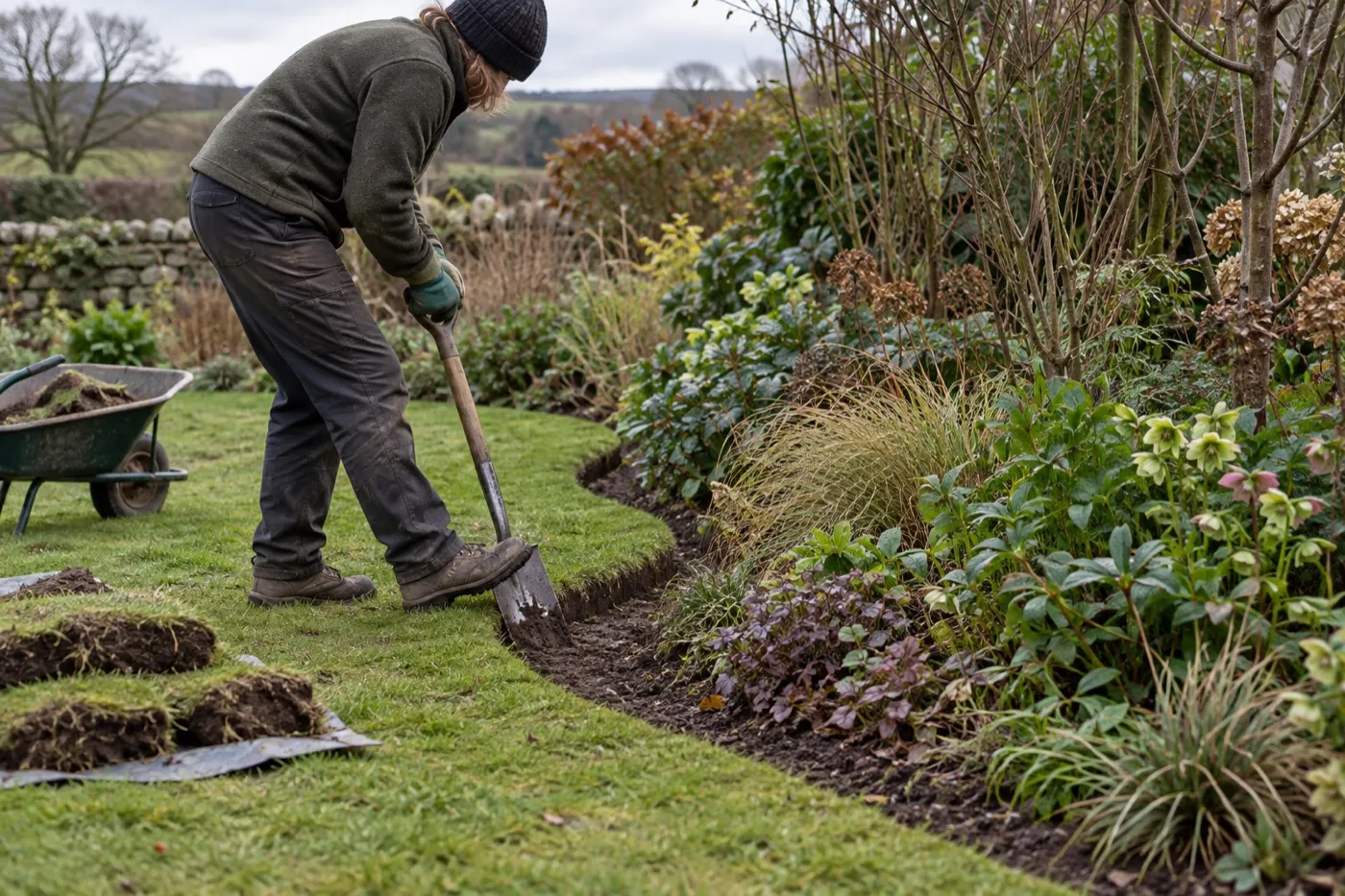 Illustrative image: tidying up awkward edges saves lots of mowing and trimming. This is not Longmeadow.
Let sturdy perennials stand through winter
You don’t need to cut everything down in autumn. Seedheads and grasses look great in winter and give birds and insects food and shelter.
Cut back anything that’s flopped over paths. Remove stems that look diseased or mushy. Leave the sturdy, upright ones. Many perennials can happily stand until spring.
The work doesn’t disappear, it just moves to spring. But you skip a rushed autumn clear-out and get months of winter shape.
Choose plants that stand up well on their own. Our guide to plants with winter seedheads has reliable picks. Avoid tall, floppy plants beside narrow paths, as every storm means another tidy-up.
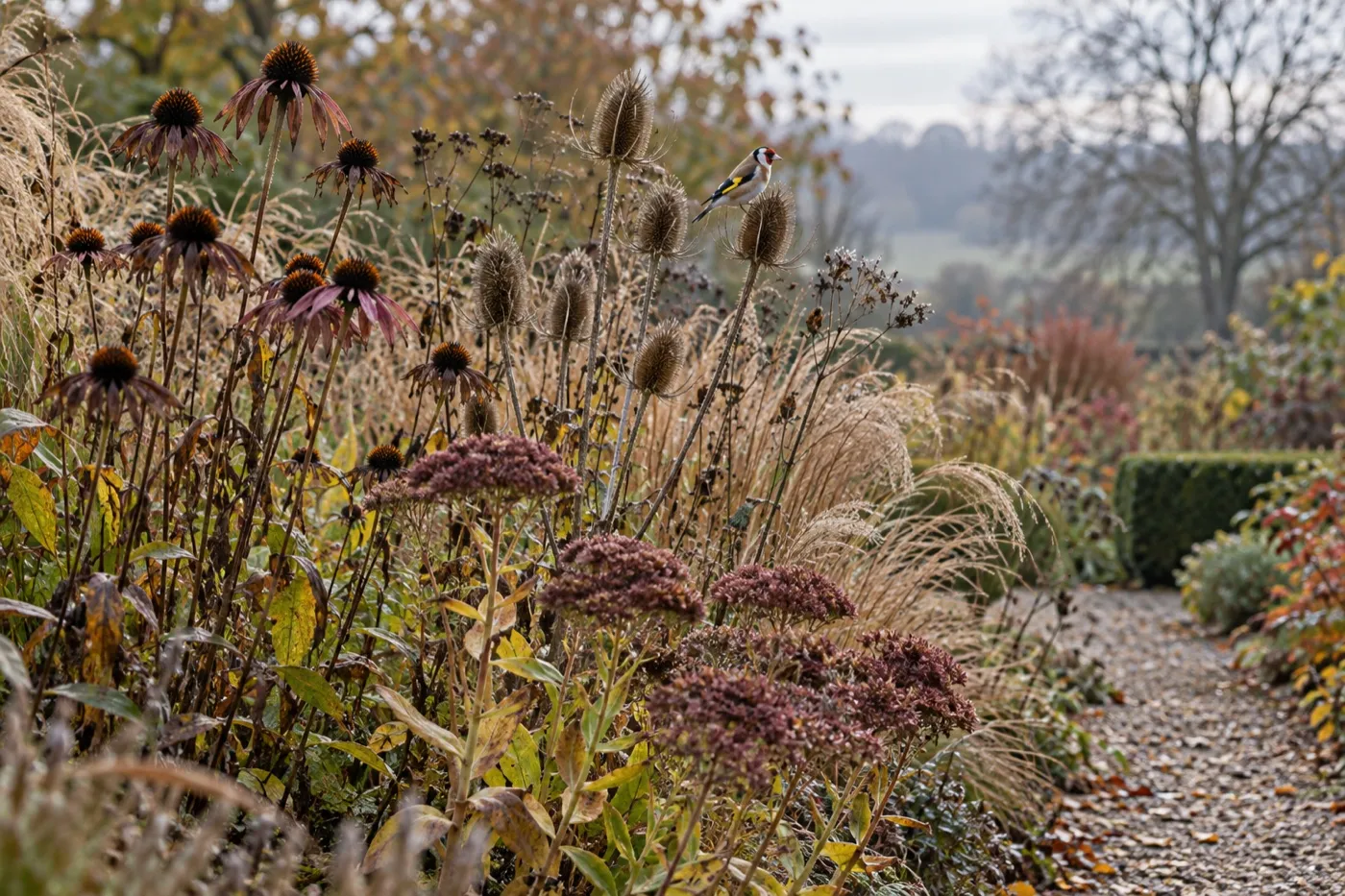 Illustrative image: leave sturdy seedheads standing and clear just the diseased or flopped stems. This is not Longmeadow.
Cover the soil instead of weeding it
Bare soil just grows more weeds. Ground cover plants, mulch and fuller planting block the light weed seeds need.
Clear perennial weeds first, then spread an organic mulch. Keep it away from woody stems and plant crowns. Top it up when it gets thin.
Ground cover plants are great under shrubs where light reaches the soil. Pick ones that suit the spot. A thug in the wrong place just gives you a new job.
The same idea works in the veg patch. Compost spread on top protects the soil between crops and means less digging. Our no-dig gardening guide explains how.
In flower beds, pick easy-care plants for how they grow and where they’ll be happy, not just for their flower colour.
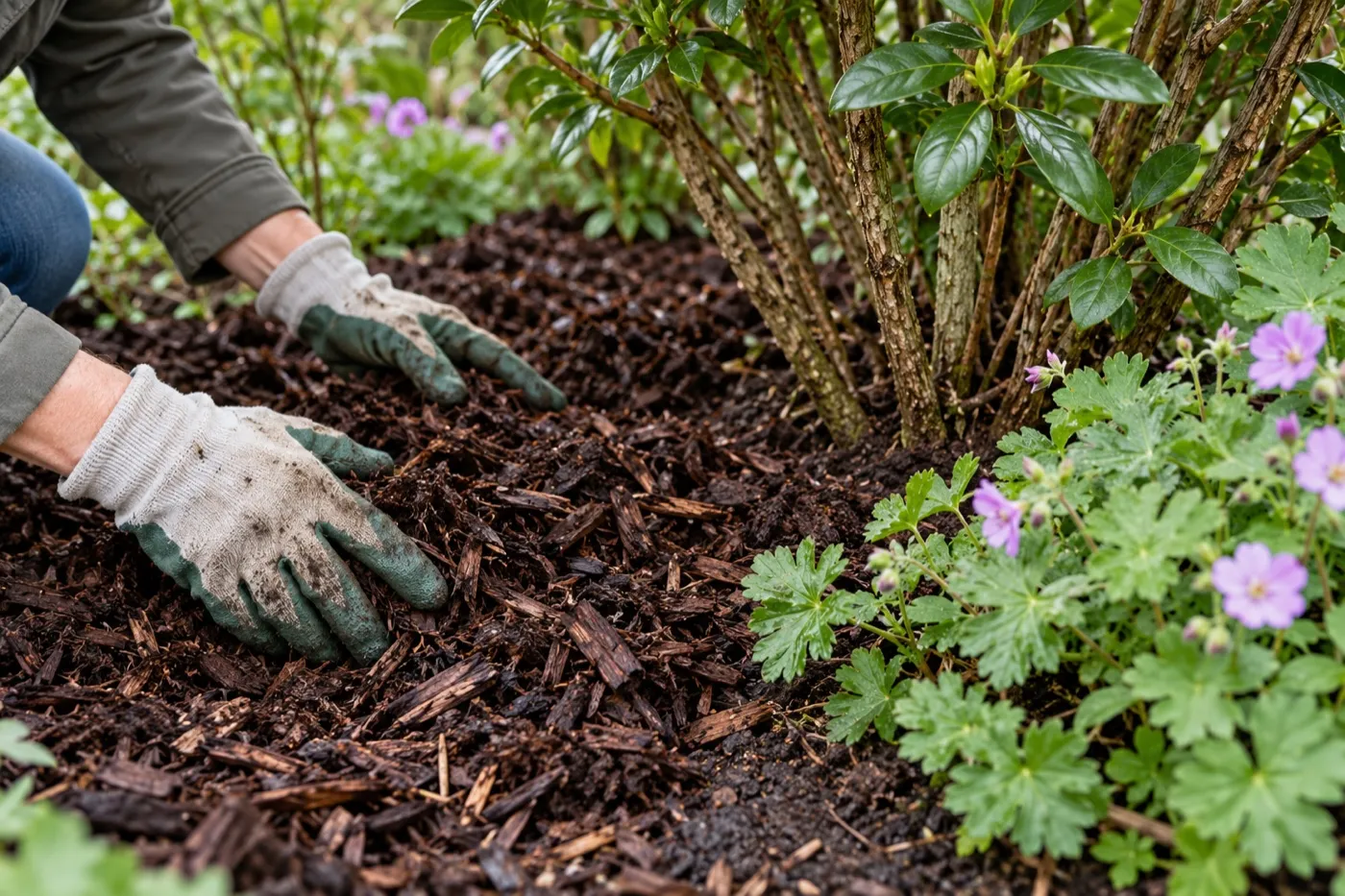 Illustrative image: mulch and ground cover mean less bare soil and fewer weeds. This is not Longmeadow.
Keep the veg patch to a size you’ll use
Grow what you actually eat. Long sowing lists mean lots of sowing, watering, thinning, picking and storing. Empty beds then mean more weeding.
List the crops you really eat or give away. Give those the best beds. Cut back on the ones you grow out of habit, especially if they often go to waste.
Perennial herbs, soft fruit and fruit trees give you food without sowing every year. They still need pruning, feeding and picking, so they’re easier, not effortless.
Keep the crops you pick most near the path. Salad, herbs and courgettes need picking often. Storage crops can go further away. Grouping thirsty plants together makes watering simpler too.
Put the compost heap on a firm path that’s easy to reach. Tucked away at the far end, every barrow trip adds work.
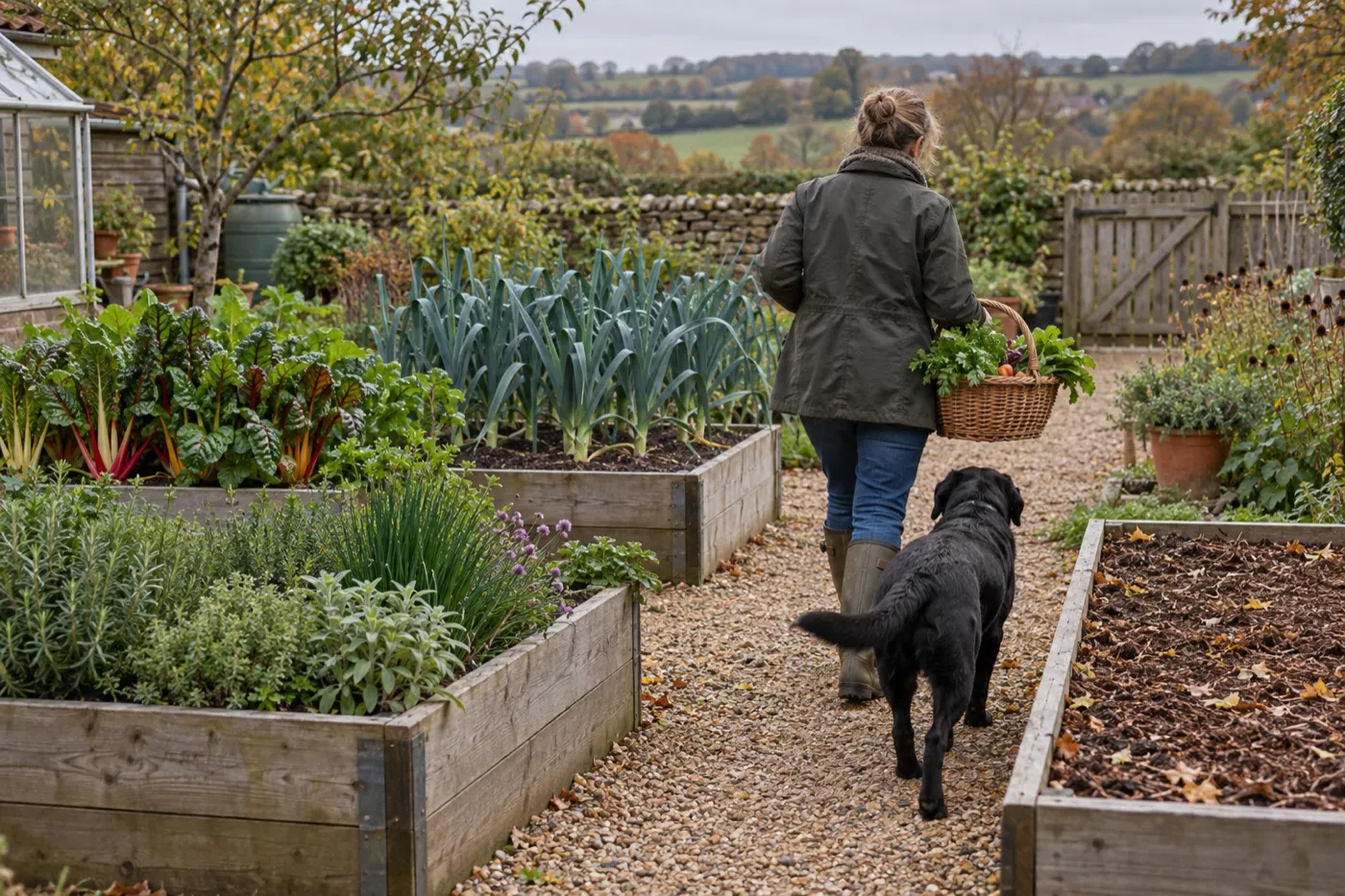 Illustrative image: give the best beds to crops you love, and sow less of the rest. This is not Longmeadow.
Make a simple seasonal calendar
A short calendar stops every job feeling urgent. Start with safety, plant health and getting about. Add the look-nice jobs afterwards.
| Season | Must-do jobs | Jobs that can wait or shrink |
|---|---|---|
| Winter | Main pruning where suitable, tool care, storm checks | Tidying sturdy seedheads |
| Spring | Clear paths, mulch, plan staking, first weeding | Filling every gap with bedding |
| Summer | Water new plants, harvest, safety checks | Deadheading the whole garden daily |
| Autumn | Planting, removing diseased growth, drainage checks | Cutting every perennial to the ground |
Let the weather overrule the calendar. Keep off soggy soil, whatever the date says. Wait until it no longer smears underfoot.
Our year-round pruning calendar has plant-by-plant timings. The autumn gardening checklist sorts the useful autumn jobs from the optional ones.
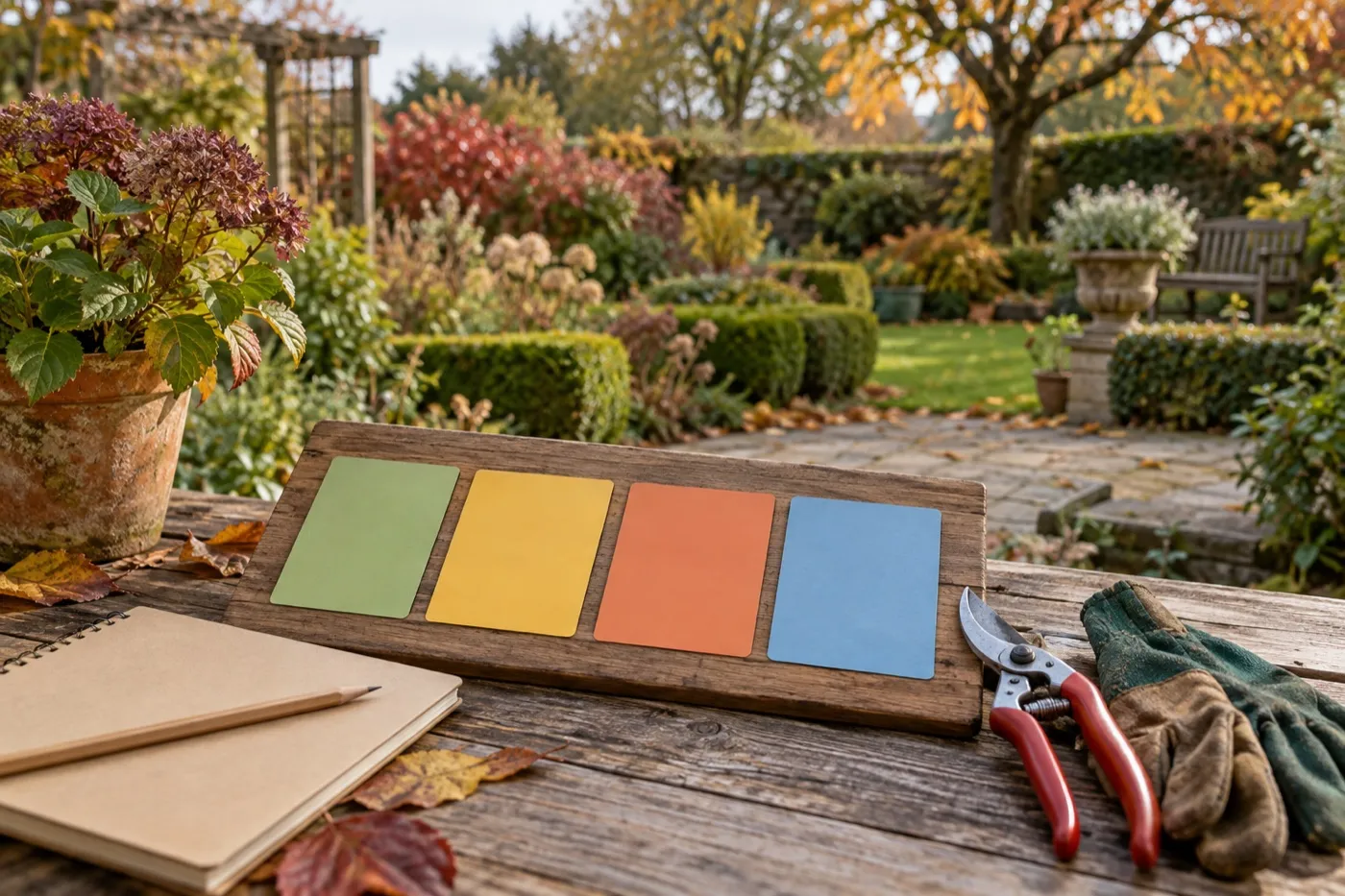 Illustrative image: a four-season plan shows the jobs that matter without making every week feel urgent. This is not Longmeadow.
Common mistakes when simplifying a mature garden
Rushing it can make more work than it saves. Some things in a mature garden only become obvious after a full season.
Removing structure before you’ve recorded it
Take photos of key views in winter and summer. Note paths, shade, wet spots and important plants before you dig anything up. A big shrub might be doing more for the garden than its flowers suggest.
Paving over every border
Paving still needs drainage, cleaning and repairs. Big hard areas can also send rainwater towards the house. Simplify the planting first, before any big building work.
Choosing fast-growing replacements
Fast growers mean lots of pruning. Check how big a plant gets. A slower shrub in the right spot is usually less work than a vigorous one you keep cutting back.
Calling neglect “letting it go wild”
Long grass and standing stems still need some care. Keep paths open, remove anything dangerous, and stop invasive plants before they seed. A wildlife corner can have a log pile and still be easy to walk through. Our garden design guides have more planning ideas.
What the Longmeadow story teaches the rest of us
Beautiful gardens hide a lot of hard work. Weekly telly showed some of it, even if we never saw every hour.
What happens next at Longmeadow hasn’t been announced. The team might stay, the money might come from elsewhere, or some areas might be run differently. Anything more is guesswork.
The lesson for your own garden is clearer. You don’t need to put the same effort in everywhere. Look after the bits that make the garden yours. Keep the veg patch to a size you use. Make paths and work areas easy. Let some outer corners go a bit more natural.
That’s not giving up. It’s gardening smarter.
Ready to start? Our low-maintenance planting guide helps you cut the work and keep the charm.
Frequently asked questions
Will Longmeadow close after Monty Don leaves Gardeners’ World?
No closure has been announced. Longmeadow is a private garden, and Monty Don hasn’t announced a sale or public opening. He has said he needs to think about money and staffing once a BBC wage contribution ends.
Who owns Longmeadow?
It’s Monty and Sarah Don’s private garden. They started making it from a neglected field in 1991. Gardeners’ World has filmed there since 2011, but the garden doesn’t belong to the BBC.
Will Longmeadow open to the public?
No, there are no plans to open it. Monty Don has explained that it’s a private home garden and parking would be difficult. Please don’t travel there or try to get in.
How can I reduce work in a large garden?
Look after the bits you love most and simplify the rest. Note how much time goes on mowing, edging, watering, staking, bedding and pots. Swap the least rewarding jobs for shrubs, ground cover, mulch or a wilder patch.
Should I cut every perennial border back in autumn?
No, just cut back what needs it. Clear diseased or flopped growth, but leave sturdy stems and seedheads for winter shape and for wildlife. Do the main tidy in spring.
Why does a mature garden need a maintenance plan?
It protects the best bits when time or help runs short. A plan separates the jobs that really matter from the ones that are just for show. Then any cutbacks are your choice, not a panic.
How often should I review a garden maintenance plan?
Once a season for the first year. Note which jobs took longer than expected and which areas nobody used. After that, a quick look each autumn is usually enough.
Our team produces practical UK gardening guidance from source research, contributor records and established horticultural practice. Editorial standards are overseen by Matt W.