Key takeaways
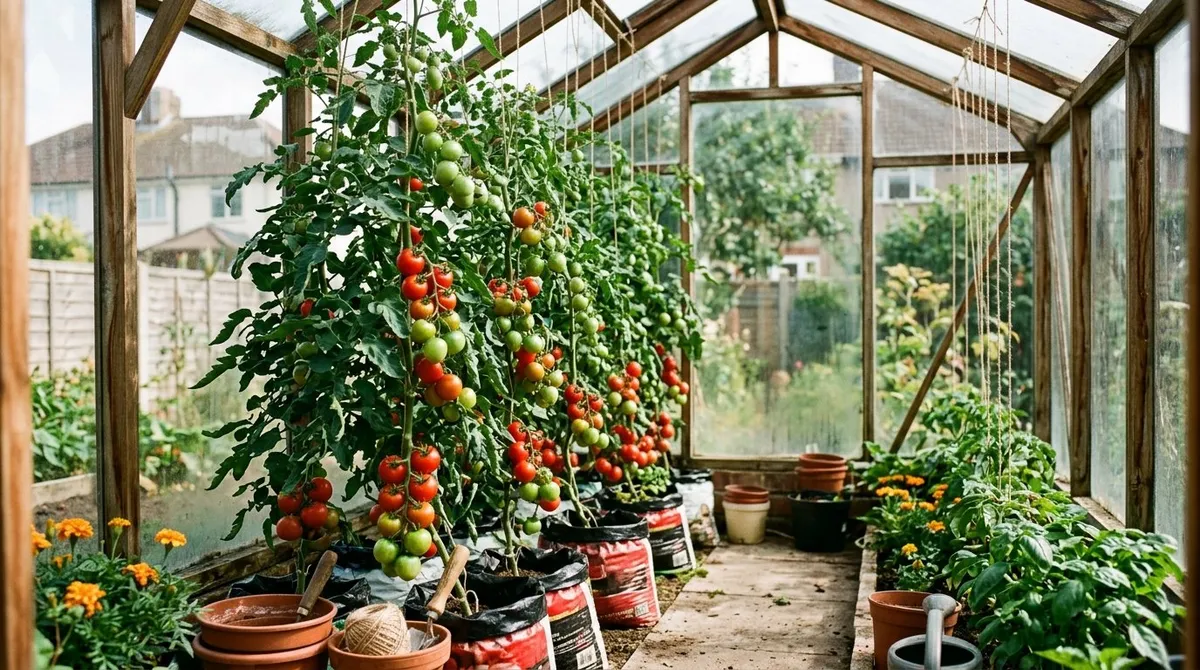
- Loofah needs a long, warm season, so grow it in a greenhouse or polytunnel
- Sow in February or March in a heated propagator, after soaking the seed
- Hand pollinate female flowers, which have a tiny fruit behind the petals
- Train the vines up strong canes or netting, as they grow tall and heavy
- Pick when the skin turns brown and the fruit feels light, before the first frost
Yes, you can grow your own loofah sponges in the UK. That scratchy sponge in the bathroom is the dried inside of a gourd, a close relative of the cucumber. Give it a long, warm season under cover and a little help with pollination, and you’ll have home-grown sponges by autumn.
This guide covers loofah from seed to finished sponge. It’s a fun crop for anyone with a greenhouse or polytunnel and a bit of patience.
Which loofah should you grow?
For sponges, grow Luffa aegyptiaca, the smooth loofah. You’ll also see it sold as Luffa cylindrica, which is an older name for the same plant.
Luffa acutangula, the ridged loofah, is mostly grown to eat young, like a courgette. Its dried fibre is coarser and less useful as a sponge. Both types can be eaten when small and tender.
When and how to sow loofah seeds
Sow in February or March. Loofah needs a long season, so an early start gives the fruit time to ripen.
- Soak the seeds in warm water overnight. The hard seed coat softens and germination is quicker.
- Sow one seed per small pot, about 1cm deep, in peat-free seed compost.
- Keep at 20-25°C in a heated propagator. Seed is slow and patchy in cooler conditions.
- Give seedlings bright light once they’re up, on a sunny windowsill or under a grow light.
Sow a few more than you need, as not every seed comes up.

Loofah seed needs warmth to come up. A heated propagator on a bright windowsill does the job.
Potting on and planting out
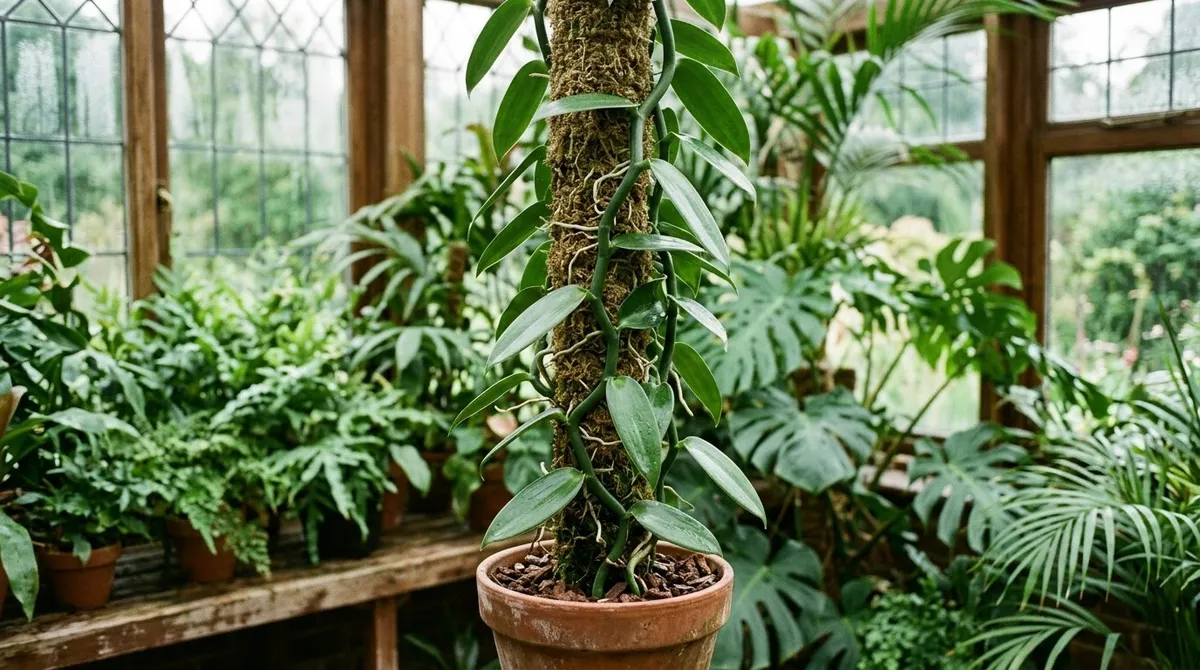
Pot seedlings on into bigger pots as the roots fill each pot. Loofah grows fast and dislikes being cramped. Keep the young plants somewhere warm and bright.
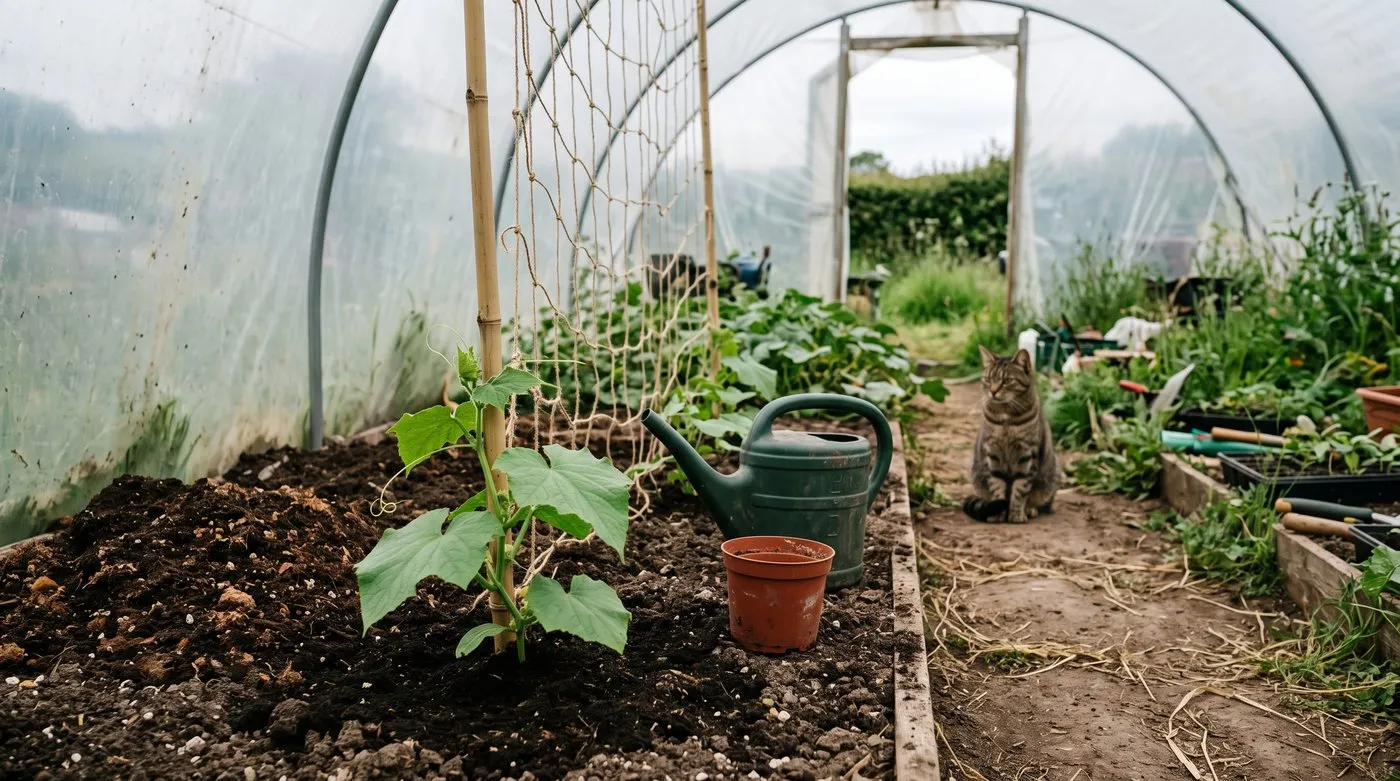
Plant out under cover once the nights stay mild, and put the supports in at the same time.
Plant into a greenhouse border, polytunnel bed or a big container in late May, once nights stay mild. In the north and Scotland, wait until early June. Dig in plenty of well-rotted manure or compost first, as loofah is hungry. Give each plant about 1m of space.
How to train loofah vines
Loofah is a vigorous climber that can grow several metres long. Give it strong support from the start.
- Put in tall canes or strong netting when you plant. The fruit gets heavy, so it needs to be sturdy.
- Tie the main stem in as it grows, using soft twine in a loose figure-of-eight.
- When it reaches the roof, train it sideways along a wire or the frame.
- Pinch out the tip once it has filled its space. This pushes the plant into side shoots, where many of the female flowers form.

Tie the stem in loosely as it climbs. Strong canes matter, because the fruit gets heavy later on.
How to hand pollinate loofah flowers
Hand pollinating is the step that makes the biggest difference under cover. Few bees find their way into a greenhouse or polytunnel, so female flowers often drop off unpollinated.
Tell the flowers apart first.
- Male flowers grow in clusters on long, thin stalks. They usually appear first.
- Female flowers grow singly, with a tiny fruit just behind the petals.
Then pollinate in the morning, when the flowers are open.
- Pick an open male flower and pull off its petals to show the pollen.
- Dab the pollen onto the centre of an open female flower. A small soft brush works too.
- Repeat for each open female flower.
A pollinated fruit starts to swell within a few days. One that wasn’t pollinated turns yellow and drops off. Our guide to hand pollinating tomatoes, squash and fruit shows the same method on other crops.

The female flower has a baby fruit behind it. The male sits on a long, bare stalk. Move pollen from male to female.
Watering and feeding through summer
Loofah is thirsty and hungry once it gets going.
- Water regularly and deeply, more often in hot weather as the vine grows. Don’t let it dry out.
- Mulch the base with compost or grass clippings to keep the soil moist.
- Feed with a high-potash liquid feed, such as a tomato feed, once the flowers appear. Follow the label.
Care is much the same as for cucumbers, as our guide on how to grow cucumbers explains. Keep the greenhouse well ventilated on hot days, as damp, still air encourages powdery mildew. Our guide to squash and courgette diseases covers the problems loofah shares with its cousins.
When to harvest loofahs
Pick loofahs when the fruit is ready, and always before the first frost.
Signs a loofah is ready:
- The skin turns from green to yellow-brown.
- The fruit feels much lighter than it looks.
- The skin feels dry and papery, and the seeds may rattle when shaken.
Cut the fruit with secateurs, leaving a bit of stalk. If frost is forecast, bring in any well-grown fruit even if it’s still turning colour. Fruit that has started to yellow often finishes drying indoors. Small, soft green fruit won’t make a usable sponge.
Hang the fruit somewhere warm, dry and airy, such as a conservatory or airing cupboard. Turn it now and then. It’s ready to peel when it feels very light and the skin starts to crack.

Ripe loofahs turn brown and feel surprisingly light. Bring them all in before the first frost.
How to peel and dry a loofah sponge
Turning a dry loofah into a sponge is the fun bit, and children love helping.
- Soak the fruit in warm water for a few minutes to soften the skin.
- Crack the skin by squeezing and rolling the fruit in your hands.
- Peel it off to reveal the fibre inside.
- Shake out the seeds. Keep the plumpest ones for next year.
- Rinse the sponge well to wash out the sap and any bits.
- Dry it on a rack in a sunny or warm spot until it’s completely dry.
Cut it to size with a bread knife. Short lengths make good washing-up scrubbers. Long ones make back scrubbers. When a sponge wears out, pop it on the compost heap.

Finished sponges, cut to size. Short pieces make handy washing-up scrubbers.
Month-by-month loofah calendar
| Month | What to do |
|---|---|
| January | Order seed. Clean the propagator |
| February to March | Soak and sow seed in a heated propagator |
| April | Pot on into bigger pots. Keep warm and bright |
| Late May to early June | Plant under cover. Put up canes or netting |
| June to July | Tie in the vines. First flowers appear |
| July to August | Hand pollinate female flowers in the mornings. Feed and water well |
| September | Fruit swells. Pinch off late flowers and fruit |
| October | Pick ripe fruit before frost and hang to dry |
| November to December | Peel, clean and dry the sponges. Save seed |
Common loofah growing mistakes
- Sowing too late. Loofah needs a long season. Sow by March for the best chance of ripe fruit.
- Growing it outside. UK summers are rarely long or warm enough for an outdoor crop.
- Skipping hand pollination. Without it, many female flowers drop off without making fruit.
- Letting late fruit set. Fruit that sets late rarely ripens. Remove it so the earlier ones grow on.
- Leaving fruit out in frost. Frost spoils the fruit. Pick before the first one.
If you enjoy growing something a bit different, take a look at our unusual crops to grow in the UK, including cucamelons. There are more ideas in our growing section. To plan the rest of the space under glass, read our guide to the best greenhouse plants month by month.
Frequently asked questions
Can you grow loofahs in the UK?
Yes, but you need a greenhouse or polytunnel. Loofahs need a long, warm season to ripen, which UK summers rarely give outdoors. Sow early with heat and plant under cover in late May.
When do I sow loofah seeds in the UK?
Sow in February or March in a heated propagator. Soak the seeds in warm water overnight first, then sow one per small pot at 20-25°C. Pot on as the roots fill each pot.
Do loofahs need hand pollination?
Usually, yes, under cover. Few pollinating insects find their way into a greenhouse or polytunnel. Use a small brush, or a picked male flower, to move pollen into each open female flower in the morning.
How long does it take a loofah to grow from seed?
About six to seven months from sowing to a ripe fruit. A February or March sowing gives fruit ready to pick in autumn, if the summer is warm enough.
When should I harvest a loofah?
Pick when the skin turns yellow-brown and the fruit feels light. The seeds often rattle when you shake it. Bring all fruit in before the first frost, as frost spoils them.
How many sponges does one loofah plant produce?
Usually a few, depending on the summer and how warm your greenhouse is. Fruits that set early have the best chance of ripening. Pinch off late ones so the plant puts its energy into those already growing.
Our team produces practical UK gardening guidance from source research, contributor records and established horticultural practice. Editorial standards are overseen by Matt W.