Key takeaways
- Sow seeds indoors in April somewhere warm, around 20C
- Plant out after the last frost in late May, with something to climb
- Pick fruits at grape size for the best flavour
- Pick every few days to keep the vines cropping
- The tubers can be saved over winter for earlier plants next year
- They have fewer problems than cucumbers and are great fun to grow
Cucamelons are one of the most fun unusual crops you can grow. The grape-sized fruits look like tiny watermelons and taste of cucumber with a zingy lime tang. They grow on climbing vines that crop from July to October, and they like the same sunny conditions as outdoor tomatoes.
They go by lots of names, including mouse melon and Mexican sour gherkin. They come from Mexico and Central America, but they do surprisingly well in a British summer. Below you’ll find everything from sowing to pickling, plus how to keep the tubers for free plants next year. To fit them in with other crops, check our greenhouse planting calendar.
When to sow cucamelon seeds
Sow cucamelons indoors in April, somewhere warm, at around 20C. Don’t start earlier, as seedlings grow slowly and go leggy in poor light. Seeds usually come up in one to two weeks.
How to sow: Fill 7cm pots with peat-free multi-purpose compost. Sow two seeds per pot, 1cm deep. Water from below and put them in a heated propagator or on a warm windowsill. Once they’re up, pull out the weaker seedling.
Growing on: Keep seedlings warm and in good light. Move them into 1-litre pots when roots fill the first pot, usually after three or four weeks. Give a balanced liquid feed every couple of weeks after potting on.
Don’t sow outdoors. British soil is too cold for the seeds to come up reliably.
| Stage | When |
|---|---|
| Sow indoors | Early to mid-April |
| Pot on | Late April to early May |
| Harden off | Mid to late May |
| Plant out | Late May to early June, after frost |
| First pick | Mid-July |
| Last pick | Mid-October, before the first frost |
For seed-sowing basics, see our guide on how to sow seeds indoors.
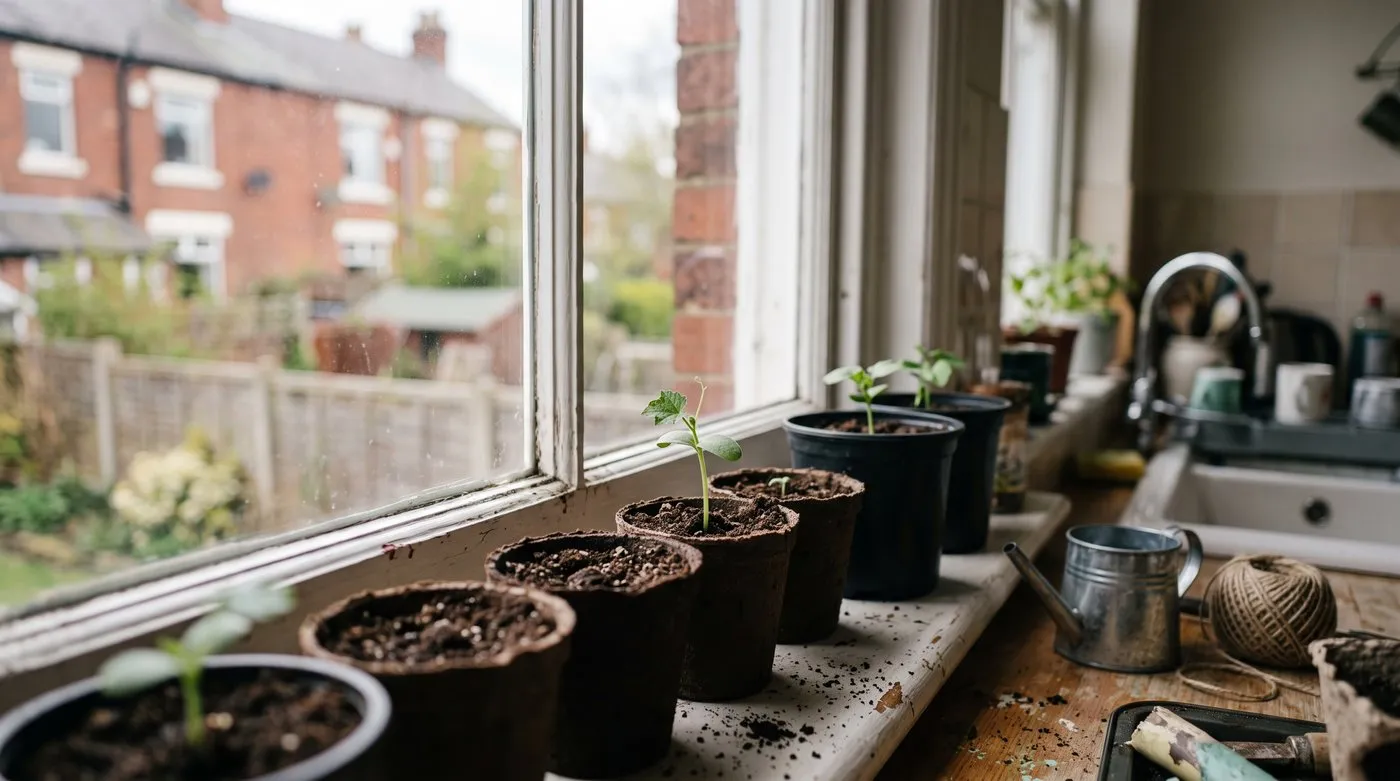
Sow in April somewhere warm and keep one strong seedling per pot. Earlier sowings just go leggy in poor light.
How to plant out cucamelons
Plant out after the last frost. That’s usually late May in the south, or early June in the Midlands and north. Frost kills them, so harden off seedlings for a week or two first.
Where: A warm, sheltered, sunny spot. Against a sunny wall or fence is perfect. They grow in part shade but crop less.
Soil: Any soil that drains well. On heavy clay, mix in grit and compost. They’re less fussy than cucumbers.
Spacing: Plant 40 to 50cm apart along a trellis. In pots, one plant per 30 to 40 litre pot.
In a greenhouse: They grow well in an unheated greenhouse or polytunnel, which gives a longer season. Train the vines up strings tied to the roof. Open vents in summer, as they like it less humid than cucumbers do.
Young cucamelons planted at the foot of a trellis in late May.
Supporting and training cucamelon vines
Cucamelon vines grow tall in a season and need something to climb. The thin stems have curly tendrils that grab hold of any thin support. Left on the ground, they sprawl, the fruits rot and slugs move in.
Trellis or netting: Fix a 2m panel of trellis or pea netting to a wall, fence or posts. The tendrils do the rest, with no tying needed. This is the easiest way for most gardens.
Strings: Run strings from pegs in the ground up to a wire about 2m high, 40cm apart. Great in a greenhouse. Twist the main stem round the string as it grows.
Wigwam: Push four tall bamboo canes into the ground, tie them at the top and wind string around them every 15cm. Plant one cucamelon at each cane. It looks lovely in a border or on a patio.
Pinching out: Not needed. The plants branch on their own and fruit on the side stems. If they get very bushy, thin a few stems to let air in and make picking easier.
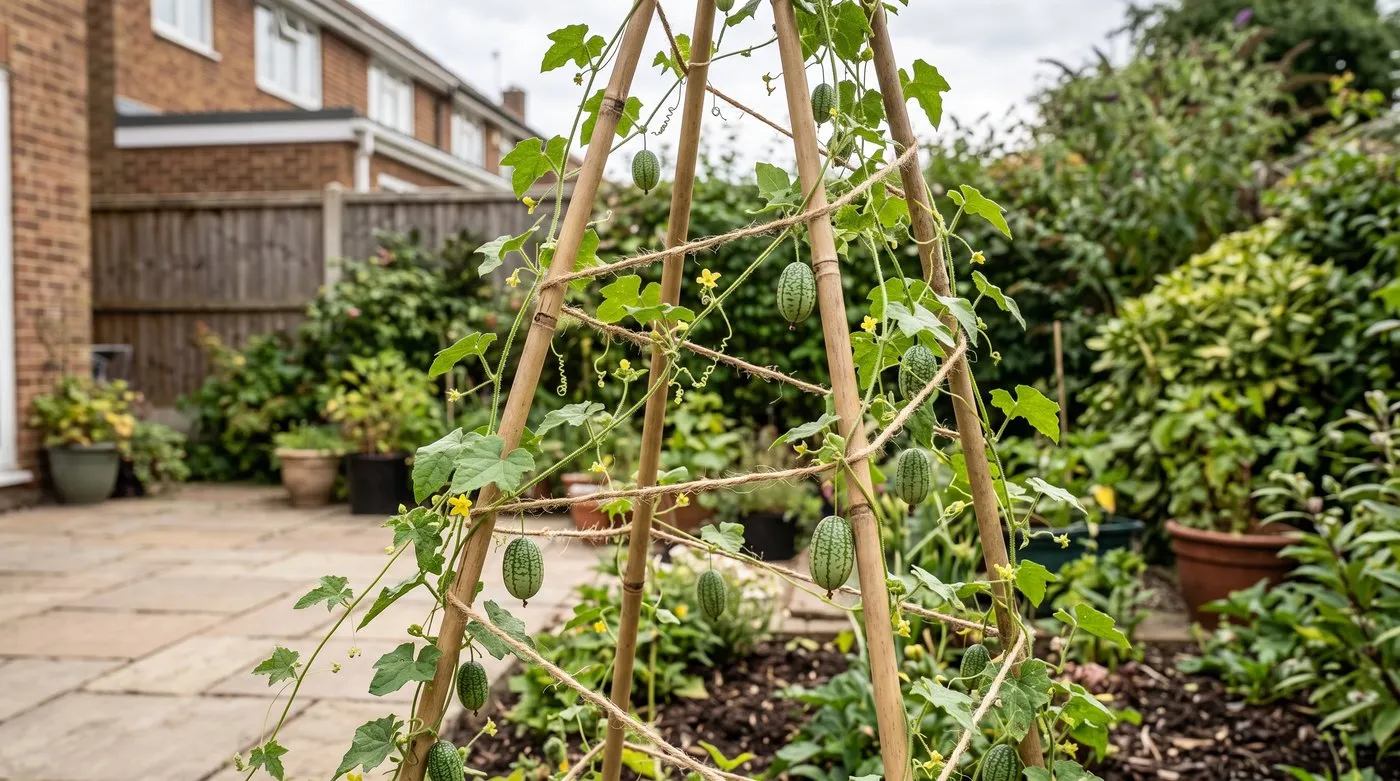
The curly tendrils grab thin supports by themselves, so string, netting or a cane wigwam all work. Off the ground, the fruit stays clean and away from slugs.
When and how to pick cucamelons
Pick them at 2 to 3cm long, about the size of a big grape. That’s the secret to good flavour. Small ones are crunchy and zesty. Bigger ones go soft and seedy.
Check every two or three days from August. Fruits ripen fast in warm weather, and regular picking keeps more coming. If you leave fruits to over-ripen, the plant slows down.
How to pick: Snip or twist them off. Handle gently, as the thin skin bruises easily.
How many: Cropping peaks from early August to mid-September. Three plants give enough for snacking and a few jars of pickles.
Storing: Fresh cucamelons keep for about a week in a sealed tub in the fridge. They don’t freeze well raw, but they pickle brilliantly.
Cucamelons at the perfect grape-sized stage for picking.
How to pickle cucamelons
Pickling is the best way to use up a glut. Cucamelons stay crunchy in vinegar much better than cucumber does.
Quick fridge pickle: Pack whole cucamelons into a clean jar. Bring 200ml white wine vinegar, 100ml water, 1 tablespoon sugar and 1 teaspoon salt to the boil. Add a sprig of dill, a sliced garlic clove and half a teaspoon of mustard seeds. Pour the hot liquid over, seal and keep in the fridge. They’re ready in a couple of days. Keep them in the fridge and eat within a few weeks.
Flavour ideas: Dill and garlic is the classic. Try chilli and lime, or coriander and cumin. They’re also great halved in salads, in a gin and tonic, or tossed into a stir-fry at the last moment.
Saving tubers for next year
Cucamelons make small tubers underground, a bit like tiny dahlia tubers. Keep them over winter and you’ll get earlier plants next year.
In mild areas: After the first frost blackens the top growth, cut the stems to the ground. Cover the spot with a thick layer of straw or bark. In sheltered town gardens and along the south coast, the tubers often survive in the ground.
In cold areas or heavy clay: Dig the tubers up in October, before a hard frost. Let them dry for a day somewhere cool and airy. Store them in a paper bag of dry compost in a frost-free shed or garage. Check every month and throw out any soft ones. Replant in May once the soil has warmed up.
In pots: Move the whole pot into a frost-free greenhouse or porch for winter. Don’t water while it’s resting, then start again in April when shoots appear.
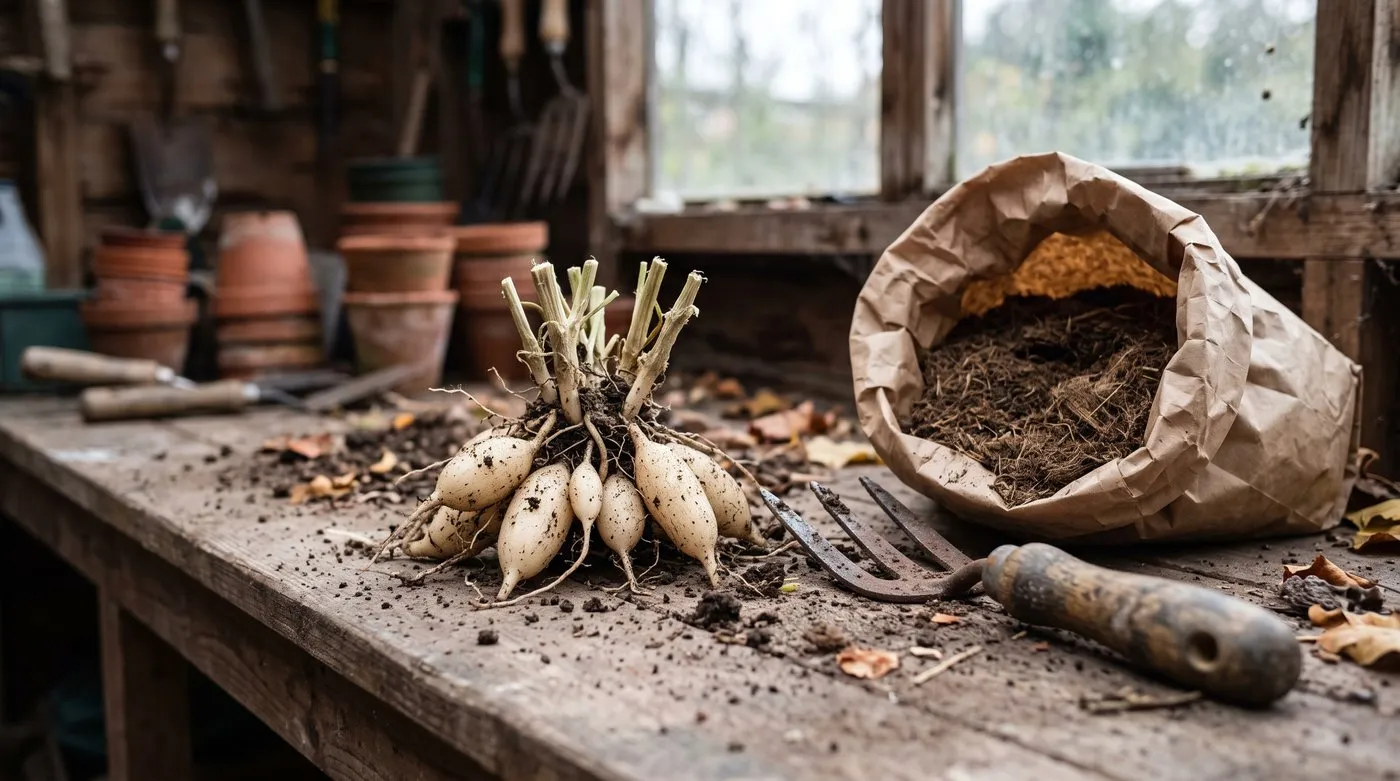
Lift the little tubers in October in colder gardens and store them in dry compost somewhere frost-free. Replanted in May, they give earlier crops.
Good companions for cucamelons
Cucamelons are easy neighbours. They share their season and growing needs with tomatoes, peppers and beans.
Good companions: Tomatoes, basil, marigolds, nasturtiums and spring onions. Nasturtiums can lure blackfly away from other crops.
Rotate: Try not to grow them in the same spot as other cucumber relatives (cucumbers, courgettes, squash) year after year, as they can share soil problems. Move them to a new spot each year.
Make use of the shade: Vines on a trellis cast dappled shade, so pop lettuce or other salads at the base. They also look pretty on an obelisk in a flower border.
Pests and problems
Cucamelons have fewer problems than cucumbers, which is a big part of their charm. Still, keep an eye out for powdery mildew late in the season and red spider mite in a hot greenhouse. Cucumber mosaic virus can affect many cucumber relatives, so know the signs.
Slugs: Young plants are at risk for the first couple of weeks after planting out. Use ferric phosphate slug pellets or copper tape round pots. Once the stems toughen and climb, slugs lose interest.
Aphids: Greenfly sometimes cluster on shoot tips in July. Squash them or blast them off with a jet of water. Ladybirds and hoverflies usually finish the job.
Few fruits: Cold weather can mean poor pollination. In a cool summer, dab a small paintbrush inside each flower to help. Most years in England, you won’t need to.
Too much water: Soggy soil rots the roots. Water when the top 3cm of compost is dry. Check pots daily in summer, but let the surface dry between drinks.
Cucamelons share their season with tomatoes, so our guide to growing tomatoes for beginners is a handy next read. Another unusual crop for the same season is the tomatillo.
A cucamelon vine climbing strings in a greenhouse, loaded with fruit.
Growing cucamelons in pots
Cucamelons are great in pots. Use one that holds at least 30 litres, filled with multi-purpose compost. Push in a 2m cane or a small obelisk and stand the pot in full sun by a warm wall.
Feeding: Once flowers appear, give a balanced liquid feed every 10 days. Switch to a tomato feed from July to help the fruit along.
Watering: Water when the top 3cm feels dry, and don’t leave pots standing in saucers of water. They cope with short dry spells better than cucumbers, but will drop flowers and baby fruits if they get very dry.
Over winter: At the end of the season, cut back the dead growth and move the pot somewhere frost-free. Start watering again in April when shoots appear.
For another climber that crops well in patio pots, see our French bean growing guide.
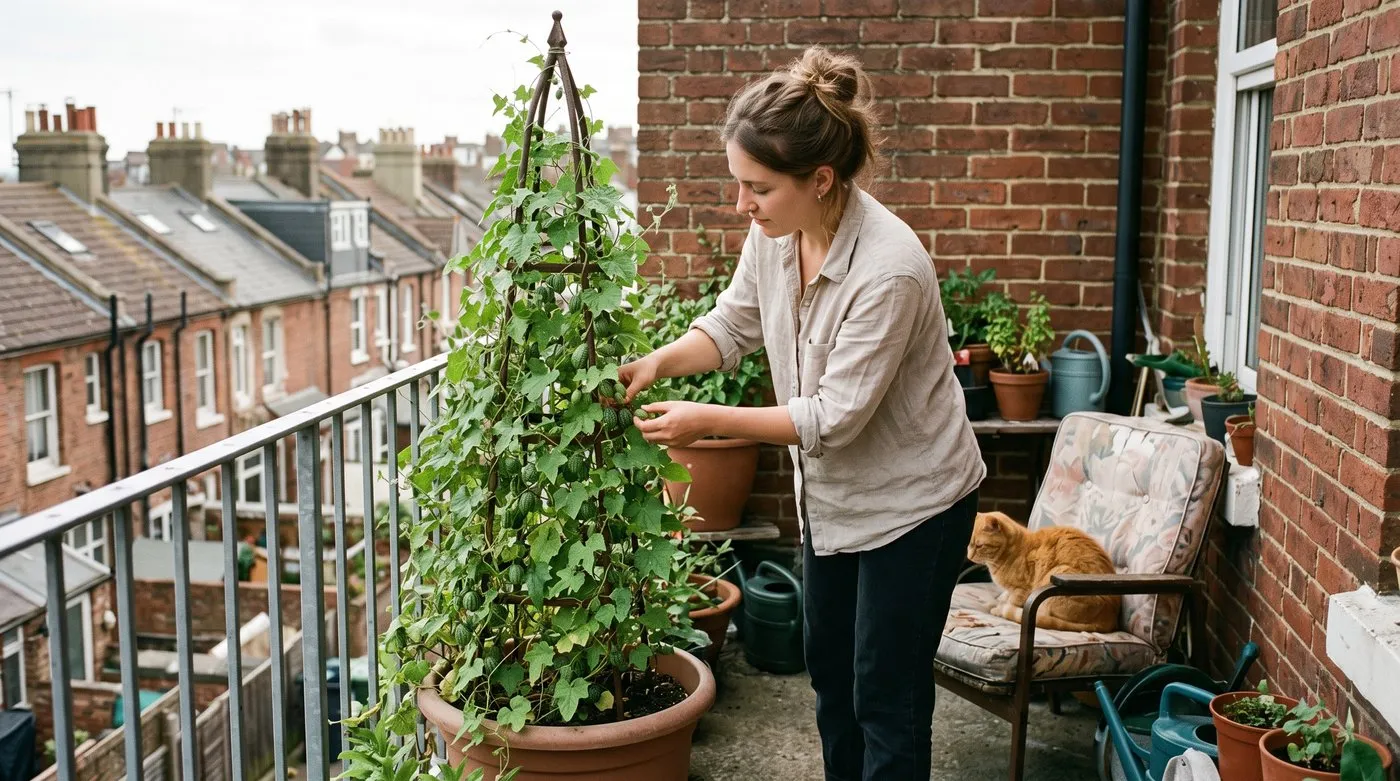
A big pot with an obelisk by a warm wall is all a cucamelon needs. Switch to tomato feed from July to keep the fruits coming.
Frequently asked questions
When should I sow cucamelon seeds in the UK?
Sow indoors in early to mid-April, somewhere warm. A propagator or warm windowsill at around 20C is ideal, and seeds usually come up in one to two weeks. Sow two seeds per 7cm pot, 1cm deep, and pull out the weaker seedling. Don’t sow outside, as the soil is too cold. Harden off in late May and plant out after the last frost.
Do cucamelons need a greenhouse in the UK?
No, they crop well outdoors in most of England. A sheltered, sunny wall or fence with a trellis is perfect. A greenhouse or polytunnel gives you a longer season at both ends. In Scotland and the north of England, a greenhouse makes life easier.
What do cucamelons taste like?
Like cucumber with a sharp, lime-like tang. The skin has a slightly sour bite. Picked small, about 2cm, they’re lovely and crunchy. Leave them too long and they go soft and seedy. Eat them raw in salads, pickle them, or pop one in a gin and tonic.
Can I save cucamelon tubers for next year?
Yes, they make small tubers you can keep over winter. In mild areas, cut back the dead stems after the first frost and cover the spot with a thick straw mulch. In colder areas or on heavy clay, dig the tubers up in October. Dry them for a day and store them in dry compost somewhere frost-free. Replant in May for earlier crops.
How do I support cucamelon vines?
Give them trellis, netting or strings to climb. The vines grow tall and the curly tendrils grip thin supports easily. A wigwam of bamboo canes works well too. Left on the ground, they sprawl, the fruits are hard to find and slugs get to them first.
Are cucamelons the same as regular cucumbers?
No, they’re a different plant altogether. Cucamelons (Melothria scabra) are relatives of cucumbers, not the same thing. Despite the looks, they aren’t melons either. They don’t cross with cucumbers, courgettes or squash. They also tend to cope with dry spells better than cucumbers.
How many cucamelon plants do I need?
Two or three plants are plenty for most households. One plant in a big pot gives a steady supply for salads. Three on a trellis give enough for snacking plus a few jars of pickles.
Our team produces practical UK gardening guidance from source research, contributor records and established horticultural practice. Editorial standards are overseen by Matt W.