Key takeaways
- Amarine is a cross between Nerine bowdenii and Amaryllis belladonna
- Plant bulbs in spring with the neck just above soil level
- A hot, dry spot at the foot of a sunny wall is what makes them flower
- Flowers appear on bare stems from September into November
- Leave clumps undisturbed, because crowded bulbs flower best
- All parts are toxic if eaten, so keep bulbs away from pets and children
Amarine is a tall, pink autumn bulb that flowers on bare stems just as the rest of the garden is winding down. Growing it well comes down to one unusual habit: plant the bulb with its neck showing, then give it a hot, dry summer spot. Get that right and it rewards you with clusters of trumpets from September into November.
This guide covers what Amarine is, where and how to plant it, pots, cutting and the reasons a clump stops flowering. If you are new to autumn bulbs, our nerine growing guide is a good place to start, as the care is very similar.
What is Amarine?
Amarine is a hybrid between two autumn-flowering South African bulbs: Nerine bowdenii and Amaryllis belladonna. Its botanical name is x Amarine tubergenii, after the Dutch bulb nursery Van Tubergen. The x shows it is a cross between two different genera.
It takes a little from each parent. From the belladonna lily it gets taller, sturdier stems and larger, more open trumpets. From the nerine it gets more toughness and a willingness to flower in British summers. The flowers usually come a little after the main nerine display, stretching the season into November.
Most Amarines sold in the UK are named clones from the Belladiva Series, in shades from white with a pink blush to deep cerise. An older clone, ‘Zwanenburg’, is also sold. Buy named bulbs rather than unnamed mixes, so you know what colour you are getting.
Like their parents, Amarines are toxic if eaten. Plant them where dogs that dig won’t get at the bulbs, and wear gloves if your skin is sensitive.
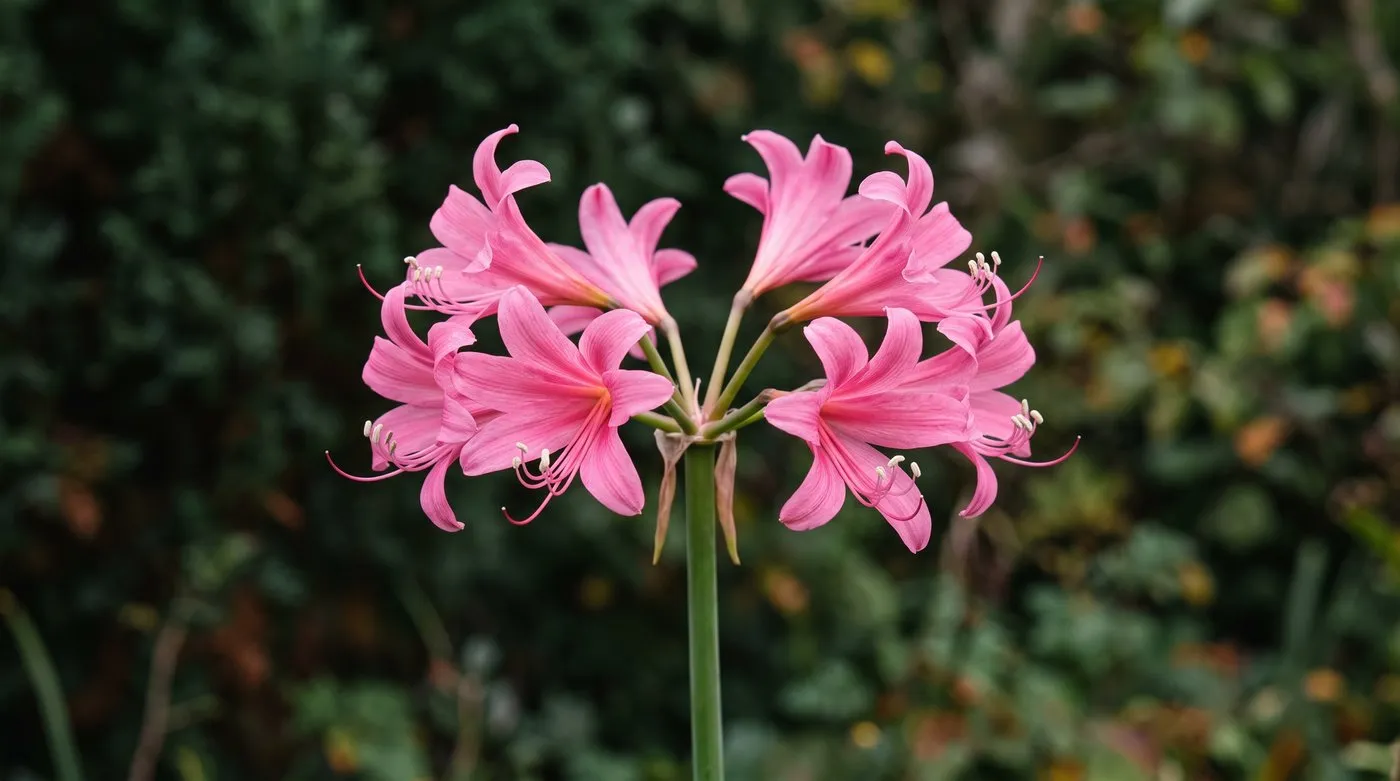
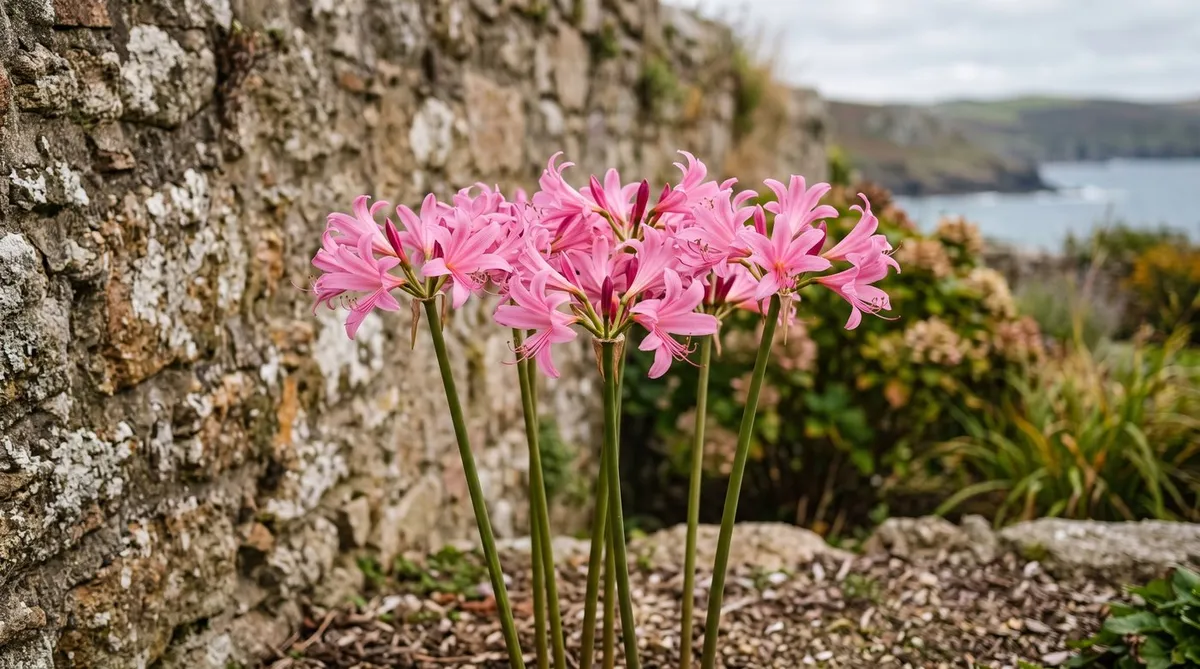
Each stem carries a whole cluster of trumpets. They open in turn, so one stem stays pretty for a good while.
Where to plant Amarine for the best flowers
Plant Amarine in full sun, in free-draining soil, at the foot of a south or west-facing wall if you can. The wall soaks up heat and keeps the bulbs warm and dry in summer, which is what they need to flower the following autumn.
Moderately fertile soil is fine. Very rich or freshly manured ground pushes leaves rather than flowers. On heavy clay, build up a slightly raised spot with grit and soil, or grow them in pots.
Avoid north-facing borders, places shaded by shrubs, and anywhere a sprinkler or irrigation line runs in summer. All three stop the bulbs from baking.
Amarines are fairly hardy, more so than straight belladonna. In cold, wet or exposed gardens, a sheltered wall or a pot moved under cover in winter gives them the best chance.
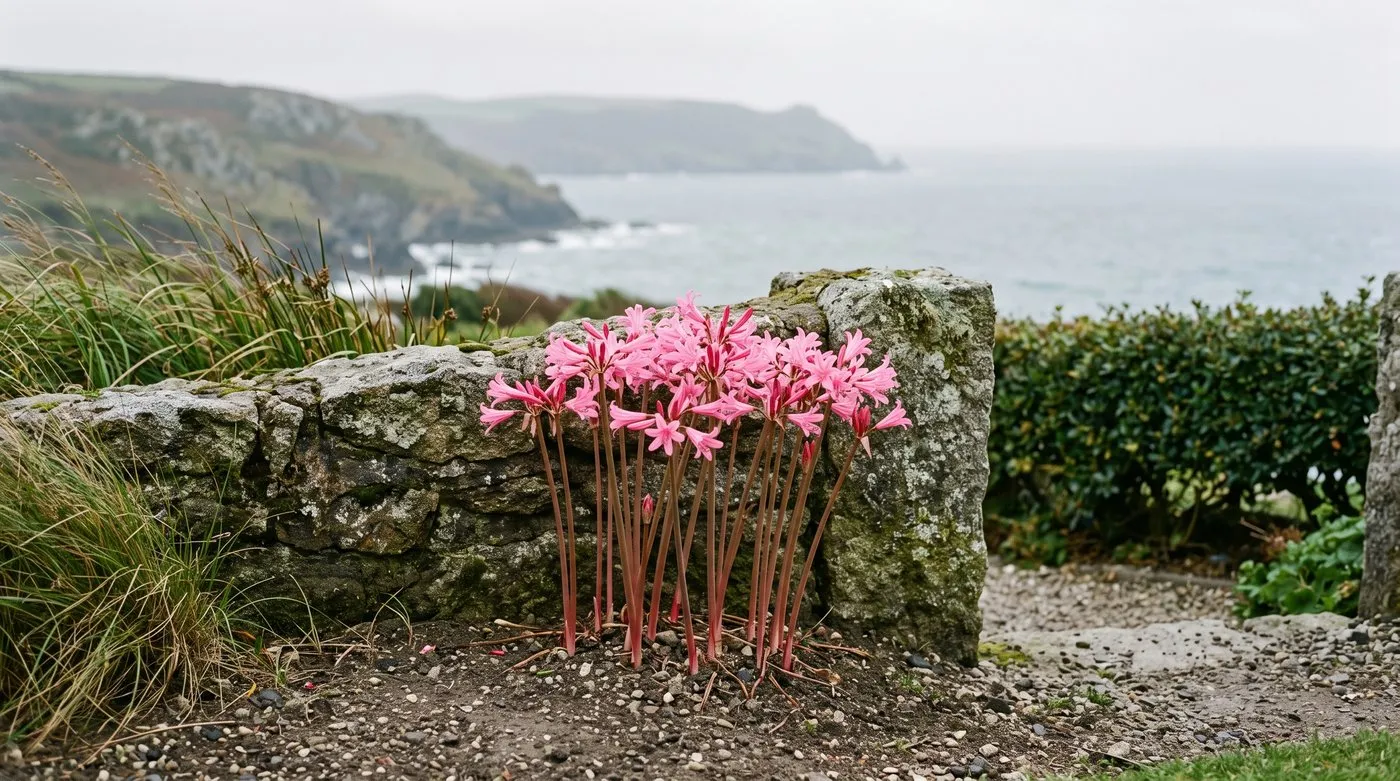
A stone wall soaks up the sun and keeps the bulbs warm and dry. Clumps in spots like this flower year after year.
How to plant Amarine bulbs
Plant Amarine bulbs in April or May, with the neck of each bulb just showing above the soil. This is the single most important step.
- Dig a hole wide rather than deep, and mix in a little grit on heavy soil.
- Set each bulb so its neck sits at or just above soil level.
- Space bulbs about 10-15cm apart, in groups of three to five.
- Firm the soil around the buried part of the bulb only.
- Water once to settle them, then leave them to it.
It feels wrong if you are used to planting daffodils deep. But a buried Amarine tends to make lots of strappy leaves and very few flowers. With its neck in the sun, it can ripen properly in summer.
Expect a slow start. Newly planted bulbs often flower lightly or not at all in their first autumn, then build up as the clump settles.
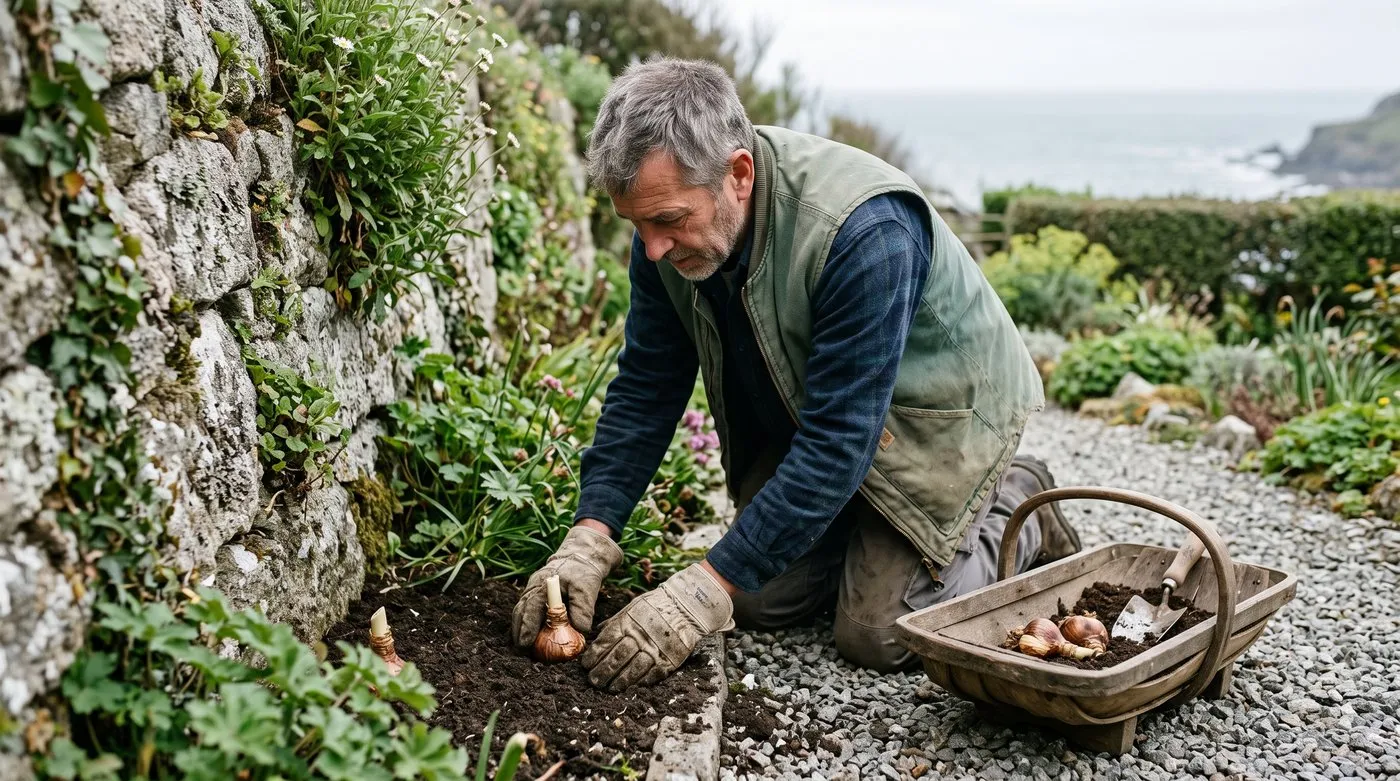
Leave the tops of the bulbs poking out, as here. It looks odd, but that sun-warmed neck is what brings the flowers.
Caring for Amarine through the year
Amarine care is mostly about leaving well alone, especially in summer.
The strappy leaves grow in spring and feed the bulb. A high-potash liquid feed, such as tomato feed, once or twice in spring helps. Let the leaves die back naturally in early summer, and don’t cut them off while they are still green.
From then until late summer, the bulbs want heat and dryness. Don’t water, mulch or shade them. Bare stems then push up from late summer and open from September. Water lightly in a long dry spell once the flower stems appear.
Leave clumps undisturbed. Amarines flower best when they are crowded, so only lift and divide when a clump is really packed and flowering less. Do it in spring.
Amarine vs nerine vs belladonna lily
If you are choosing between these three autumn bulbs, here is the quick version.
| Bulb | Height | Flowers | Best for |
|---|---|---|---|
| Nerine bowdenii | Medium | Pink, frilly | The hardiest choice, cooler gardens |
| x Amarine tubergenii | Tall | Larger pink or white trumpets | Height, cutting, sunny walls |
| Amaryllis belladonna | Tall | Large scented pink trumpets | Hot, sheltered southern gardens |
Nerine is the safest bet for most gardens. Amarine gives more height and bigger flowers and still copes with British summers. Belladonna is the showiest but sulks without real heat. Don’t confuse any of them with the indoor “amaryllis” sold at Christmas, which is a hippeastrum. The guide to growing amaryllis covers that one.
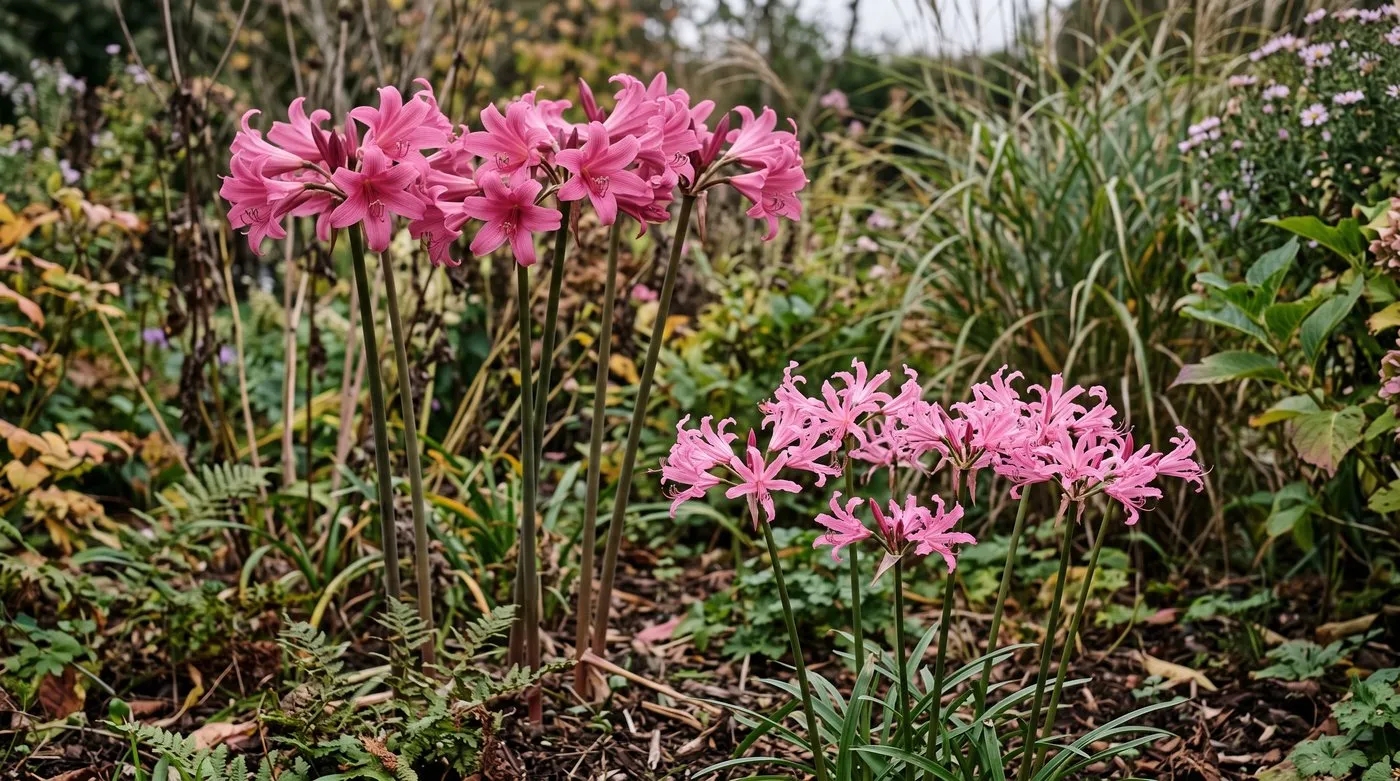
Amarine at the back stands taller than the nerines in front, with bigger, more open trumpets.
Growing Amarine in pots
Pots are a great answer on heavy or wet soil. They let you move the bulbs into full sun in summer and under shelter in a wet winter.
Use a loam-based compost such as John Innes No 2 mixed with plenty of grit. A terracotta pot dries faster than plastic, which suits the bulbs. Plant with the necks showing, a few bulbs to a pot, and top with a layer of grit.
Water sparingly in spring while the leaves are growing, then stop once they yellow. Start light watering again when the flower stems appear. Feed with a high-potash liquid feed in spring only.
In winter, keep pots off saucers and raised on feet so they drain. A sheltered wall or cold greenhouse keeps the worst of the rain off. Repot only every few years, as the bulbs flower best when snug.
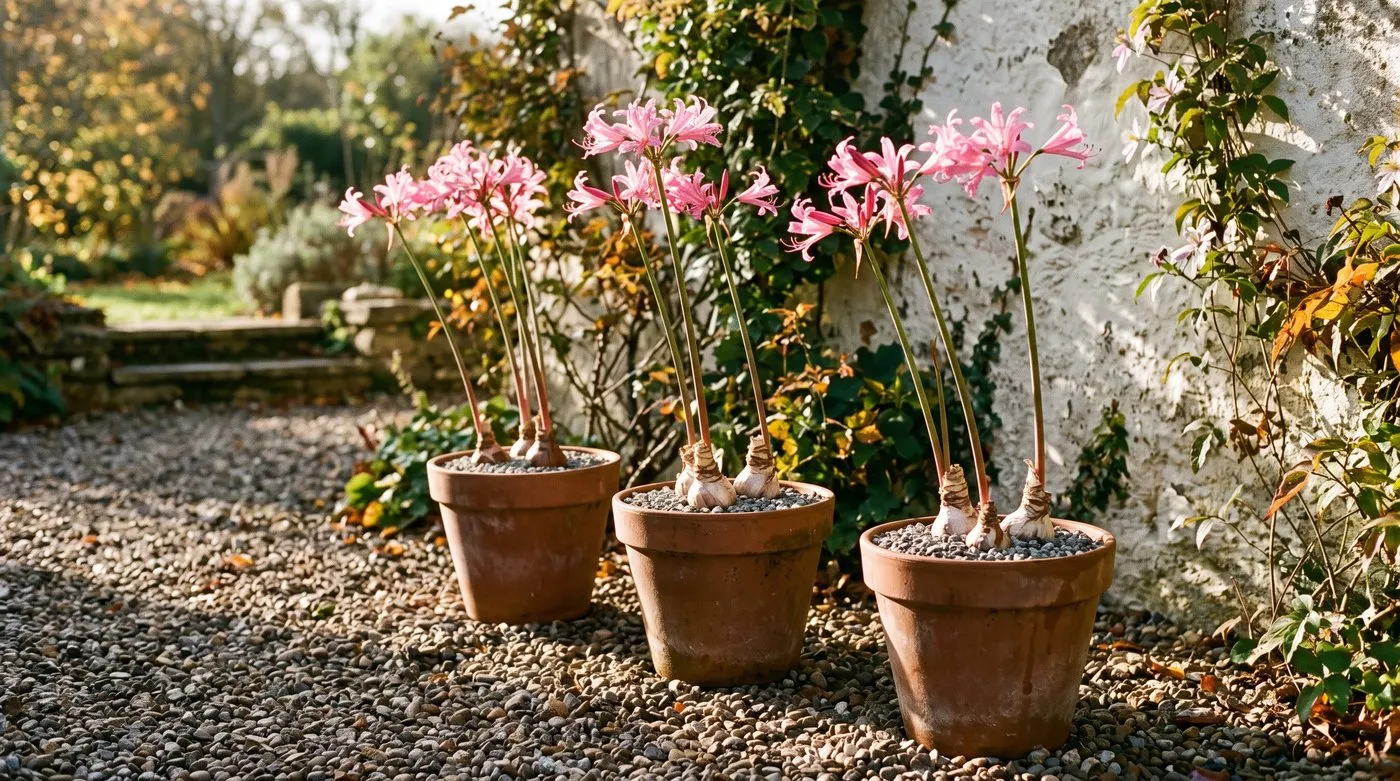
Terracotta pots with a grit topping keep the bulbs warm and dry. You can move them into the sunniest spot each summer.
Cutting Amarine for the house
Amarines make a lovely cut flower on long, sturdy stems. Cut when the first couple of trumpets have opened and the rest are still in bud. They carry on opening indoors.
Recut the stem under water before arranging and change the water every couple of days. The guide to conditioning cut flowers explains the method. Take only a few stems from each clump, so the rest can feed the bulbs for next year.
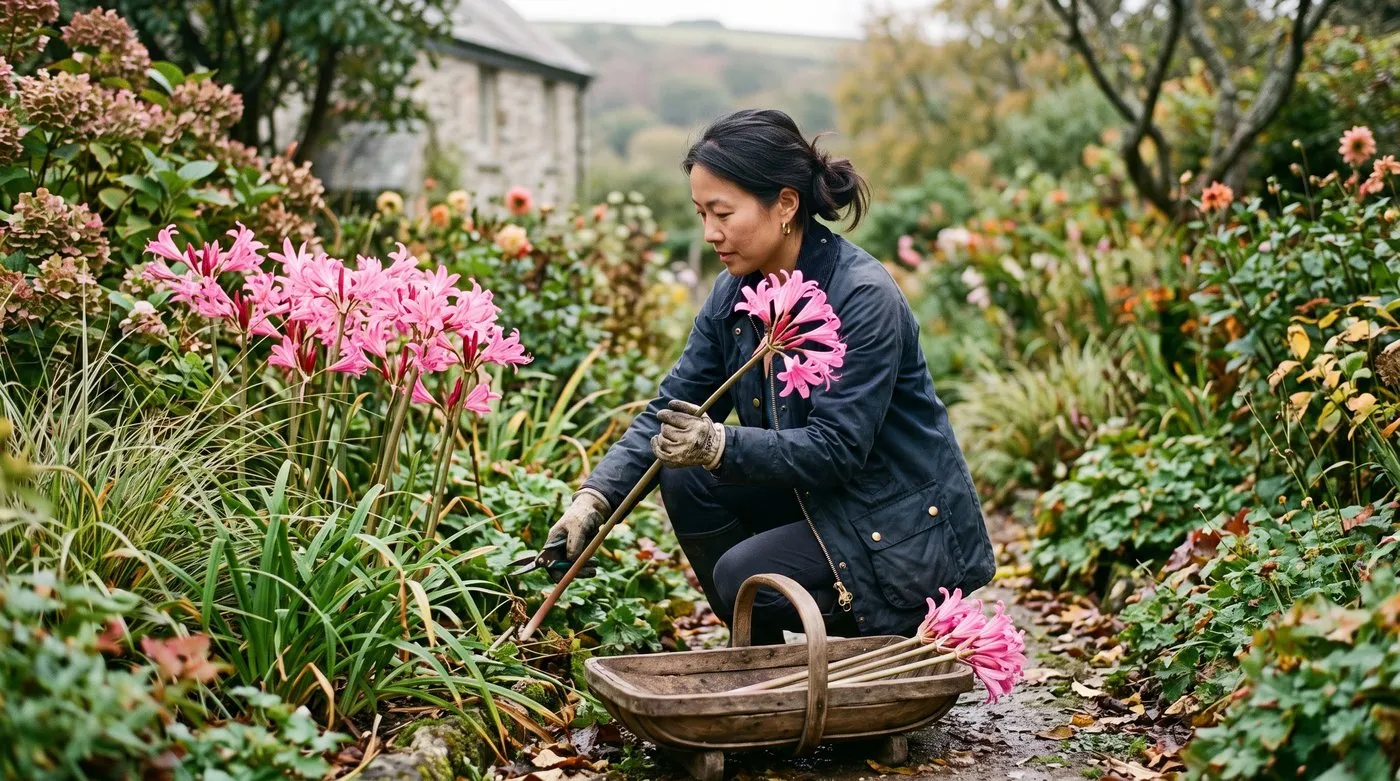
Cut stems when the first trumpets open and leave plenty on the clump. A few in a jug bring autumn colour indoors.
Protecting Amarine over winter
In most of England and Wales, Amarines at the foot of a sunny wall come through winter fine. In colder or wetter gardens, give them a little help.
Lay a loose, dry mulch of straw or bracken over the clump in early winter, keeping it off the bulb necks. Avoid compost or bark, which hold water against the bulbs. Pull the mulch away in early spring before the leaves come through.
In Scotland and cold, exposed gardens, grow Amarines in pots and move them into a cold greenhouse or against the house wall from late autumn. They want to be cool and dry, not warm. Our guide to storing flower bulbs has more on keeping bulbs safe out of the ground.
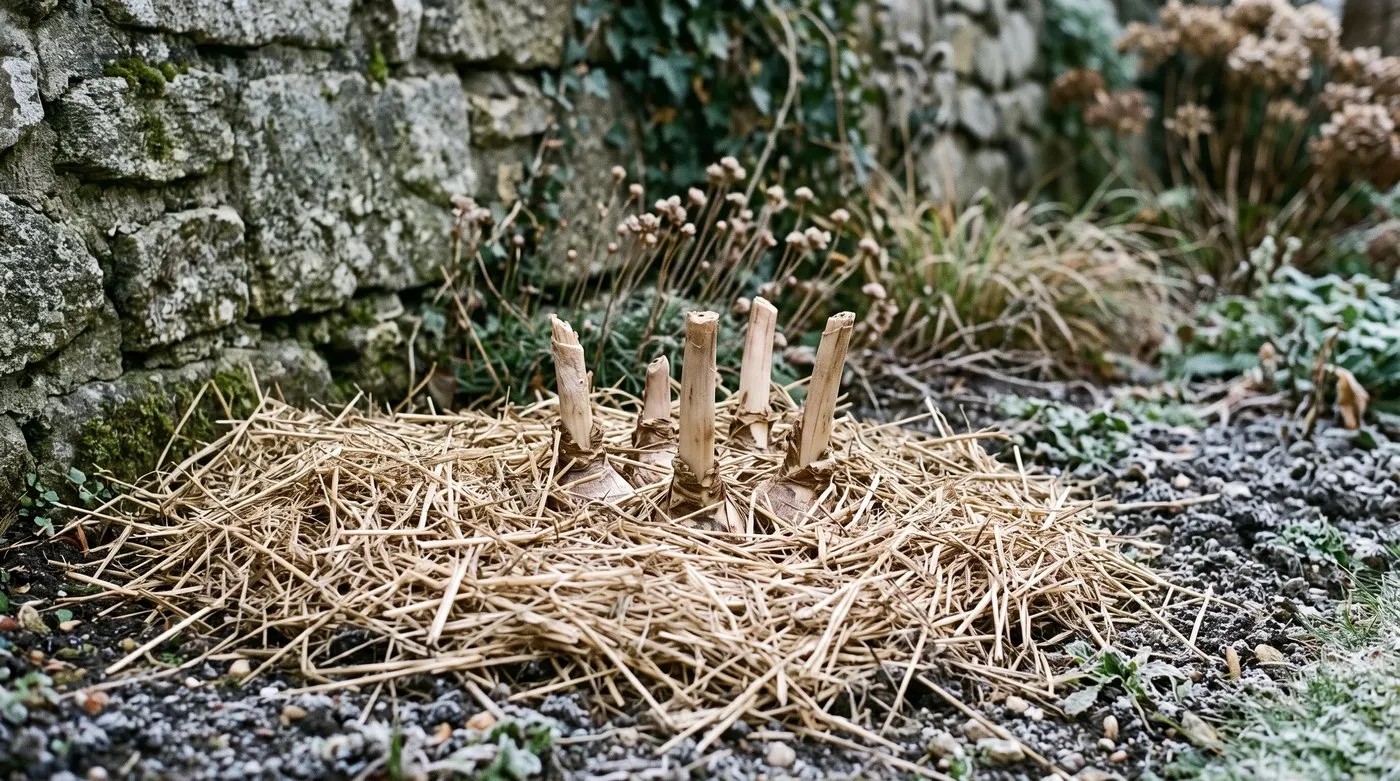
A loose straw mulch keeps frost off the clump while leaving the bulb necks clear and dry.
Amarine growing calendar
| Month | What to do |
|---|---|
| January | Keep pots dry and raised on feet |
| February | Order named bulbs |
| March | Remove winter mulch. Leaves start to grow |
| April | Plant new bulbs with necks showing. Feed established clumps |
| May | Last feed. Leaves start to yellow |
| June | Let leaves die back. Stop watering pots and move them into full sun |
| July | Leave alone. No water, mulch or shade |
| August | Flower stems start to push up late in the month |
| September | First flowers. Water lightly in dry spells |
| October | Main flowering. Cut a few stems for the house |
| November | Last flowers. Leave spent stems until they pull away easily |
| December | Mulch in cold gardens. Move pots under cover |
Why has my Amarine stopped flowering?
Usually something has started shading the bulbs in summer. A neighbouring plant flops over them, or a shrub grows and casts more shade. The bulbs stop baking and stop flowering.
Cut back plants around the clump in early summer and keep a small bare patch around it. If a shrub has taken over, move the bulbs in spring to a sunnier spot and expect a quiet year while they settle.
Other common causes are bulbs planted too deep, summer watering and splitting clumps too often.
Common mistakes with Amarine
- Burying the bulb. Leave the neck showing. Deep bulbs give leaves, not flowers.
- Planting in autumn. Bulbs sit cold and wet with no roots. Plant in spring.
- Dividing too often. Amarines like being crowded. Leave clumps alone for years.
- Watering in summer. Dormant bulbs need heat and dryness, not care.
- Cutting leaves while green. They are still feeding the bulb. Wait until they pull away easily.
Plan the rest of your autumn bulbs
Amarine looks great with other late-season bulbs. For a tougher, shorter companion, read about crinum lilies. For looking after bulbs once they finish, see the guide to bulb care after flowering, or browse more growing guides.
Frequently asked questions
What is an Amarine?
Amarine is a cross between Nerine bowdenii and Amaryllis belladonna. Its botanical name is x Amarine tubergenii, where the x shows it is a hybrid between two genera. It has the tall stems and bigger trumpets of the belladonna and much of the toughness of the nerine.
When should I plant Amarine bulbs in the UK?
Plant Amarine bulbs in April or May. That gives them a full summer to settle before they flower in autumn. Bulbs bought in pots can go in during summer too.
How deep do you plant Amarine bulbs?
Plant them shallow, with the neck of the bulb just showing. Buried bulbs tend to make plenty of leaves but few flowers. The exposed neck lets the summer sun warm the bulb.
Are Amarines hardier than Amaryllis belladonna?
Generally yes, thanks to their nerine parent. Amarines flower more freely in cooler gardens than straight belladonna, which really wants a hot, sheltered spot in the south.
Why does my Amarine produce leaves but no flowers?
Usually it is planted too deep, too shaded or disturbed too often. Lift buried bulbs so the neck shows, clear anything shading them in summer, and leave clumps alone.
How long do Amarines take to settle and flower well?
Often a year or two. Newly planted bulbs may flower lightly or skip their first autumn. Once settled into a clump, they flower more each year.
Can I grow Amarines in pots?
Yes, and pots are a good choice on heavy or wet soil. Use gritty, loam-based compost, stand the pot in full sun in summer and keep it dry and sheltered in a wet winter.
Our team produces practical UK gardening guidance from source research, contributor records and established horticultural practice. Editorial standards are overseen by Matt W.