
Key takeaways
- Hops are hardy perennial climbers that die back each winter and regrow in spring
- Plant in March or April in full sun, in rich soil that holds moisture
- Give each plant a tall, strong support and train 3-4 shoots clockwise up it
- Dwarf varieties such as First Gold suit smaller gardens; 'Aureus' is grown for golden leaves
- Pick cones in late summer when they feel papery and leave yellow powder on your fingers
- Hops are poisonous to dogs, so keep fresh, dried and used hops well out of reach
Hops are easy to grow in the UK, and they’re native here too. Plant one in spring and by late summer it will have scrambled several metres up a support, hung with papery green cones. Grow them for home brewing, or simply as a fast, leafy screen that disappears each winter.
This guide covers where to plant, which varieties to choose, how to build a support strong enough, and how to harvest and dry the cones. One safety note up front: hops are poisonous to dogs, so keep cones and brewing leftovers out of their reach.
Where should I plant hops in the UK?
Hops need full sun, rich soil and shelter from strong wind. A south or south-west-facing spot is ideal, such as against a sunny wall or fence with a tall support.
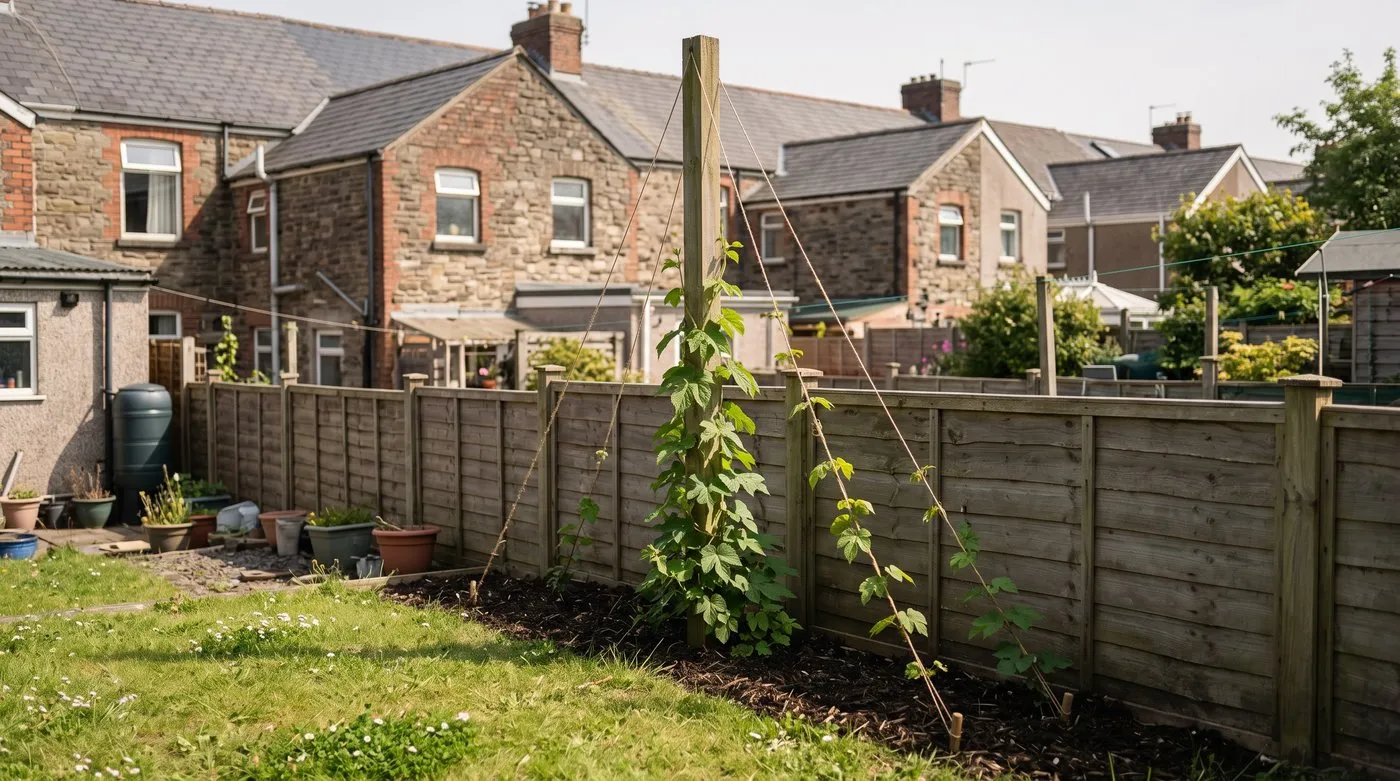
A sunny spot, rich mulched soil and a tall post with strings is all a hop needs. Give it space, as it grows fast.
They’re hungry, thirsty plants with deep roots. Dig in plenty of well-rotted compost or manure before planting so the soil holds moisture in summer. They cope with most soils except very wet, waterlogged ground.
Allow about 1.5m between plants if you grow more than one. Hops are very vigorous, so keep them away from small shrubs, fruit trees and your neighbour’s fence, or they’ll smother everything in reach.
How to plant hops
Plant hops in March or April. You can buy them as dormant rhizomes, pieces of root with buds, or as pot-grown plants. Nursery hop plants are female, which is what you want, as only females make cones.
- Dig over a patch about 45cm across and mix in a bucket of well-rotted compost.
- Lay the rhizome flat with the buds facing up, or plant a potted hop at the depth it was growing.
- Cover rhizomes with about 5cm of soil.
- Water well and mulch around the plant.
- Put the support in place now, before the shoots appear.
Shoots appear a few weeks later. When they’re about 30cm long, choose the three or four strongest and gently wind them clockwise around the support. Hops always twist clockwise, so winding them the other way just makes them fall off. Cut the remaining shoots off at ground level.

Plant the rhizome flat with its buds facing up, right beside a sturdy post. Put the support in before the shoots arrive.
What support do hops need to climb?
Hops need a strong, tall support from day one. Traditional brewing hops can reach 5-6m in a season. They climb by twisting their whole stem around a support, so they need something thin enough to wrap around, like string or wire.
The classic garden method is a tall post with strings. Sink a sturdy timber post well into the ground. Run three or four lengths of strong garden twine from the top down to pegs in the ground around it, one for each shoot. At harvest you can cut the strings and lower the whole thing to pick the cones.
For a decorative screen, grow hops over a pergola, arch or trellis. By late summer a plant laden with cones is surprisingly heavy, so make sure the structure is solid. Our pergola ideas has plenty of inspiration, and our guide to training young climbers covers tying in.

Golden hop turns a pergola into a bright, leafy roof by midsummer. Make sure the frame is sturdy enough for the weight.
Which hop variety should I grow in the UK?
Choose by what you want from the plant: brewing, a smaller garden, or golden leaves.
| Variety | Height | Best for |
|---|---|---|
| Fuggle | Tall | Classic English bitters and ales |
| East Kent Goldings | Tall | Traditional English pale ales |
| Challenger | Tall | All-round English brewing |
| Cascade | Tall | Citrusy American-style pale ales, warmer gardens |
| First Gold | Dwarf | Smaller gardens, English brewing |
| ’Aureus’ (golden hop) | Tall | Golden leaves for pergolas and screens |
Fuggle and East Kent Goldings are the classic English brewing hops. Cascade gives modern citrus flavours but does best in warmer, southern gardens. First Gold is a dwarf hop, so it’s the easiest to manage in a small space. ‘Aureus’ holds the RHS Award of Garden Merit for its lime-yellow leaves. It does produce cones, but it’s mainly grown to look good.
How to care for hops through the year
Water deeply in dry spells and feed through summer. Hops grow incredibly fast, so they need plenty of both.
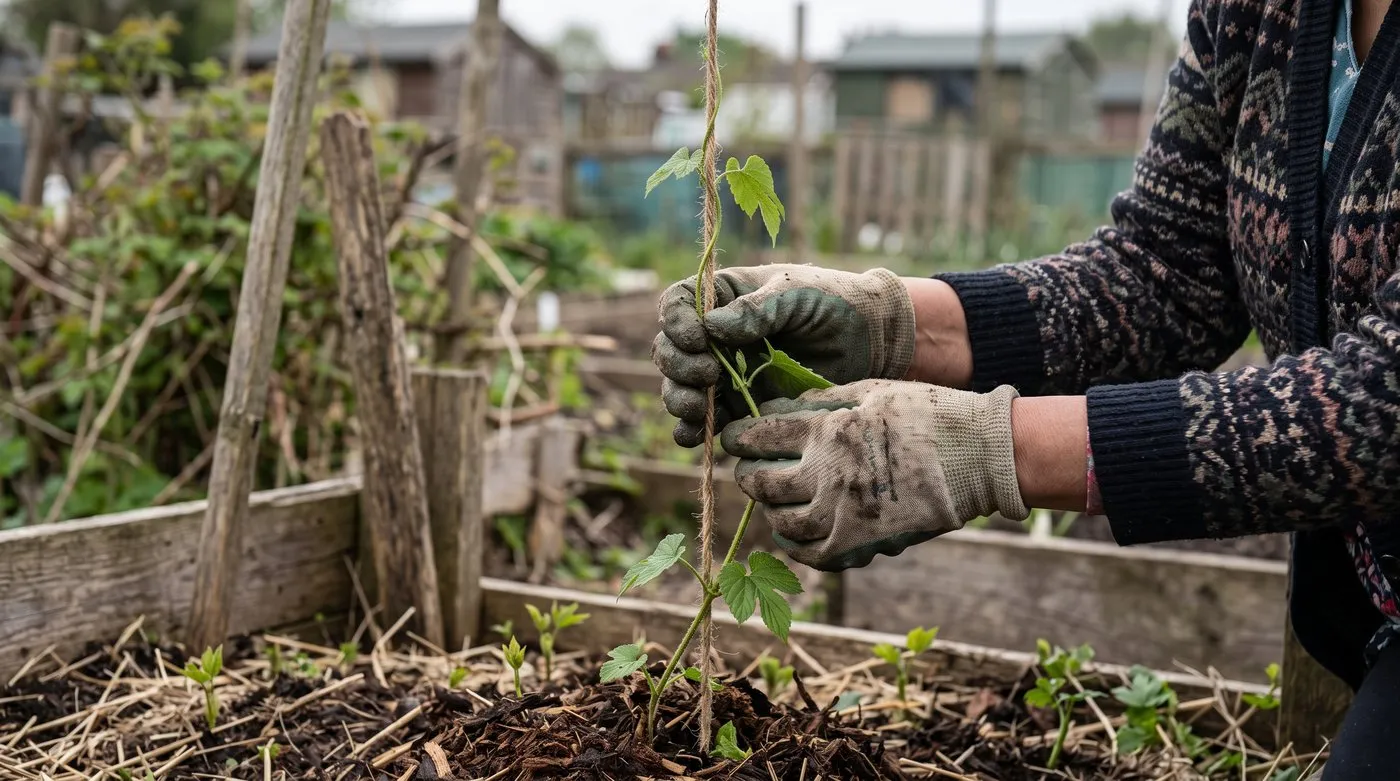
Wind each shoot clockwise around its string. Hops only twist one way, so the wrong way just slips off.
Spring: clear away last year’s dead stems. Mulch around the crown with compost. Train three or four strong shoots clockwise up each support and remove the rest.
Early summer: check each shoot is climbing its own string. Strip off the lowest leaves, up to about 1m, to improve airflow and reduce disease. Water well in dry weather.
Midsummer: the flowers appear and turn into cones. Feed every two weeks with a high-potash liquid feed such as tomato food.
Late summer: harvest the cones (see below).
Autumn and winter: once the stems have died back, cut them down to the ground. Mulch the crown with compost. Hops are fully hardy, so no winter protection is needed in the ground.
If you’d like a fast climber without the harvest, our guide to fast-growing climbers for fences and walls has more ideas.
What pests and diseases affect UK hops?
Hop aphids cluster on the soft shoot tips in early summer. Hose off small colonies and let ladybirds, lacewings and hoverflies do the rest. Our guide to getting rid of aphids has more natural controls.
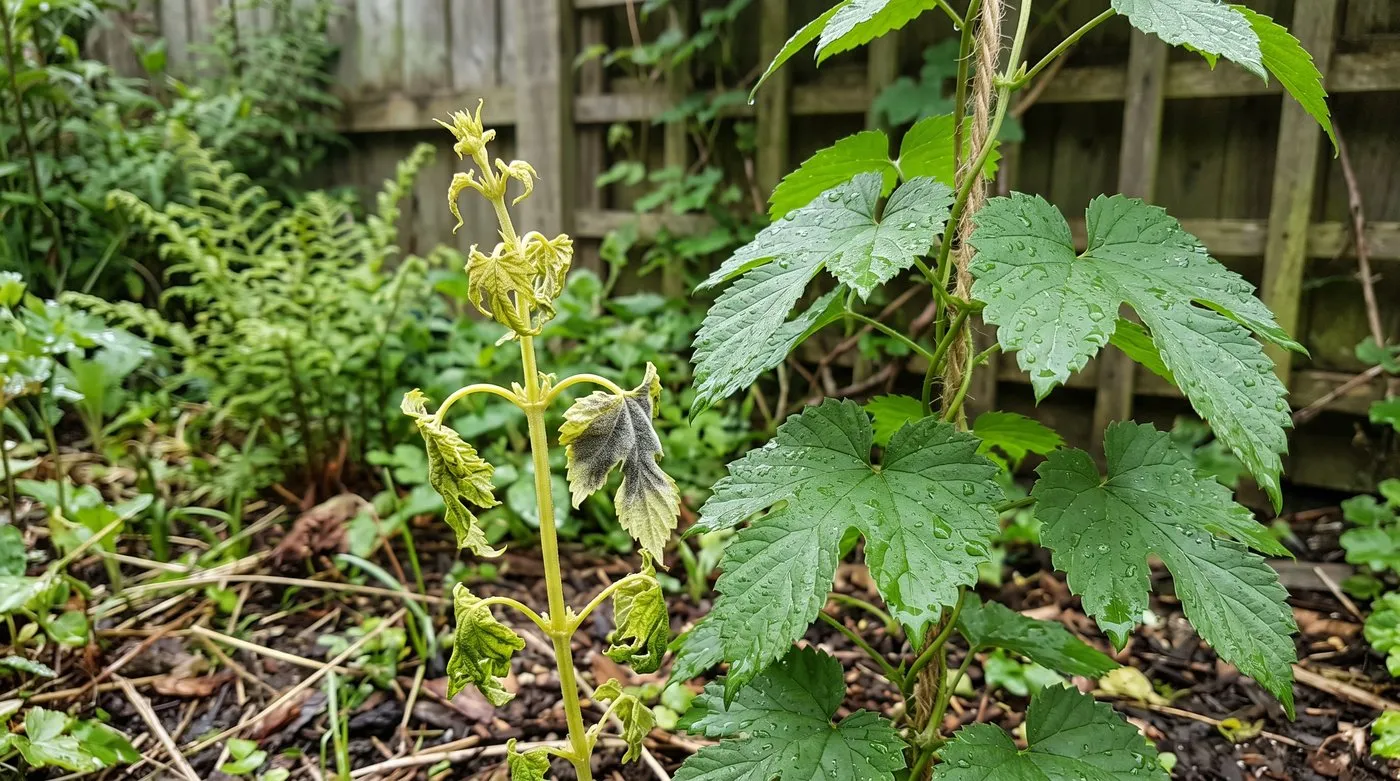
A stiff, pale, stunted shoot in a damp spring is the classic sign of downy mildew. Cut it out and keep the base airy.
Downy mildew is the most damaging hop disease. In damp springs, shoots come up stunted and pale, with dark, fuzzy patches under the leaves. Cut out affected shoots, strip the lower leaves for airflow and clear up fallen leaves in autumn.
Verticillium wilt is a soil-borne disease that makes stems wilt from the base, even when the soil is moist. There’s no cure. Remove the plant and grow hops somewhere else.
Red spider mite can appear in hot, dry summers, especially against sunny walls. Look for fine webbing and speckled leaves. Watering well in dry spells helps prevent it.
Hops also feed wildlife. They’re a favourite food plant for the caterpillars of the comma butterfly, so a few nibbled leaves are something to celebrate.
How to harvest and dry hop cones
Pick hop cones in late August or September, when they feel dry and papery, spring back when squeezed, and leave yellow, sticky powder on your fingers. This powder, called lupulin, holds the flavour. Unripe cones feel soft and damp. Overripe cones turn brown.
Pick by hand straight from the plant, or cut the strings and lower the stems onto a sheet. Hop stems are rough and can irritate the skin, so wear long sleeves and gloves.

Ripe cones feel papery and leave yellow dust on your fingers. Long sleeves help, as the bines are scratchy.
For wet-hop beer, use fresh cones within a day of picking.
To dry hops, spread the cones in a single layer on a mesh screen in a warm, airy place out of direct sun. Turn them every day. They’re ready when the small central stem snaps rather than bends, usually after a few days. Pack them in airtight bags and store them in the freezer.
Keep hops away from dogs. Fresh, dried and used brewing hops are poisonous to dogs and can cause a dangerous rise in body temperature. Dispose of spent hops where dogs can’t reach them. The PDSA has advice on what to do if your pet eats something poisonous.
Can I grow hops in containers?
Yes, but choose a dwarf variety and a big pot. First Gold suits a container best. Use a pot of at least 50 litres with drainage holes, filled with loam-based compost such as John Innes No. 3.
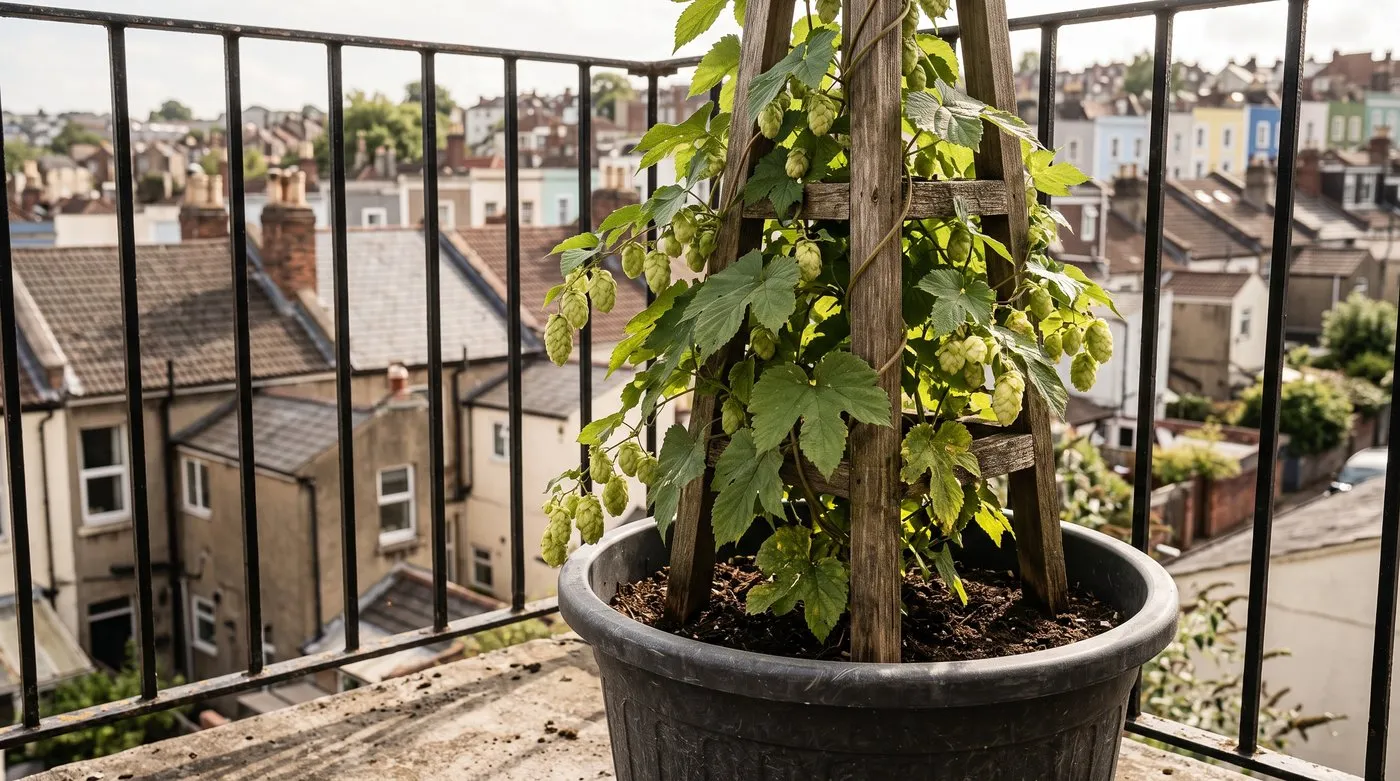
A dwarf hop in a big pot can crop on a sunny balcony. Fix the support firmly and water every day in hot weather.
Give it a tall, sturdy support fixed firmly so it can’t blow over. Water every day in hot weather, as pot-grown hops dry out fast, and feed weekly through summer. Repot or divide every couple of years. For more on growing in pots, see our container vegetable gardening guide.
Month-by-month hop calendar
| Month | What to do |
|---|---|
| March to April | Plant rhizomes or potted plants. Put supports up. Clear old stems |
| May | Train three or four shoots clockwise up each string. Remove the rest |
| June | Strip the lowest leaves. Check for aphids. Water in dry spells |
| July | Flowers form. Feed every two weeks with tomato food |
| August to September | Harvest cones when papery. Dry or brew straight away |
| October to November | Cut down dead stems. Mulch the crown |
| December to February | Leave the crown to rest. Plan supports for spring |
Common mistakes with hops
Flimsy supports. A hop in full leaf and cone is heavy and catches the wind. Use sturdy posts and strong twine.
Too many shoots. Letting every shoot grow gives a tangled mass with fewer cones. Keep three or four per string.
Winding the wrong way. Hops climb clockwise. Wind them anticlockwise and they’ll unravel.
Picking too early. Green, soft cones have little flavour. Wait until they’re papery and leave yellow dust on your fingers.
Leaving hops where dogs can reach them. Fresh, dried and spent hops are all dangerous to dogs.
If you like growing your own drinks, our guide to growing grape vines is a great next step. For more climbing crops and plants, browse our growing hub.
Frequently asked questions
Can you grow hops in a small UK garden?
Yes, choose a dwarf variety such as First Gold. Dwarf hops grow shorter than traditional types, so a sturdy obelisk or tall post can do the job. You can also grow one in a large pot with a tall support, though it will need lots of watering.
When should I plant hop rhizomes in the UK?
Plant hop rhizomes in March or April. Pot-grown hop plants can go in from spring to early summer, as long as you keep them watered while they settle in.
How long do hops take to produce cones?
Most hops give a small crop in their first year. They usually crop well from the second or third year, once the roots are established. After that, a healthy plant will keep cropping for many years.
Do hops need a lot of sun to grow in the UK?
Yes, hops crop best in full sun. A south or south-west-facing spot is ideal. In part shade they still grow plenty of leaves but give fewer cones.
What pests and diseases affect hops in the UK?
Hop aphids, downy mildew and red spider mite are the main problems. Aphids cluster on shoot tips in early summer. Downy mildew causes stunted, pale shoots in damp springs. Verticillium wilt can kill plants. Good airflow, removing affected shoots and choosing resistant varieties all help.
Can I use garden-grown hops for home brewing?
Yes, garden hops are great for home brewing. Use fresh cones within a day for a “wet hop” beer, or dry them for later. Garden hops vary in strength, so they’re best for aroma rather than precise bitterness.
How do you dry hops at home after picking?
Spread the cones in a single layer somewhere warm and airy. A mesh screen or old window screen works well. They’re dry when the small central stem snaps rather than bends, usually after a few days. Store them airtight in the freezer.
Are hops poisonous to dogs?
Yes, hops are poisonous to dogs. Eating fresh, dried or used brewing hops can cause a dangerous rise in body temperature. Keep cones and brewing waste out of reach, and call your vet straight away if your dog eats any.
Our team produces practical UK gardening guidance from source research, contributor records and established horticultural practice. Editorial standards are overseen by Matt W.


