
Key takeaways
- Sweet chestnut needs acid to neutral, free-draining soil and struggles on chalk
- Plant two different varieties near each other, as single trees crop poorly
- Grafted named varieties crop years sooner than trees grown from a nut
- Allow at least 10m between trees, as they grow very large
- Pick nuts from the ground in October, wearing thick gloves
- Report suspected chestnut blight or gall wasp to the Forestry Commission
Sweet chestnut is a big, handsome tree that rewards you with roasting nuts every October. It suits roomy gardens on acid to neutral soil, but it isn’t for chalk or small plots. Choose two grafted varieties, give them space and plenty of time, and the harvest builds year after year.
This page covers sweet chestnut on its own. For other nut trees side by side, see the guide to growing nut trees.
Is your garden right for a sweet chestnut?
A sweet chestnut needs room, acid to neutral soil and sun. If you can’t offer all three, a smaller nut tree will be happier.
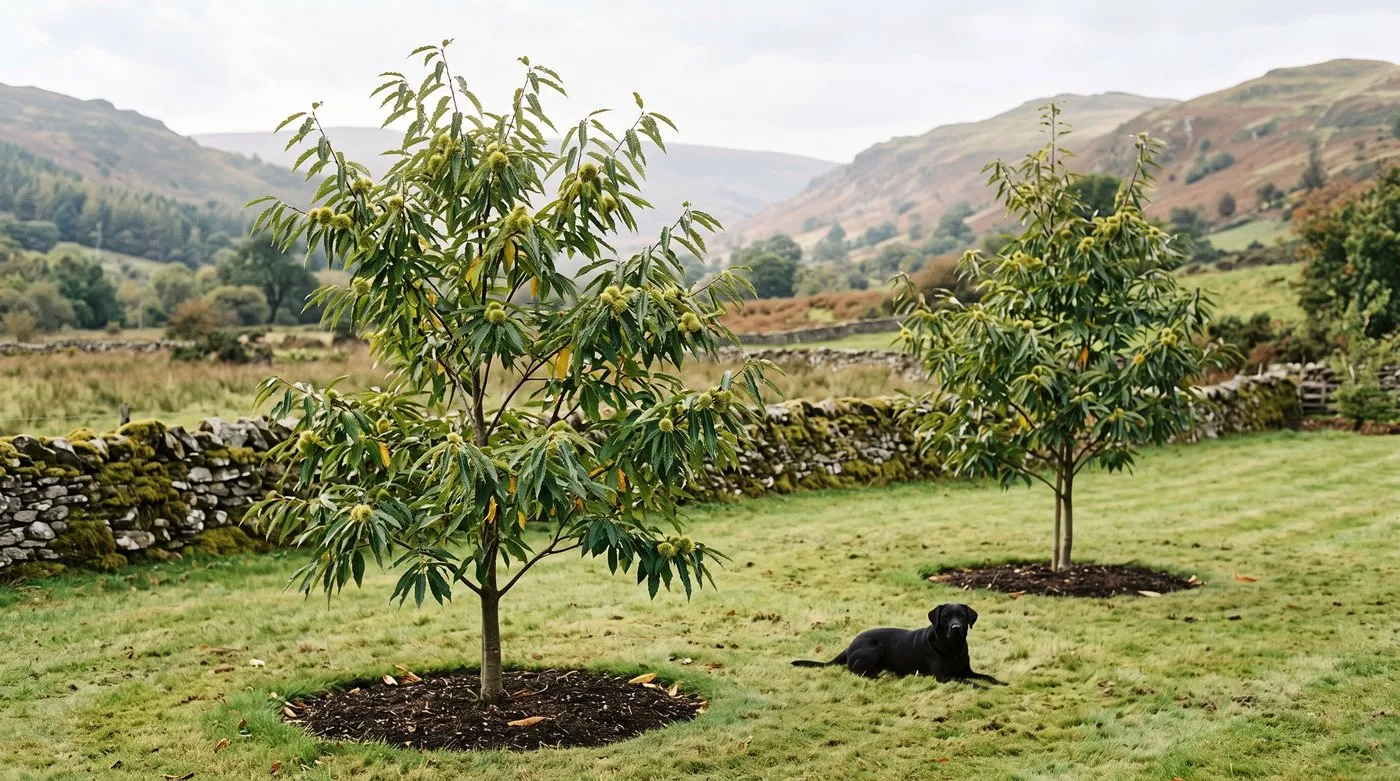
Give each tree plenty of room. Two different varieties planted near each other pollinate one another for a better crop.
- Space: it becomes a very large tree. Allow at least 10m between trees and keep well clear of houses, drains and overhead cables.
- Soil: acid to neutral and free-draining. Sandy or loamy soil is ideal. It struggles on chalk or lime, where the leaves turn yellow.
- Sun and shelter: full sun, with some shelter from cold north and east winds.
- Drainage: roots rot in waterlogged ground. On heavy soil, plant on a low mound.
Not sure about your soil? The soil pH guide shows how to test it cheaply. For alkaline soil or a smaller garden, hazel and cobnuts crop sooner and take up far less room.
Best sweet chestnut varieties for nuts
Buy grafted named varieties if you want good nuts. Trees grown from a nut are cheap but slow to crop, and the nuts are often small.
| Variety | Notes |
|---|---|
| Marron de Lyon | Classic large-nut French variety |
| Marigoule | Large nuts, often an early cropper |
| Bouche de Betizac | Large nuts, but makes little or no pollen, so needs a partner |
| Seedling tree | Cheap and good for wildlife or coppice, but slow and variable for nuts |
Sweet chestnuts crop poorly on their own. Plant two different varieties near each other so they can cross-pollinate. A specialist nut nursery can suggest pairs that flower at the same time. If you already have a sweet chestnut nearby, it may help too.
How to plant a sweet chestnut tree
Plant bare-root trees between November and March, when they’re dormant. Container trees can go in at other times, but autumn is easiest.
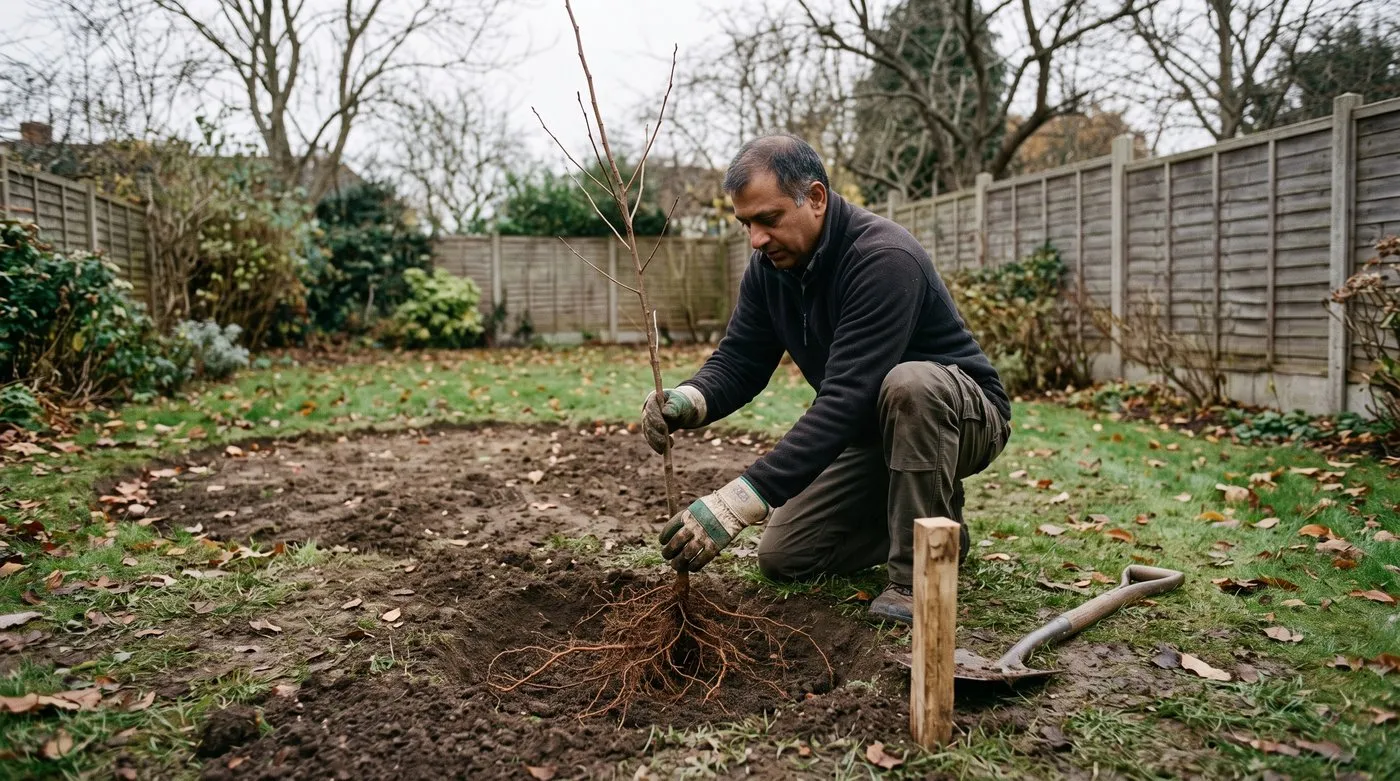
Dig wide rather than deep and backfill with the soil you took out. No compost or fertiliser in the hole.
- Clear grass and weeds from a circle about 1m across.
- Dig a hole wider than the roots, but no deeper. Loosen the sides and base with a fork.
- On heavy soil, build a low mound and plant into that so water drains away.
- Spread the roots out and set the tree at the same depth it grew in the nursery. Keep the graft union above the soil.
- Backfill with the soil you dug out. Don’t add compost or fertiliser to the hole.
- Firm gently, water well and add a short stake on the windward side.
- Mulch a 1m circle with bark or compost, keeping it clear of the trunk.
- Fit a guard if rabbits or deer visit.
Water deeply in dry spells for the first two or three summers. The bare-root tree planting guide covers staking and aftercare in more detail.
Pruning and coppicing sweet chestnut
Prune young trees lightly in winter for the first few years, then leave them be. Sweet chestnut forms a good shape on its own.
In years one to five, remove crossing, damaged or competing shoots. Aim for a single main stem with a few well-spaced branches. After that, only cut out dead, damaged or diseased wood.
Coppicing is the other way to grow it. Cut to near the ground, a sweet chestnut sends up lots of straight poles. These are traditionally cut every 15 years or so for fencing. You won’t get many nuts from a coppice, but it’s useful in a woodland corner. The pollarding and coppicing guide explains how.

A coppiced stool sends up lots of straight poles. It’s the traditional way to grow chestnut for fencing, rather than for nuts.
Sweet chestnut pests and diseases to watch for
Most garden trees stay healthy, but there are three serious problems to know about. Two must be reported.
- Chestnut blight: a fungus causing sunken orange-brown cankers on the bark, with dead shoots above. It’s notifiable, so report suspected cases to the Forestry Commission through TreeAlert.
- Oriental chestnut gall wasp: causes round green or reddish swellings on buds and leaves in spring. It’s also notifiable, so report it the same way.
- Ink disease: a root rot in wet soil, with dark staining and ooze at the base of the trunk. Good drainage is the best prevention.
Grey squirrels strip bark from young trees and take nuts. Tree guards help, and picking up nuts promptly saves more for you.
Harvesting and storing sweet chestnuts
Sweet chestnuts ripen in October. The spiky burrs split open and drop, each holding one to three shiny brown nuts.
Wear thick gloves, as the spines are very sharp. Pick up fallen nuts every day or two before squirrels and mice get them. A quick twist with your boot opens a stubborn burr.
Fresh chestnuts dry out and go mouldy fairly fast. Leave them a few days somewhere cool to sweeten. Then keep them in a paper bag in the fridge and eat within a few weeks. For longer storage, cook and peel them, then freeze.
To roast, cut a cross in the flat side of each nut so it doesn’t burst. Roast in a hot oven for 20-30 minutes, then peel while warm.

The burrs split open when the nuts are ripe. Thick gloves are a must, as those spines go straight through thin ones.
Sweet chestnut or horse chestnut?
Only sweet chestnuts are edible. Conkers, from horse chestnut, are poisonous to people and to dogs.
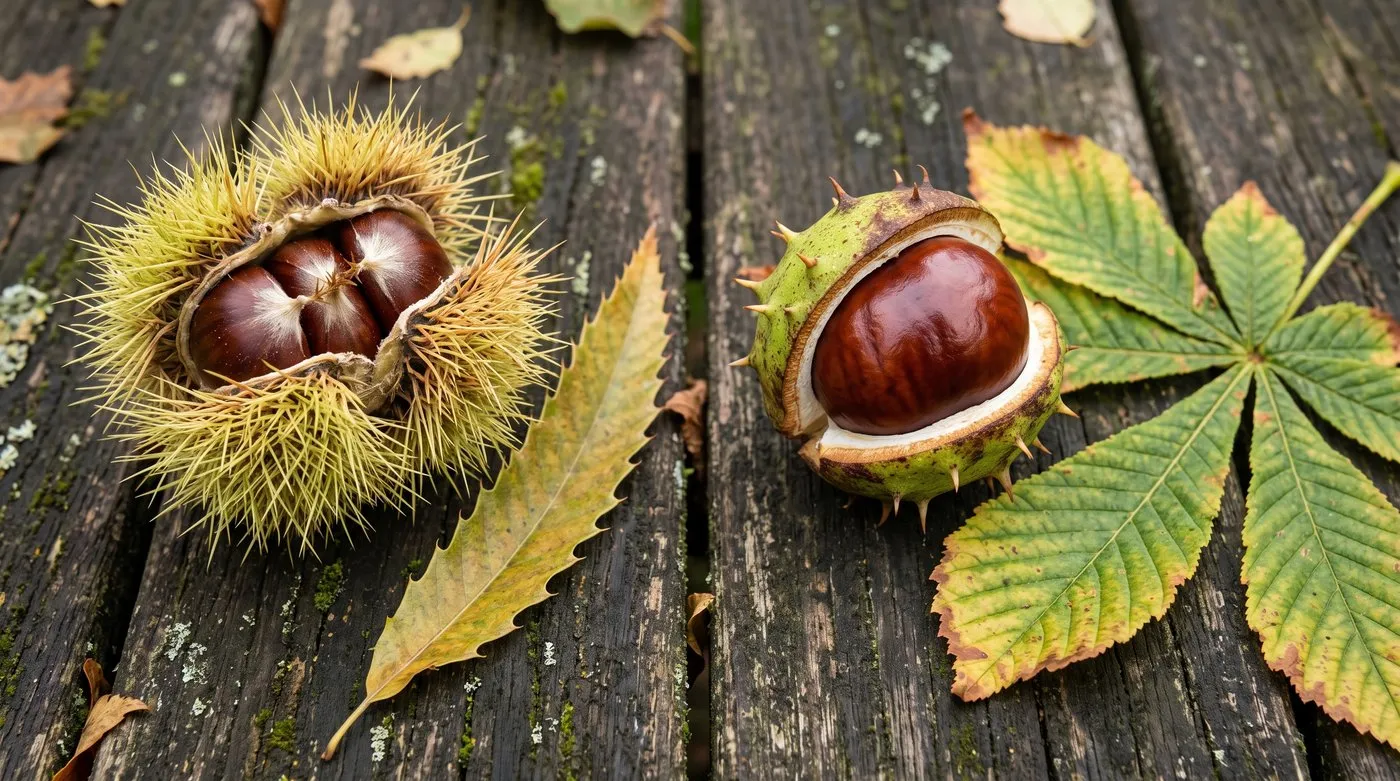
Long, fine spines and flat-sided nuts mean sweet chestnut. A few thick spikes and a round conker mean horse chestnut, which isn’t edible.
- Sweet chestnut burrs are covered in long, fine spines, like a hedgehog. Inside are one to three nuts, usually flat on one side with a little point.
- Horse chestnut cases have a few short, thick spikes. The conker inside is round, glossy and has no point.
- Leaves: sweet chestnut has long single leaves with toothed edges. Horse chestnut has big hand-shaped leaves made of five to seven leaflets.
Common mistakes with sweet chestnut
- Planting on chalk. The tree struggles and yellows. Test your soil first.
- Planting just one. A lone tree crops poorly. Choose two varieties.
- Growing from a shop nut. It’s slow to crop and the nuts can be small. Buy grafted trees.
- Underestimating the size. It becomes a very big tree. Plant well away from buildings.
- Ignoring cankers or galls. Both serious problems must be reported.
Sweet chestnut calendar
| Month | Task |
|---|---|
| November to March | Plant bare-root trees. Prune young trees lightly |
| April to May | Mulch. Look for galls on new shoots |
| June to July | Catkins and flowers appear. Water young trees in dry spells |
| August to September | Check bark for cankers. Keep watering young trees |
| October | Harvest fallen nuts every day or two |
Frequently asked questions
How long does a sweet chestnut take to fruit?
Grafted trees usually start cropping within about five years. Trees grown from a nut take much longer, often ten years or more, and the nuts can be small. Crops build up steadily as the tree grows.
Do sweet chestnuts need a pollinator?
Yes, plant two different varieties close together for a good crop. A lone tree usually gives few nuts. Some varieties, such as Bouche de Betizac, make little or no pollen, so pair them with one that does.
What is the best sweet chestnut variety for UK gardens?
Choose grafted varieties bred for large nuts. Marron de Lyon, Marigoule and Bouche de Betizac are widely grown. Ask a specialist nut nursery which pairs pollinate each other well in your area.
Can sweet chestnuts grow on alkaline soil?
Not well, as they need acid to neutral soil. On chalk or lime the leaves yellow and trees struggle. Test your soil before planting, and choose a hazel or walnut instead if it’s alkaline.
What is sweet chestnut blight?
It’s a serious fungal disease that causes bark cankers and dieback. Look for sunken orange-brown patches on the bark and dead shoots above them. It’s a notifiable disease, so report suspected cases to the Forestry Commission through TreeAlert.
Are sweet chestnuts the same as conkers?
No, conkers come from horse chestnut and are poisonous. Sweet chestnut burrs are covered in long, fine spines like a hedgehog. Horse chestnut cases have a few short, thick spikes. Only eat nuts you’re sure about.
Fancy another long-lived nut tree? Read the walnut growing guide, or browse more fruit and nut growing guides.
Our team produces practical UK gardening guidance from source research, contributor records and established horticultural practice. Editorial standards are overseen by Matt W.


