
Key takeaways
- Choose a grafted, late-leafing variety such as Broadview or Buccaneer
- Grafted trees usually crop in five to seven years; seedlings take much longer
- Avoid frost pockets, as late spring frosts kill the flowers
- Prune only in July and August, as winter cuts bleed sap
- Keep the veg patch well away, as walnut roots and leaves hold back some plants
- Harvest from September as husks split, wearing gloves against staining
English walnut is a big, beautiful tree that gives you fresh walnuts every autumn. It suits a large garden with deep, well-drained soil and a spot out of frost pockets. Choose a grafted, late-leafing variety, plant it well away from the veg patch, and only prune in summer.
This page is all about walnuts. To compare walnuts with hazel and sweet chestnut first, see the guide to growing nut trees.
Is your garden right for a walnut tree?
A walnut needs space, deep soil and shelter from late frosts. If you can’t offer those, a hazel will be much happier.
- Space: it becomes a large tree. Allow 10m or more between trees and keep well clear of houses and drains.
- Soil: deep, fertile and well-drained. Shallow soil over rock or waterlogged clay holds it back.
- Frost: walnuts are hardy in winter, but late spring frosts kill new leaves and flowers. Avoid low spots where cold air settles.
- Sun: full sun gives the best crops.
This is the English walnut (Juglans regia). Black walnut (Juglans nigra) is mainly grown for timber, and its hard-shelled nuts are tough to crack. For smaller gardens, hazel and cobnuts crop in a few years and take far less room.

A walnut needs room to spread. Give it a lawn or a big corner where its shade and roots won’t crowd other plants.
Best walnut varieties for UK gardens
Buy a grafted named variety. Grafted trees crop years sooner than trees grown from a nut, and the nuts are reliable.
| Variety | Why grow it |
|---|---|
| Broadview | The most popular UK choice. Late into leaf and crops young |
| Buccaneer | Late-leafing and reliable, a good partner for Broadview |
| Franquette | Very late into leaf, so it often escapes frosts |
| Lara | A French variety with good-sized nuts |
Walnuts are wind-pollinated, and Broadview and Buccaneer usually crop on their own. A second variety nearby can help pollination and spread the harvest.
How to plant a walnut tree
Plant bare-root trees between November and March, when the ground isn’t frozen or waterlogged.
- Clear grass and weeds from a circle about 1m across.
- Dig a hole wider than the roots but no deeper. Loosen the sides and base with a fork.
- Knock in a stake on the windward side before planting.
- Set the tree at the depth it grew in the nursery, with the graft union above the soil.
- Backfill with the soil you dug out. Don’t add compost or fertiliser to the hole.
- Firm gently, tie the tree to the stake with a proper tree tie and water well.
- Mulch a 1m circle, keeping the mulch clear of the trunk.
Water deeply in dry spells for the first two or three summers. The bare-root tree planting guide covers staking and aftercare.

Plant bare-root walnuts in winter while they’re dormant. Firm the soil well and stake the tree for its first few years.
What grows under a walnut tree?
Walnut roots, leaves and husks release a natural chemical called juglone. It holds back some plants growing close by. English walnut makes less than black walnut, but it’s still worth planning around.
- Keep away: tomatoes, potatoes, apples and other fruit trees often struggle near walnuts. Put the veg patch well out of reach of the roots.
- Usually fine: spring bulbs, ferns and other shade-tolerant woodland plants often grow happily underneath. Try a few first before planting a lot.
Rake up fallen walnut leaves and husks. Compost them separately and let them rot down well before using them, rather than mulching the veg beds with them.

Spring bulbs and ferns often do well in the dappled shade under a walnut. Keep tomatoes and potatoes well away.
How to prune a walnut tree
Prune walnuts only in July and August. Cut in winter or spring and they bleed sap heavily.
- Young trees: keep one main stem and remove competing leaders. Choose four to six well-spaced side branches.
- Older trees: only remove dead, damaged, diseased or crossing branches.
- Low branches: lift the canopy if you need to walk or mow underneath.
Make clean cuts just outside the branch collar, the slight swelling where a branch joins the trunk. Big branches high in a mature tree are a job for a qualified tree surgeon.

Summer is the only safe time to prune a walnut. Leave big climbing jobs on mature trees to a qualified tree surgeon.
Walnut blight, pests and other problems
Walnut blight is the most common problem. This bacterial disease causes black spots on leaves and blackened young nuts that drop early. It’s worst in wet springs. No home garden spray is approved for it, so prevention is the answer:
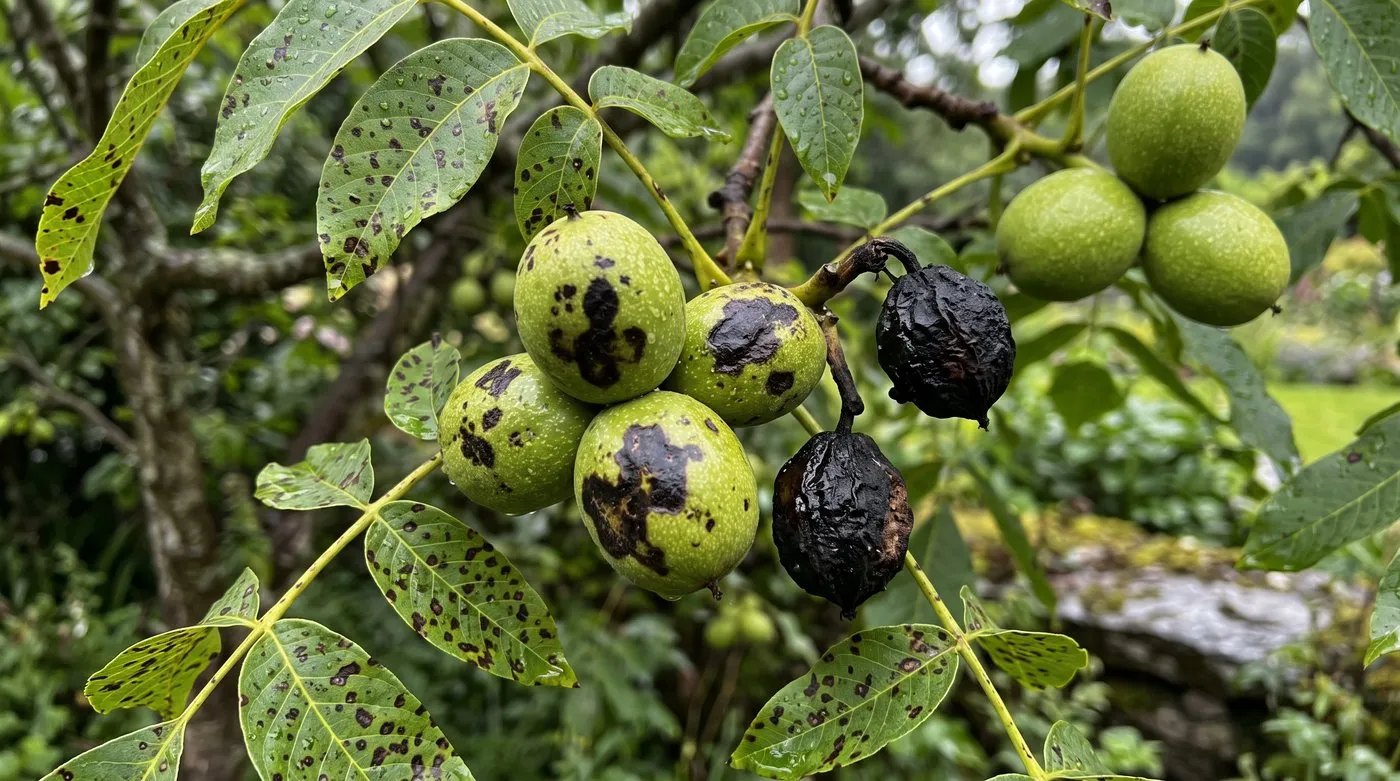
Black patches on young nuts and spots on the leaves mean walnut blight. Pick up and bin fallen nuts to cut the spread next year.
- Keep the canopy open so leaves dry quickly after rain
- Pick up and bin fallen blackened nuts and leaves, rather than composting them
- Cut out blackened shoots when you prune in summer
Other things to look out for:
- Grey squirrels take nuts and strip bark from young trees. Guard the trunk and pick up nuts promptly.
- Walnut leaf gall mite causes raised blisters on the leaves. It looks odd but does no real harm.
- Honey fungus can kill trees. Look for sudden wilting and white fungal sheets under the bark at the base. The honey fungus guide explains what to do.
Harvesting, drying and storing walnuts
Walnuts ripen from September to October. The green husks split and the nuts fall. Pick them up every day or two before squirrels and birds take them.
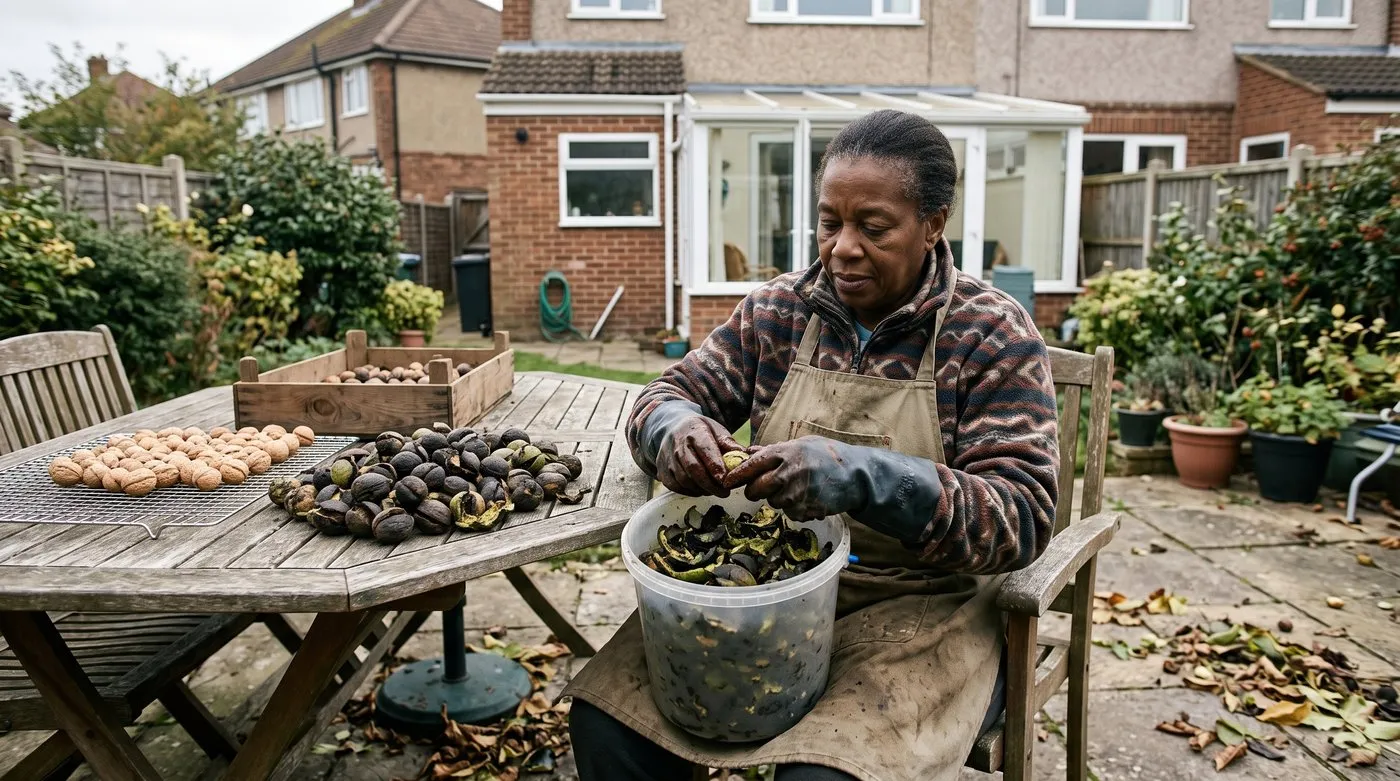
Wear gloves when you take the husks off, as the juice stains skin brown. Dry the cleaned nuts on a rack somewhere airy.
Wear gloves to remove the husks. The juice stains skin dark brown for a long time. Then:
- Rinse the nuts and rub off any husk still clinging on.
- Dry them in a single layer somewhere warm and airy for a couple of weeks, until the kernel snaps rather than bends.
- Store dry nuts in their shells in a mesh bag, somewhere cool and dry.
Shelled kernels go rancid more quickly, so keep them in the fridge or freezer.
Picking green walnuts for pickling
You can also pick walnuts green for pickled walnuts. Pick them in late June or early July, while a pin still passes right through the nut. Once the shell starts to harden inside, they’re too late. The guide to pickling garden produce covers the basics of safe pickling.
Common mistakes with walnut trees
- Planting in a frost pocket. Late frosts kill flowers and new leaves. Choose higher ground or a sheltered spot.
- Pruning in winter. The tree bleeds sap. Prune in July and August only.
- Planting near the veg patch. Juglone holds back tomatoes and potatoes. Keep them well apart.
- Growing from a shop nut. It’s slow and the nuts vary. Buy a grafted tree.
- Underestimating the size. It becomes a large tree. Plant well away from buildings.
Walnut calendar
| Month | Task |
|---|---|
| November to March | Plant bare-root trees. Check stakes and ties |
| April to May | Watch for late frosts. Mulch young trees |
| Late June to early July | Pick green walnuts for pickling |
| July to August | Prune. Cut out blackened shoots. Water young trees |
| September to October | Harvest fallen nuts. Remove husks with gloves on |
| October to November | Dry and store nuts. Clear fallen leaves |
Frequently asked questions
How long does a walnut tree take to fruit in the UK?
A grafted tree usually starts in about five to seven years. Trees grown from a nut take much longer, often well over ten years, and the nuts vary. Crops build up as the tree grows.
What is the best walnut variety for UK gardens?
Broadview is the most popular choice for UK gardens. It comes into leaf late, so it often misses spring frosts, and crops young. Buccaneer is another reliable late-leafing variety. Franquette and Lara are also grown, especially where late frosts are a problem.
Do walnuts kill plants growing nearby?
They can hold some plants back. Walnut roots, leaves and husks release a natural chemical called juglone. English walnut makes less than black walnut, but tomatoes, potatoes and apples can still struggle close by. Keep veg beds well away.
What is walnut blight?
It’s a bacterial disease that blackens young nuts and spots the leaves. It’s worst in wet springs. Keep the canopy open, pick up and bin blackened nuts and leaves, and don’t compost them.
Can I grow walnuts from supermarket nuts?
Sometimes, but stored shop nuts often won’t sprout. Fresh nuts in their shells have a better chance after a winter outside in a pot. The tree takes many years to crop and the nuts vary, so buy a grafted tree for a reliable crop.
When should I pick walnuts for pickling?
Pick them green in late June or early July. A pin should still pass right through the nut. Once the shell starts to harden inside, they’re too late for pickling.
Got room for another big nut tree? The sweet chestnut growing guide covers acid-soil gardens, and there’s more in the fruit and nut growing guides.
Our team produces practical UK gardening guidance from source research, contributor records and established horticultural practice. Editorial standards are overseen by Matt W.


