Key takeaways
- New-build gardens often have thin topsoil over subsoil compacted by building work
- Year one is about watering deeply through the first summer and not digging
- Spread 5cm of compost on beds each autumn and let worms work it in
- Expect some plant losses, and replace them in autumn with tougher choices
- Aerate, top-dress and overseed tired new-build turf in early autumn
- Hold off on proper pruning until shrubs have settled, usually year three
A new-build garden can look finished on the day you move in: patio laid, lawn turfed, beds planted. But underneath, the soil is often a thin layer of topsoil spread over subsoil squashed flat by diggers and dumpers. Plants struggle to root into it, and some won’t make it without help.
The good news is that a simple three-year plan sorts most of it. Year one is about keeping everything alive. Year two is about rebuilding the soil, fixing the lawn and replacing losses. Year three is when you start shaping the garden the way you want.
This guide is for gardens the developer has already planted and turfed. If you’ve been handed a bare plot of rubble and want to design it from scratch, see designing a new-build garden.
What’s wrong with a new-build garden?
Most new-build gardens share the same three problems.
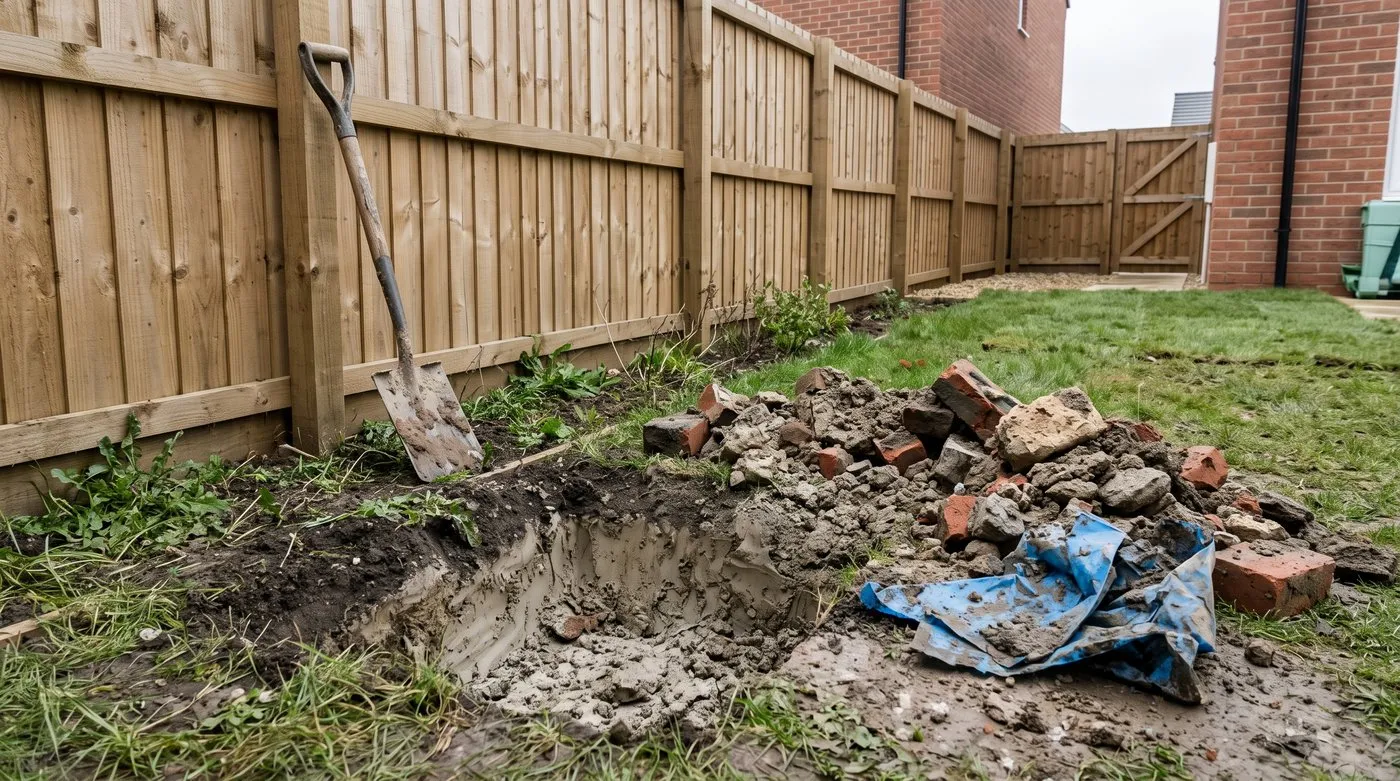
Thin topsoil over squashed clay and a few bits of rubble is a very common find in new-build gardens.
Compacted subsoil. During building, the garden area is often used for machinery, materials and skips. Topsoil is then spread back on top, sometimes quite thinly. The squashed layer underneath stops roots spreading and stops water draining. So the garden can be soggy in winter and bone-dry in summer.
Buried debris. Bits of brick, mortar, plastic and the odd buried lump of concrete are common. You’ll find them when you dig a planting hole.
Stressed plants and turf. Planting often happens in a rush at the end of the build. Plants can be pot-bound or planted in dry weather, and turf laid on compacted ground. Some losses in the first year are normal.
Not sure what soil you’ve got? The guide to UK soil types shows how to tell clay from sand or chalk in a few minutes.
Year 1: keep everything alive
Year one is about getting the developer’s plants and turf through their first summer. Focus on three jobs.
Watering
This is the biggest job in year one. From April to September, give new shrubs and trees a deep soak once or twice a week in dry weather. A full watering can, poured slowly at the base, is far better than a quick sprinkle. New turf needs watering in dry spells too, especially in its first summer.
Set up a water butt on the downpipe early. It saves tap water and gives you a supply if there’s a hosepipe ban.

A slow, deep soak at the base once or twice a week does far more good than a daily sprinkle.
Mulch in autumn
In autumn, spread a layer of well-rotted compost or bark around shrubs and trees. Keep it a hand’s width clear of the stems. Mulch holds in moisture, keeps weeds down and starts the slow job of improving the soil.
Don’t dig, but do keep notes
Resist digging over the beds. It disturbs young roots and brings rubble to the surface. Instead, walk round every couple of weeks and note what’s thriving and what’s struggling. By autumn you’ll have a list of gaps and problem spots to deal with in year two.
Year 2: rebuild the soil and fix the gaps
Year two is the main rebuilding year. You’ve seen a full season, so you know which plants failed and where the lawn struggles.
Compost on every bed
Spread about 5cm of well-rotted compost over every bed in autumn or early spring. Leave it on top. Worms will pull it down into the soil over the following months. Doing this every year slowly builds a deeper, richer layer for roots.
This no-dig approach is especially good on heavy ground. The guide to no-dig on heavy clay explains how to make it work on sticky soil.

Heavy, squashed clay is common in new-build gardens. Layers of compost on top, year after year, slowly turn it round.
Replace the losses
Go through your list from year one. For each gap, decide whether to replace like for like, choose something better suited, or leave the space if the bed was overcrowded.
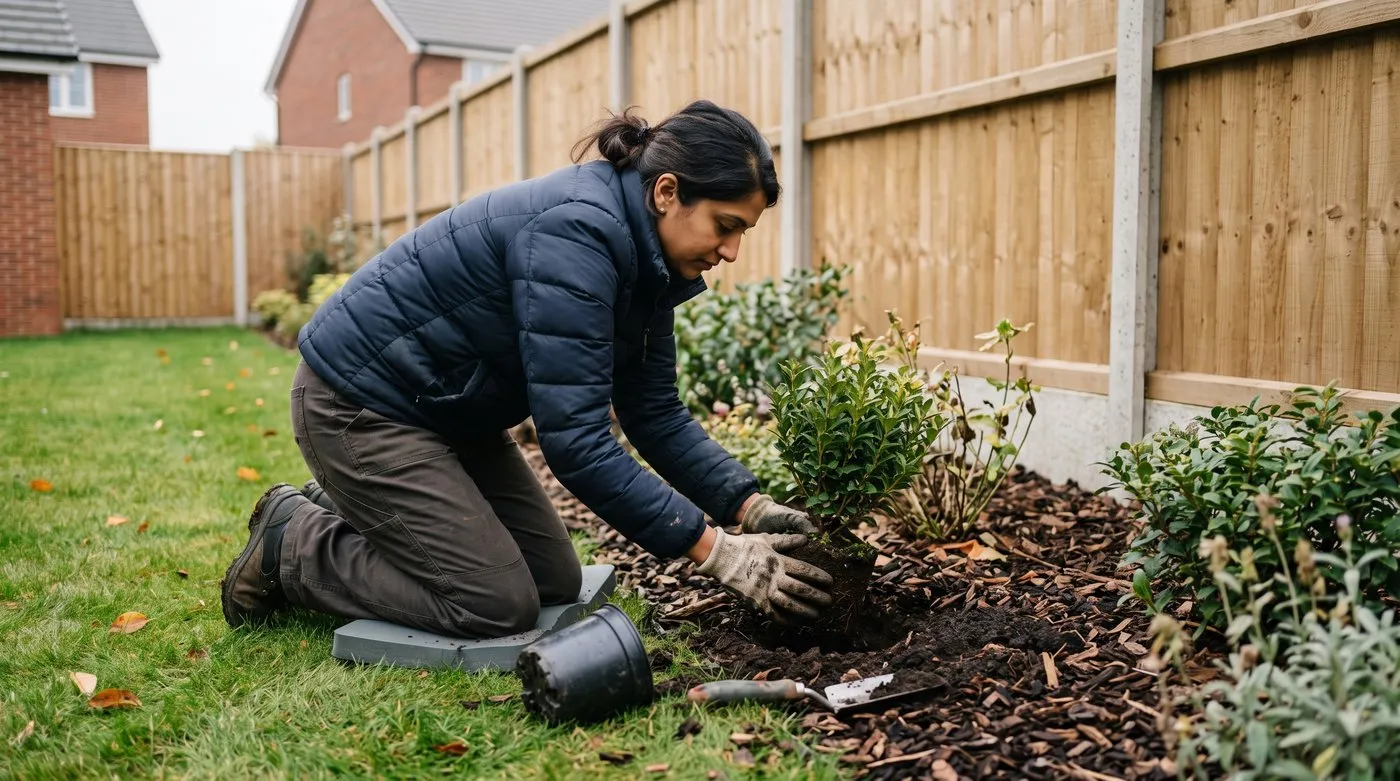
Autumn is the best time to fill the gaps left by first-year losses, so roots settle before summer.
Pick tough, reliable plants that suit your soil and how much sun the spot gets. On clay, see the best plants for clay soil. Plant in October to November or March, not in summer, and water new plants through their first summer just as in year one.
Fix the lawn
New-build turf often shows its problems by the end of the first year: thin patches over compacted ground, gaps between turves, moss in shady corners and stones working up to the surface.
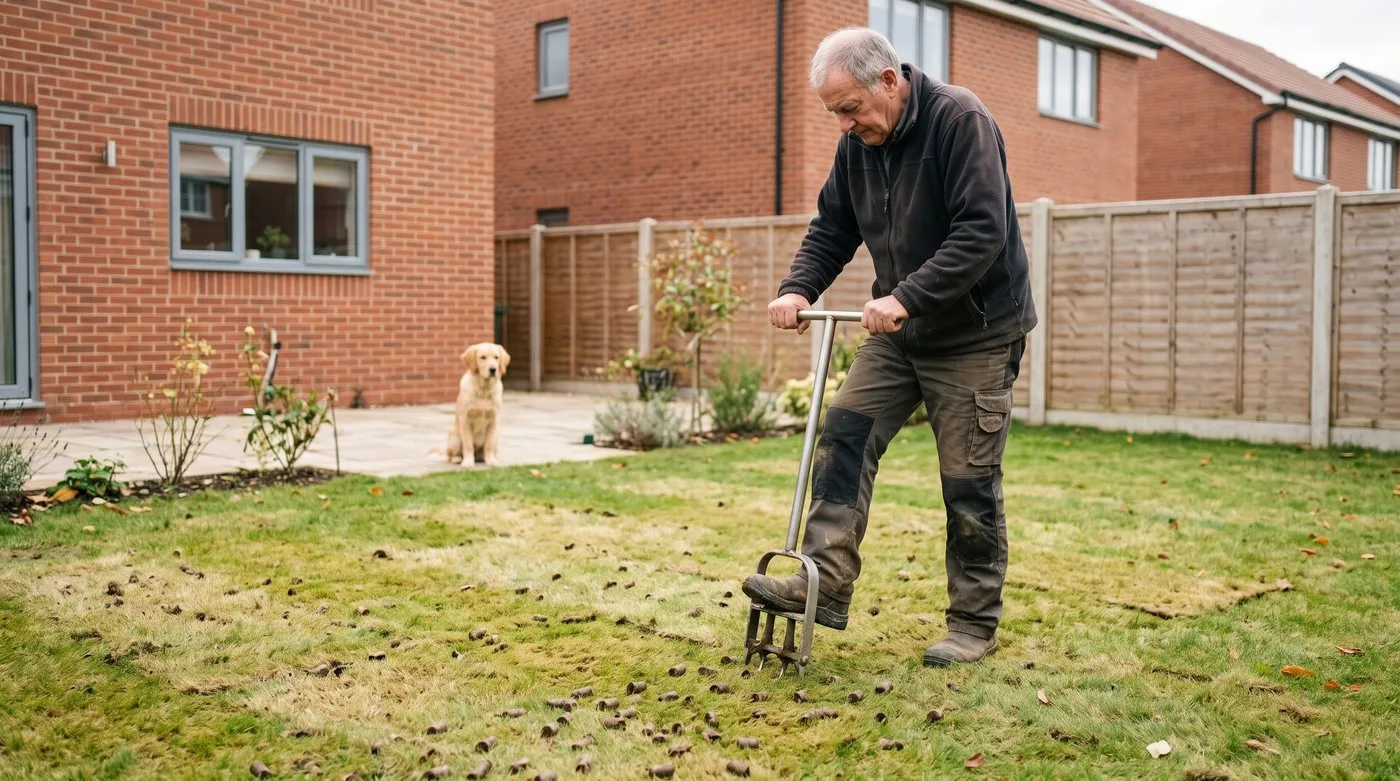
Pulling out little cores of soil lets air and water back into squashed new-build turf, ready for top-dressing and seed.
In early autumn:
- Scarify to rake out moss and dead grass.
- Aerate compacted patches with a hollow-tine aerator, which pulls out small cores of soil.
- Top-dress with a sandy lawn top-dressing and brush it into the holes.
- Overseed thin or bare patches with a hard-wearing grass seed mix.
- Feed with an autumn lawn feed.
The guide to scarifying and aerating a lawn covers each step in detail.
Water less as plants settle
By the second summer, most plants that made it through year one have better roots. Water deeply once a week in long dry spells rather than twice. This encourages roots to go down looking for water.
Year 3: start shaping the garden
By year three, plants are settled, the lawn has filled in and the beds have had a couple of compost mulches. Now the work moves from rescue to shaping.
First proper prune
Most shrubs are ready for their first proper prune in year three. A simple guide:
- Spring-flowering shrubs such as forsythia, weigela and philadelphus: prune just after flowering.
- Late-summer flowering shrubs such as buddleja and lavatera: cut back hard in spring.
- Evergreen hedges and shrubs such as yew and photinia: trim in late summer.
- Roses: prune in late winter or early spring.
Remove crossing, weak and wayward stems, and anything blocking a path. Before cutting hedges or dense shrubs between March and August, check carefully for nesting birds and leave any active nest alone.
Test the soil
Year three is a good time for a soil test. A simple pH kit tells you whether your soil is acid, neutral or alkaline, which helps you choose plants. The guide to soil testing and pH explains how to take a sample and what the results mean.
Small design changes
By now you can see what works. Move a shrub planted too close to the path. Split perennials that have bulked up. Fill a gap with a feature plant. Bigger changes, like a new bed or a path, are easier to plan now the garden has shown its true shape.

With a few years of watering, mulching and filling gaps, a new-build garden can look like this.
How to plant in a new-build garden
Good planting matters even more on poor, squashed soil. At any stage:
- Dig a hole about twice as wide as the root ball, but no deeper.
- If the bottom and sides are hard, break them up with a fork so roots can spread.
- Remove any rubble you find.
- Set the plant at the same depth it was growing in its pot.
- Backfill with the soil you dug out, firm gently and water in well.
- Mulch around the plant, keeping it clear of the stem.
- Stake trees low down with a soft, flexible tie, and only if they need it.
A mycorrhizal fungi product sprinkled on the roots can help new trees and shrubs settle into disturbed new-build soil.

Plant at the same depth as in the pot and use a soft tie on the stake, checking it each year so it doesn’t cut in.
Three-year aftercare calendar
| When | Year 1 | Year 2 | Year 3 |
|---|---|---|---|
| March to April | Start checking for dry spells. Weed beds | Plant replacements. Aerate the lawn again if still soggy | Prune late-summer shrubs. Test the soil |
| May to August | Water deeply once or twice a week if dry | Water once a week in long dry spells | Water only in long dry spells. Prune spring shrubs after flowering |
| September | Note losses and problem spots | Scarify, aerate, top-dress and overseed the lawn | Feed and repair the lawn as needed |
| October to November | Mulch around shrubs and trees | Spread 5cm of compost on all beds. Plant replacements | Mulch beds. Make small design changes |
| December to February | Plan replacements | Plan any bed changes | Prune roses late in winter |
Common new-build garden mistakes
- Not watering in the first summer. This is the main reason developer planting fails.
- Digging everything over. It brings up rubble and disturbs roots. Mulch on top instead.
- Piling mulch against stems. It can rot the bark. Keep a gap.
- Planting replacements in summer. Autumn or early spring planting gives roots time to settle.
- Ignoring the lawn until it’s patchy. Aerate and overseed thin areas in the first or second autumn.
- Pruning too hard, too soon. Young shrubs need their leaves to grow roots.
Frequently asked questions
Why does a new-build garden need 3 years of aftercare?
Because the soil under a new-build garden is often poor. Builders often leave a thin layer of topsoil over compacted subsoil. Watering, mulching and lawn care over the first few years help plants root in and rebuild the soil.
How much does new-build garden aftercare cost?
It depends on the size of the garden and how much you do yourself. Most of the spending goes on bulk compost or mulch, replacement plants and lawn seed and feed. Doing the work yourself keeps costs modest.
Why do plants die in new-build gardens after a year?
Usually because of compacted soil and a dry first summer. Roots stay in the thin topsoil and can’t reach water deeper down. Overwatering, mulch piled against stems and stressed plants also cause losses.
Should I dig over the whole garden in year 1?
No, avoid digging over the whole garden. Digging can bring buried rubble to the surface and disturbs young roots. Spread compost on top each autumn instead and let worms do the work.
When can I prune a new-build garden’s shrubs?
Leave most shrubs largely unpruned for the first year or two. Just remove dead, damaged or diseased growth. Start proper shaping from about the third year, once they’ve settled.
How often should I water new plants in a new-build garden?
Once or twice a week in dry weather through the first summer. Give each shrub or tree a slow, deep soak rather than a light sprinkle. Keep going from April to September, easing off when autumn rain arrives.
Once your new-build garden has settled in, keep the grass in shape with our lawn care calendar, or browse more how-to guides.
Our team produces practical UK gardening guidance from source research, contributor records and established horticultural practice. Editorial standards are overseen by Matt W.