Key takeaways
- Eucalyptus grow very fast and can become large trees, so plan for their size before planting
- Cider gum and snow gum are the hardiest choices for UK gardens; snow gum stays smaller
- Plant a small pot-grown tree in May or June, as it roots in better than a big staked one
- Coppice or pollard every one to two years in early spring to keep it at 2-4m
- A felled eucalyptus stump re-sprouts, so grind it out or treat it to stop regrowth
Eucalyptus can be a lovely garden plant or a giant headache, and the difference is how you manage it. These fast, silvery evergreens from Australia will happily become big trees. Pick a hardy type, plant it small, and cut it back regularly, and you’ll have a neat shrub full of round blue leaves.
This guide covers which eucalyptus to grow, how to plant it, how to keep it small, and what to do with one that’s grown too big.
Which eucalyptus survive a UK winter?
Only a few eucalyptus are hardy enough for British gardens. These are the three to look for:
- Cider gum (Eucalyptus gunnii): the one in every garden centre. Fast and tough, with round silvery young leaves. Left alone it becomes a large tree.
- Snow gum (E. pauciflora subsp. niphophila): one of the hardiest, from the Australian mountains. It stays smaller and has gorgeous mottled grey, green and cream bark.
- Mountain gum (E. dalrympleana): fast, with pale patchy bark and a pinkish tinge to young stems. A little less hardy, so give it shelter.
For most gardens, snow gum is the best all-rounder because it stays a sensible size. Cider gum is great if you’re happy to cut it back regularly. If you’d like a slower, tidier evergreen, compare it with the best evergreen trees for UK gardens.
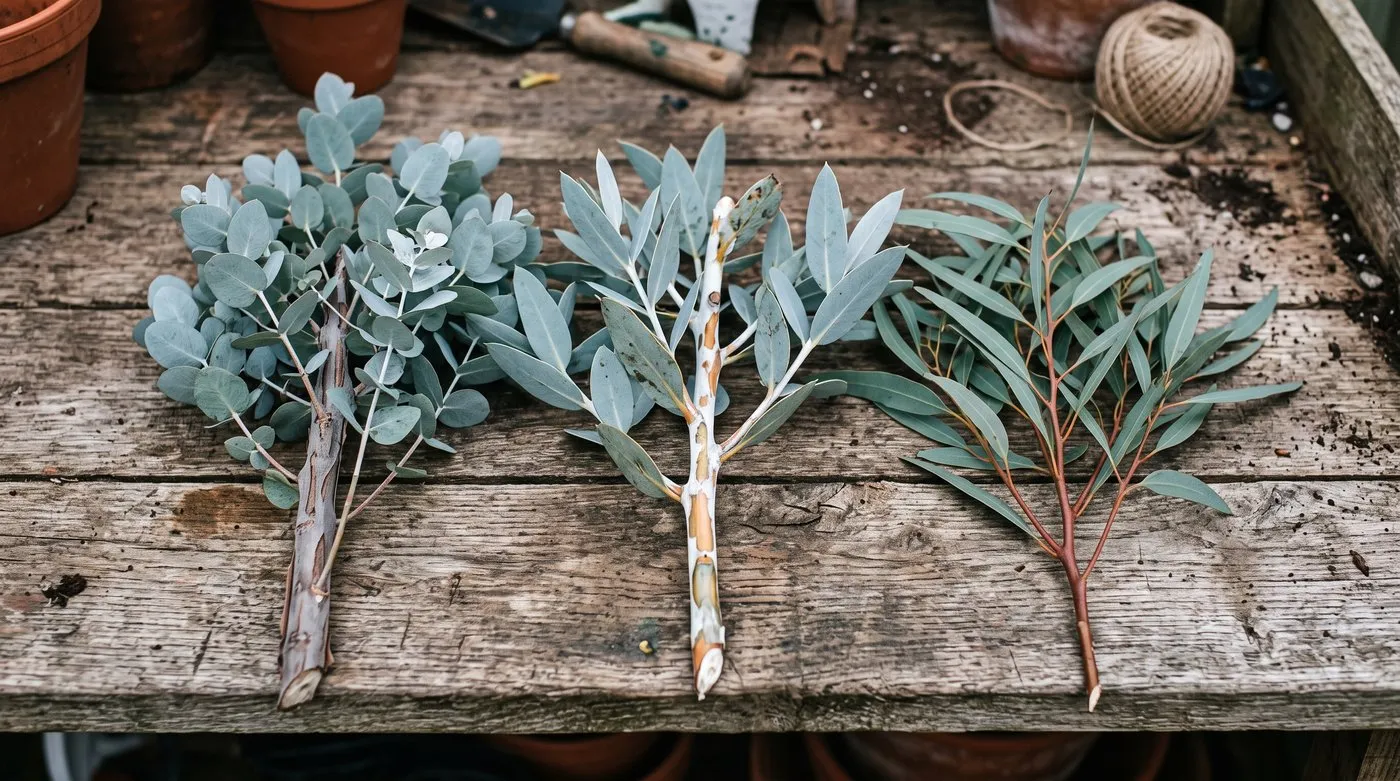
Hardy eucalyptus vary a lot in leaf shape and bark. Snow gum, in the middle, has some of the prettiest bark.
Round young leaves or long adult leaves?
Eucalyptus have two quite different kinds of leaf. Young (juvenile) leaves are the round, blue-grey discs that florists love. They grow in pairs hugging the stem and have the strongest colour and scent. Adult leaves are long, narrow and curved, hanging down in a duller grey-green.
Young plants and regularly cut plants keep their round leaves. Once a tree grows up, it switches to adult leaves. That’s why an old cider gum looks so different from the little pot you bought.
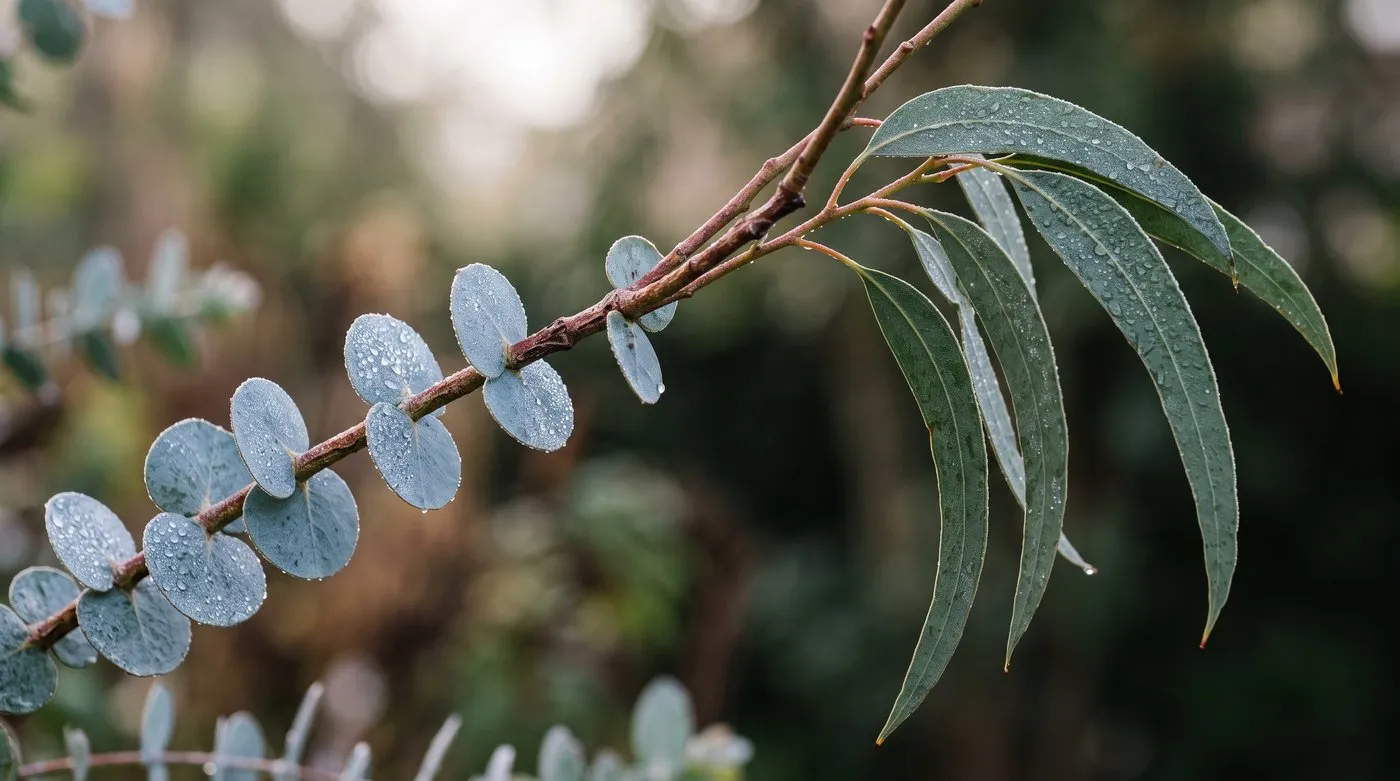
Round young leaves on the left, long adult leaves on the right. Regular coppicing keeps the plant in its round-leaved stage.
How big and how fast does eucalyptus grow?
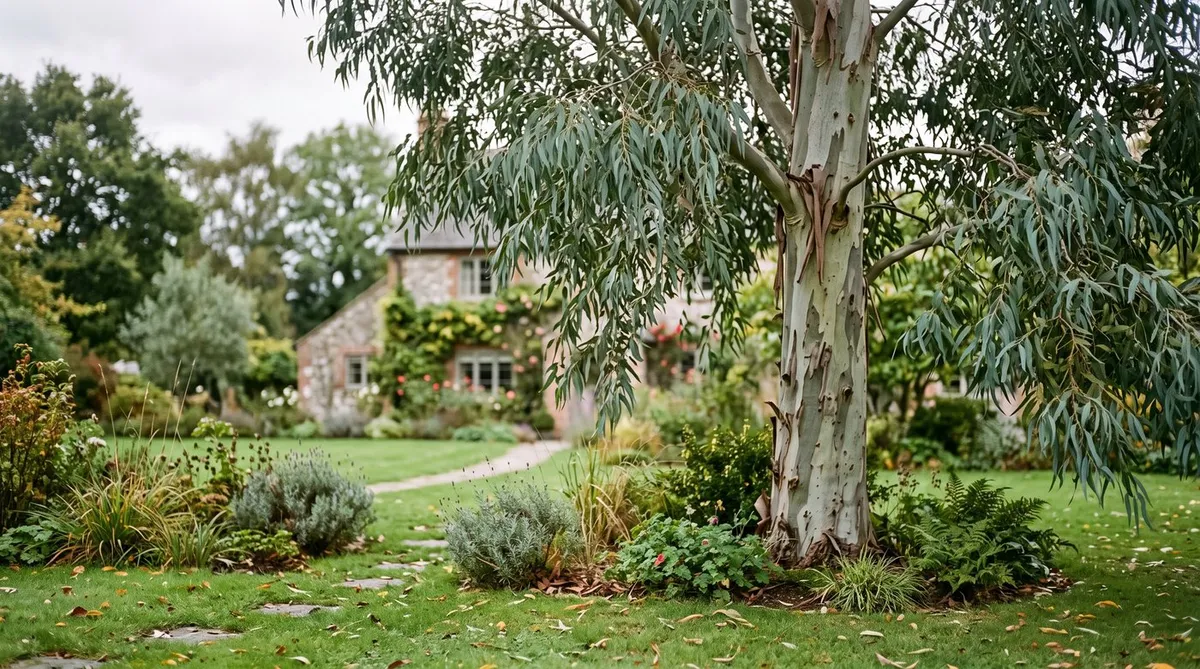
Very fast. Once settled, eucalyptus often grow a metre or more a year. Left uncut, a cider gum can pass 15m, while a snow gum usually stays much smaller.
At full size, the problems start. A big tree shades borders, drinks a lot of water, and sheds bark, twigs and sometimes branches. The roots spread wide and shallow, so a tall tree has poor anchorage in a gale.
Decide before you plant whether you’ll let it grow into a tree or keep it cut. A full-size eucalyptus doesn’t belong close to a house, drain or boundary. For a tree that stays naturally compact, see the best trees for small gardens. If you want a fast evergreen screen without a future giant, look at fast-growing hedging plants instead.
Warning: Give full-size eucalyptus plenty of room, well away from buildings. On shrinkable clay soil, a large, thirsty tree near foundations can add to the risk of subsidence.
How to plant eucalyptus for strong roots
The golden rule is to plant small. A young plant in a 9cm or 2 litre pot roots in faster and anchors better than a tall staked specimen. Big plants are top-heavy and rock in the wind, which stops the roots taking hold.
- When: late spring or early summer, usually May or June, so the roots have a full warm season before winter.
- Where: full sun, shelter from cold drying winds, and well-drained soil.
- Staking: use a short, low stake only on a windy site, and remove it after a year. A little movement helps the roots grow stronger.
- Watering: water through the first summer, and in dry spells the next. After that, established plants cope well with dry weather.
- Feeding: don’t. Rich, moist soil pushes soft growth that suffers in cold weather.
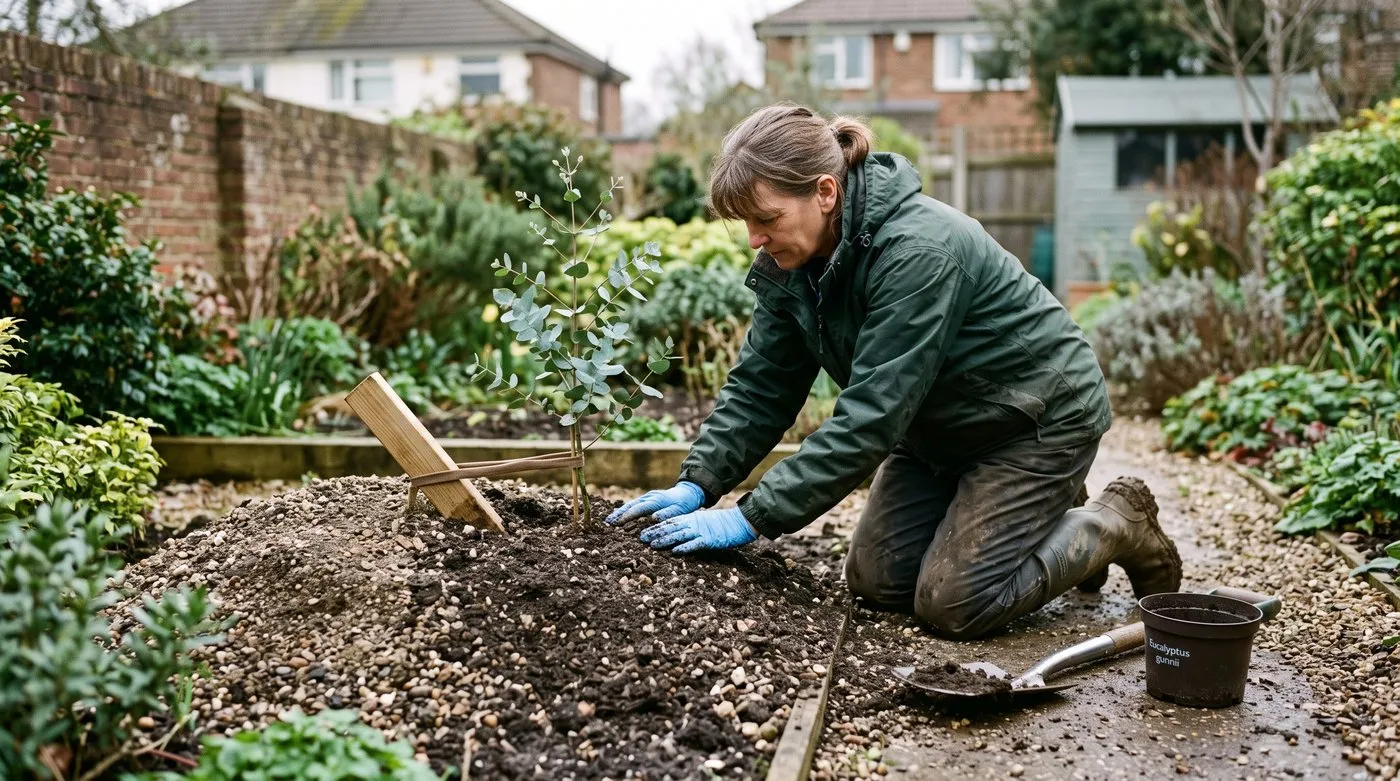
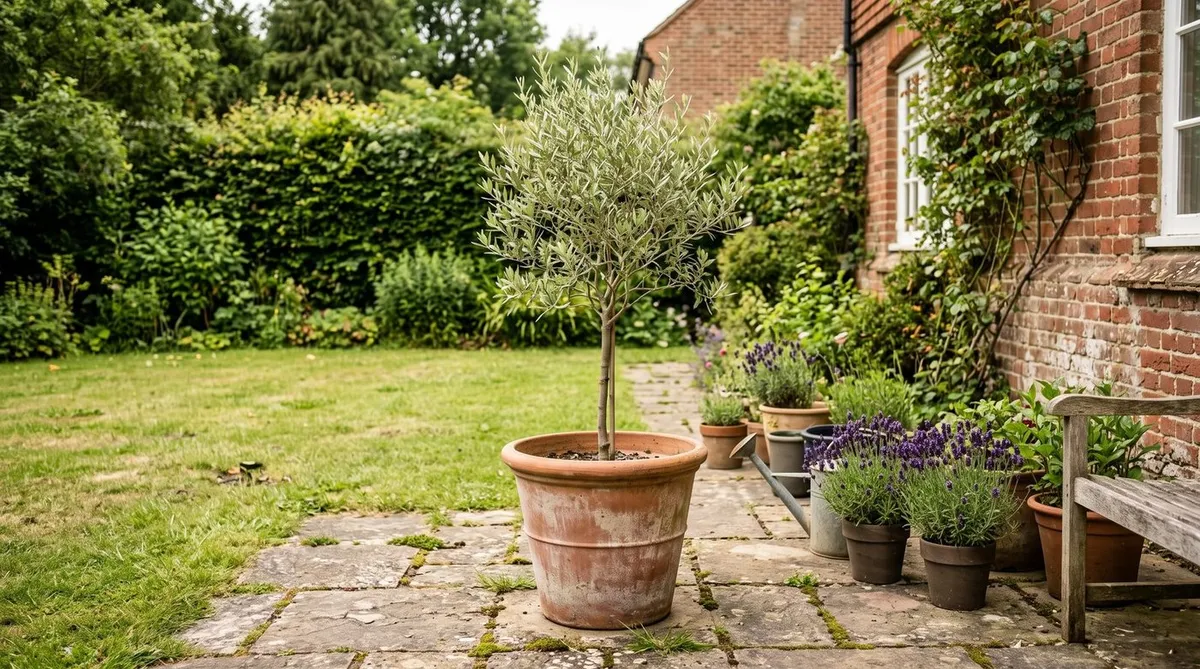
Small plant, short stake. A young eucalyptus like this settles in far better than a big one.
Coppicing and pollarding to keep eucalyptus small
Regular cutting is what makes eucalyptus a good garden plant. It copes with hard pruning well, because in the wild it regrows after fire.
- Coppicing means cutting the whole plant down to a low stump, about 15-45cm high, so it sends up lots of new stems.
- Pollarding means cutting back to the top of a clear trunk, often 1.5-2m high, so you keep a stem to walk under.
Cut in early spring, March or April. The new shoots grow quickly and are covered in round silvery young leaves. Repeat every one to two years to keep a bushy plant of about 2-4m. Leave it longer and the stems get thick and hard to cut. The guide to pollarding and coppicing explains both methods step by step.
| Method | Cut height | How often | Result | Best for |
|---|---|---|---|---|
| Yearly coppice | 15-30cm | Every year | A dense, bushy shrub | Small gardens, cut foliage |
| Two-year coppice | 30-45cm | Every 2 years | A taller multi-stem shrub | A silvery screen with less work |
| Pollard | 1.5-2m | Every 1-2 years | A bushy head on a clear trunk | Keeping height near paths |
| No cutting | None | Never | A large tree with adult leaves | Big gardens with room |
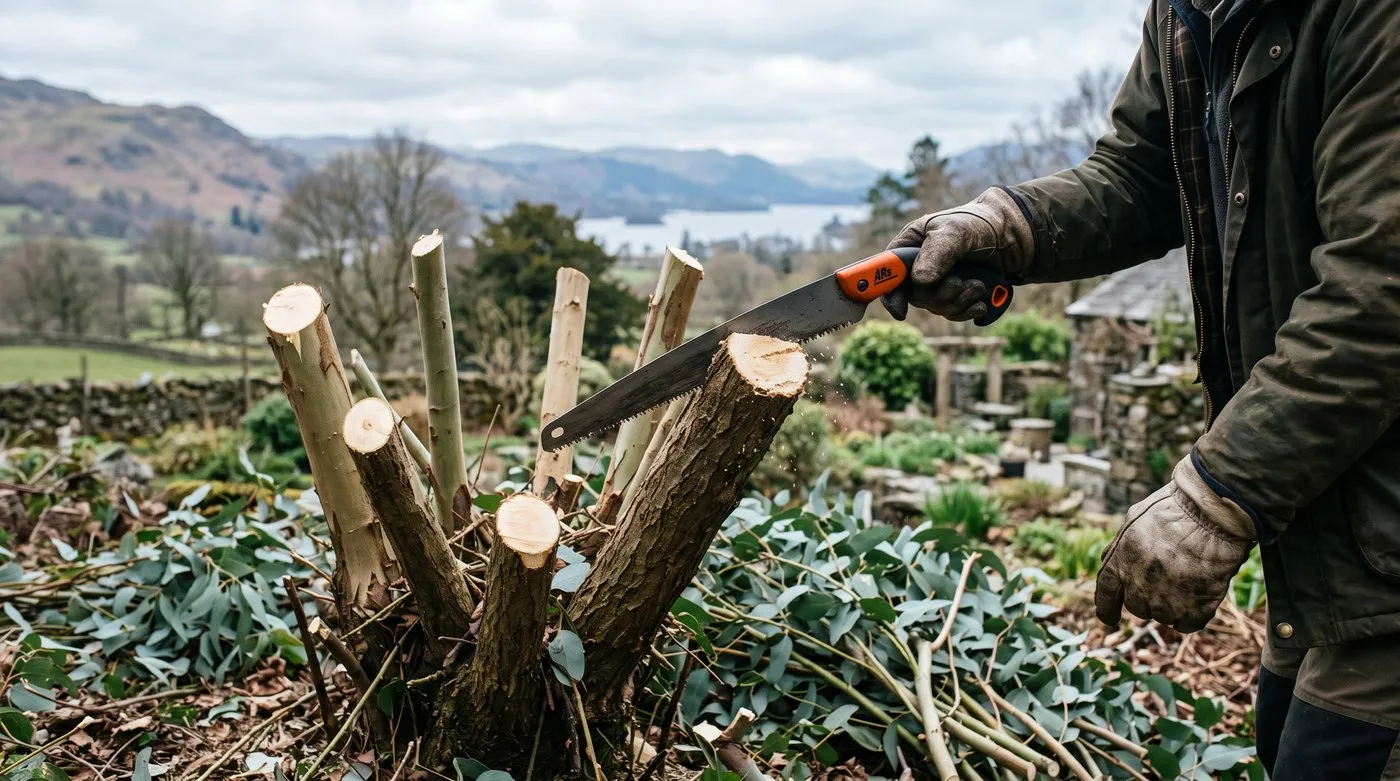
Cutting back hard in early spring. Fresh silvery shoots soon follow.
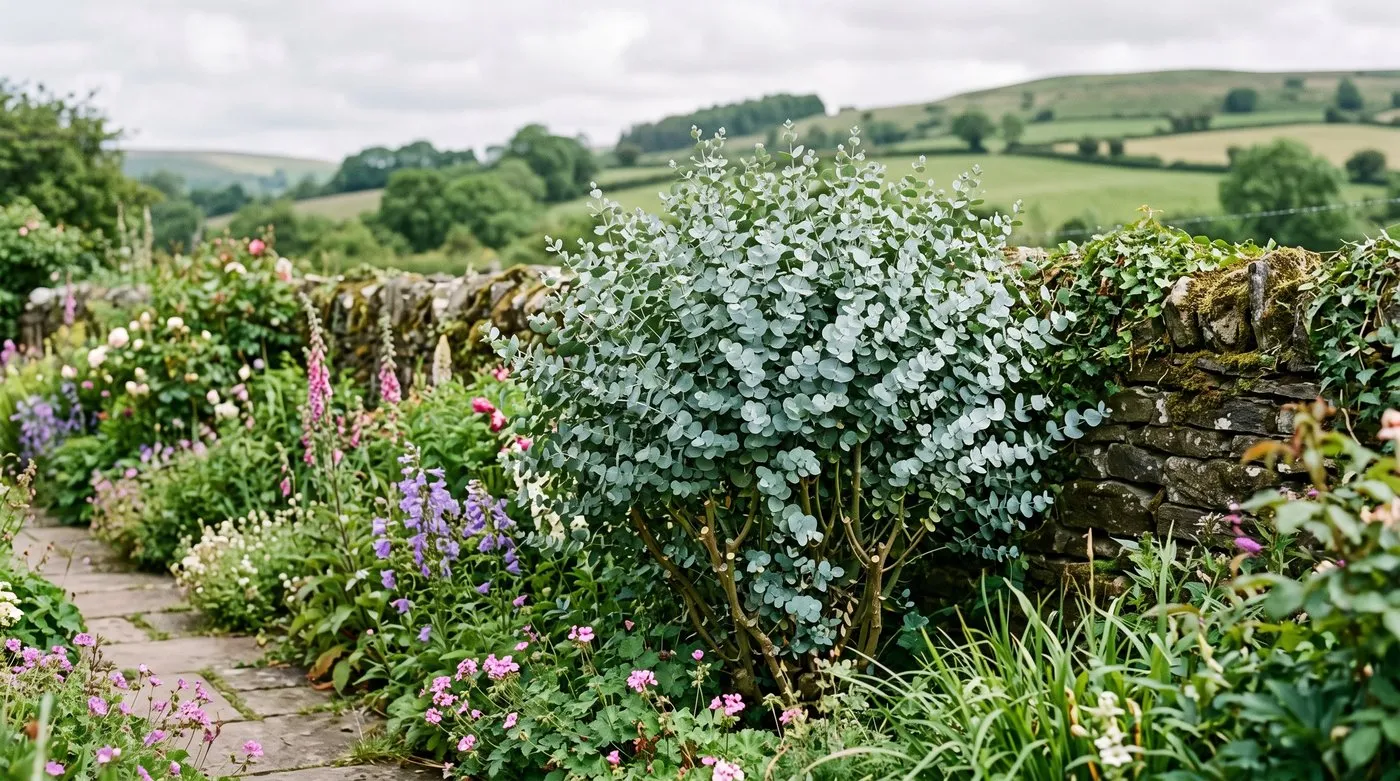
A regularly coppiced eucalyptus stays a bushy shrub covered in round silver-blue leaves.
Month-by-month eucalyptus calendar
| Month | What to do |
|---|---|
| January | Check young plants after hard frost. Leave any browned leaves until spring |
| February | Plan your coppicing. Sharpen your saw |
| March | Coppice or pollard on a dry day |
| April | Finish any cutting back. New shoots start |
| May | Plant new eucalyptus from small pots |
| June | Last chance to plant. Water new plants in dry spells |
| July | Water young plants in dry weather. Cut stems for flower arranging |
| August | Keep watering plants in their first summer |
| September | Stop cutting so growth can firm up before winter |
| October | Check stakes and ties on young plants before winter winds |
| November | Leave plants alone. Shelter very young plants on exposed sites |
| December | Shake heavy snow off young plants to stop stems snapping |
Should you remove or just tame a eucalyptus?
People often remove eucalyptus because they’re too tall, too close to the house, too shady or drying out the garden. Before you fell one, think about pollarding instead. It cuts the height, the water use and the wind risk in one go, while keeping the trunk.
A tall tree near a boundary or building is the most likely candidate for full removal. Because the roots are shallow, a big eucalyptus can blow over in a gale, lifting a plate of soil and often a fence with it. Shedding bark and branches can also be a nuisance over a patio or pond.
For a big, mature tree, get a qualified tree surgeon to look at it. The guide to a conifer that’s too big walks through a similar reduce-or-remove decision.

Shallow roots give a tall eucalyptus poor anchorage. In a strong gale the whole root plate can lift.
Felling a eucalyptus and stopping the stump regrowing
A felled eucalyptus stump rarely dies on its own. Many eucalyptus can re-sprout from the base, so a ring of new shoots often appears within weeks.
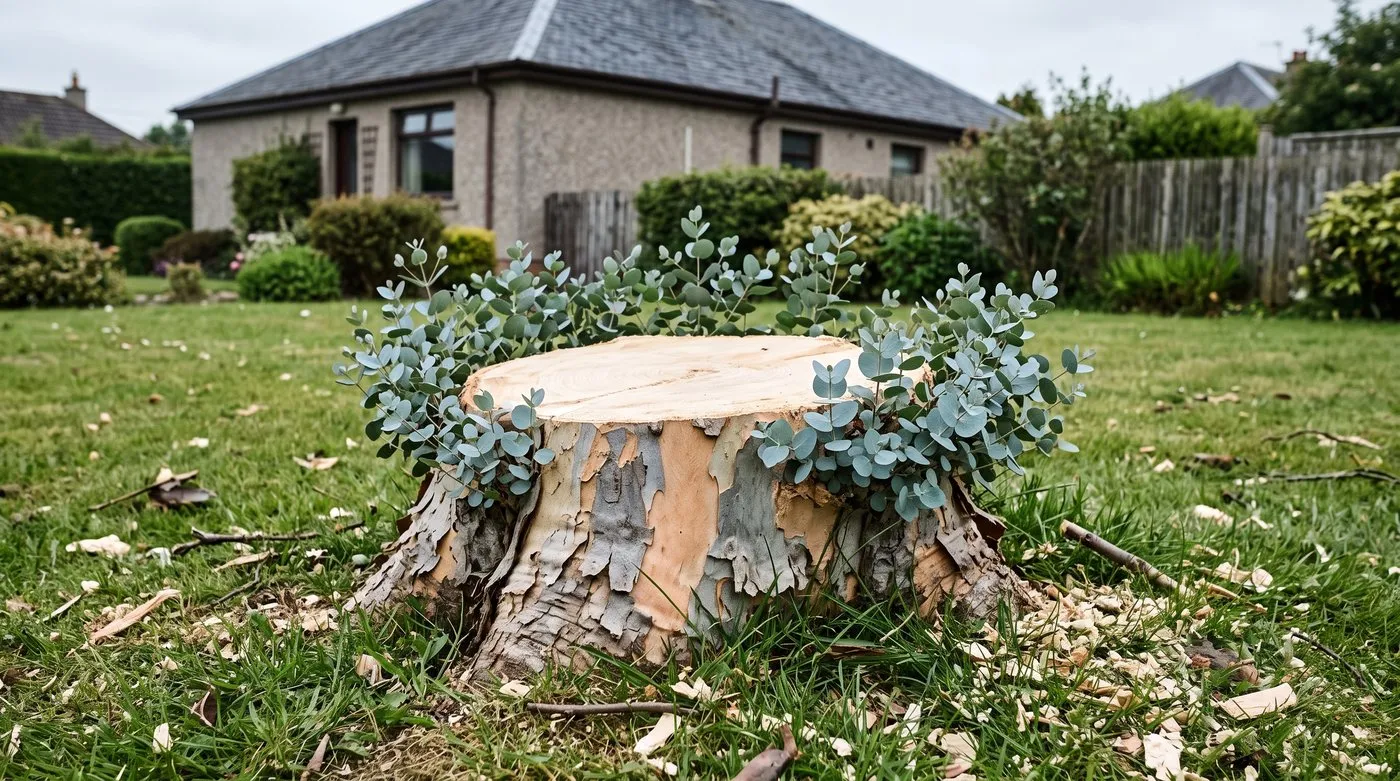
A felled eucalyptus soon pushes up fresh shoots. Grind the stump out or treat it, or it will rebuild itself.
There are two reliable ways to finish the job:
- Grind the stump out below soil level. This removes the regrowth points and is the cleanest fix.
- Treat the fresh cut straight after felling with an approved stump killer, following the label. Then cut off any new shoots that appear.
Removing every new shoot as it appears will also weaken the stump over time, though it’s slower. A large tree may keep pushing up shoots for a season or two. A regularly coppiced plant is much easier to remove than a big tree that’s never been cut.
Common mistakes when growing eucalyptus
- Planting too big. Big staked plants root slowly and rock in the wind. Buy small and plant small.
- No shelter from cold wind. Freezing winter winds scorch the leaves. Choose a sheltered, sunny spot.
- Planting near the house and forgetting it. A fast tree soon becomes a problem. Coppice or pollard from the start, or plant well away.
- Expecting a felled stump to die. Grind it out or treat it, and remove new shoots.
- Feeding and overwatering. Lean, well-drained soil gives tougher growth.
Frequently asked questions
Which eucalyptus is hardiest for a UK garden?
Snow gum and cider gum are the hardiest choices for UK gardens. Snow gum stays smaller and has beautiful mottled bark. Cider gum is the one most garden centres sell. Both cope with most UK winters in sun and well-drained soil.
How fast does eucalyptus grow?
Very fast, often a metre or more a year once settled. That speed is why a small tree can become a big one within a few years. Regular coppicing or pollarding is the reliable way to keep it in check.
Should I remove a eucalyptus tree?
Only if it’s too big, too close to a building, or a safety risk. A large eucalyptus drinks a lot, sheds bark and branches and can blow over. Pollarding is often a good middle path, keeping the tree but cutting its height.
How do you keep a eucalyptus small?
Coppice or pollard it every one to two years in early spring. Cutting it back hard makes it send up bushy new shoots with round silver-blue young leaves. That keeps the plant at about 2-4m and gives the leaves florists love.
Do eucalyptus tree roots cause problems?
They spread wide and shallow and take a lot of water. That can dry out nearby lawns and borders. On shrinkable clay, a big thirsty tree close to a house may add to subsidence risk. Shallow roots also mean poor anchorage in a gale.
Will a eucalyptus stump grow back after felling?
Yes, eucalyptus stumps usually re-sprout strongly. Grind the stump out below soil level, or treat the fresh cut with an approved stump killer following the label. Then remove any new shoots as they appear for a season or two.
When is the best time to plant eucalyptus in the UK?
Plant in late spring or early summer, usually May or June. That gives the roots a full warm season before winter. Choose a small pot-grown plant, a sunny, sheltered spot and well-drained soil, and water it through its first summer.
Now your eucalyptus is under control, read the guide to drought-tolerant plants for easy companions that like the same dry, sunny spot, or browse more trees in the plants section.
Our team produces practical UK gardening guidance from source research, contributor records and established horticultural practice. Editorial standards are overseen by Matt W.