Key takeaways
- Mandevilla is tender, so grow it in a pot you can move indoors
- Put it outside from late May or June, when nights stay above about 10°C
- Give it full sun, shelter from wind and a support to twine around
- Water often in summer and feed every week or two with a high-potash feed
- Bring it in by late September or early October and keep it above 10°C
- Trim it back in early spring to get bushy new growth and plenty of flowers
Mandevilla is a tender climber with big, glossy trumpet flowers in pink, red or white. In the UK it’s a summer patio plant: grow it in a pot outside from late May or June, then bring it indoors before the nights turn cold. Do that and one plant will flower for years.
You’ll also see it sold as dipladenia, usually for the shorter, bushier types. If you like the idea of a showy tender climber, bougainvillea in a pot is another option. It needs more heat and sun to flower well, while mandevilla is the easier patio choice.
Best Mandevilla varieties for UK patios
Pick by size. Tall climbers suit an obelisk or trellis, while compact types suit smaller pots and baskets.
| Variety | Flowers | Habit | Good for |
|---|---|---|---|
| ’Alice du Pont’ | Large, rich pink | Tall twining climber | Obelisks, trellis, conservatories |
| Sundaville range | Red, pink or white | Compact, lightly climbing | Patio pots |
| Rio range | Red, pink or white | Bushy, trailing | Hanging baskets, window boxes |
| Diamantina range | Several colours | Compact | Smaller pots |
| Mandevilla laxa (Chilean jasmine) | White, scented | Tall twining climber | Sheltered walls in mild areas |
Mandevilla laxa is the odd one out. It’s tougher than the others and can live outside on a warm, sheltered wall in mild parts of the UK, though it may lose its leaves in a cold winter. The rest need to come indoors.

Compact types like this red Sundaville are ideal for a patio pot. They flower non-stop through a warm summer.
Pots, compost and support
Use a pot 30-40cm across with good drainage holes. A bigger pot gives a bigger plant but is harder to carry indoors in autumn, so think about that before you buy.
Fill it with peat-free multipurpose compost mixed with a few handfuls of grit or perlite. Mandevilla hates soggy roots.
Put the support in before you plant. An obelisk, a wigwam of canes or a small trellis 1.5-2m tall suits most climbing types. Wind the young stems gently around it. They soon twine on their own. Our guide to training young climbers has more tips.

A sturdy obelisk in the pot gives the twining stems something to climb from day one.
Where and when to put Mandevilla outside
Choose the sunniest, most sheltered spot you have, such as a south or west-facing patio against a wall. Wind batters the flowers and chills the plant.
Wait until nights stay above about 10°C, which usually means late May in the south and June further north. Harden it off first by putting it out for a few hours on mild days over a week or two. The guide to hardening off bedding and half-hardy plants explains how.
Watering and feeding in summer
Pots in full sun dry out fast. In warm weather you may need to water daily, and twice in a heatwave. Water when the top few centimetres of compost feel dry, and soak the pot so water runs out of the bottom. Never leave it standing in a full saucer.
Feed every week or two from early summer to early September with a high-potash liquid feed, such as tomato feed. That keeps the flowers coming. Stop feeding in autumn.

On hot days a pot in full sun can need water every day. Soak it well, then let the top dry a little.
How to overwinter Mandevilla indoors
Mandevilla can’t take frost, and it sulks below about 10°C. Bring it in by late September or early October, before cold nights arrive.
Good winter spots:
- A heated conservatory
- A greenhouse heated to at least 10°C
- A bright windowsill in a warm room, away from cold glass at night
An unheated greenhouse, cold porch or garage is too cold.
In winter, water sparingly, letting the top of the compost dry out between drinks, and don’t feed. Some yellow leaves and leaf drop are normal while it adjusts. Check under the leaves for red spider mite and mealybug, which like warm, dry rooms. The guide to mealybug shows what to look for.
For other tender plants that need bringing in, see how to overwinter plants.

A few dropped leaves in winter are nothing to worry about. Keep the plants bright, warm and on the dry side.
Pruning Mandevilla in spring
Mandevilla flowers on new growth, so a spring trim means more flowers. Do it in late winter or early spring, before it starts growing strongly.
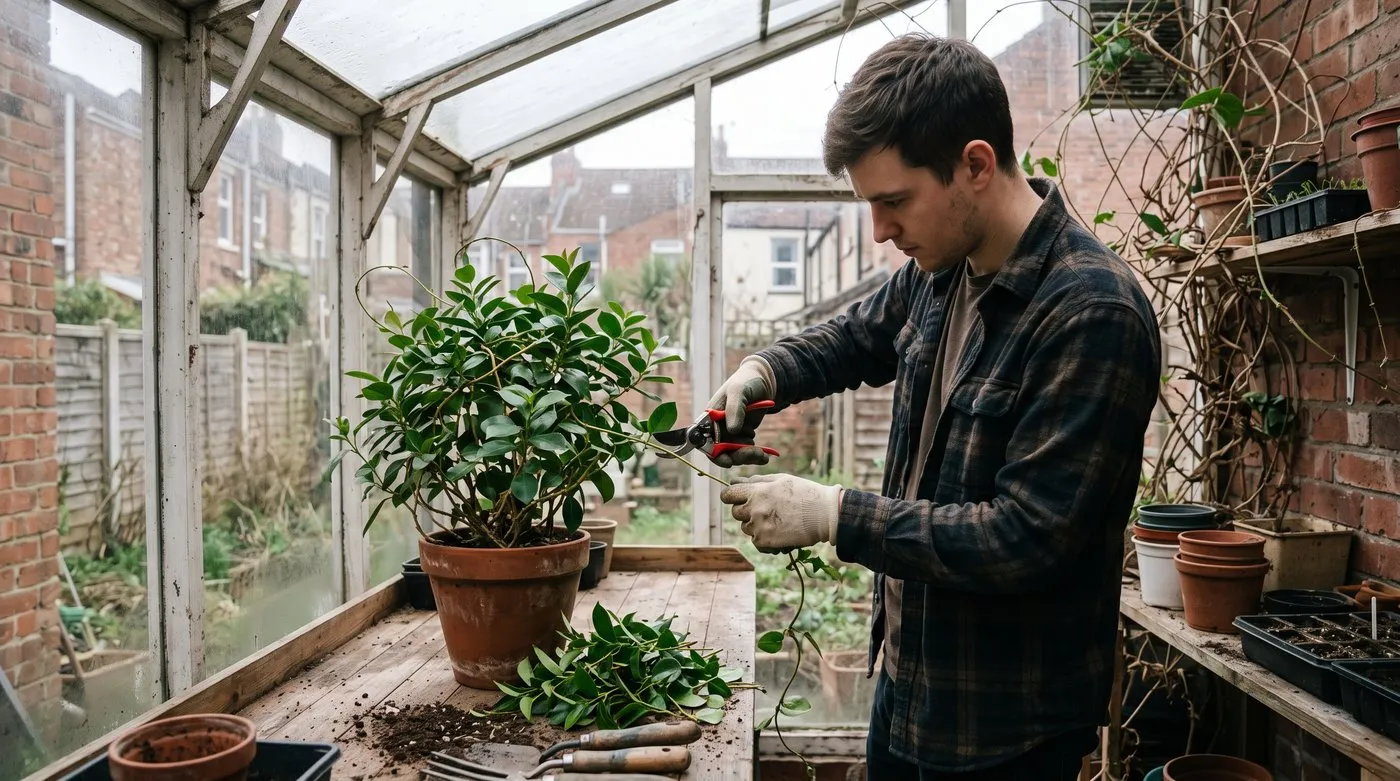
A spring trim just above a leaf joint gives a bushier plant that flowers all summer on its new shoots.
- Cut out any dead, weak or tangled stems
- Shorten long stems back to a few buds, cutting just above a leaf joint
- On a leggy plant, cut harder to get it bushy again
- Move it into a slightly bigger pot or fresh compost if it’s packed with roots
- Start watering a little more and feeding as new shoots appear
Wear gloves, as the cut stems ooze a milky sap that can irritate skin. You can also trim straggly shoots in summer to keep it tidy.
Mandevilla month by month
| Month | What to do |
|---|---|
| January | Indoors. Water sparingly. Check for pests |
| February | Indoors. Prune late in the month if growth is starting |
| March | Prune if not done. Repot if needed. Start watering a bit more |
| April | Start feeding as growth picks up. Keep indoors |
| May | Harden off. Move outside in late May in mild areas |
| June | Outside in a sunny spot. Water often. Feed every week or two |
| July | Main flowering. Water daily in hot spells |
| August | Keep watering and feeding. Tie in stray stems |
| September | Stop feeding. Bring in late in the month if nights turn cold |
| October | Indoors by early October. Water less |
| November | Bright, warm spot. Water sparingly |
| December | Rest. Keep above about 10°C |
Common Mandevilla mistakes
Putting it out too early. Cold nights in May stop growth dead. Wait until nights stay mild.
Leaving it out too late. A chilly September night can set it back badly. Bring it in in good time.
Overwatering in winter. Cool, wet compost rots the roots. Let it dry a little between drinks.
Overwintering it somewhere cold. An unheated greenhouse or porch is too cold for it. It needs a warm, bright room.
Skipping the spring trim. Untrimmed plants get leggy, with flowers only at the tips.
Frequently asked questions
Can I grow Mandevilla outdoors in the UK?
Yes, but only in summer. Put it outside in a sunny, sheltered spot from late May or June, once nights stay mild. Bring it back indoors in late September or early October, before cold nights set in. It won’t survive a UK winter outside.
How do I overwinter Mandevilla in the UK?
Keep it indoors somewhere bright and above about 10°C. A heated conservatory, a warm greenhouse or a sunny windowsill all work. Water much less, letting the top of the compost dry out, and stop feeding until spring. Some leaf drop is normal.
When should I prune Mandevilla?
Prune in late winter or early spring, before new growth starts. Cut long stems back to a few buds and remove any weak or dead ones. It flowers on new growth, so a spring trim gives a bushier plant with more flowers.
What is the best Mandevilla variety for UK gardens?
For a tall climber, choose the pink ‘Alice du Pont’. For a smaller pot or hanging basket, the compact Sundaville, Rio and Diamantina ranges are easy to find. For scent and a little more hardiness, try Chilean jasmine, Mandevilla laxa.
Is Mandevilla toxic to pets?
Play it safe and stop pets chewing it. Like many plants in its family, it has a milky sap that can irritate skin. Wear gloves when pruning, and ask your vet if a pet eats some.
Why are my Mandevilla leaves turning yellow?
Usually too much water, or cold. Let the top of the compost dry a little between waterings, and keep it away from cold draughts. Yellowing and some leaf drop are also normal when you first bring it indoors in autumn.
Want more ideas for walls, fences and obelisks? Read our guide to the best climbing plants for UK gardens, or browse all our plant guides.
Our team produces practical UK gardening guidance from source research, contributor records and established horticultural practice. Editorial standards are overseen by Matt W.