Key takeaways
- Check the sun, soil and moisture first, then choose plants that like those conditions
- Space plants at their full-grown width and fill gaps with annuals for a year or two
- Tall at the back, low at the front, and tallest in the middle of an island bed
- Repeat plants in groups of three, five or seven so a border looks calm, not spotty
- Keep spreading plants away from slow, delicate ones
- Check the final size of shrubs and trees before planting near the house
Lovely plants can still look wrong if they’re in the wrong place. Too close together, hidden behind something taller or struggling in the wrong light, they never show what they can do.
The good news is that every placement mistake has a simple fix. Most happen before a plant even goes in the ground. This guide is about where to put each plant in a border. For bigger layout problems like narrow paths or too much lawn, see our guide to garden design mistakes and how to fix them.
Check the spot before you plant
Spend an hour looking at the bed before you buy anything. Note how many hours of sun it gets, whether the soil is clay, sandy or chalky, and whether it stays wet or dries out.
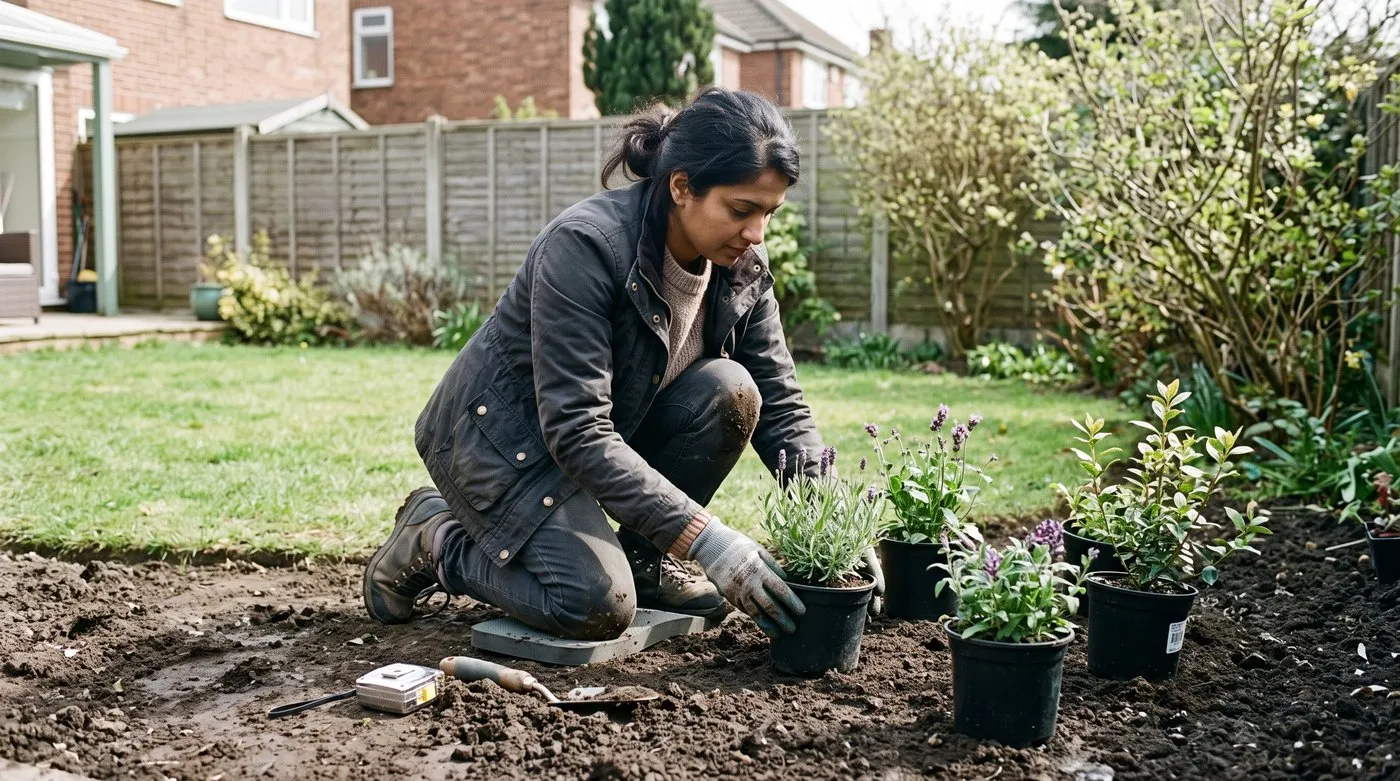
Setting plants out in their pots first shows you the spacing and heights before anything goes in the ground.
Then stand your plants in their pots on the bed, spaced at their full-grown width. Look at them from the house and the path. You’ll spot spacing, height and grouping problems while they’re still easy to fix.
Our guide to reading your garden’s aspect and light helps you work out which beds get the most sun.
1. The wrong plant for the conditions
This is the root of most failures. A plant chosen for its looks rather than the spot will always struggle.
A sun-lover in shade grows leggy and flowers poorly. A moisture-lover on dry, sandy soil goes crispy. No amount of feeding fixes this. Check the spot, then choose plants that already like it. The table further down helps.
2. Planting too close together
New beds look bare, so it’s tempting to cram plants in. Within a couple of seasons they smother each other, trap damp air and pick up mildew.
Space every plant at its full-grown width, counting from the centre of one plant to the centre of the next. Fill the gaps with annuals or bulbs for a year or two while the permanent plants spread.

Planted too close, these perennials are already squashing each other and losing their lower leaves.
3. Tall plants at the front
Tall plants at the front hide everything behind them. In a border you see from one side, put tall plants at the back, medium ones in the middle and low ones at the front.
In an island bed you walk around, put the tallest in the centre. A few airy, see-through plants such as Verbena bonariensis or grasses can break the rule and come forward. Our guide on how to plan a mixed border gives plants for each layer.

Tall at the back, low at the front, so every plant gets seen.
4. Ignoring your soil type
Some plants need acid soil, and no feed will make up for the wrong soil. Rhododendrons, camellias, pieris and blueberries go yellow and sulk on chalky, alkaline ground.
A cheap soil test kit tells you where you stand. If your soil is alkaline, grow acid-lovers in pots of ericaceous (lime-free) compost. Our guide to soil pH explains how to test and what grows best.
5. Nothing green in winter
A border of summer perennials is bare earth from November to March. Add a few evergreen shrubs and grasses so it keeps its shape all year.
Aim for roughly a third evergreen. Small shrubs such as sarcococca, hebe or a clipped shrub at the corners do a lot of work.
6. One of everything
One plant each of twenty kinds looks spotty and busy. Repeat the same plant in groups of three, five or seven, and let those groups weave along the border.
Repetition is what makes planting look calm and planned. Our guide to the best plant combinations for borders shows pairings that work well together.

Repeating salvia and grasses along the border ties it all together.
7. Ignoring warm and cold corners
Every garden has warmer and colder spots. The bottom of a slope can be a frost pocket. The base of a sunny wall can be hot and dry.
Put tender plants away from frost pockets. Use a warm, sheltered wall for slightly tender plants you couldn’t risk in the open, and water them well, as soil at the foot of a wall stays dry.
8. Everything flowering at once
A border that peaks in June can be dull for the rest of the year. Plan something for each season: spring bulbs, early perennials, summer flowers, autumn seed heads and winter stems.
Tucking bulbs between perennials is the easiest way to stretch the show into spring.
9. Thugs next to delicate plants
Fast spreaders swamp slower neighbours. Mint, running bamboo, some hardy geraniums and self-seeders like lady’s mantle can take over.
Keep them away from small, choice plants, or grow them in pots or behind a root barrier. Group plants with similar vigour so nothing gets bullied. Our list of garden thugs names the main culprits.
10. Forgetting the full-grown size
A shrub sold in a small pot can reach 3m or more. The cute conifer by the front door can end up blocking the windows.
Read the height and spread on the label before you buy. Plant large shrubs and trees well clear of walls, windows and drains, allowing for their final width.

Planted too close to the house, this conifer now blocks the windows and gutters.
11. Soft plants in a windy spot
Large, soft leaves get shredded in exposed and coastal gardens. Choose tough, small-leaved or flexible plants for windy spots.
Plant a windbreak of tough shrubs such as escallonia or griselinia first. Softer plants then do much better in the shelter behind it.
Right plant, right place at a glance
Find your conditions in the left column, then pick from the middle.
| Conditions | Plants that thrive | Plants to avoid there |
|---|---|---|
| Sunny and dry | Lavender, salvia, sedum, rosemary | Hostas, ferns, astilbe |
| Sunny and moist | Roses, daylilies, phlox, dahlias | Lavender, cistus |
| Part shade, moist | Hostas, astilbe, ferns, foxgloves | Lavender, sedum |
| Dry shade | Epimedium, male fern, Geranium macrorrhizum, periwinkle | Astilbe, primulas |
| Acid soil | Rhododendron, camellia, pieris, blueberry | Dianthus, lavender |
| Windy or coastal | Escallonia, hebe, sea holly, ornamental grasses | Japanese maples, big-leaved hostas |
Some of these, including lavender, dahlias and foxgloves, aren’t safe for pets to chew. Check before planting if you have a dog or cat that nibbles.

Hostas and ferns are happy in shade where sun-lovers would fail.
Plant spacing by plant type
Space plants at their full-grown width. These are handy starting points, but always check the label.
| Plant type | Typical spacing |
|---|---|
| Bedding plants | 15-25cm |
| Perennials | 30-45cm |
| Ornamental grasses | 45-60cm |
| Small shrubs | 60-90cm |
| Large shrubs | 1-2m |
How to fix a plant in the wrong place
Move it. Most shrubs and perennials can be lifted and replanted in autumn or early spring, when the soil is moist and the plant isn’t in full growth.
Water well the day before. Dig a wide rootball, replant at the same depth in a spot that suits it, and water well through its first summer. Large, old shrubs and plants with a long taproot move less well, so it may be easier to replace those.
For more planting and layout ideas, visit our garden design hub.
Frequently asked questions
What is the most common planting mistake?
Choosing a plant for its looks rather than the spot. A sun-lover in shade or a bog plant on dry sand will sulk whatever you do. Check the sun, soil and moisture first, then pick plants that like those conditions.
How far apart should I space plants?
Space each plant at its full-grown width. That’s often 30-45cm for perennials, 60-90cm for small shrubs and 1-2m for large shrubs. It looks sparse at first, so fill the gaps with annuals or bulbs for a year or two.
Should tall plants go at the back of a border?
Yes, in a border you see from one side. Put tall plants at the back, medium in the middle and low at the front. In an island bed, put the tallest in the centre. See-through plants like Verbena bonariensis can come forward.
How do I stop plants outgrowing their space?
Check the final height and spread on the label before you buy. Many shrubs sold small grow to 2-3m. Plant big shrubs and trees well away from walls, windows and drains, allowing for their full-grown width.
Why do my plants keep dying in the same spot?
The spot probably doesn’t suit what you’re planting there. A frost pocket, dry shade under a tree or waterlogged clay will kill plant after plant. Work out what the spot is like, then choose plants that like it.
Can I move a plant that’s in the wrong place?
Yes, most shrubs and perennials can be moved. Do it in autumn or early spring when the soil is moist. Dig up a good rootball, replant at the same depth and water well through the following summer.
Ready to put it all on paper? Our guide on how to write a planting plan walks you through it step by step.
Our team produces practical UK gardening guidance from source research, contributor records and established horticultural practice. Editorial standards are overseen by Matt W.