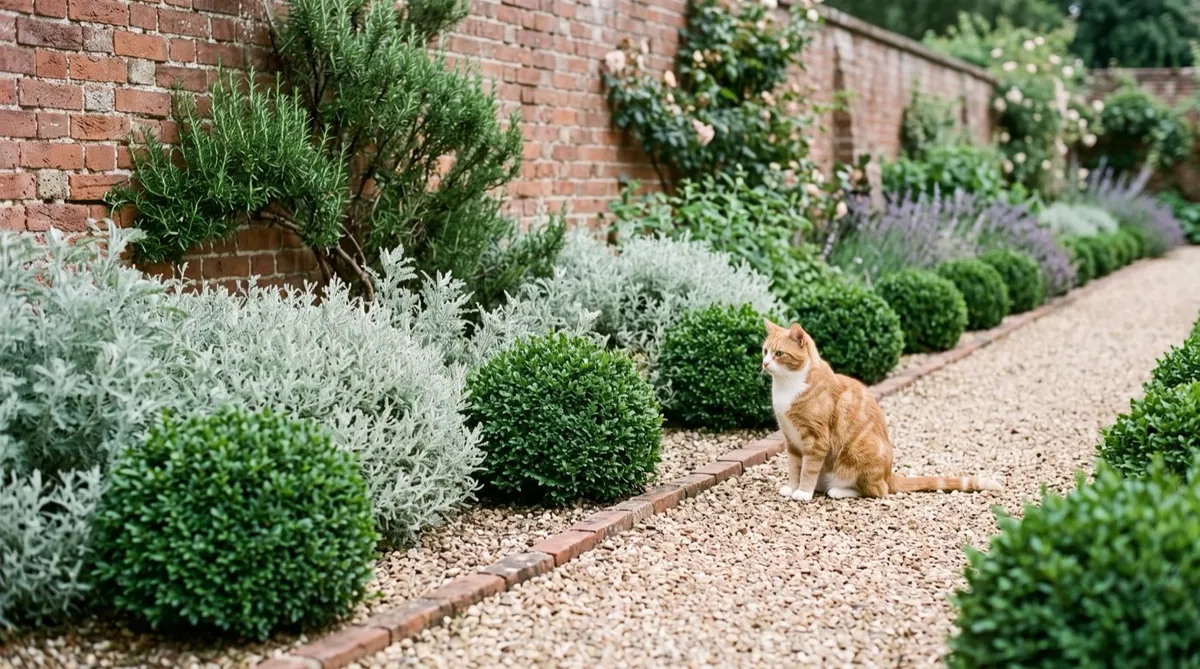
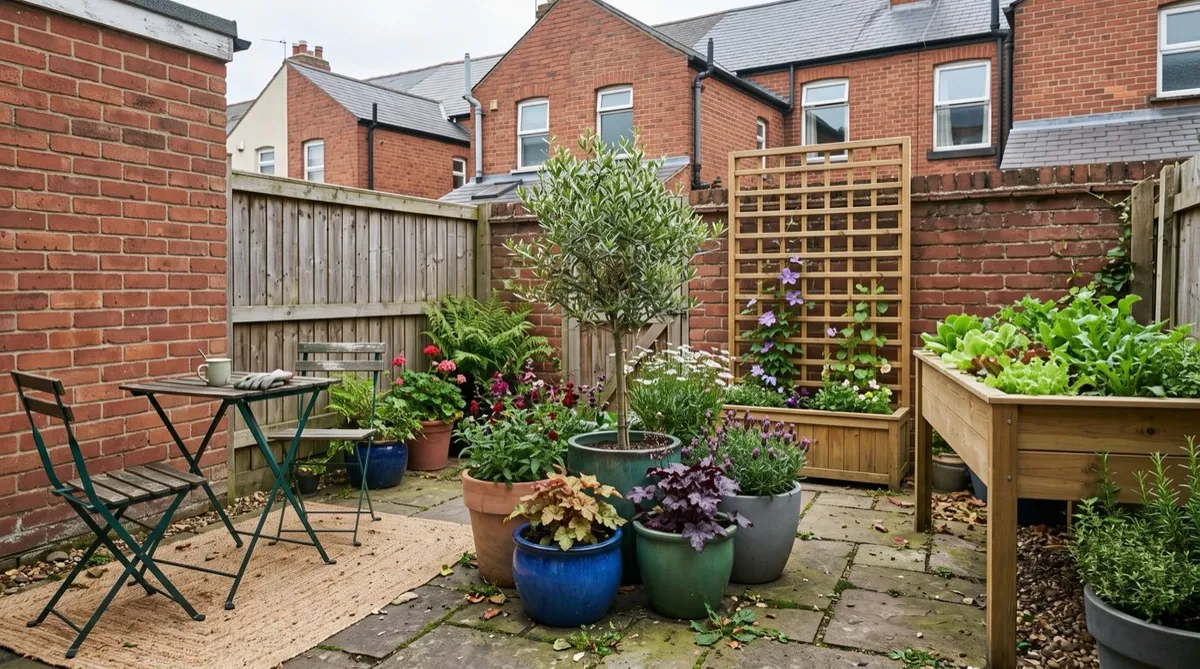
Key takeaways
- Brick and stone walls store the day's warmth and shelter plants from wind
- South walls suit peaches, figs and grapes; north walls suit morello cherry and ferns
- Avoid early blossom on east walls, where morning sun thaws frosted buds too fast
- Fans suit stone fruit, espaliers suit apples and pears, and cordons fit the most varieties in
- The soil at a wall's base stays dry, so plant 45cm out and water through the first two summers
- Most walled plantings fail on the wrong aspect, not on poor soil
A walled garden is the warmest, most sheltered spot most UK gardeners will ever have. Brick and stone soak up the sun all day and give that warmth back at night, while the walls keep off the wind. That’s why the old estate kitchen gardens could ripen peaches, figs and grapes.
You don’t need an estate to use the same trick. This guide covers what to grow on each wall, how to train fruit flat against brick, how to lay out the space and how to beat the dry strip at the foot of a wall.
Why are walled gardens warmer?
A solid wall works like a storage heater. Brick and stone take in heat slowly during the day and let it out slowly overnight, so the air next to a sunny wall stays a little warmer than the open garden.
Walls also block the wind. Less wind means less chill, less battering and slower drying out. Put shelter and stored heat together and you get a sun trap: a corner that warms up early in spring and holds its warmth into autumn.
The Victorians took this seriously. Some estate walls were built hollow, with flues carrying warm air from fires behind the brick on frosty nights. You can still see these “hot walls” at old kitchen gardens open to the public.
To find the warmest spots in your own plot, start by sun mapping your garden through a whole day.
What to grow on each wall
The direction a wall faces decides what will thrive against it. Read the aspect first, then choose the plants. Getting this wrong is the most common walled-garden mistake.
South-facing walls get sun from mid-morning to evening and store the most heat. Save them for plants that need a long, warm season: peaches, nectarines, apricots, figs, grapes and tender wall shrubs.
West-facing walls warm up in the afternoon and hold the evening sun. They’re a great all-rounder for pears, plums, late apples and most climbers.
East-facing walls get gentle morning sun, then shade. Avoid early-flowering fruit here. Morning sun on frosted blossom thaws it too fast and damages it.
North-facing walls stay cool and shaded but are the steadiest through frost. They’re no dead zone.
| Wall aspect | What it’s like | Good plants |
|---|---|---|
| South | Warmest, longest sun | Peach, nectarine, apricot, fig, grape, ceanothus |
| West | Warm afternoons, sheltered | Pear, plum, late apple, climbing rose, honeysuckle |
| East | Morning sun, cool afternoons | Early apple, gooseberry, redcurrant, pyracantha |
| North | Cool, shaded, steady | Morello cherry, climbing hydrangea, ferns, hostas |
South wall: peaches, figs and grapes
A south wall is wasted on anything tough. Peaches and nectarines flower early, so a warm, sheltered wall protects the blossom and ripens the fruit. Choose a variety with some resistance to peach leaf curl, such as ‘Avalon Pride’. A simple polythene shelter over the fan from winter to late spring keeps rain off and helps stop leaf curl.
Figs crop best when their roots are kept in check. Plant them in a pit lined with paving slabs, or in a large pot. ‘Brown Turkey’ is the reliable UK choice. Grapes ripen far better on wires against a south wall than in the open.
Our guides to growing peach trees and growing fig trees cover each one in detail.
North wall: morello cherry and shade lovers
Morello cherry is the classic north-wall crop. It’s a sour cherry that fruits well in shade and is lovely in jams and pies.
For cover, climbing hydrangea (Hydrangea anomala subsp. petiolaris) clings to brick without support and brightens shade with white summer flowers. Ferns, hostas and ivy fill the border below.

A north wall isn’t a problem to solve. Ferns, hostas and climbing hydrangea turn the shade into a feature.
Training fruit flat against a warm wall
Training fruit flat against brick puts it in the warmest air in the garden. It also makes every fruit easy to reach, net and pick.
- Fans suit stone fruit: peaches, nectarines, apricots, figs and morello cherries. The branches spread out like the ribs of a fan.
- Espaliers have flat tiers of branches off a central stem. They suit apples and pears on dwarfing rootstocks.
- Cordons are single stems planted at an angle, about 75cm apart. They pack the most varieties into a short wall.
- Step-overs are knee-high single tiers, used to edge beds and paths.
Fit galvanised wires before you plant, held about 5cm off the wall with vine eyes. Space them about 15cm apart for fans and about 45cm apart for espalier tiers. Putting wires in around an established tree is fiddly work.
For step-by-step training, see our guides to fan training fruit trees and training an espalier.

A fan-trained peach pressed flat against warm brick, ripening fruit that rarely succeeds out in the open.
Climbers and wall shrubs for every face
Not every wall plant has to be fruit. Climbers and wall shrubs soften the brick and add scent and flower. Self-clinging climbers grip brick on their own. Twiners and scramblers need wires or trellis fixed a few centimetres off the wall.
On sunny south and west walls, try climbing roses, honeysuckle, jasmine and ceanothus. On cooler walls, use climbing hydrangea or Parthenocissus. For a quick cover on a new wall, our list of fast-growing climbers for fences and walls has the speediest choices.

Espaliered apples lining a path turn a plain edge into something pretty that crops too.
How to lay out a walled garden
The walls already give you straight lines, so a simple formal layout usually looks best. Run paths in a cross or a grid, with one central feature where they meet: a sundial, a dipping pond, a clipped shrub or a fruit tree.
Split the space into four or more beds. Edge them with raised beds or step-over apples for a neat, productive look. Make at least one path about 1.2m wide so a wheelbarrow gets through easily.
Use doorways and gates to frame a view. A single well-placed opening turns a wall into a picture frame.

A doorway in the wall frames a view and pulls you through into the next part of the garden.
Making a sheltered sun trap for sitting
Put your seat against a south or west wall. The stored heat makes it usable from early spring to late autumn, and the wall keeps off the wind.
Wind behaves oddly around solid walls. It spills over the top and can swirl down on the other side. A hedge or open trellis on top of a wall slows it more gently. Fill the corner with scented herbs and tender climbers to make the most of the warmth.

A south-facing corner blocks the wind on two sides and warms up weeks before the rest of the garden.
Can you create a walled garden without an old wall?
Yes. A new brick wall gives the full warmth and shelter. A rendered blockwork wall is cheaper and also stores plenty of heat, as the dense blocks behind the render do the work.
A clipped yew or beech hedge, gabion walls or close-board fencing all give enclosure and shelter, though only solid masonry stores heat. Taller walls need proper foundations and coping to throw off rain. Check with your council before building a tall wall on a boundary, as height limits apply. Our guide on how to build a garden wall covers footings to coping.

Rendered block walls give a modern garden the same sheltered, enclosed feel as old brick.
How to beat the dry strip at the base of a wall
The soil at the foot of a wall stays surprisingly dry. The wall blocks rain blowing in from one side, so the strip within about 45cm of the brick misses much of it. Plant right against the wall and the plant can die of thirst while the rest of the garden is soggy.
The fix is simple:
- Plant 45cm out from the wall and lean the stems back towards it.
- Dig in plenty of compost or well-rotted manure to hold moisture.
- Mulch 5-8cm deep, keeping it off the stems.
- Water new wall plants weekly in dry spells for their first two summers.

The strip at the foot of a wall misses most of the rain. Plant out from it, not right against the brick.
Month-by-month walled garden calendar
A warm wall can bring some jobs forward a little, so keep an eye on your plants as well as the calendar.
| Month | Jobs |
|---|---|
| January | Winter-prune apples and pears. Check wires and ties. Cover peach fans to keep rain off |
| February | Plant bare-root trained fruit 45cm out from the wall |
| March | Hand-pollinate peach blossom with a soft brush. Mulch wall borders |
| April | Fleece blossom on frosty nights, especially on east walls |
| May | Remove the peach shelter by mid-May. Tie in new growth. Water new wall plants in dry spells |
| June | Thin peaches to about 15cm apart |
| July | Summer-prune trained apples and pears. Net cherries against birds |
| August | Pick peaches, early figs and plums. Keep watering in dry spells |
| September | Pick late apples, pears and grapes |
| October | Plant new fruit and climbers. Remove fig fruits bigger than a pea |
| November | Protect fig and tender wall-shrub roots with straw on cold walls |
| December | Prune grapes while fully dormant. Plan any new wires |
Common walled garden mistakes
Planting tight against the wall. The dry strip kills more wall plants than cold does. Plant 45cm out and water well for two summers.
The wrong plant on the wrong wall. A peach on a north wall won’t ripen, and a fern on a baking south wall will scorch. When a wall plant struggles, aspect is usually the cause, not the soil. Watch where the sun falls at 9am, noon and 5pm before you buy anything.
Early blossom on an east wall. Morning sun on frozen flowers damages them. Put late-flowering plants there instead.
Wires added too late. Fitting wires around an established tree is slow and damages growth. Put them up first.
Too much clutter. A walled garden can quickly feel cramped. Keep the layout simple and the paths generous, and let the walls and one central feature do the work.
Frequently asked questions
Does a walled garden really make plants hardier?
Yes, a sunny wall gives a warmer, more sheltered spot than open ground. Brick soaks up sun by day and releases it slowly at night. That can be enough to protect the blossom of tender wall fruit and to ripen crops that struggle a few metres away.
What can I grow against a south-facing wall in the UK?
Peaches, nectarines, apricots, figs and grapes do best on a south wall. The warm brick helps ripen fruit that struggles in the open. Tender wall shrubs such as ceanothus and fremontodendron like it there too.
What grows on a cold north-facing wall?
Morello cherry, climbing hydrangea, ferns and hostas all do well on a north wall. It stays cool and shaded but rarely bakes, and it suffers less from frost damage to buds. Treat it as a calm spot, not a poor one.
How do I deal with the dry strip at the base of a wall?
Plant 45cm out from the wall and lean the stems back towards it. The wall blocks a lot of rain, so the soil at its foot stays dry. Dig in compost, mulch well and water new wall plants weekly in dry spells for their first two summers.
Can I create a walled feel without an old brick wall?
Yes, a new rendered block or brick wall gives much the same warmth and shelter. A clipped yew hedge, gabions or close-board fencing give enclosure and shelter too. Only solid masonry stores the day’s heat, though.
What is the best fruit-training method for a wall?
Fans suit stone fruit, and espaliers suit apples and pears. Peaches, figs and morello cherries crop well as fans. Apples and pears on dwarfing rootstocks make neat espaliers. Cordons fit the most varieties into a short run of wall.
Which way should the warmest part of a walled garden face?
South, because it gets the longest and strongest sun. A south wall gets sun from mid-morning to evening and stores the most heat. West walls warm later and hold the evening sun. East walls get gentle morning sun, and north walls stay cool.
Now you know which wall suits which plant, put your warmest brick to work with our guide to growing apple trees, or find more ideas in our garden design section.
Our team produces practical UK gardening guidance from source research, contributor records and established horticultural practice. Editorial standards are overseen by Matt W.