Key takeaways
- True spinach is a spring and autumn crop, as long summer days make it bolt
- Sow a short row every two to three weeks rather than one big sowing
- Perpetual spinach and New Zealand spinach keep cropping through summer
- Sow hardy winter spinach in September and cover it with a cloche
- Steady moisture and a little shade in warm spells help delay bolting
You can pick spinach almost every month of the year in the UK. The trick is to grow different types in turn. True spinach does best in the cool of spring and autumn. Tougher, heat-proof leaves fill the summer, and hardy varieties under a cloche see you through winter.
If you’re new to spinach, start with the basics in how to grow spinach in the UK. This guide builds on that and shows how to keep a steady supply going all year.
Why true spinach bolts in summer
True spinach runs to seed, or bolts, when the days get long. In late spring the plant switches from making leaves to making a flower stalk. Warm weather and dry soil speed this up, and the leaves turn tough and bitter.
That’s why a March sowing does well and a June sowing often fails. The spring crop is ready before the longest days. A summer sowing meets those days while it’s still small and bolts almost straight away.
In the north, days get long a bit earlier than in the south. Bring spring sowings forward if you can. The guide to day length and plant growth explains how this works.
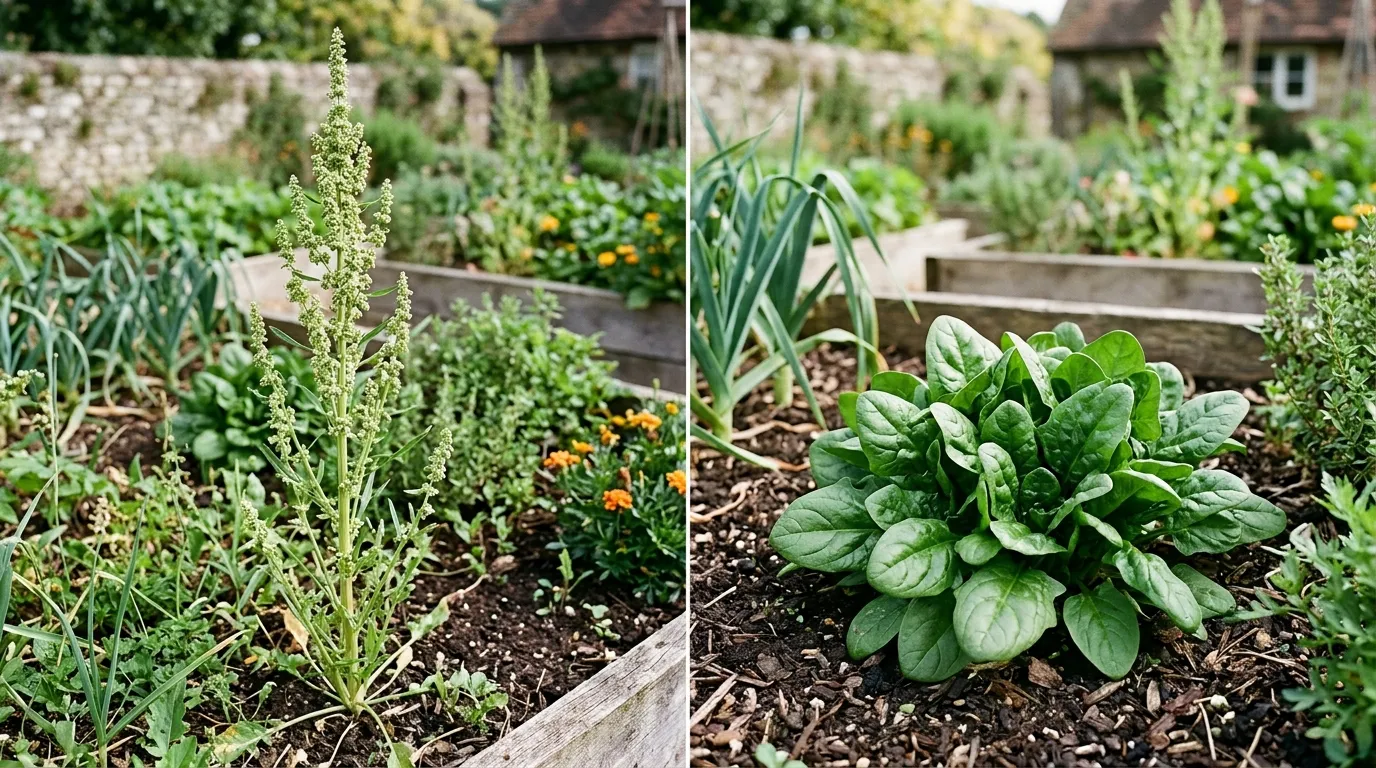
A bolted plant on the left, a healthy leafy one on the right. Once the centre starts to stretch upwards, pick what you can and pull it.
Succession sowing true spinach in spring and autumn
True spinach is happiest from March to May and again from August to early September. To stretch those windows, use succession sowing: sow a short row every two to three weeks instead of one big row.
Each sowing gives a few weeks of picking. Stagger them and a new row is ready just as the old one tires. For two people, a short row each time is plenty.
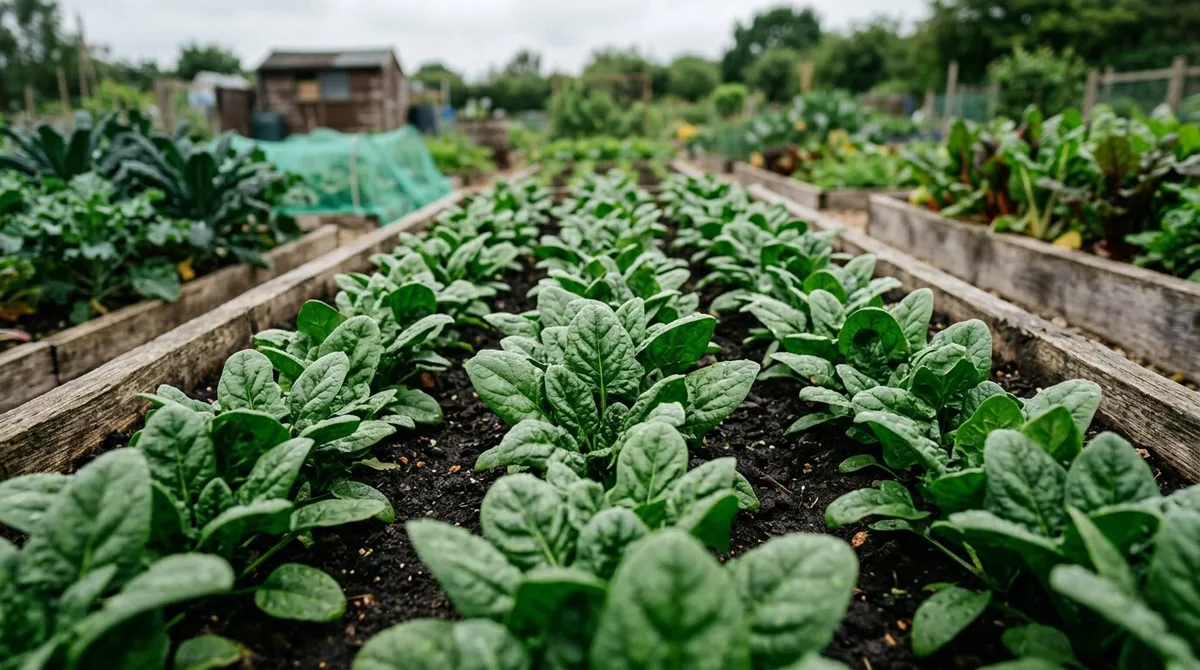
Sow seeds about 2cm deep, in rows 30cm apart. Thin plants to about 8-15cm apart for big leaves, or leave them closer for baby leaves. Seedlings usually appear in one to two weeks. Spinach germinates poorly in very warm soil, which is another reason summer sowings struggle.
In August, as the days shorten, start sowing true spinach again for leaves from September into early winter. The succession planting guide shows how to do the same with other crops.
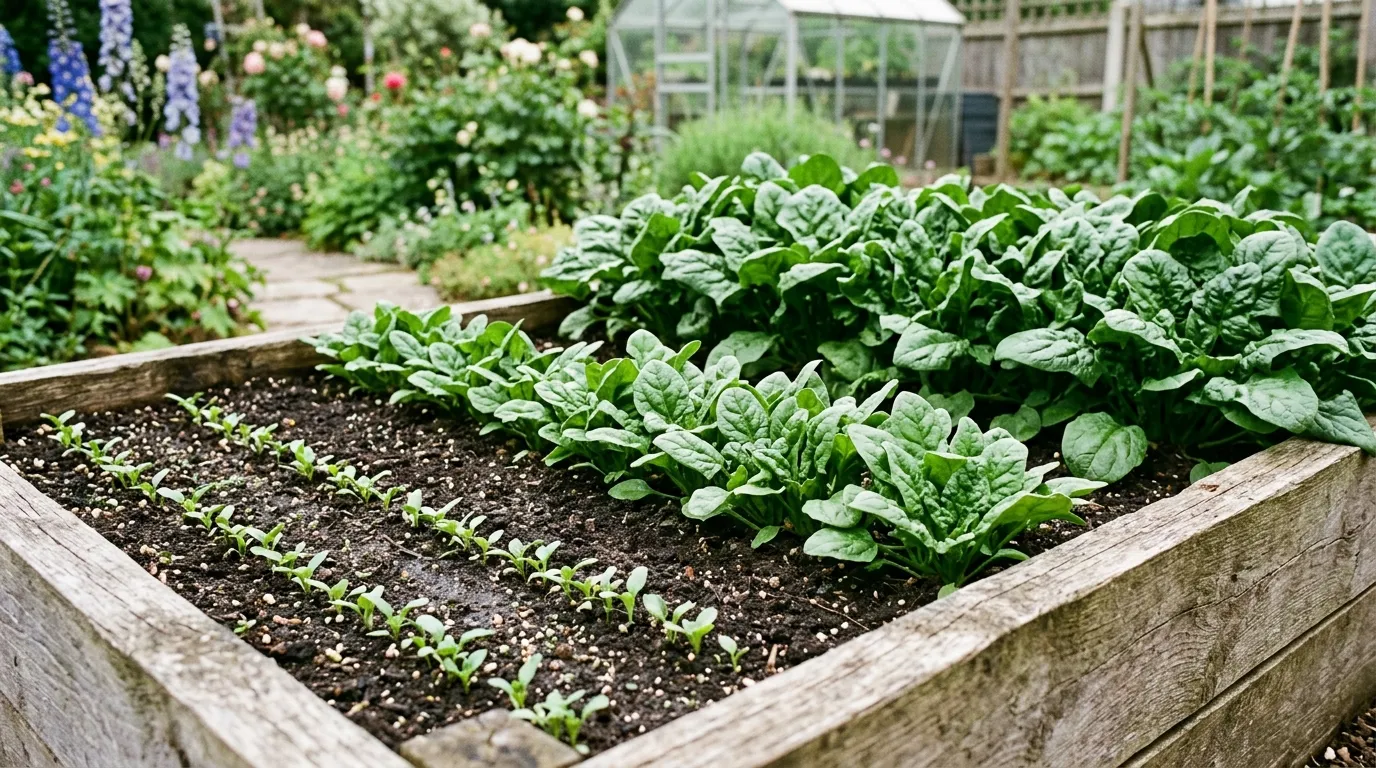
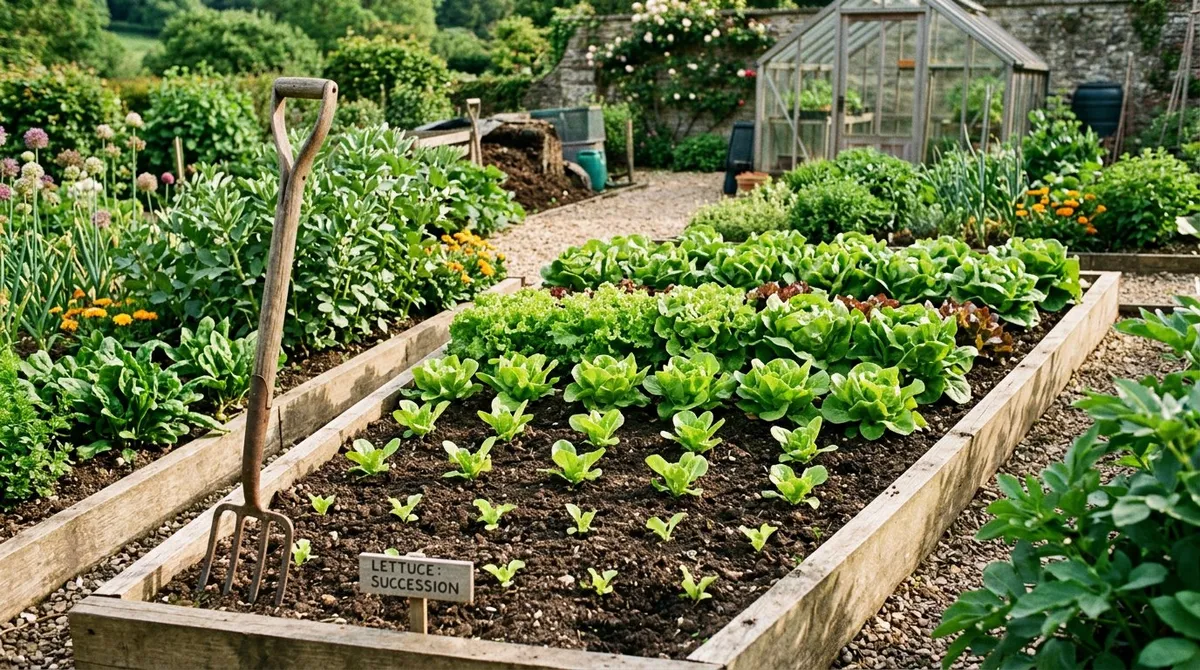
Three sowings a few weeks apart in one bed. One row is ready to pick while the next is still coming up.
Choosing spinach varieties for each season
Choose the variety to suit the time of year.
- Spring and autumn: most true spinach varieties do well. For later spring sowings, pick one sold as slow to bolt, such as ‘Medania’.
- Baby leaves: red-stemmed varieties such as ‘Reddy’ look lovely in salads.
- Winter: hardy varieties such as ‘Giant Winter’ cope with cold and make big leaves in early spring.
Slow-to-bolt varieties don’t stop bolting, they just buy you a little time. For high summer, switch to the heat-proof leaves below.
Summer spinach: perpetual and New Zealand spinach
The June to August gap is where most year-round plans fall over. The answer is to stop fighting true spinach and grow something tougher.
Perpetual spinach, also called spinach beet, is a beet grown for its leaves. It copes with heat, rarely bolts in its first year and crops for months as you pick. The leaves are thicker and earthier than true spinach but cook down the same way. Sow it from April to July.
Swiss chard is a close cousin and just as reliable. See how to grow Swiss chard for colourful varieties.
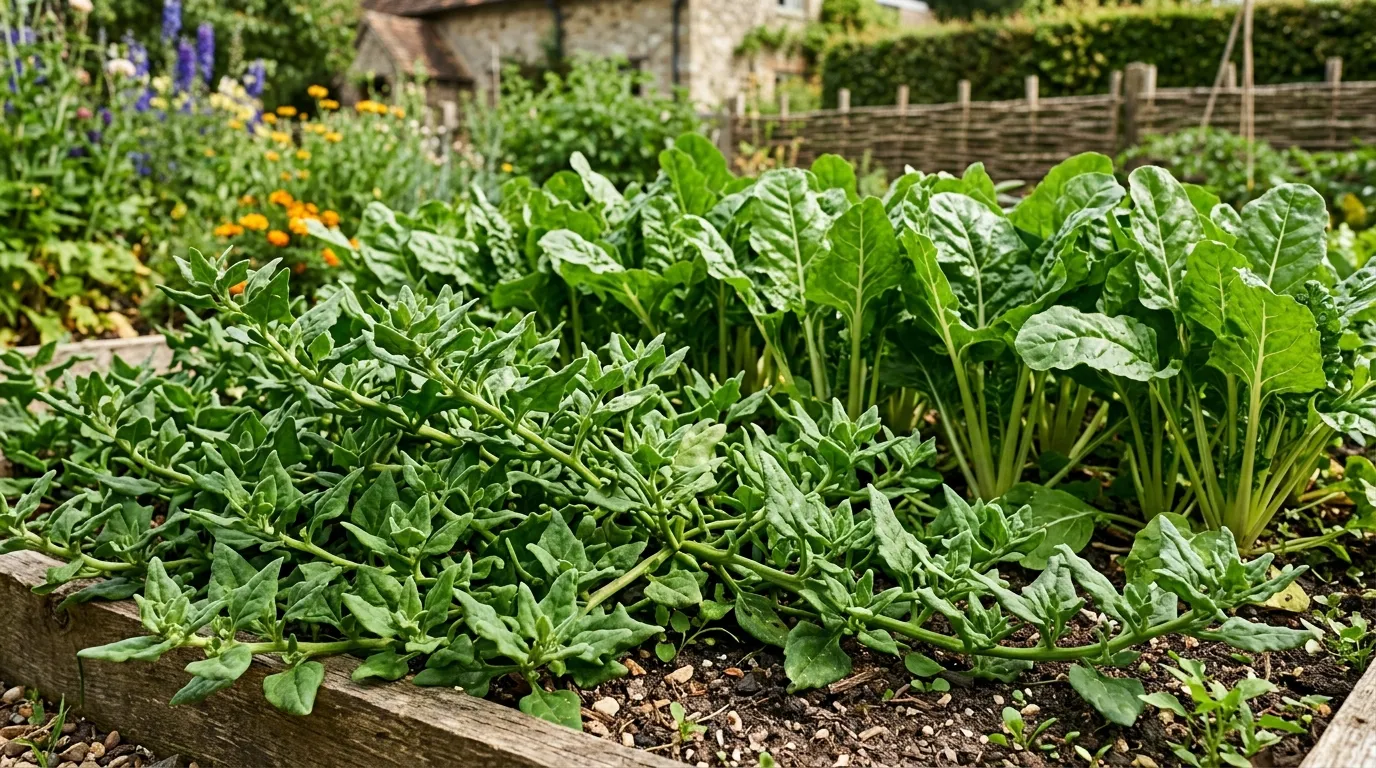
New Zealand spinach in front and perpetual spinach behind. Both keep cropping through summer when true spinach has bolted.
Growing New Zealand spinach
New Zealand spinach (Tetragonia) loves warmth and doesn’t bolt in summer. It sprawls along the ground with small, fleshy, triangular leaves. Pick the soft tips and the plant keeps branching.

Pinch the soft tips of New Zealand spinach and it keeps branching. It thrives in summer heat, even in a pot.
The seed is slow to start, so soak it in water overnight before sowing. Sow indoors in April, then plant out after the last frost. Or sow outdoors from late May. It’s killed by the first frost in autumn.
Winter spinach under a cloche
Hardy winter spinach fills the cold months and the spring hungry gap, when little else is ready. Sow a hardy variety such as ‘Giant Winter’ in August or September. Plants need to reach a decent size before growth slows in the cold.
They grow very slowly in deep winter, then pick up again as the light returns in February. Cover them with a cloche or fleece tunnel. It keeps rain and wind off the leaves, so they stay clean and you get more to pick. The guide to cloches and low tunnels shows simple set-ups.
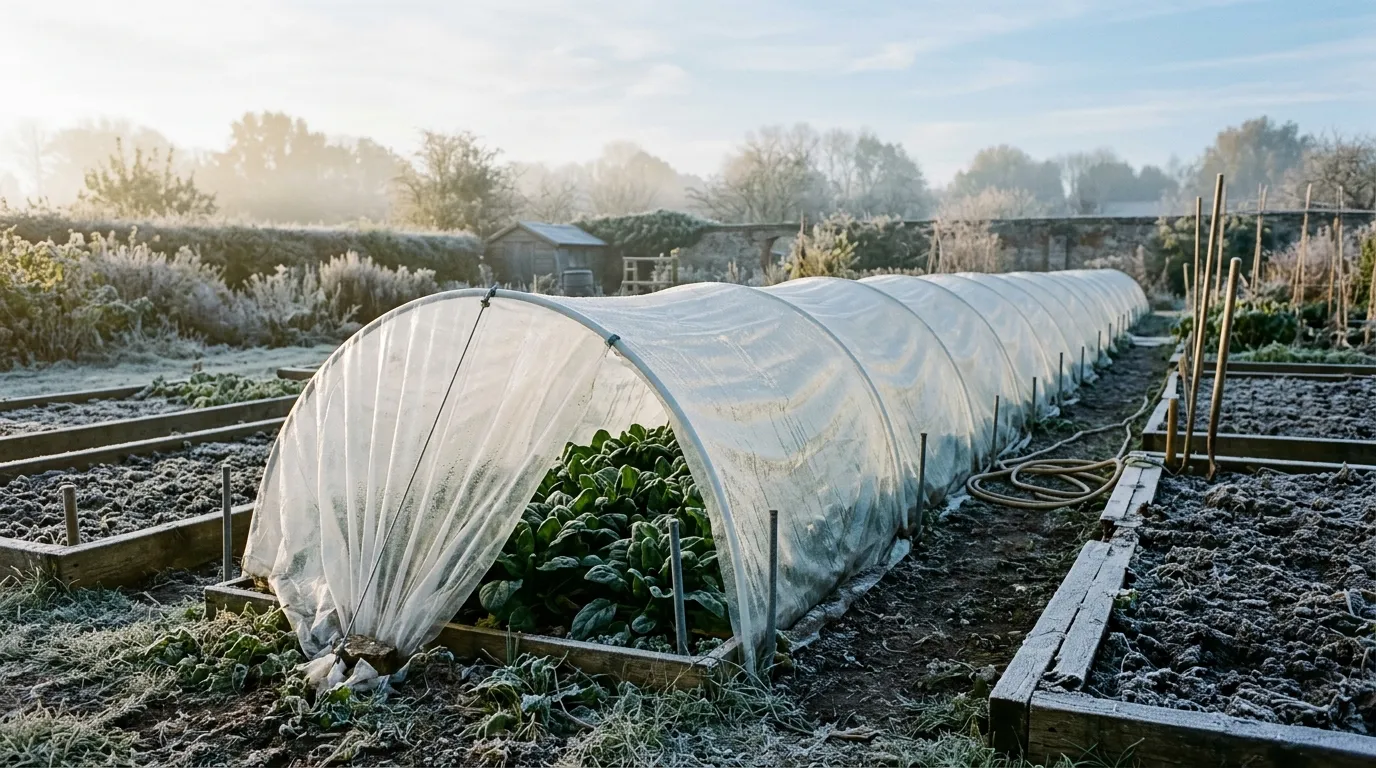
A simple cloche over winter spinach keeps the leaves clean and pickable through frosty spells.
True spinach versus the summer substitutes
| Type | Best season | Bolting | Leaf | Frost |
|---|---|---|---|---|
| True spinach | Spring and autumn | Bolts in long summer days | Tender, sweet, good raw | Varies by variety |
| Winter spinach (‘Giant Winter’) | Autumn to spring | Bolts in late spring | Large, mild | Hardy |
| Perpetual spinach | Spring to the following spring | Rarely bolts in year one | Thicker, earthy, cooks well | Hardy |
| New Zealand spinach | Summer | Doesn’t bolt in heat | Small, fleshy | Killed by frost |
| Swiss chard | Spring to winter | Rarely bolts in year one | Glossy, with bright stems | Fairly hardy |
Month-by-month spinach calendar
| Month | What to do |
|---|---|
| January | Pick winter spinach under cloches on mild days |
| February | Winter spinach starts growing again. Sow true spinach under cover |
| March | Sow true spinach outdoors. Keep picking winter spinach |
| April | Sow true spinach every 2-3 weeks. Sow perpetual spinach. Start New Zealand spinach indoors |
| May | Last true spinach sowings, using slow-to-bolt varieties. Pull winter spinach as it bolts |
| June | Plant out New Zealand spinach. Pick perpetual spinach and chard |
| July | Pick summer types. Sow more perpetual spinach for autumn and winter |
| August | Restart true spinach sowings. Sow winter varieties late in the month |
| September | Sow winter spinach. Pick autumn true spinach |
| October | Cover winter spinach with cloches. Keep picking perpetual spinach |
| November to December | Pick sparingly from winter spinach and perpetual spinach |
Watering, feeding and avoiding bitter leaves
Spinach wants steady moisture. Dry soil is one of the quickest ways to make it bolt and taste bitter. Water well in dry spells and mulch with compost to keep the roots cool.
Dig in well-rotted compost before sowing. If growth is slow, give a nitrogen-rich liquid feed every few weeks. Spinach prefers soil that isn’t too acidic. In warm spells, a spot with a little afternoon shade helps leaves stay sweet. The guide to the best vegetables to grow in shade has ideas for shadier beds.
For quick baby leaves, try multi-sowing: sow three or four seeds in each module, then plant the clumps out about 20cm apart. Cut across the whole clump and it regrows. The multi-sowing guide explains the method.

Pick the outer leaves and leave the centre to grow. Each row then keeps going for several weeks.
Common mistakes that break a year-round supply
Sowing true spinach in midsummer. Seedlings meet the longest days and bolt while tiny. Leave June and July to perpetual and New Zealand spinach.
No summer crop planned. Gardeners pull bolted spinach in June with nothing to follow. Start New Zealand spinach indoors in April so it’s ready in time.
One big sowing. A whole packet at once gives a glut, then nothing. Sow little and often.
No winter cover. Hardy spinach survives uncovered, but the leaves get battered and muddy. A simple cloche makes a big difference.
Letting the soil dry out. Dry roots mean early bolting and bitter leaves. Water steadily and mulch.
Frequently asked questions
Can you grow spinach all year round in the UK?
Yes, by growing different types of spinach in turn. True spinach covers spring and autumn. Perpetual spinach and New Zealand spinach fill the summer gap. Hardy winter varieties sown in September give leaves through winter under a cloche.
Why does my spinach bolt so quickly?
True spinach bolts when days get long and the weather warms up. In late spring and summer the plant switches to flowering, whatever its size. Dry soil makes it worse. Sow in spring and autumn, choose slow-to-bolt varieties and keep the soil moist.
What is the most bolt-resistant spinach for UK summers?
New Zealand spinach copes best with summer heat. It isn’t true spinach but a different plant, Tetragonia, with fleshy leaves that taste similar. Perpetual spinach also rarely bolts in its first year. Among true spinach, varieties sold as slow to bolt, such as ‘Medania’, last a little longer.
How often should you sow spinach for a continuous supply?
Sow a short row of true spinach every two to three weeks. Stop sowing true spinach outdoors by late May and switch to summer types. Restart in August, then sow hardy winter varieties in September.
Can spinach survive winter outside in the UK?
Yes, hardy varieties such as ‘Giant Winter’ survive most UK winters. Sow them in August or September so they are a good size before the cold. A cloche or cold frame keeps the leaves clean and gives you more to pick.
Is perpetual spinach the same as spinach?
No, perpetual spinach is a type of beet grown for its leaves. It is closely related to chard. The leaves are a little thicker and earthier than true spinach but cook the same way, and one sowing can crop for months.
Want more to pick in the leanest weeks of spring? Read what to grow for the hungry gap, or browse more growing guides.
Our team produces practical UK gardening guidance from source research, contributor records and established horticultural practice. Editorial standards are overseen by Matt W.