Key takeaways
- Lay hedges in winter, from November to the end of February, before birds start nesting
- Cut each stem most of the way through near the base, leaving a living hinge of bark and wood
- Lean the pleachers over at a low angle, not flat, and lay uphill on a slope
- Drive stakes about 45-50cm apart and weave hazel or willow binders along the top
- Hawthorn and blackthorn lay best; elder is too brittle
- Don't trim a newly laid hedge in its first year, so the new base shoots can grow
Hedgelaying is the old winter craft of turning a tall, gappy hedge back into a thick, living fence. You cut most of the way through each stem near the ground, bend it over and weave it between stakes. The stems stay alive and send up fresh shoots from the bottom.
It suits long hedges on farms, smallholdings and bigger rural gardens, especially native hawthorn and blackthorn. It takes practice, but the basics are simple. This guide covers when to lay, which hedges lay well, the tools and the steps. If you want a neat garden hedge instead, the guide on when to cut hedges in the UK covers routine trimming.
What is hedgelaying?
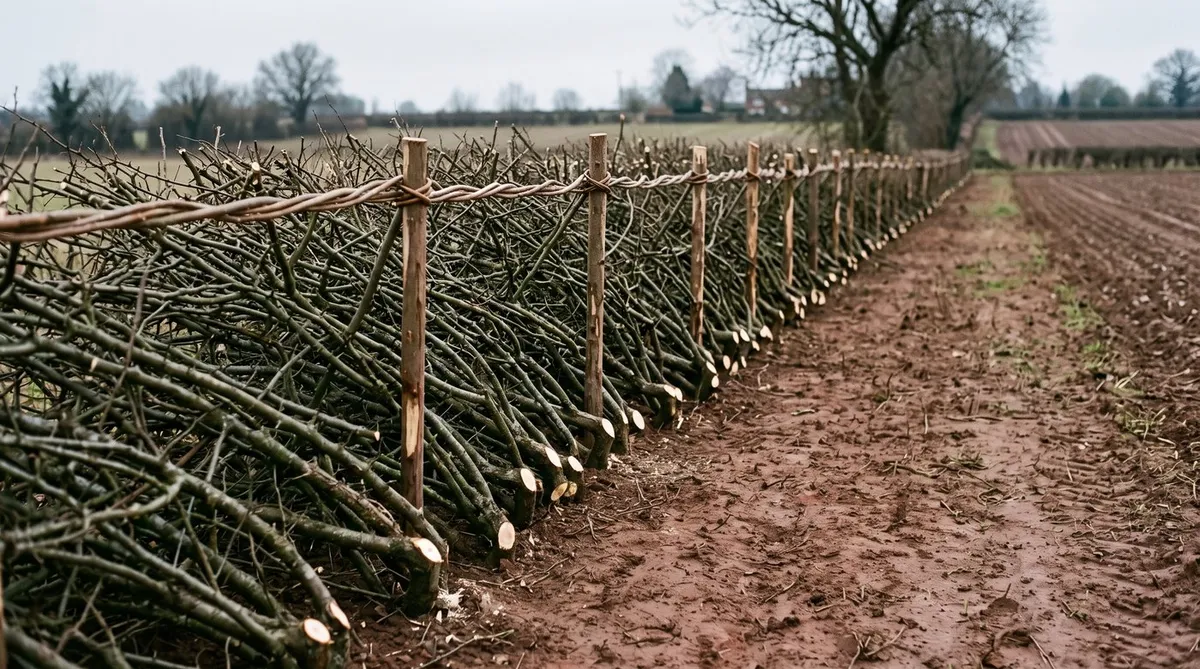
Hedgelaying means cutting each upright stem most of the way through, then laying it over at an angle. The part-cut stems are called pleachers. They’re never cut right off. A strip of bark and living wood, the hinge, keeps each one attached to its root and alive.
Laid side by side, the pleachers make a low, thick wall of living wood. Upright stakes hold them in place, and long, bendy rods called binders are woven along the top to lock everything together.
The point is renewal. A hedge left to grow reaches up for light and goes bare at the bottom. Laying makes it shoot again from the base, exactly where a hedge needs to be thick. It works on the same idea as pollarding and coppicing: a hard cut brings strong new growth.
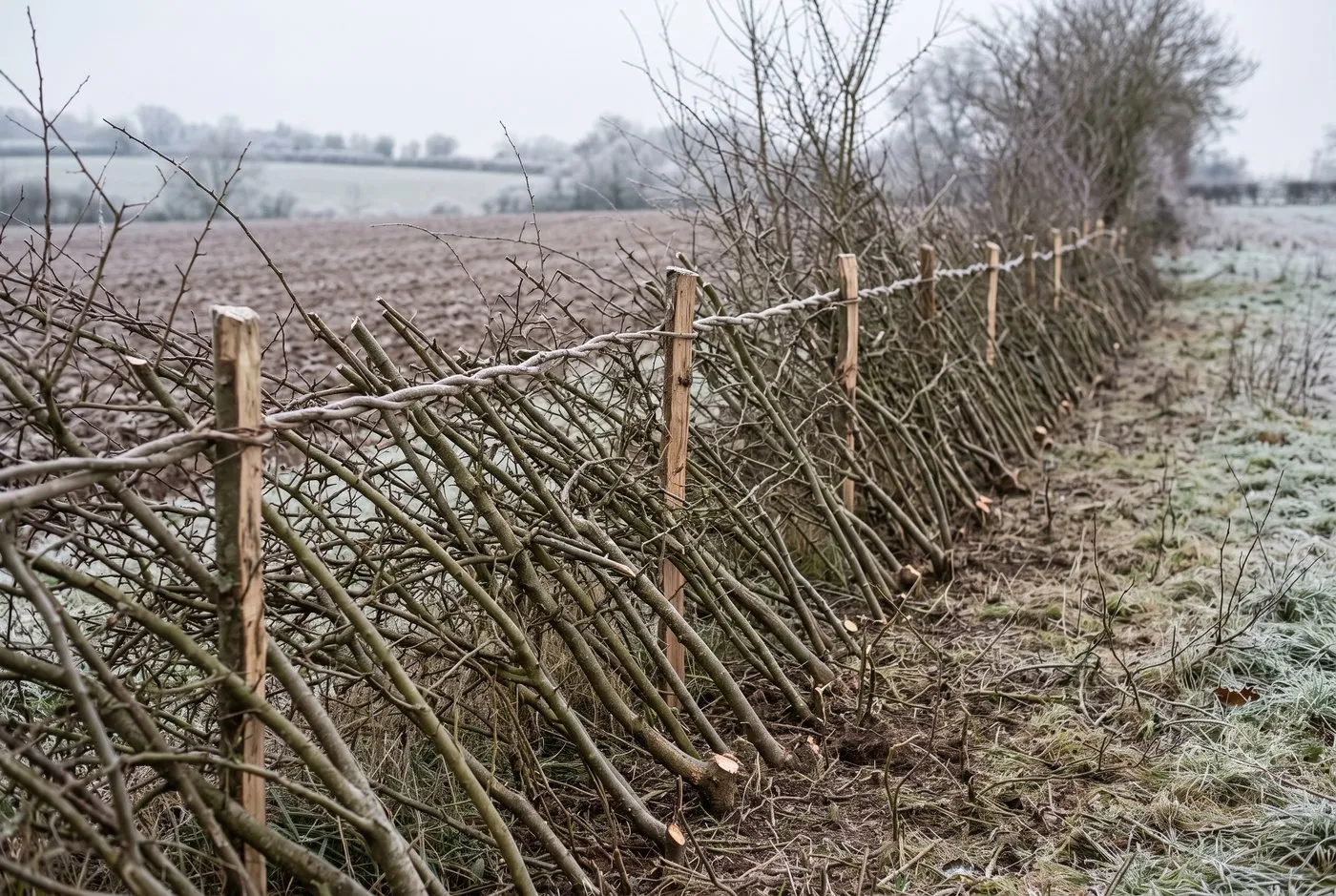
A freshly laid hedge on a frosty morning. The pleachers lean along the line, held by stakes and binders, ready to reshoot in spring.
When to lay a hedge in the UK
Lay hedges in winter, from November to the end of February, while they’re dormant. The wood cuts cleanly and the pleachers cope well with the shock. Laying a hedge in full leaf is much harder on it.
Aim to finish before birds start nesting in spring. Damaging or destroying an active nest is an offence at any time, so check the hedge carefully before you start. Farmers also have their own rules on hedge cutting dates, so check yours if the hedge is on farmland.
Pick a dry day without a hard frost if you can. Frozen wood is brittle and splits at the hinge, and frozen ground makes staking miserable. A still, grey January day is close to ideal.
Gardener’s tip: Don’t wait for the perfect week. A hedge laid on an ordinary damp day takes just as well as one laid in sunshine. Finishing before spring matters far more.
Which hedges are best for laying?
Hawthorn is the classic laying hedge. It’s thorny, tough and reshoots hard from the base. The guide to growing hawthorn explains why it’s the backbone of so many British hedges.
| Hedge plant | How it lays | Good to know |
|---|---|---|
| Hawthorn | Very well | Reshoots strongly, thorny and stock-proof |
| Blackthorn | Very well | Thick, thorny infill, and sloes for birds |
| Hazel | Well | Bulks out the hedge and gives you stakes and binders |
| Field maple | Well | Steady regrowth and good autumn colour |
| Hornbeam | Fairly well | Holds dead leaves through winter, handy on clay |
| Holly | Slowly | Evergreen cover, but slow to reshoot |
| Elder | Poorly | Brittle and hollow, so coppice or remove it instead |
Most old hedges are a mix. The native hedgerow species guide helps you name what’s growing in yours. Gaps can be filled by planting new whips in winter.
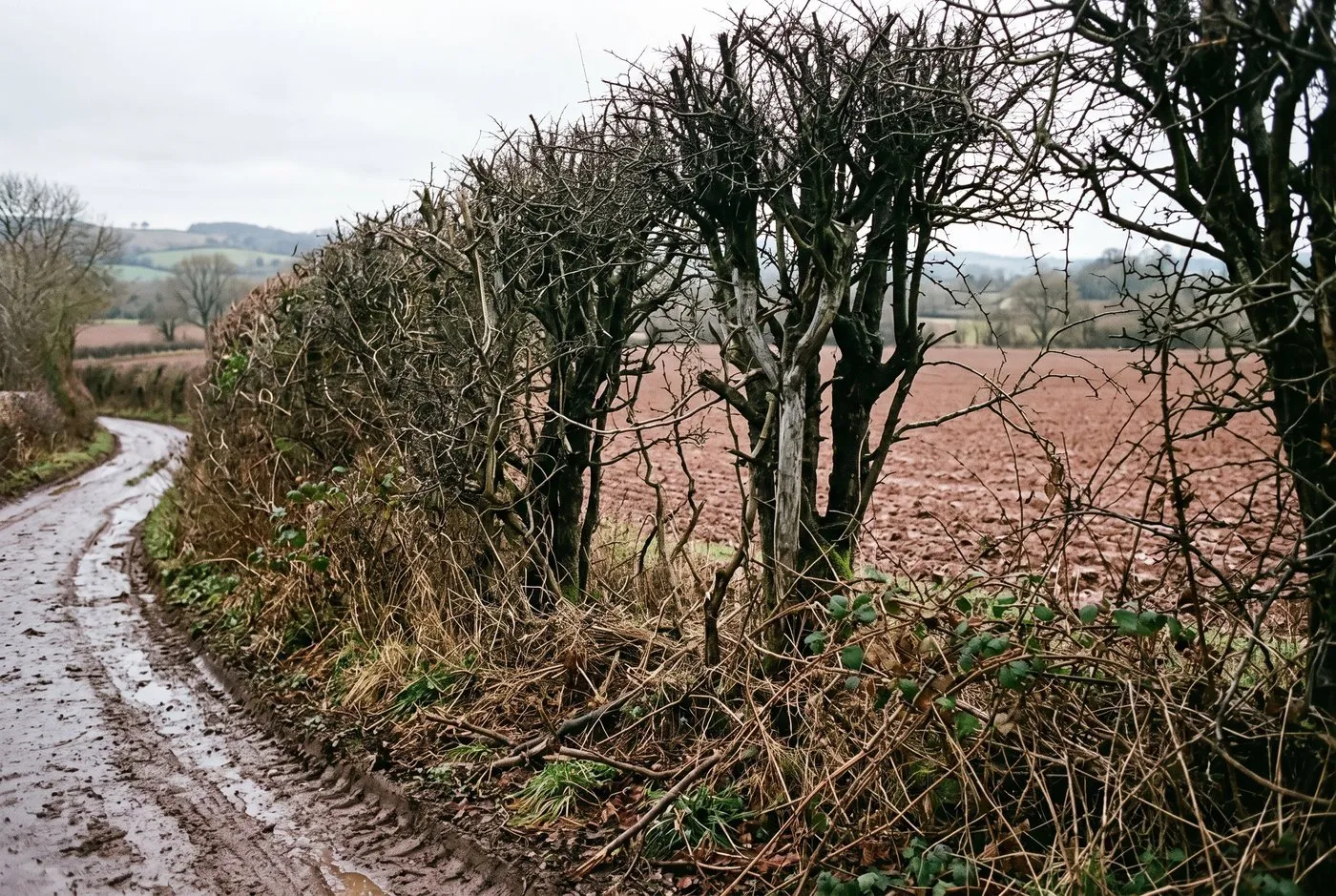
Tall at the top and thin at the bottom. This kind of overgrown hedge is just what laying is for.
Regional hedgelaying styles
Britain has lots of local hedgelaying styles. Each grew up around the farm animals the hedge had to hold. Three are worth knowing.
Midland or bullock style
The Midland style was made to stop cattle. The pleachers are laid at an angle with their brushy tops on one side, facing the field. Stakes go in along the line, and binders are woven along the top to make a firm edge that cattle can’t push through.
Devon and bank styles
The Devon style is laid on top of an earth bank. Pleachers are laid along the bank and pinned down with wooden hooks called crooks, rather than tall stakes and binders. Cornish and many Welsh hedges also sit on banks, and the bank does much of the stock-proofing.
Welsh border style
The Welsh border style leaves brush showing on both sides of the hedge, so it suits fields with sheep on either side. If you’re laying your first hedge, the National Hedgelaying Society can point you to local courses and the styles used near you.
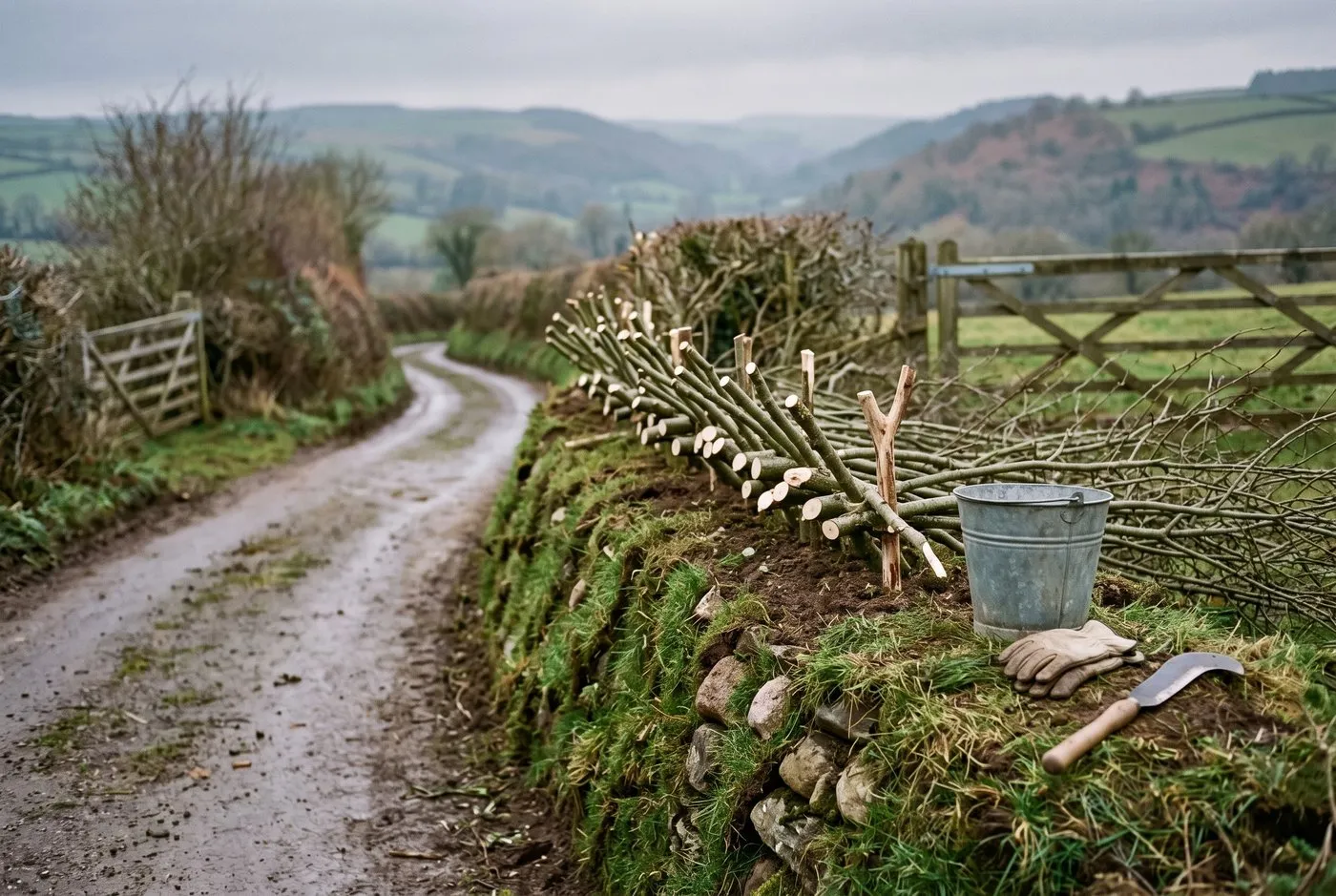
On a bank hedge the pleachers lie along the top, pinned in place, and the bank itself keeps the stock in.
Tools you need for hedgelaying
A sharp billhook does most of the work. It’s a heavy, curved blade for cutting and trimming pleachers. Keep it sharp, as a blunt one bounces off wood.
For thicker stems, use a bowsaw to make the first cut, then finish with the billhook. Some hedgelayers use a chainsaw, but only use one if you’ve been trained. Add loppers for tidying and a mell or beetle, a heavy wooden mallet, for driving stakes without splitting them. Wear thornproof gauntlets, because hawthorn and blackthorn are vicious.
You also need timber. Stakes are usually sweet chestnut or hazel, about 1.5m long. Binders are long, whippy hazel or willow rods. Many hedgelayers cut their own from coppiced hazel. The guide to growing hazel and cobnuts shows how a few stools keep you supplied.
Warning: Always cut away from your body and keep your free hand behind the blade. A billhook glancing off a stem into your leg is the classic hedgelaying injury.
How to lay a hedge step by step
Work along the hedge in one direction, laying each pleacher on top of the last.
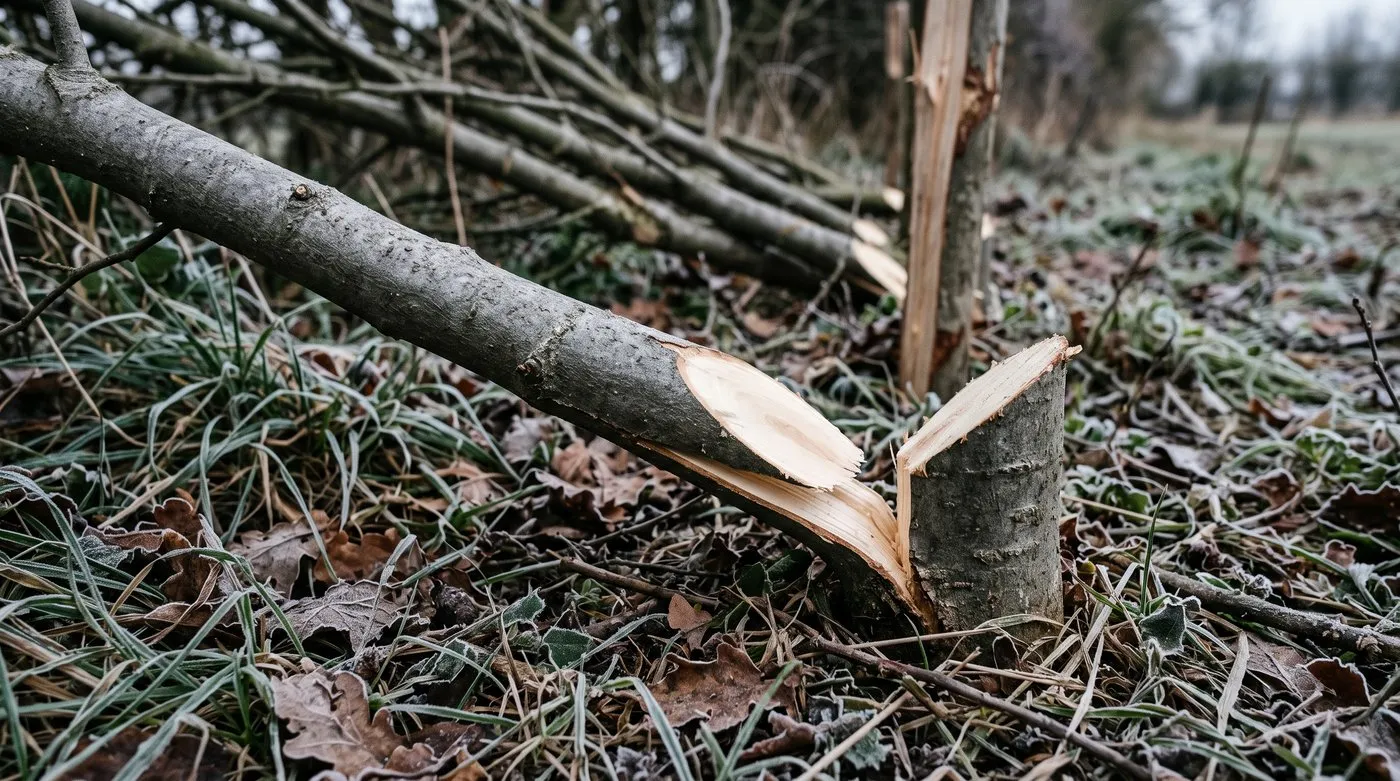
The hinge is what keeps a laid stem alive. It’s thin enough to bend but still joined to the root.
- Clear the bottom. Cut out brambles, ivy, dead wood and any old wire so you can see every stem base.
- Choose your stems. Keep straight, healthy stems to lay. Cut out weak, dead or crossing ones so the keepers have room.
- Cut each pleacher low. Cut close to the ground, sloping downwards, most of the way through the stem. Leave a hinge of bark and living wood that’s thin enough to bend.
- Lay it over. Ease the stem down to a low slant, but not flat. On a slope, lay uphill.
- Trim the heel. Cut off the stub left behind each pleacher at a slant, so it sheds rain and can reshoot.
- Drive the stakes. Knock stakes in upright along the line, about 45-50cm apart.
- Weave the binders. Twist binders around the stake tops, overlapping each new one with the last. This ties the hedge into one firm line.
- Tidy up. Cut the stake tops level, clear away the brash and tidy the base.
Go slowly on your first hedge. Getting the cut and the hinge right matters far more than speed. If a pleacher snaps, don’t worry. The stump will usually still reshoot.
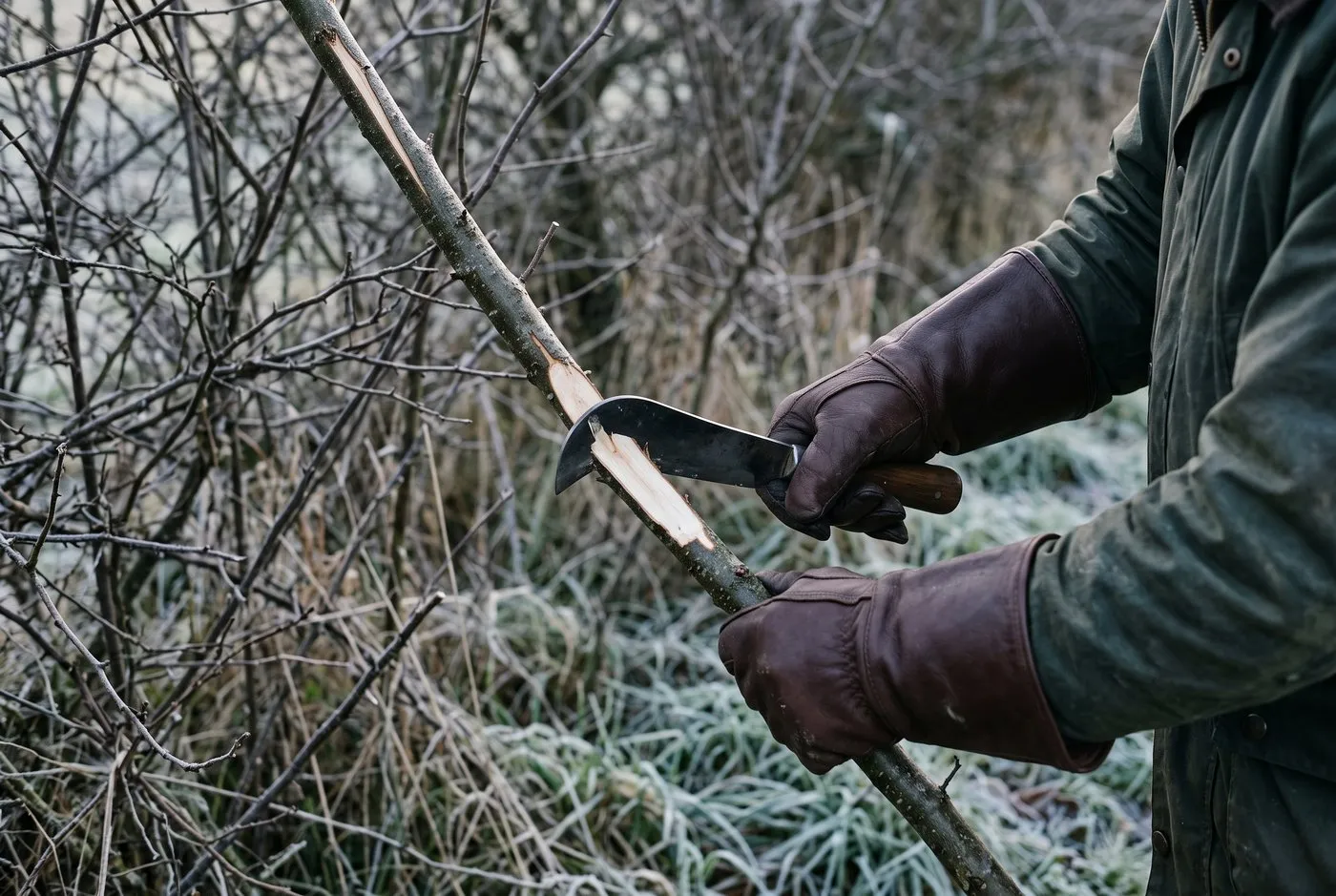
Leather gauntlets and a sharp billhook make the job safer. Keep your free hand well away from the line of the blade.
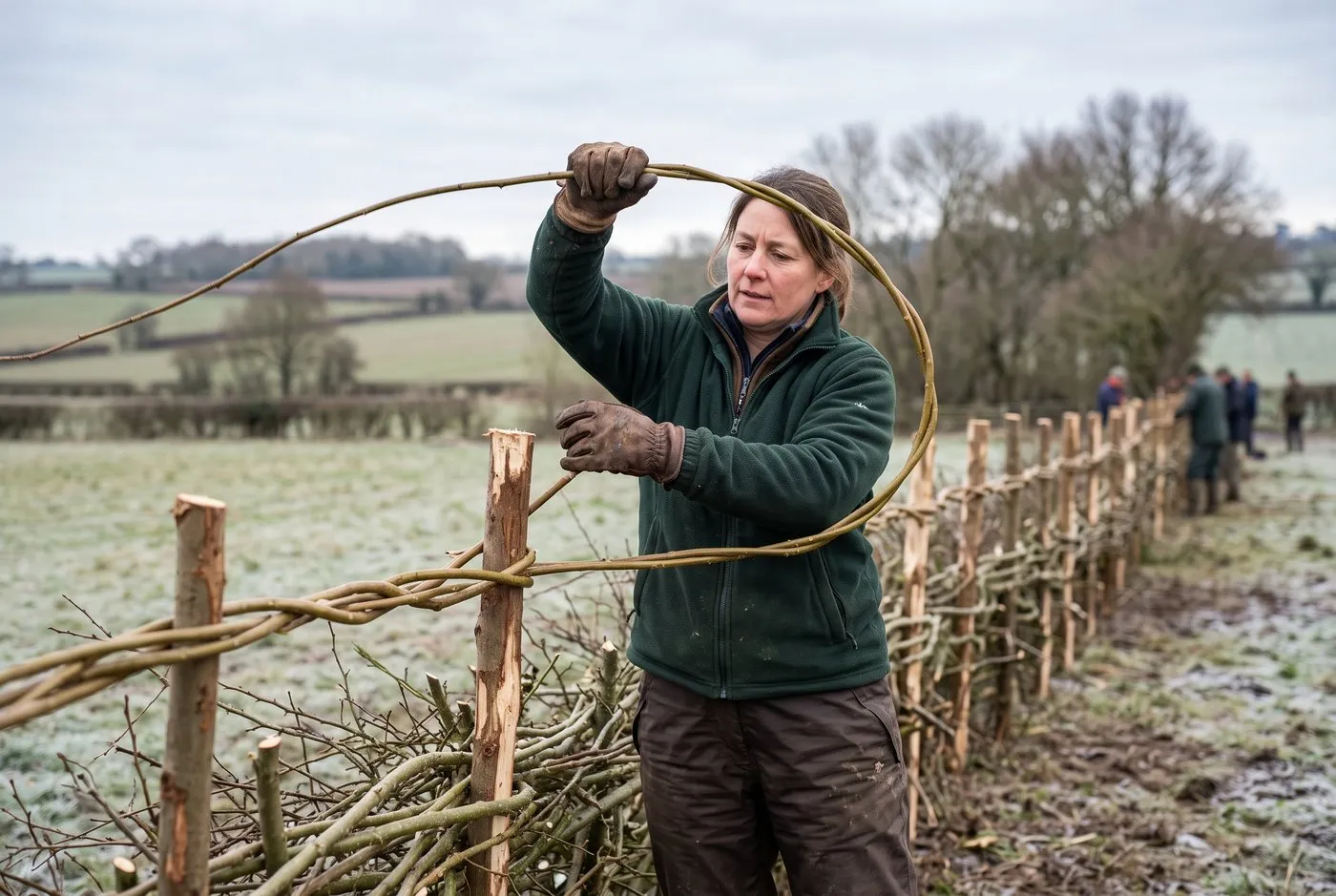
Twisting binders around the stake tops locks the whole hedge together. Bendy fresh hazel or willow works best.
Looking after a newly laid hedge
Leave a newly laid hedge alone for its first year. Don’t trim it. The new shoots from the base are the hedge of the future. Keep livestock off it while the new growth is soft.
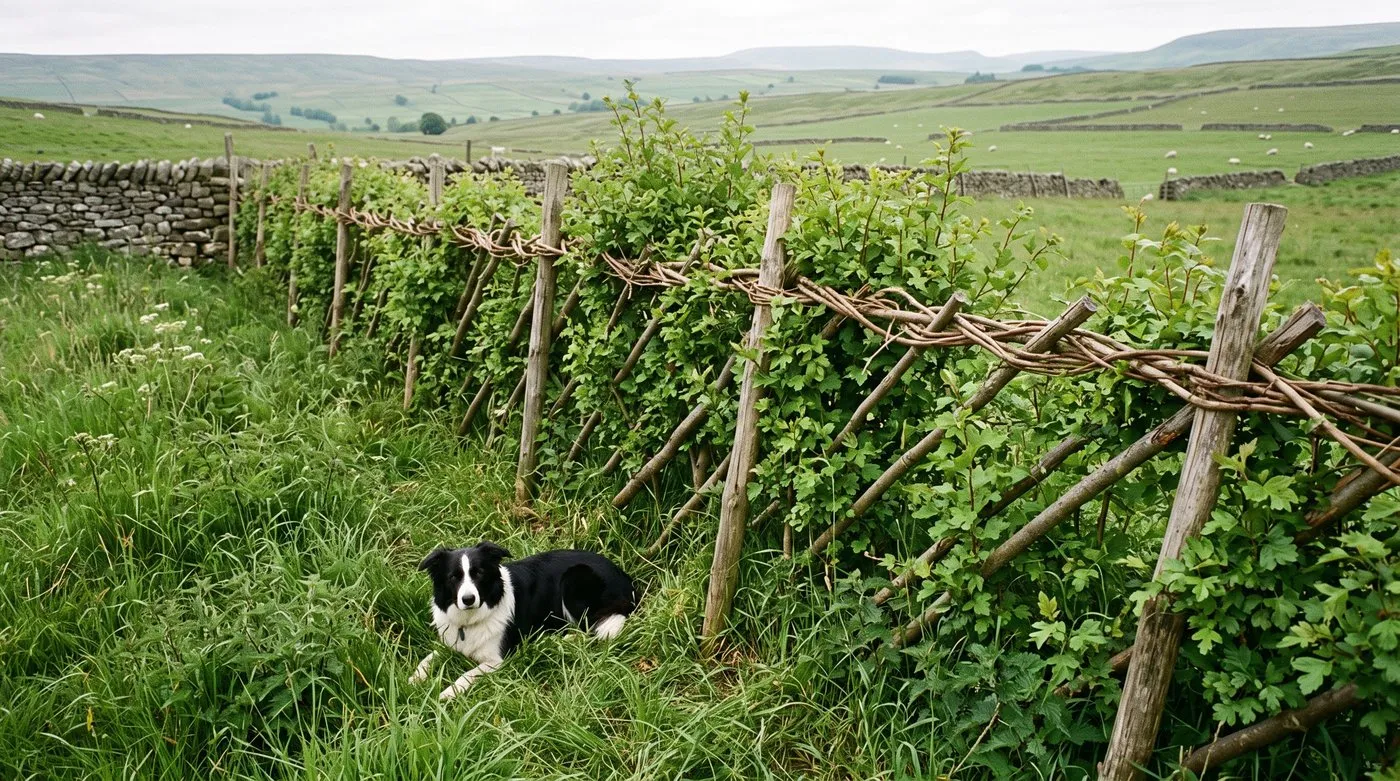
A laid hedge a few months on. New shoots spring up from the base, which is exactly where you want it thick.
From the second year, trim it lightly in winter. Leave it a little taller and wider each time, in an A-shape that’s broad at the bottom. That shape lets light reach the base, so it stays thick. Cutting a hedge to exactly the same height every year is what makes it bare at the bottom.
Re-lay the hedge every 10-20 years, once it has grown tall and gappy at the base again. Plan any new boundaries with the hedge planting guide.
Why hedgelaying is good for wildlife
A laid hedge is one of the best wildlife habitats on a farm or in a big garden. Its thick, thorny base gives birds safe nesting cover, and small mammals use it as a sheltered runway.
The benefits run all year. Hawthorn and blackthorn flowers feed early bees and hoverflies in spring. Haws and sloes feed thrushes and winter visitors such as redwings and fieldfares. At ground level, leaf litter under the hedge shelters hedgehogs. If your hedge runs between gardens, a gap at the base makes a hedgehog highway. Pile the brash you clear into a heap in a quiet corner, as insects and small animals will use it.
Hedgelaying calendar
| Month | What to do |
|---|---|
| September | Plan which length to lay this winter. Order stakes if you can’t cut your own |
| October | Clear brambles and old wire from the hedge bottom |
| November | Laying season starts. Cut hazel stakes and binders |
| December | Lay on dry, still days. Keep the billhook sharp |
| January | The main laying month. Avoid days with a hard frost |
| February | Finish laying by the end of the month. Firm any loose stakes |
| March to May | Leave the new hedge alone. Watch for shoots from the base and plant whips in any gaps early in spring |
| June to August | Let it grow. Keep stock off the soft new shoots and don’t disturb nesting birds |
Common hedgelaying mistakes
- Cutting too high. Cutting at knee height to save your back leaves a tall stub. New growth then starts too high up. Cut close to the ground.
- A hinge that’s too thick or too thin. Too thick and the stem won’t bend without splitting. Too thin and it snaps or dies. Leave enough living wood to stay attached while it bends.
- Laying the pleachers flat. A stem pressed flat on the ground loses vigour. Keep it at a low slant.
- Laying downhill. On a slope, lay uphill so the pleachers keep growing well.
- Working too late in the year. Laying in spring disturbs nesting birds and stresses the hedge. Finish by the end of February.
Now you know how to lay a hedge by hand, find more seasonal jobs in the how-to guides, or read about blackthorn hedges if you’re planning to plant a thorny boundary.
Frequently asked questions
What is hedgelaying?
It’s part-cutting hedge stems and bending them over into a living fence. The cut stems, called pleachers, stay alive through a hinge of bark and wood. They’re woven between stakes and reshoot from the base, giving a thick, stock-proof hedge.
When should you lay a hedge in the UK?
In winter, from November to the end of February. The hedge is dormant, so the cut stems cope well. Finish before birds start nesting in spring. Damaging an active nest is an offence at any time of year.
What angle do you lay pleachers at?
At a low slant, but never flat on the ground. A stem pressed flat tends to lose vigour. On a slope, lay the pleachers uphill, which helps them keep growing.
Which is the best hedge to lay?
Hawthorn is the classic hedge to lay. It’s tough, thorny and reshoots strongly from the base. Blackthorn, hazel and field maple also lay well. Brittle, hollow-stemmed elder does not.
How often do you need to re-lay a hedge?
Usually every 10-20 years. In between, trim it lightly so it stays thick. Once it grows tall and gappy at the bottom again, it’s time to lay it again.
What tools do you need for hedgelaying?
A sharp billhook does most of the work. Add a bowsaw for thicker stems, loppers for tidying and a wooden mallet for stakes. Thornproof gauntlets are a must with hawthorn and blackthorn.
Is hedgelaying good for wildlife?
Yes, a laid hedge is great for wildlife. Its thick base gives birds nesting cover and small mammals safe runs. Hawthorn and blackthorn flowers feed early insects, and haws and sloes feed birds in winter.
Our team produces practical UK gardening guidance from source research, contributor records and established horticultural practice. Editorial standards are overseen by Matt W.