Key takeaways
- Tufted hair grass is a British native that grows happily in damp clay and light shade
- 'Goldtau' (about 75cm) is the best all-rounder for most borders
- Plant in March to May or September to mid-October, about 50cm apart
- Leave the flower heads over winter, then tidy the clump in late winter before new growth
- Divide tired clumps every few years in spring to keep them flowering well
Deschampsia cespitosa, or tufted hair grass, is the native grass to reach for if your soil is damp clay or your border gets light shade. It forms a neat, dark green tussock. From early summer it sends up airy clouds of tiny flowers that glow gold or bronze in low sun.
Many popular grasses, such as stipa, want dry, sunny ground. Deschampsia is happier where the soil stays moist. That makes it a good fit for heavier British gardens. Below you’ll find the best varieties, where to plant, and the simple yearly care that keeps it looking good. For a wider look at grasses, see the guide to ornamental grasses for UK gardens.
What is tufted hair grass?
Tufted hair grass is a clump-forming perennial grass that grows wild across Britain. It is found in damp meadows, woodland rides and rough grassland, from the south coast to the Highlands. Garden varieties are selected forms of the wild plant.
The tussock of narrow, dark green leaves is usually 30-50cm tall and wide. It often keeps some green over winter in mild areas. The flower heads rise well above the leaves from June. Each one is a fine, open spray of tiny spikelets, so a group of plants looks like a hazy cloud rather than a set of stems.
Being a native, it suits British weather and supports wildlife. Several grass-feeding caterpillars use native grasses, and the dense tussocks give shelter to beetles and other small creatures. If you like the idea of more native plants, the guide to UK native plants for gardens has plenty more.

Out of flower, deschampsia is a tidy, fine-leaved mound. It holds its shape well through a frosty winter.
Best deschampsia varieties for UK gardens
‘Goldtau’ is the one to start with. It is compact, reliable and flowers freely. Taller varieties suit bigger borders, and wavy hair grass is the pick for acid soil.
| Variety | Height in flower | Flower colour | Best for |
|---|---|---|---|
| ’Goldtau’ | About 75cm | Green, ageing to gold | Most borders, small gardens |
| ’Bronzeschleier’ | About 1-1.2m | Bronze | Tall drifts, late summer colour |
| ’Goldschleier’ | About 1-1.2m | Silvery gold | Large naturalistic borders |
| ’Pixie Fountain’ | About 50-60cm | Pale gold | Small borders, edges |
| ’Northern Lights’ | About 30cm | Rarely flowers | Variegated foliage, pots |
| ’Tatra Gold’ (wavy hair grass) | About 50-60cm | Light, airy | Acid soil, dappled shade |
’Goldtau’
‘Goldtau’ means golden dew. The flower heads open greenish in early summer, turn gold in July and fade to straw as autumn comes. The leafy mound stays around 30-40cm, so it fits the front or middle of a border.

Each flower head is a fine spray of tiny spikelets. Planted in a group, they turn into a soft golden haze.
‘Bronzeschleier’ and ‘Goldschleier’
These are taller selections, roughly 1-1.2m in flower. ‘Bronzeschleier’ (bronze veil) has warm bronze heads that look lovely with late daisies such as heleniums. ‘Goldschleier’ (gold veil) has paler, silvery gold heads. Both are see-through, so you can plant them near the front without hiding what’s behind.
‘Northern Lights’ and ‘Pixie Fountain’
‘Northern Lights’ is a small foliage plant with cream-striped leaves that flush pink in cool weather. It rarely flowers and is less vigorous than the green forms, so give it good drainage or a pot. ‘Pixie Fountain’ is a shorter green form for small borders.
‘Tatra Gold’ (wavy hair grass)
‘Tatra Gold’ is a form of wavy hair grass, another British native. It is now often listed as Avenella flexuosa but is still sold with deschampsias. It has bright yellow-green leaves and needs acid or neutral soil. It looks great under birch or among heathers in dappled shade.
Where to plant deschampsia
Choose a spot in sun or light shade with soil that doesn’t dry out badly in summer. Heavy clay is fine. If your garden is on clay, the guide to the best plants for clay soil has more partners for it.
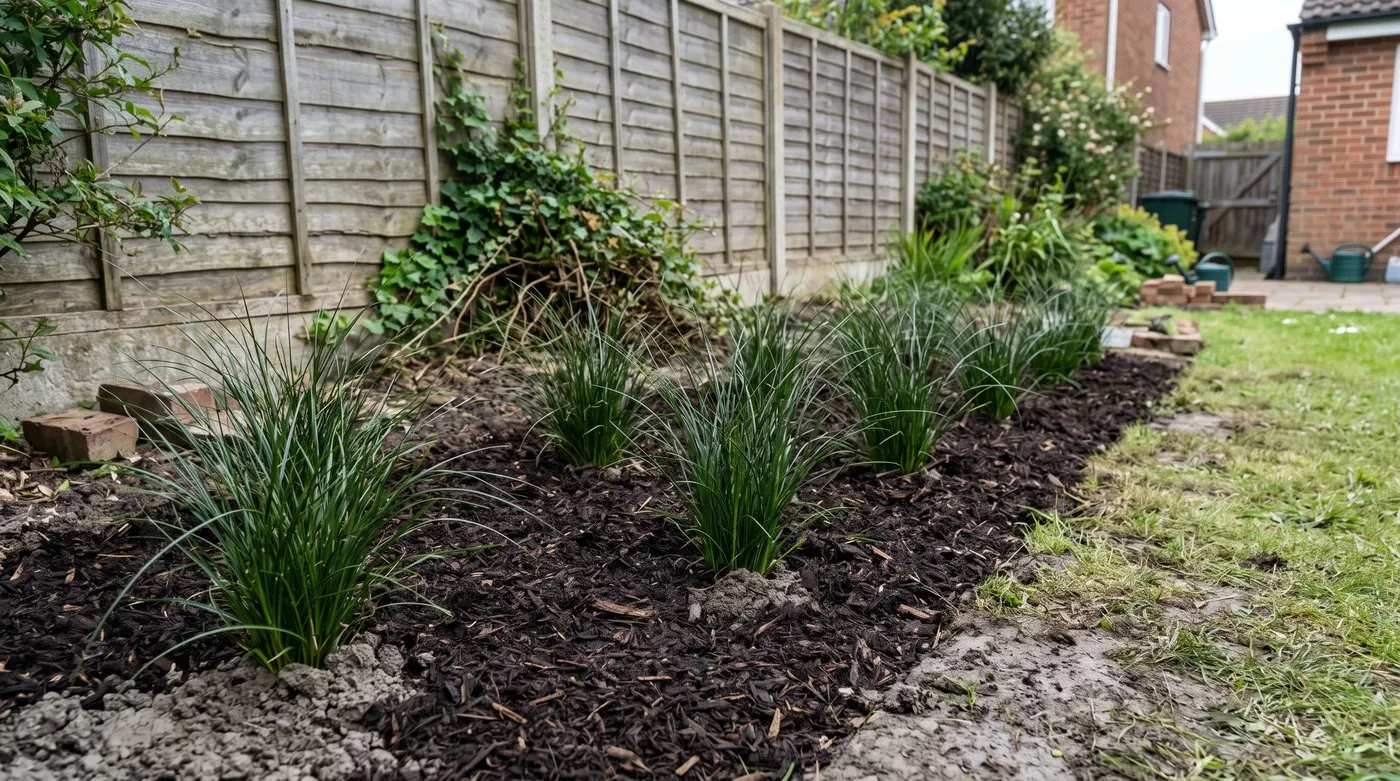
Plant in groups about 50cm apart. In a year or two they knit together into one soft drift.
- Soil: clay, loam or chalk that holds some moisture. On light, sandy soil, dig in plenty of compost and expect smaller plants.
- Light: a few hours of sun gives the best flowers. North-facing spots and deep shade mean fewer flower heads.
- Spacing: about 50cm apart for a drift, or a little wider if you want each tussock to stand out.
Deschampsia looks best in groups of five, seven or more rather than as a lone plant. Low evening sun behind the flower heads makes them glow, so a west-facing border is a treat.
How to plant deschampsia
Plant in spring (March to May) or early autumn (September to mid-October), when the soil is moist and warm. Avoid planting into cold, waterlogged clay in winter.
- Dig a hole about twice the width of the pot and the same depth.
- On heavy clay, loosen the sides and base of the hole with a fork.
- Tease out the roots if they are circling the pot.
- Plant at the same depth it sat in the pot, not deeper.
- Firm in gently and water well.
- Mulch around the plant with compost or bark, keeping it off the crown.
Water weekly in dry spells for the first summer. After that, plants on moist soil rarely need watering.
How to tidy deschampsia in late winter
Leave the flower heads standing through autumn and winter. They look wonderful with frost on them and give insects somewhere to shelter. Then tidy the clump in late winter, around February, before new shoots get going. In colder northern gardens, early March is fine.
Cut the old flower stems right down to the base. Then comb out the dead leaves with gloved fingers or a rake, or trim the whole tussock back to about 10cm. A clump left untidied for years gets congested and flowers less well.
Use sharp secateurs or shears and avoid cutting into fresh green shoots. Compost the trimmings.

Tidy up before the new shoots get tall. That way you clear the old growth without nicking the fresh green blades.
Dividing deschampsia clumps
Divide clumps every few years, in March or April, when they start to look thin or dead in the middle. Division also gives you free plants.
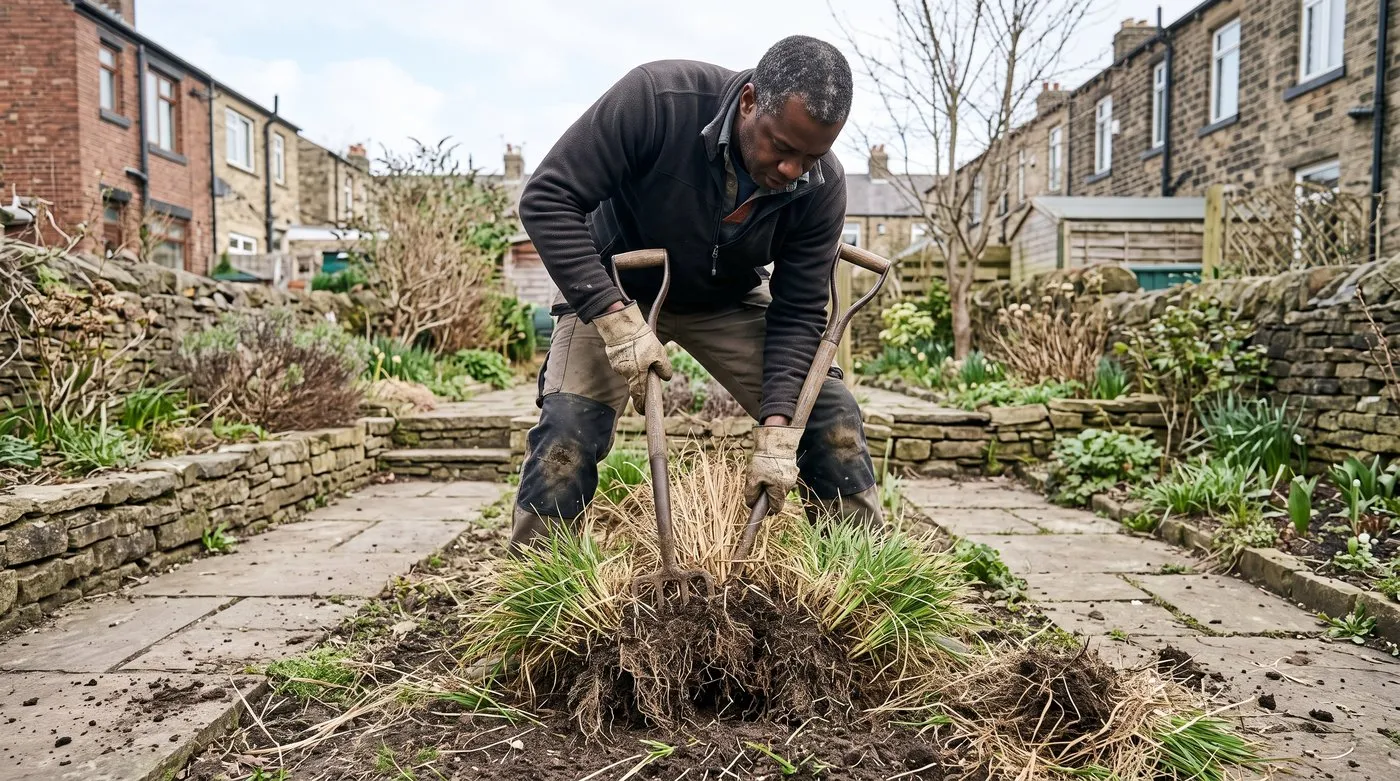
Two forks back to back lever a tough clump apart with far less effort than a spade alone.
Lift the clump with a fork. Split it into chunks with a sharp spade, or push two forks in back to back and lever them apart. Each piece should have healthy roots and plenty of shoots. Throw away the old woody centre. Replant at the same depth and water well.
Division is the only way to get more of a named variety that matches the parent exactly. Seedlings may vary.
Using deschampsia in naturalistic planting
Deschampsia is a favourite in naturalistic and prairie-style planting. Here a grass is planted through a whole bed as a “matrix”, with flowering perennials dotted through it in groups. The fine grass haze ties everything together, even when some flowers are over.
Good partners include Sanguisorba (burnet), Salvia nemorosa, Echinacea, Astrantia, Persicaria amplexicaulis and Helenium. All like similar soil and flower in summer. The guide to growing sanguisorba covers one of the best matches. For planning a full scheme, see prairie planting for an Oudolf-style border.

Grass woven through purple salvia, coneflowers and burnet. The haze links the flowers into one loose, natural-looking scheme.
Pests, problems and self-seeding
Deschampsia is trouble-free in most gardens. Slugs and snails leave it alone. The main thing to watch for is rust, which shows as orange-brown spots on the leaves in damp summers. Pick off badly affected leaves and bin them rather than composting. Good spacing and the yearly tidy-up help.
It can self-seed into gravel and bare soil. Pull unwanted seedlings while small. If you want more plants, you can also sow seed in spring. Sprinkle it thinly on the surface of seed compost, barely cover, and keep it in a cold frame.
Deschampsia in autumn and winter
Deschampsia earns its space after summer too. The flower heads fade from gold to bronze and then to pale straw. They hold their shape into winter, catching low sun and frost. Pair them with other plants that stand well, and the guide to plants with winter seedheads gives plenty of ideas.

In autumn the flower heads turn bronze and straw-coloured. They look great with late daisies like heleniums.
Deschampsia care calendar
| Month | What to do |
|---|---|
| January | Leave clumps standing and enjoy the frosty seed heads |
| February | Cut old flower stems to the base and tidy dead leaves |
| March | Finish tidying in cold areas. Mulch. Divide congested clumps |
| April | Plant new plants and divisions. Sow seed in a cold frame |
| May | Water new plants in dry spells |
| June | Flower heads start to appear |
| July | Peak flowering. Watch for rust in damp weather |
| August | Flower heads turn gold or bronze |
| September | Plant new plants while the soil is warm |
| October | Finish planting by mid-month. Leave seed heads standing |
| November | Seed heads fade to straw. No cutting yet |
| December | Enjoy the winter outline |
Common mistakes with deschampsia
- Planting in dry, hungry soil. It wants moisture. On dry sandy soil, a grass like stipa is the better choice.
- Cutting back in autumn. You lose the winter display and the shelter for insects. Wait until late winter.
- Never tidying it. Old leaves build up and the clump flowers less. A quick late-winter tidy keeps it fresh.
- Planting just one. A single tussock looks lost. Plant in groups for the hazy effect.
- Planting in deep shade. It survives but flowers poorly. For deep shade, try a shade-lover like Hakonechloa instead.
Frequently asked questions
Is deschampsia a UK native grass?
Yes, Deschampsia cespitosa grows wild across Britain. You’ll find it in damp meadows, woodland rides and rough grassland. Garden varieties are selected forms of the same plant.
When should I cut back deschampsia?
Tidy it in late winter, around February, before new growth gets going. Cut the old flower stems to the base and comb or trim out dead leaves. Leaving it standing until then gives you frosty seed heads and shelter for insects.
How tall does Deschampsia ‘Goldtau’ grow?
‘Goldtau’ grows to about 75cm in flower. The leafy tussock itself stays around 30-40cm. That makes it one of the easiest deschampsias to fit into a normal border.
Does deschampsia grow in clay soil?
Yes, it is one of the best ornamental grasses for clay. It likes soil that stays moist and copes with heavy ground that many grasses dislike. It does less well on very dry, sandy soil.
Can deschampsia grow in shade?
Yes, in light or dappled shade. It flowers best with a few hours of sun. In deep shade it survives but flowers poorly.
Does deschampsia self-seed?
Yes, it can self-seed into gravel and bare soil. Pull unwanted seedlings while small. Seedlings of named varieties may not match the parent, so divide plants if you want more of the same variety.
If your garden has a dry, sunny spot as well, read the guide to growing Stipa feather grass for a grass that loves those conditions. You’ll find more ideas in the plants hub.
Our team produces practical UK gardening guidance from source research, contributor records and established horticultural practice. Editorial standards are overseen by Matt W.