
Key takeaways
- An edimental is any plant that earns its place in a border and is also edible
- Sea kale and globe artichoke are long-lived, silver-leaved stars for sunny, well-drained borders
- Rainbow chard gives coloured stems and leaves to pick from early summer into autumn
- Nasturtium, calendula and borage flowers brighten borders and salads alike
- Good drainage matters more than rich soil for most edimentals
- Only eat ornamental kale you've grown from seed, as bought bedding plants may have been sprayed
Edimentals are plants that look good enough for a flower border and give you something to eat as well. Think silver sea kale, statuesque globe artichokes, glowing rainbow chard and bright nasturtiums. They let a small garden do two jobs at once, with no need for a separate veg patch.
This guide covers 12 of the best edimentals for UK gardens, how to plant them together, and how to keep them looking good while you pick. If you’d like a more formal kitchen-garden look, with neat beds and edging, the guide to the potager garden is the one for you.

Chard, nasturtiums, borage and herbs mingling in a summer border. Every plant here can go in the kitchen.
What does edimental mean?
An edimental is a plant with real ornamental value that you can also eat. The word blends “edible” and “ornamental”, and was popularised by the gardener Stephen Barstow.
What makes a good edimental, rather than a vegetable that happens to look nice?
- It looks good for a long season. Silver leaves, bold shapes, bright stems or lovely flowers.
- It sits happily in a border. It mixes with perennials and shrubs rather than needing rows.
- It gives a worthwhile harvest. More than one token leaf in spring.
Many edimentals are perennial, so you plant them once and pick for years. The guide to perennial vegetables has more of these long-lived crops.
The 12 best edimentals for UK gardens
1. Sea kale (Crambe maritima)
Sea kale is a native coastal plant with wavy, silver-blue leaves and clouds of honey-scented white flowers in early summer. It’s long-lived and loves sun and sharp drainage.
How to use it: Plant one to three as a silver anchor in a sunny, gritty border. In late winter, cover a crown with an upturned bucket or forcing pot to blanch the new shoots. Cut them when they’re about 15-20cm long and steam them like asparagus. Young leaves and the broccoli-like flower buds are edible too.

Sea kale looks like it belongs in a seaside gravel garden. The white flowers smell of honey and the bees love them.
2. Globe artichoke (Cynara cardunculus Scolymus Group)
A globe artichoke is a big, silver-leaved perennial, about 1.5m tall, with huge purple thistle flowers in summer. The artichokes you eat are the unopened flower buds.
How to use it: Give it a sunny spot at the back of a border. Pick buds while the scales are still tight. Leave a few to open, as the purple flowers are magnets for bumblebees. Mulch the crown in winter in colder areas. The globe artichoke growing guide covers it in detail.

Leave a few artichoke buds to open. The giant purple thistles are a feast for bumblebees.
3. Rainbow chard (Beta vulgaris subsp. cicla)
Rainbow chard has glossy leaves on stems of red, yellow, pink, orange and white. It’s one of the brightest plants you can put in a border.
How to use it: Plant groups through the middle of the border. It looks great beside silver foliage or dark heuchera. Pick the outer leaves regularly and new ones keep coming from summer into autumn. Sow from April. See the Swiss chard guide for sowing and care.
4. Ornamental kale (Brassica oleracea)
Ornamental kale forms frilly rosettes of purple, pink, cream and green. The colours deepen as the weather turns cold, so it shines from autumn into winter.
How to use it: Plant in late summer for autumn and winter colour, in borders or pots with heuchera and pansies. The leaves are edible but tougher and more bitter than kitchen kale.
Good to know: Only eat ornamental kale you’ve grown from seed. Bedding plants sold for display may have been treated with products not meant for food crops.
5. Perennial kale ‘Daubenton’ (Brassica oleracea var. ramosa)
This bushy, perennial kale keeps producing leaves for several years. The variegated form has cream-edged leaves that look good in a border.
How to use it: Buy a plant or root a cutting, as it rarely sets seed. Pick leaves often to keep it compact. Cabbage white caterpillars like it as much as you do, so check under the leaves in summer. Nasturtiums nearby can act as a decoy for the butterflies.
6. Samphire (Salicornia europaea and Crithmum maritimum)
There are two kinds. Marsh samphire is an annual of salt marshes, and rock samphire is a perennial of sea cliffs. Both have fleshy, salty stems.
How to use it: In a garden, grow them in pots or raised beds of sandy, very free-draining compost in full sun. They’re happiest in coastal gardens. Pick the young shoots in summer.
7. Bronze fennel (Foeniculum vulgare ‘Purpureum’)
Bronze fennel grows into a tall, feathery haze of bronze-purple leaves, with flat yellow flowers in summer. It’s a perennial and seeds itself around freely.
How to use it: Use it as a see-through screen in a sunny border. Pick the feathery leaves for fish and salads, and collect the seeds in autumn. Cut off some seedheads if you don’t want seedlings everywhere.
8. Sorrel (Rumex acetosa and Rumex scutatus)
Sorrel has sharp, lemony leaves. Buckler-leaved sorrel (R. scutatus) has pretty shield-shaped leaves that suit the front of a border.
How to use it: Grow it at the border edge in moist soil. Pick young leaves from spring, and cut off flower stems so the leaves stay tender. Sorrel is sharp because of oxalic acid, so enjoy it in small amounts. The sorrel growing guide has more.
9. Chives and garlic chives (Allium)
Chives have grassy leaves and pom-pom purple flowers in early summer. Garlic chives have flat leaves and white starry flowers in late summer.
How to use it: Edge a border or path with them, or tuck them under roses. Snip leaves all season and scatter the flowers on salads.
Pet note: Chives and other alliums are toxic to cats and dogs if eaten. Keep them out of reach if you have a pet that nibbles plants.
10. Borage (Borago officinalis)
Borage is an annual with hairy grey-green leaves and bright blue starry flowers from early summer. Bees adore it, and it self-seeds freely.
How to use it: Scatter seed in any sunny gap. Float the flowers in drinks or freeze them in ice cubes. Eat the flowers rather than the hairy leaves. The borage growing guide covers sowing.

Borage’s blue stars look lovely in a border and even better frozen into ice cubes. The bees will thank you too.
11. Nasturtium (Tropaeolum majus)
Nasturtiums have round leaves and orange, yellow or red flowers from summer until the frosts. Leaves and flowers both taste peppery.
How to use it: Let them trail over edges and fill gaps. Use the flowers and young leaves in salads. Pickle the green seed pods as a home-grown alternative to capers. See growing nasturtiums for varieties.
12. Calendula (Calendula officinalis)
Calendula, or pot marigold, has cheerful orange and yellow daisy flowers over a long season. It self-seeds readily.
How to use it: Grow it at the front of a border. Pull the petals and scatter them over salads, rice or cakes for colour. Sow in spring, or in early autumn for earlier flowers next year.
How to design an edimental border
Plan it like any ornamental border. Choose a few bold plants for structure, repeat some mid-height plants, soften the edges, and fill gaps with self-seeding annuals.
A small starter border (about 2m x 3m)
| Position | Plant | Role | How many |
|---|---|---|---|
| Back centre | Globe artichoke | Bold silver anchor | 1 |
| Back corners | Bronze fennel | Tall, airy height | 2 |
| Middle | Rainbow chard | Colour and leaves to pick | 5 |
| Middle | Perennial kale ‘Daubenton’ | All-year leaves | 1 |
| Front | Chives | Neat edging | 6 |
| Gaps | Calendula, borage, nasturtium | Self-seeding fillers | Scattered |
This gives you something to pick from spring chives to autumn kale, with flowers from early summer into autumn.
Tips for a good-looking edimental border
- Repeat plants. Three groups of chard along a border look planned. One clump looks like it escaped from the veg patch.
- Use silver foliage. Sea kale, artichokes and cardoons make bright colours glow.
- Plan for gaps. When you pick a whole chard plant, sow nasturtiums or calendula in the space.
- Mix in ornamentals. Edimentals sit happily beside salvias, grasses and roses.

Rainbow chard looks brilliant with dark heuchera and silver foliage. Pick the outer stems and it keeps on going.
Edimentals or a vegetable plot?
An edimental border won’t give you as big a harvest as a dedicated veg bed of the same size. What it gives you is a border that looks good for longer, needs less digging and weeding, and still puts food on the plate.
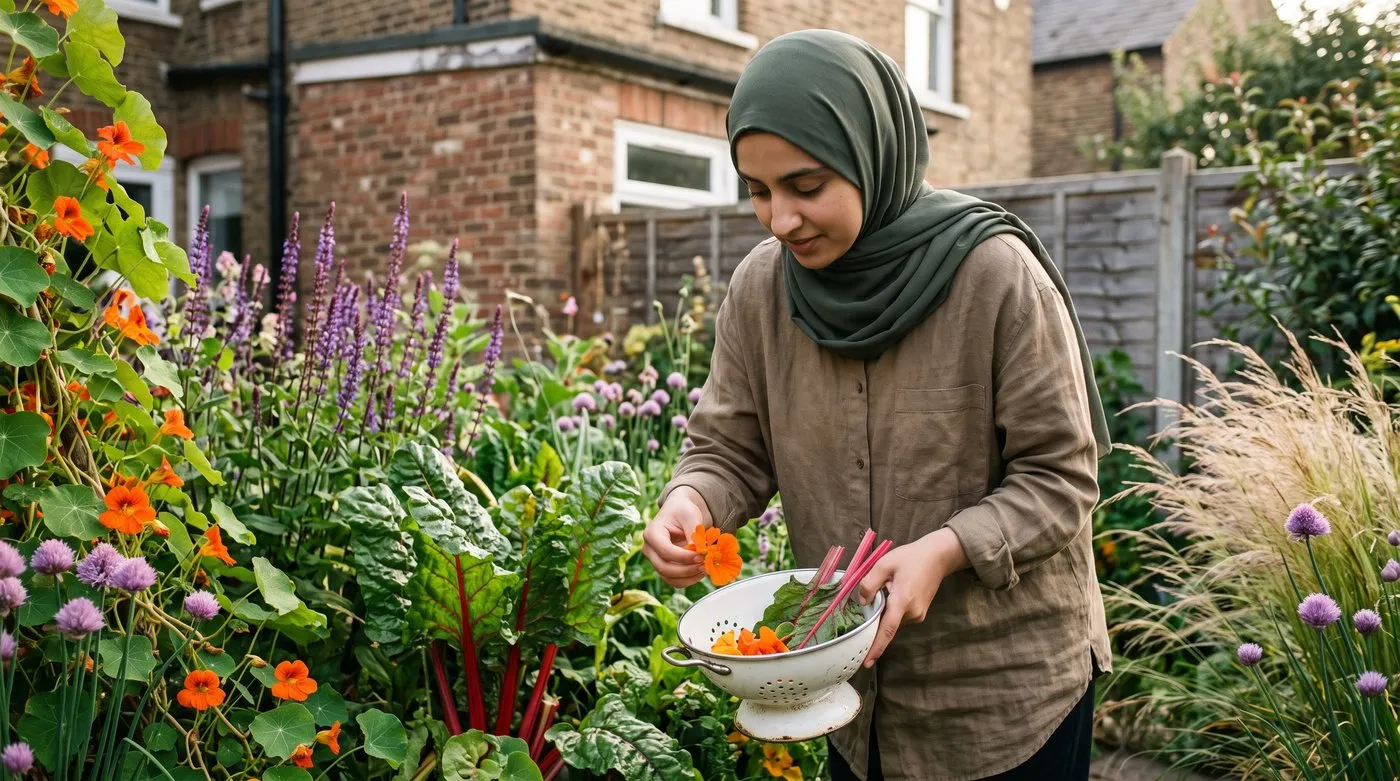
Picking supper from the flower border is the whole joy of edimentals. A handful on the way past soon adds up.
It suits you if you have a small garden, want one space that does both jobs, or like the idea of picking a few things for dinner as you walk past. If you want to grow most of your own veg, a proper plot will out-crop it.
Edimental planting calendar
| Plant | When to plant or sow | How |
|---|---|---|
| Sea kale | Spring | Root cuttings (thongs) or pot-grown plants |
| Globe artichoke | Spring | Pot-grown plants or rooted offsets |
| Ornamental kale | Late summer | Module-raised plants |
| Perennial kale ‘Daubenton’ | Spring or early autumn | Cuttings or pot-grown plants |
| Rainbow chard | April to July | Sow direct or in modules |
| Bronze fennel | Spring | Sow or pot-grown plants |
| Sorrel | Spring | Sow, or divide established clumps |
| Chives | Spring to early autumn | Pot-grown plants or division |
| Borage | April to June | Sow direct, then let it self-seed |
| Nasturtium | Late April to June | Sow direct after frosts |
| Calendula | March to May, or September | Sow direct |
| Samphire | Spring | Pot-grown plants in sandy compost |
Looking after an edimental border
An edimental border isn’t much work. Picking keeps most plants tidy and productive, so harvesting doubles as maintenance.
Spring: mulch around perennials with garden compost. Sow chard, borage, calendula and nasturtiums. Blanch sea kale shoots under a pot.
Summer: pick chard, sorrel and chives often. Cut artichoke buds before they open, leaving a few for bees. Deadhead calendula, or leave some to self-seed.
Autumn: plant ornamental kale. Cut down spent artichoke stems. Clear sea kale’s dying leaves once they fade.
Winter: pick kale leaves. Mulch artichoke crowns in cold gardens. Plan next year’s gaps.

Ornamental kale gets brighter as the cold sets in. It’s one of the few plants still glowing in December.
Common edimental mistakes
Treating it like a veg plot. Rows and bare soil between crops look out of place in a border. Plant in groups and let plants mingle.
Over-feeding. Lots of nitrogen gives soft, floppy growth that pests love. A yearly compost mulch is usually enough.
Not picking. Unpicked chard, sorrel and chives turn tough or run to flower. Pick little and often.
Wrong plant, wrong spot. Sea kale rots on wet clay, and samphire struggles away from sandy, sunny conditions. Match the plant to your soil.
Eating bought ornamental kale. Plants sold as bedding may have been sprayed. Grow your own from seed if you want to eat it.
Frequently asked questions
What does edimental mean in gardening?
An edimental is a plant that is both edible and ornamental. The word joins the two together and was popularised by the gardener Stephen Barstow. Sea kale, globe artichoke, rainbow chard and chives are classic examples.
Which edimentals suit a small garden?
Rainbow chard, chives, nasturtiums, calendula and strawberries suit small spaces. Add one bold plant such as a globe artichoke if you have a sunny spot. Many edimentals also grow happily in large pots.
Are edimentals as productive as a vegetable plot?
No, but that isn’t the point. You’ll pick less than from a veg bed of the same size. In return you get a border that looks good for longer and needs less work.
When should I plant edimentals?
Plant perennials like artichokes and sea kale in spring or early autumn. Sow chard, borage, calendula and nasturtiums from March to May. Avoid planting into very dry or waterlogged soil.
Do edimentals need special soil?
Most just need good drainage and a sunny spot. Sea kale and fennel are happy in poor, gritty soil. Chard and perennial kale like a bit more richness. On heavy clay, add grit or use raised beds.
Are edimentals good for bees?
Yes, many are excellent for bees. Artichoke flowers, borage, chives, sea kale and fennel are all popular with pollinators. Leave a few artichoke buds to open for the bees.
Is ornamental kale edible?
Yes, but it’s tougher and more bitter than kitchen kale. Only eat plants you grew from seed yourself. Bedding plants sold as ornamentals may have been treated with products not meant for food crops.
Love the idea of edible flowers? Our guide to growing and using edible flowers has plenty more to try. For more border ideas, browse the garden design hub.
Our team produces practical UK gardening guidance from source research, contributor records and established horticultural practice. Editorial standards are overseen by Matt W.


