Key takeaways
- Vita Sackville-West and Harold Nicolson created the White Garden from around 1950
- It mixes white flowers with silver, grey and green leaves inside low clipped hedges
- Rosa mulliganii over a central arbour is the star, flowering from late June into July
- It is smaller than most people expect, which is why its ideas suit home gardens
- Borrow the principles: one colour, layered foliage, firm structure, scent and a focal point
- The garden belongs to the National Trust, so check opening times before you go
The White Garden at Sissinghurst Castle in Kent is probably the most famous single-colour garden in the world. Vita Sackville-West and her husband Harold Nicolson created it around 1950. It mixes white flowers and silver leaves inside neat, box-edged beds.
The surprise for many visitors is how small it is. That’s good news, because its ideas work in an ordinary back garden. This guide covers the story, the plants, visiting tips and how to borrow the look. For a wider list of plants, see our guide to the best white flowers for UK gardens.
How Sissinghurst’s White Garden was made
Vita Sackville-West was a poet, novelist and gardening writer, with a long-running column in The Observer. Harold Nicolson was a diplomat and writer. In 1930 they bought Sissinghurst Castle, a near-ruin in the Kent countryside, and spent the following decades turning the land around it into a series of garden rooms, each enclosed by walls or hedges.
The White Garden was one of the later rooms. Vita planned it from 1949, and it was planted around 1950. Harold is credited with much of the formal layout, and Vita with the planting.
In 1959 Vita took on two head gardeners, Pamela Schwerdt and Sibylle Kreutzberger, who looked after the garden for many years after her death in 1962. The National Trust took over Sissinghurst in 1967 and still cares for it today.
Six ideas to borrow from the White Garden
You don’t need to copy the exact plants. These six principles work in any UK garden.
1. Stick to one colour
The White Garden really is white, with no stray pinks or pastels. A single colour stops flowers competing, so your eye notices shape, texture and leaves instead. White is a great choice for a shady garden, because it brightens dark corners.
2. Layer your foliage
White flowers alone would look flat. Sissinghurst mixes in silver leaves such as lamb’s ears (Stachys byzantina) and artemisia, grey-green plants, and dark green box and yew as a backdrop. These leaves keep the garden interesting when little is in flower. As a rough guide, add a silver-leaved plant for every few white flowers.
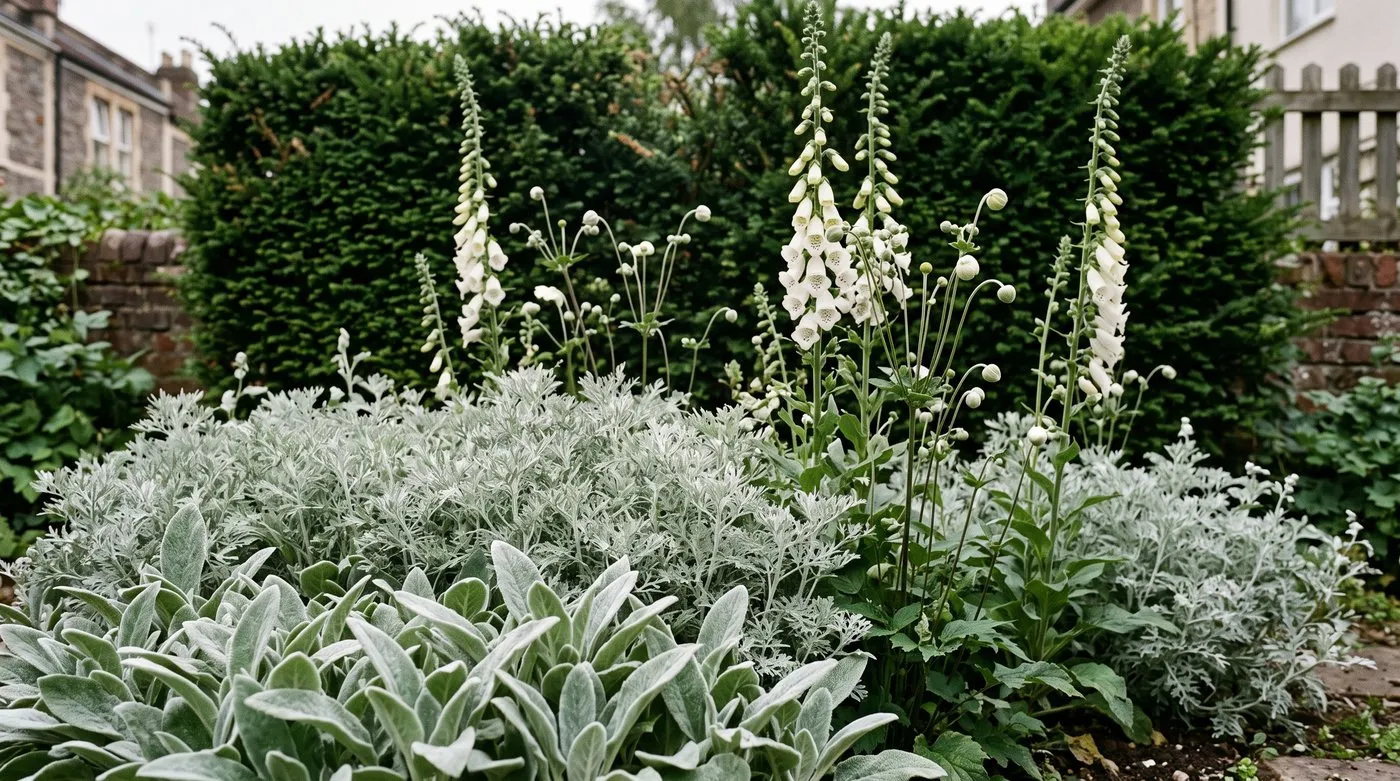
Silver and dark green leaves stop a white border looking flat, even when little is in flower.
3. Give it year-round structure
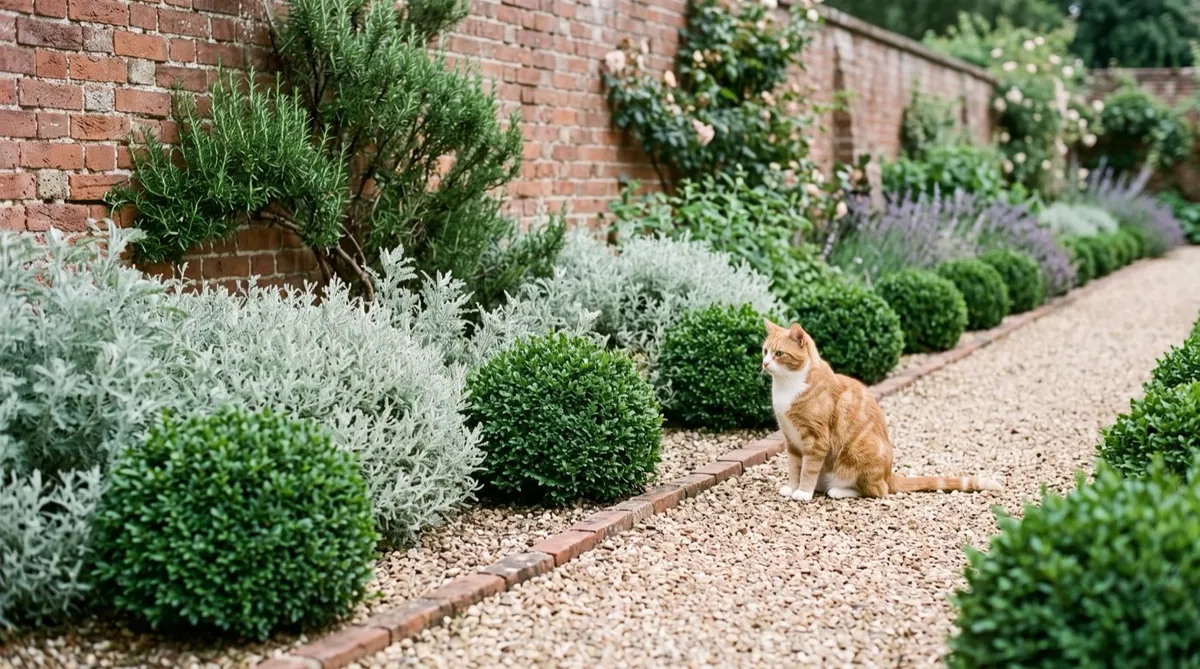
Low clipped hedges around the beds give the garden its bones. In winter, when the flowers have gone, the hedge pattern is still there. Tall yew hedges enclose the space and frame the views.
At home, a low clipped edge around a bed does the same job. Box blight and box tree caterpillar are now common problems, so consider a substitute from our guide to box hedge alternatives.

Four low-hedged beds, white tulips and silver leaves. The same idea scaled down to a suburban garden.
4. Plant for evening scent
Many white flowers are scented in the evening to attract moths, and they glow as the light fades. Good choices include:
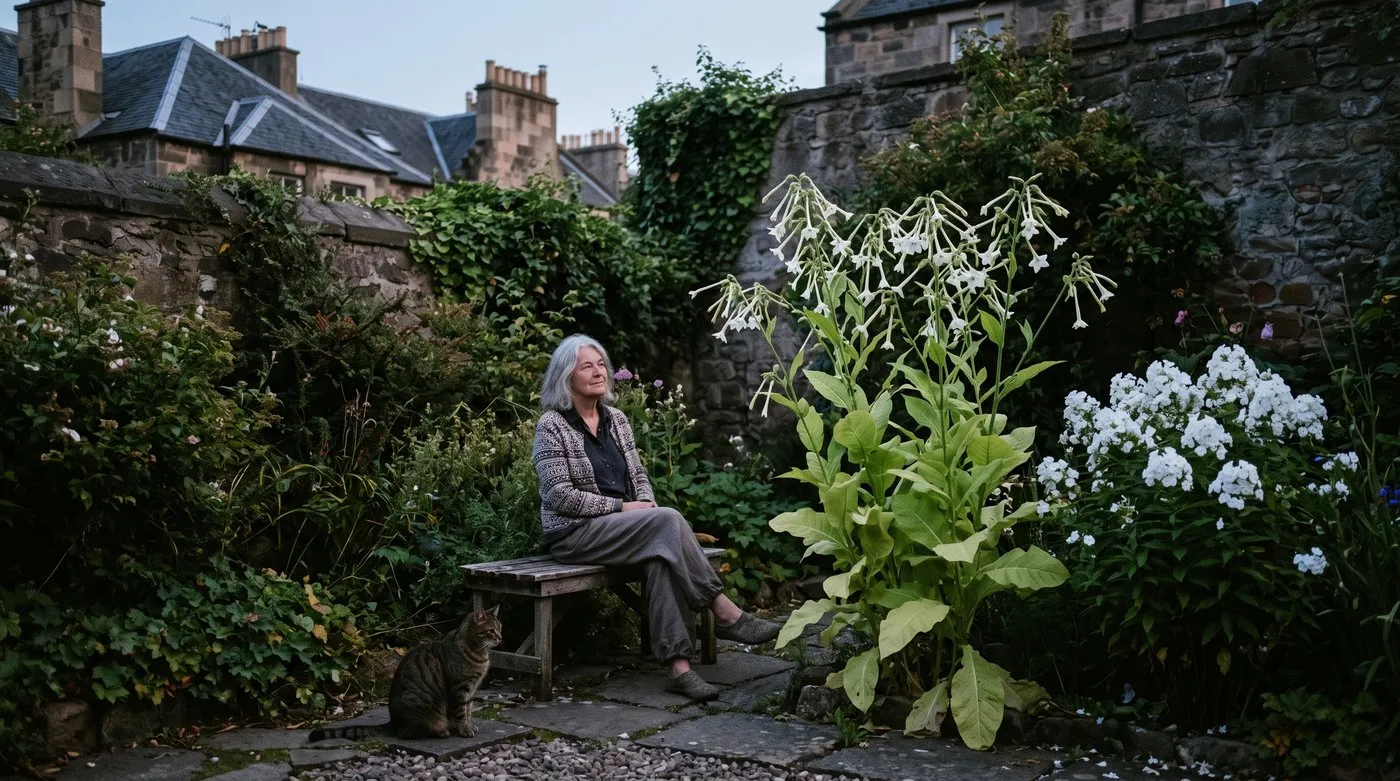
White flowers glow as the light fades, and nicotiana fills the air with scent on summer evenings.
- Nicotiana sylvestris (woodland tobacco), strongly scented at night
- Trachelospermum jasminoides (star jasmine)
- Lilium regale (regal lily)
- White sweet rocket (Hesperis matronalis var. albiflora)
- White forms of Phlox paniculata
Put two or three near a seat or path. Our guide to moon garden design is all about planting for the evening.
Warning: Lilies are deadly to cats. Even pollen licked from fur can cause kidney failure. If you have a cat, leave lilies out and choose nicotiana or phlox instead.
5. Use pale paths
Pale paths reflect light and work with the white planting to brighten the garden. Many white flowers also seed themselves into gravel, giving you free plants in surprising spots.
6. Choose one focal point
The White Garden centres on an iron arbour draped in Rosa mulliganii, a vigorous white rambling rose. Everything leads your eye towards it.
At home, a focal point could be an obelisk with a white climbing rose, a standard shrub, a pot or a bench. It doesn’t need to cost much. It just needs to be deliberate. Our guide to climbing roses has white varieties to try.

A white rambling rose over an arbour gives a white garden its centrepiece. On a smaller scale, an obelisk does the same job.
White garden plants through the seasons
This is a short list of white and silver plants that give the Sissinghurst look in a home garden. Many are grown there, though the planting changes over the years.
| Season | White flowers | Silver or foliage plants |
|---|---|---|
| Spring | Tulipa ‘White Triumphator’, Narcissus ‘Thalia’, white Anemone blanda | Crambe maritima (sea kale) |
| Early summer | Rosa mulliganii, white foxgloves, white delphiniums, Lupinus ‘Noble Maiden’, Aquilegia ‘White Barlow’ | Stachys byzantina (lamb’s ears) |
| High summer | Lilium regale, Phlox paniculata ‘David’, Nicotiana sylvestris, Cosmos ‘Purity’ | Artemisia ‘Powis Castle’ |
| Late summer to autumn | Anemone x hybrida ‘Honorine Jobert’, white echinacea, Hydrangea paniculata ‘Limelight’ | Eryngium giganteum ‘Miss Willmott’s Ghost’ |
| All year | Clipped box or a substitute, yew hedging |
Foxgloves are poisonous if eaten, so plant them away from where small children play.
How to make a Sissinghurst-style bed at home
A bed of about 2m by 3m is enough to capture the feel.
- Edge it with a low clipped hedge, about 30cm high.
- Add an obelisk in the middle and plant a white climbing rose such as ‘Madame Alfred Carrière’.
- Plant bulbs in autumn: white tulips and ‘Thalia’ daffodils for spring.
- Add early-summer flowers, such as white foxgloves and aquilegias, which self-seed.
- Add high-summer scent with phlox and a nicotiana near the edge.
- Finish with silver foliage, such as three lamb’s ears and an artemisia, for texture.
Top it up each year with annuals and replace any plants that fail. Our best companion plants for roses suggests more partners for the rose.

A white bed in a small garden: a clipped edge, a rose on an obelisk and silver leaves at the front.
Visiting Sissinghurst: tips for gardeners
Where: Sissinghurst Castle Garden is near Cranbrook in Kent. It belongs to the National Trust. Members get in free and non-members pay for entry. Check the National Trust Sissinghurst page for opening times and booking before you travel.
When: For the White Garden, aim for late June into July, when the roses are out. Go late in the day for the glow of white in low light. Spring brings white tulips and fewer crowds.
What else to see: The Rose Garden, the hot-coloured Cottage Garden, the Herb Garden and the Lime Walk, which is full of spring bulbs. Climb the tower for the famous view down over the garden rooms.
For more places to visit, see our guide to the best open gardens in the UK.

From above, the low hedges turn into a neat pattern. That structure holds the garden together all year.
Common white garden mistakes
- Letting other colours creep in. One pink flower breaks the spell. Be strict.
- Using white flowers only. Without silver and green leaves, a white bed looks flat and washed out.
- Skipping structure. Without clipped edges or a focal point, white planting looks messy.
- Planting only for June. Choose whites for spring, summer and autumn so the bed always has something out.
Frequently asked questions
Who designed the White Garden at Sissinghurst?
Vita Sackville-West and her husband Harold Nicolson created it. Vita chose the planting, while Harold is credited with much of the layout. It was planned from 1949 and planted around 1950.
What plants are in Sissinghurst’s White Garden?
White flowers mixed with silver and grey foliage. Rosa mulliganii over the central arbour is the star, with white delphiniums, foxgloves and lilies around it. Silver plants such as artemisia and lamb’s ears add texture. White tulips feature in spring.
Can I visit Sissinghurst Castle?
Yes, the garden is owned by the National Trust and open to visitors. Members get in free and non-members pay for entry. Opening times change through the year, so check the National Trust website first. Climb the tower for a view over the gardens.
How big is the Sissinghurst White Garden?
It is smaller than most people expect. Box-edged beds, paths and hedges split it into a series of framed views. That modest scale is one of its best lessons, because the ideas work in an ordinary garden.
When is the best time to see the White Garden?
Late June into July, when Rosa mulliganii is in flower. White flowers glow in low light, so late in the day is especially lovely. Spring brings white tulips. Arriving early or late also avoids the busiest times.
Can I create a white garden in a small UK plot?
Yes, the same principles work at any size. Give the space a clear structure, such as clipped edges and a simple path. Mix white flowers that bloom at different times with silver and green foliage. Add one focal point, such as a bench or an obelisk.
Inspired to plan your own? Read our guide to Gertrude Jekyll’s border design lessons for more ideas from great English gardens, or browse more garden design ideas.
Our team produces practical UK gardening guidance from source research, contributor records and established horticultural practice. Editorial standards are overseen by Matt W.