Key takeaways
- Hesperantha flowers from September to November, just as summer borders fade
- It used to be called Schizostylis, and nurseries still use both names
- It needs full sun and soil that stays moist, as summer drought stops it flowering
- Plant in spring, 5cm deep and 20-25cm apart
- Divide congested clumps every two or three years to keep it flowering well
- 'Major' and 'Sunrise' are reliable choices with the RHS Award of Garden Merit
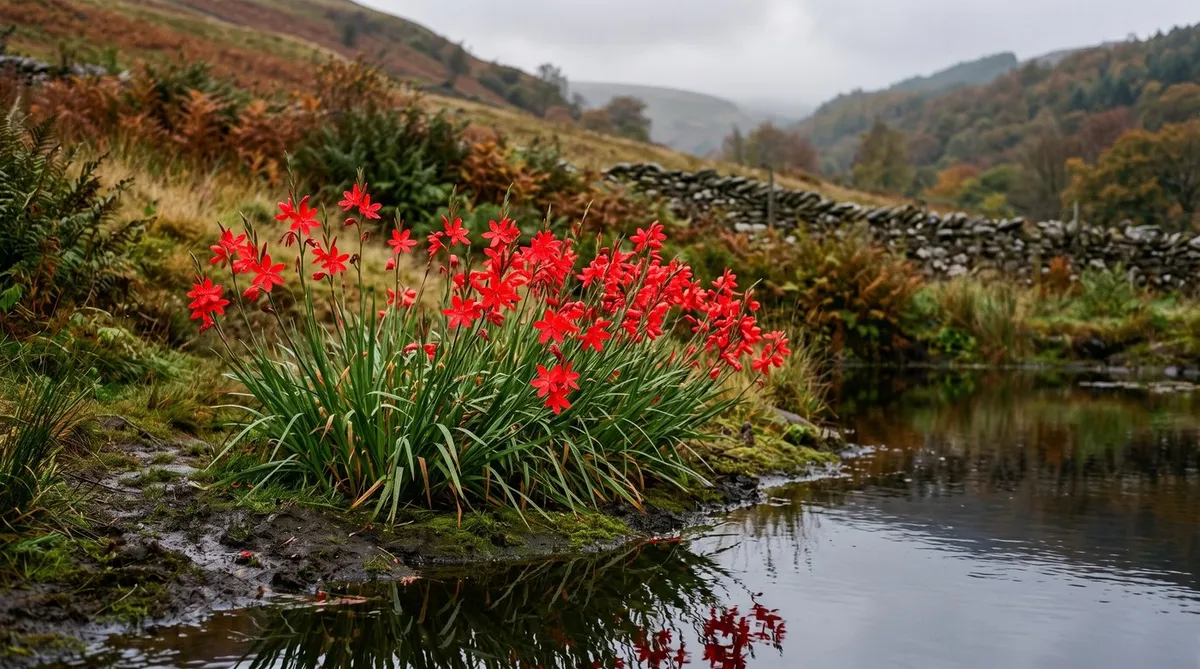
Hesperantha brings fresh, bright flowers to the garden just when most borders are fading. From September into November it sends up slender spikes of red, pink or salmon flowers that look like small gladioli. It’s easy to grow, as long as you remember one thing: it likes moist soil.
This guide covers which varieties to choose, how and when to plant, and why clumps sometimes stop flowering. It suits damp borders, pond edges and pots.
What is hesperantha?
Hesperantha coccinea, the crimson flag lily, is a clump-forming perennial from the grassy, damp hillsides and streamsides of South Africa. It grows from a creeping rhizome, a swollen underground stem, rather than a true bulb. Narrow, grassy leaves form a clump, and flower stems rise above them to about 45-60cm.
Until 1996 it was called Schizostylis coccinea, and many labels still use that name. You may also see an old common name, kaffir lily, which has been dropped because the word is an offensive slur.
Each flower is flat and star-shaped with six petals. Colours run from deep scarlet through clear pink to soft salmon.
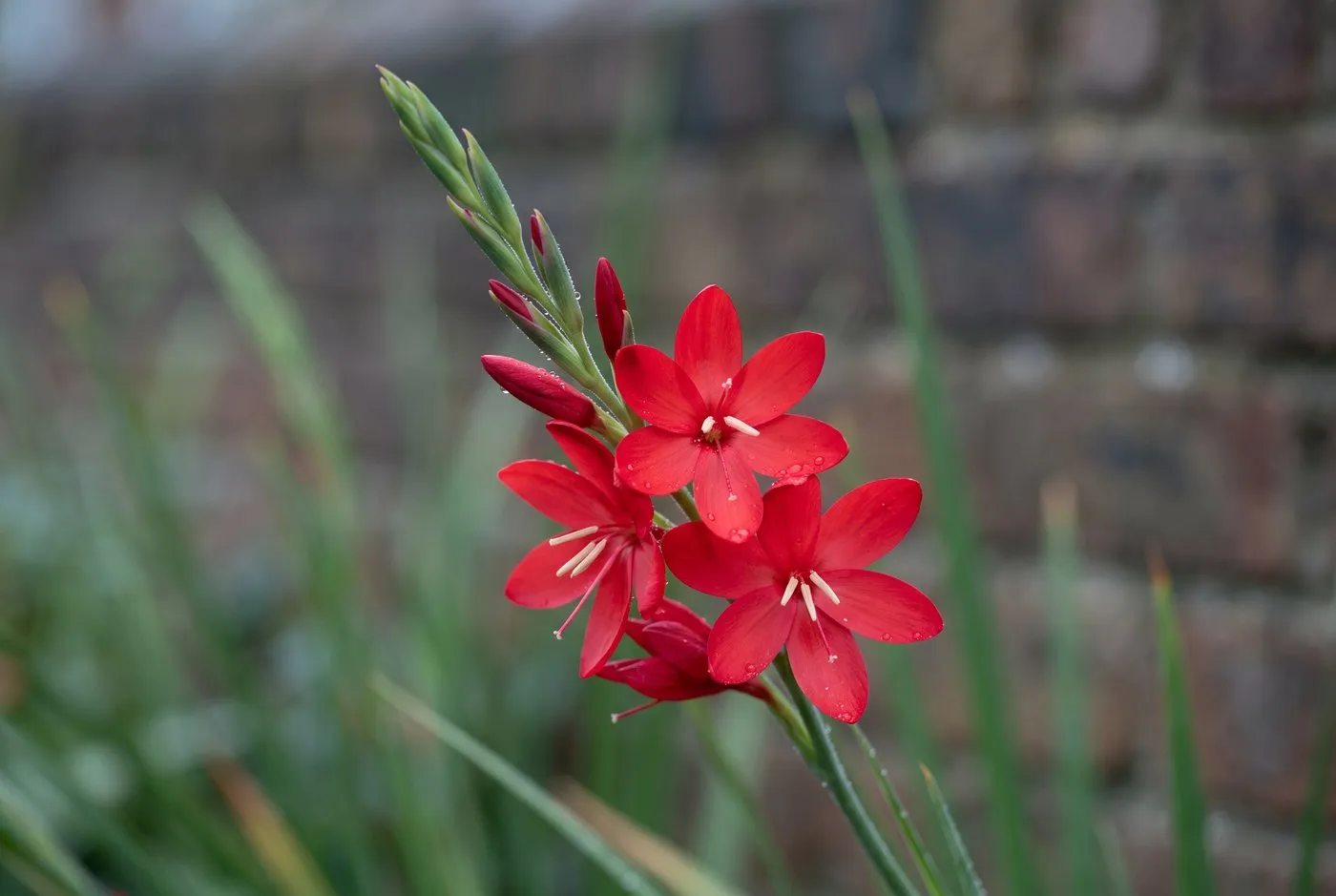
The flowers open one after another up the spike, so each stem stays colourful for weeks.
Why hesperantha is so useful in autumn
Most autumn colour comes from asters, Japanese anemones, sedums and a few late bulbs. Hesperantha adds bright, fresh flower spikes right through September, October and November, often peaking in October.
In the wild it flowers after the summer rains, and in UK gardens that timing lands in autumn. It’s a lovely partner for other late flowers and gives bees and hoverflies something to visit on mild autumn days. Our list of autumn plants for bees has more late nectar flowers to plant with it.
It also makes a good cut flower. Pick stems when the lowest flowers are just opening and they’ll keep opening in the vase.
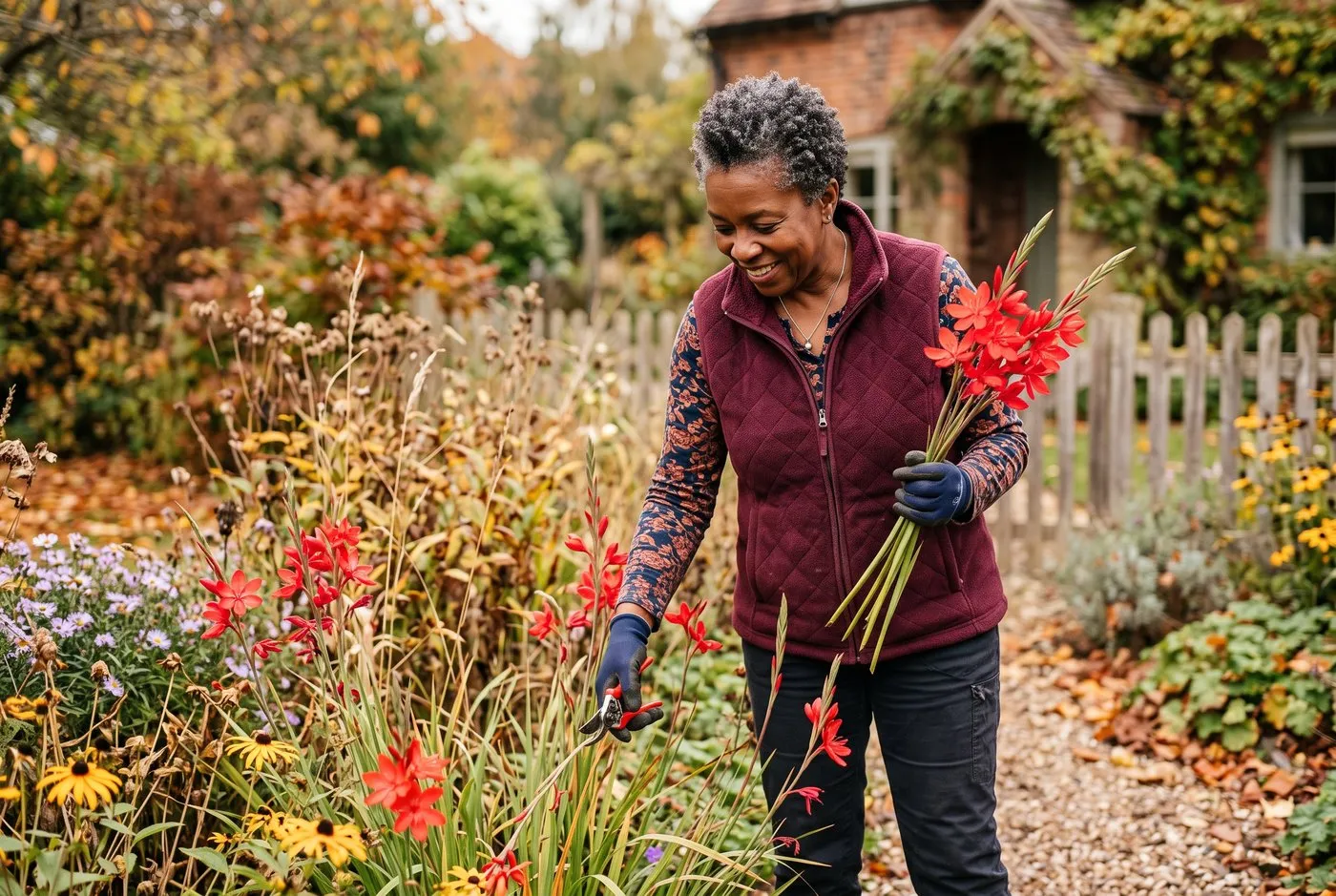
Hesperantha makes a cheerful cut flower in October. Cutting a few stems won’t spoil the display in the border.
Which hesperantha varieties to grow
For a first plant, choose ‘Major’ or ‘Sunrise’. Both hold the RHS Award of Garden Merit and flower well.
| Variety | Flower colour | Best use |
|---|---|---|
| ’Major’ | Large scarlet-red | Pond edges, damp borders |
| ’Sunrise’ | Large salmon-pink | Damp borders, cutting |
| ’Mrs Hegarty’ | Soft rose-pink | Cottage borders with moist soil |
| ’Jennifer’ | Clear pink | Borders and pots |
| ’Sunset’ | Coral-salmon | Front of a moist border |
| ’Alba’ | White | Cool colour schemes |
‘Major’ has large, rich red flowers and is the one most people picture. ‘Sunrise’ is just as strong in a softer salmon-pink. ‘Mrs Hegarty’ is a much-loved old pink variety.
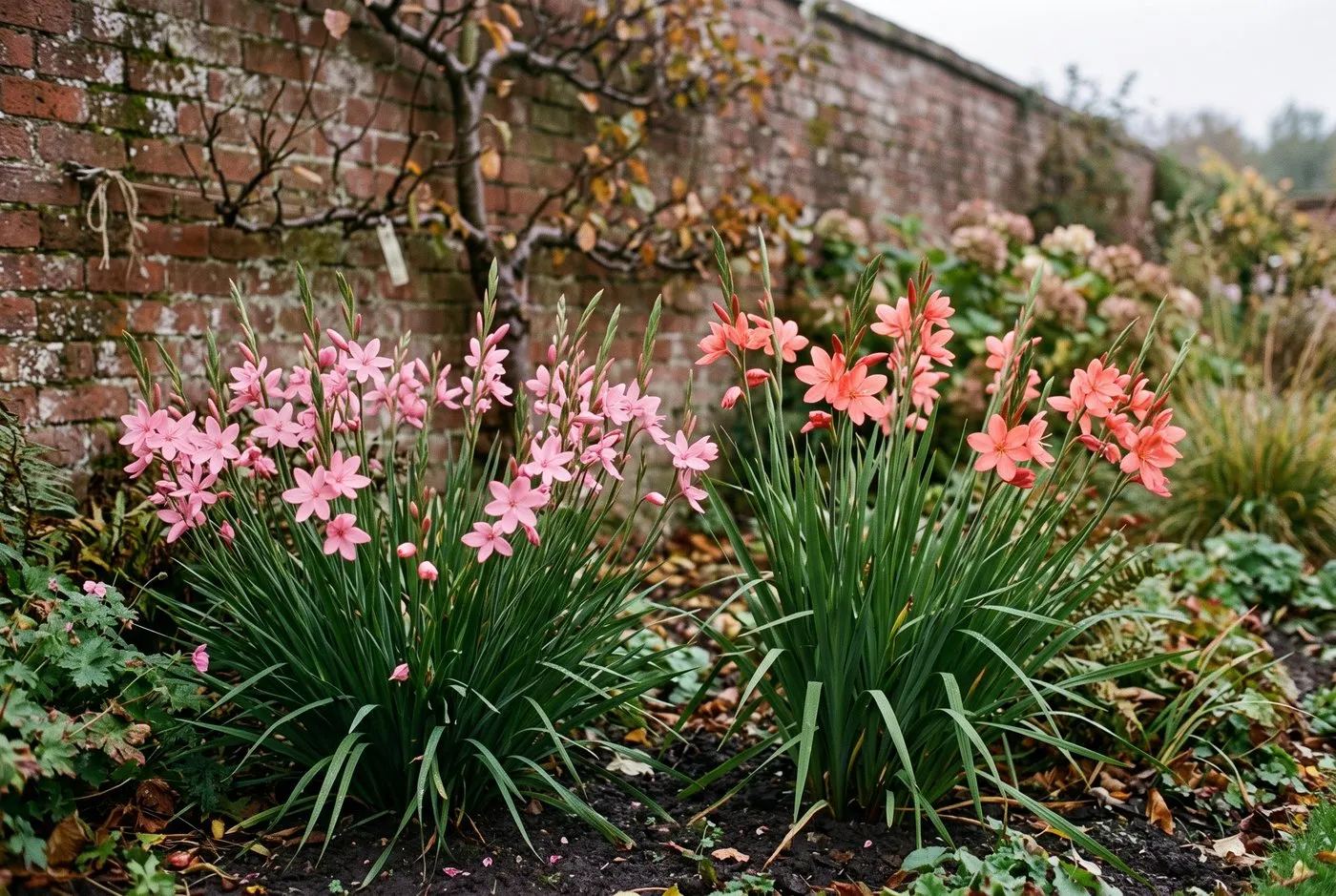
Soft pink and salmon varieties look lovely together. Plant a few colours side by side for a longer-looking show.
When and how to plant hesperantha
Plant hesperantha in spring, from March to May, as the soil warms. Pot-grown plants can go in during summer too if you keep them watered.
Choose full sun and soil that stays moist. This is the opposite of most bulb advice, and it’s the thing people most often get wrong. A damp border, the edge of a pond or a bed that never bakes dry all suit it. On dry or sandy soil, dig in plenty of compost or leaf mould first to hold moisture.
- Fork compost or leaf mould into the planting area.
- Plant each rhizome or pot-grown plant 5cm deep.
- Space plants 20-25cm apart.
- Water in well and keep the soil moist through the first summer.
New plants may only make leaves in the first year and flower well from the second autumn. Our guide to bulbs, corms, tubers and rhizomes explains why rhizome plants like this spread sideways.
Where to plant hesperantha
Pond and stream edges are ideal. Plant in the damp ground just above the waterline, not in standing water. For more plants that enjoy these conditions, see our guide to plants for wet, boggy soil.
In a border, grow it at the front or middle of a sunny bed that stays moist. Plant three or five together for impact. It looks good with the blues and purples of asters. It’s related to crocosmia, but crocosmia copes with drier soil.
Nerines flower at the same time in similar pinks but want the opposite: a hot, dry, sunny spot. If you grow both, keep the nerines on the dry side of the garden.
In pots, use loam-based compost such as John Innes No. 2 and water often in summer so it never dries out. Move pots somewhere sheltered in a hard winter.
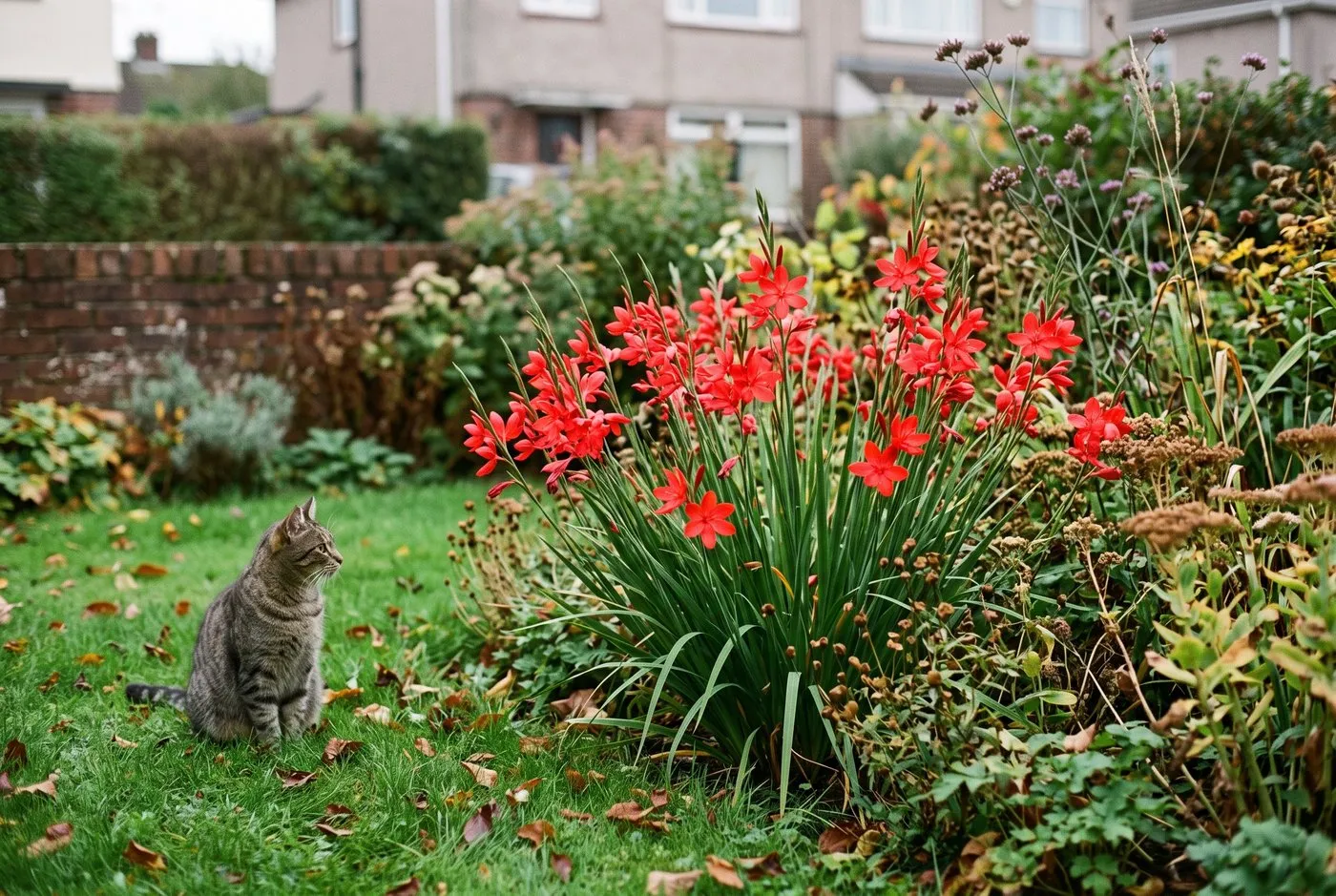
A clump of red hesperantha keeps a suburban border bright well into autumn.
Watering and feeding through the year
The key to flowers is moist soil in summer. Many gardeners treat hesperantha like a drought-tolerant bulb and stop watering. A plant that dries out in July and August makes leaves but few flower spikes.
- Spring: water if the weather turns dry. A light balanced feed in April helps on poor soil.
- Summer: water deeply in dry spells and mulch to hold in moisture. A high-potash feed such as tomato food once a month helps flowering.
- Autumn: keep the soil moist while it flowers. No feeding needed.
- Winter: leave it alone. The soil should be moist, not waterlogged.
Month-by-month hesperantha calendar
| Month | What to do |
|---|---|
| January to February | Leave clumps alone. Clear fallen leaves off the crowns |
| March to April | Plant new plants. Divide congested clumps as growth starts. Light feed |
| May | Finish planting. Mulch to hold moisture for summer |
| June to August | Water in dry spells. Monthly high-potash feed |
| September to October | Main flowering. Cut stems for the vase. Remove faded spikes |
| November | Flowering ends. Tidy frosted, collapsed leaves |
| December | Mulch crowns in cold or exposed gardens |
Will hesperantha survive a UK winter?
Yes, it’s hardy in most UK gardens, much tougher than tender autumn bulbs. It usually comes through winter in the ground with no help.
The bigger risk is cold combined with very wet, badly drained soil, which can rot the crowns. In cold or exposed gardens, or on heavy clay, spread a mulch of leaf mould, bark or compost over the crowns after flowering. In mild areas the leaves stay green over winter, so only remove those that frost has flattened.
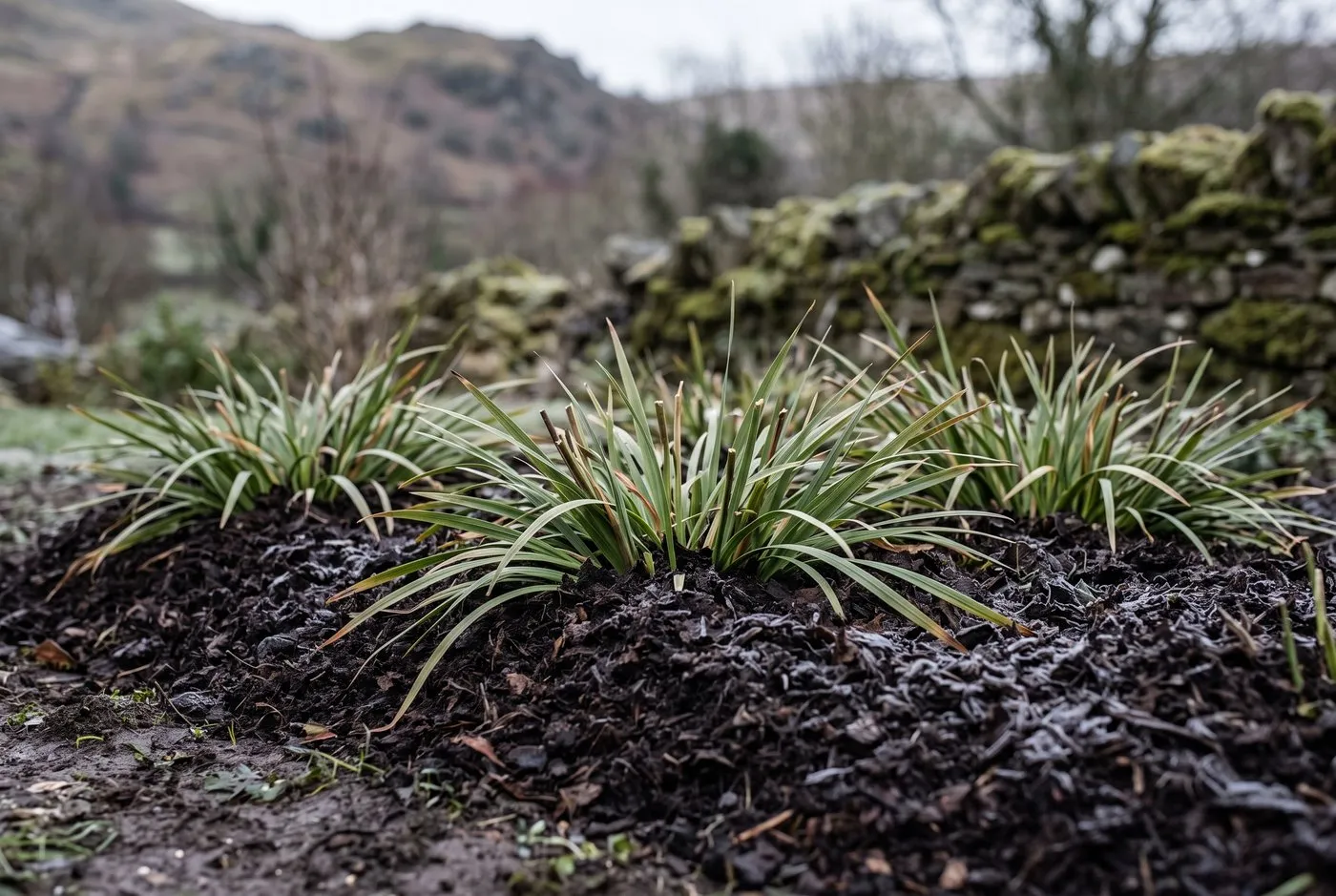
A blanket of mulch over the crowns helps in cold, exposed gardens. Leave the green leaves be.
Why hesperantha stops flowering and how to fix it
A clump that flowers less each year is usually suffering from summer drought or overcrowding, rarely pests or disease.
If it’s drought, water in dry spells and mulch, or move it to damper ground. If it’s overcrowding, divide it every two or three years in spring. Lift the clump with a fork, pull it into fist-sized pieces with healthy young shoots and roots, and throw away the old, woody middle. Replant the young pieces 5cm deep in moist, improved soil and water well. They usually flower the following autumn. Our guide to dividing perennials shows the technique.
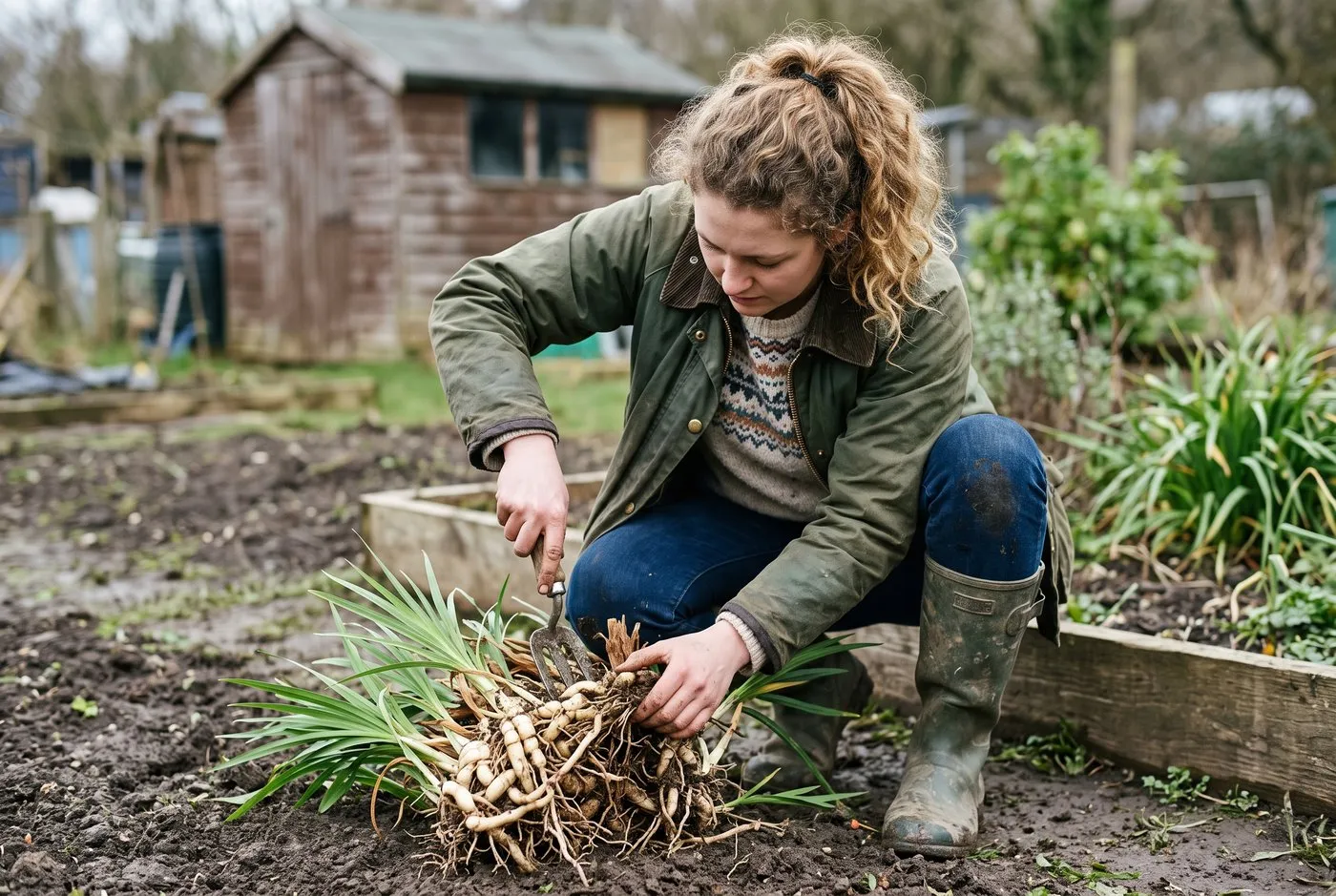
Dividing every few years keeps clumps young and flowering. Replant the healthy outer pieces and compost the old centre.
Common mistakes with hesperantha
Letting the soil dry out. This is the main reason it doesn’t flower. Keep the soil moist all summer.
Planting in a hot, dry bed. It wants sun and moist roots together. A dry gravel garden suits crocosmia, not hesperantha.
Leaving clumps undivided. Crowded clumps flower less. Divide every two or three years in spring.
Cutting back too hard in autumn. In mild areas the leaves stay green and protect the crown. Only remove frosted, collapsed leaves.
Ignoring slugs in spring. Slugs and snails love the soft new shoots in damp spots. Check after wet evenings from March to May and pick them off.
Now you know how to keep hesperantha flowering, read our guide to the best autumn flowers for UK gardens to build a full late-season display. There’s lots more on our growing hub.
Frequently asked questions
How do you grow hesperantha in the UK?
Plant it in spring in full sun and moist soil. Set plants 5cm deep and 20-25cm apart in ground that doesn’t dry out. Water in dry spells through summer and divide clumps every two or three years.
Is hesperantha the same as Schizostylis?
Yes, they are the same plant. Botanists moved Schizostylis coccinea into Hesperantha in 1996. Nurseries still sell it under both names. Its common name is the crimson flag lily.
Is hesperantha hardy in the UK?
Yes, it’s hardy in most UK gardens. It usually comes through winter in the ground without help. In cold or exposed gardens, or on heavy soil, a mulch of leaf mould or bark over the crowns in late autumn gives extra protection.
Why is my hesperantha not flowering?
Usually because it’s too dry, too shaded or too crowded. It needs moist soil and full sun to flower well. Old, congested clumps flower less, so lift and divide them in spring and replant in moist, improved soil.
When does hesperantha flower?
Hesperantha flowers from September to November in most UK gardens. It’s often at its best in October. In a mild autumn the flowers can carry on into late November.
Does hesperantha spread or become invasive?
It spreads slowly into a wider clump but isn’t invasive. The roots creep outwards to form a dense mat over time. Lifting and dividing every few years keeps it in check and flowering well.
Can you grow hesperantha in pots?
Yes, as long as the compost never dries out. Use a pot of loam-based compost and water often in summer. Pots suit gardens with dry soil, but move them somewhere sheltered in a hard winter.
Our team produces practical UK gardening guidance from source research, contributor records and established horticultural practice. Editorial standards are overseen by Matt W.