Key takeaways
- Yarrow needs full sun and well-drained soil; poor soil gives sturdier plants
- Flowers from June to September in white, yellow, pink, red and orange
- Plant 45-60cm apart in spring or autumn, with the crown level with the soil
- Divide clumps every three years or so to stop them dying out in the middle
- The flat flower heads are great for hoverflies, beetles and butterflies
- Yellow varieties dry especially well for winter arrangements
Yarrow is one of the easiest perennials you can grow in a sunny UK garden. Give it full sun and well-drained soil and it flowers from June to September, shrugs off dry spells and needs little more than dividing every few years. The flat flower heads come in white, yellow, pink, red and warm orange, and insects love them.
The wild form, Achillea millefolium, is a native wildflower of meadows and verges. Garden varieties bring brighter colours and tidier habits. Here’s how to pick one, plant it and keep it flowering.
Which yarrow varieties grow best in the UK?
For most borders, start with ‘Moonshine’ for clear yellow or ‘Paprika’ for red. Choose ‘Gold Plate’ if you want height at the back of a border.
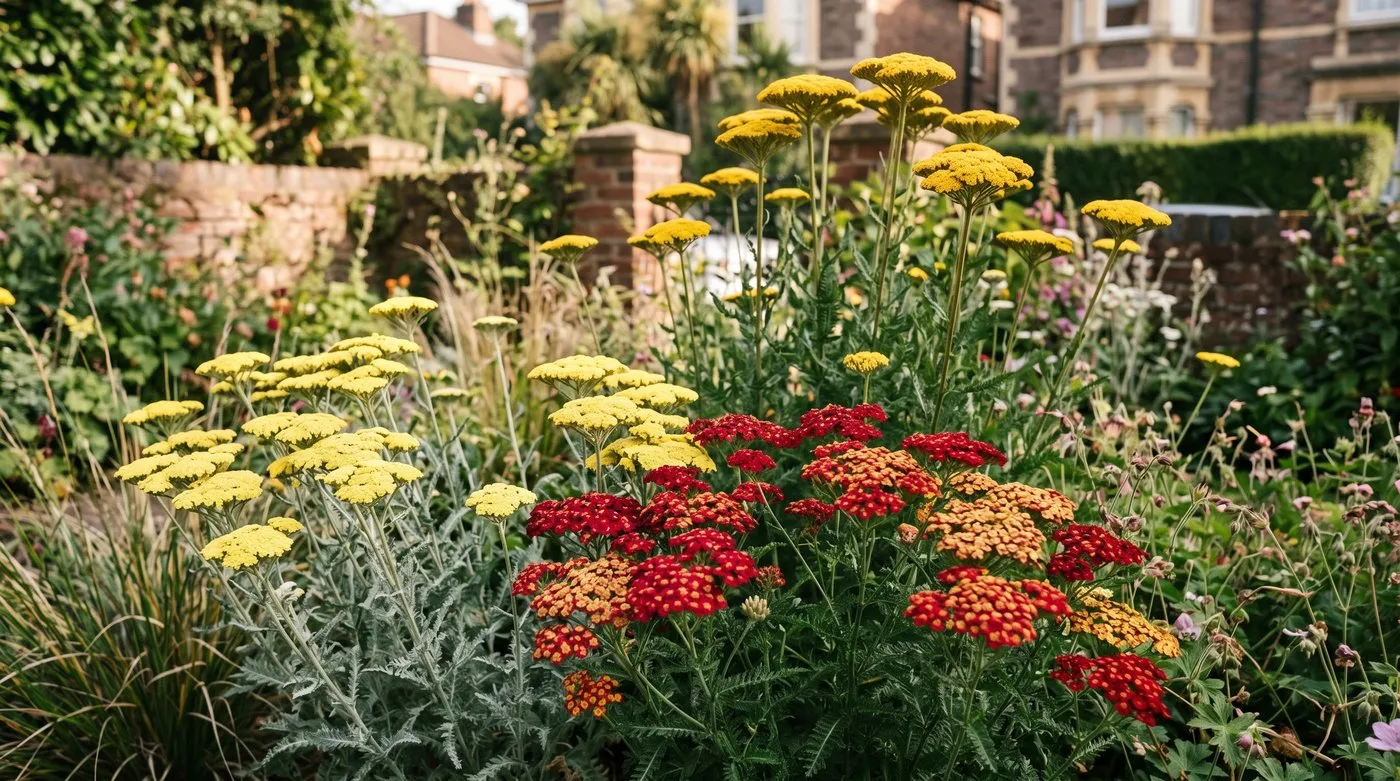
Lemon ‘Moonshine’, red ‘Paprika’ and tall ‘Gold Plate’ show how much choice there is beyond the white wild yarrow.
| Variety | Height | Colour | Best for |
|---|---|---|---|
| ’Moonshine’ | 60cm | Lemon-yellow, silver leaves | Borders, gravel gardens |
| ’Paprika’ | 60cm | Red, fading to gold | Hot colour schemes |
| ’Terracotta’ | 60-75cm | Burnt orange, fading to cream | Warm schemes, cutting |
| ’Cerise Queen’ | 60-75cm | Bright pink | Cottage borders |
| ’Gold Plate’ | 120cm or more | Deep golden yellow | Back of border, drying |
| Tutti Frutti ‘Pineapple Mango’ | 50cm | Golden apricot | Front of border, pots |
| Wild A. millefolium | 30-60cm | White or pale pink | Meadows, wild areas |
‘Moonshine’ is a tidy, reliable all-rounder with silvery leaves that look good before the flowers open. ‘Paprika’ and ‘Terracotta’ change colour as they age, so one head can show several shades at once. ‘Gold Plate’ and ‘Cloth of Gold’ are tall forms of Achillea filipendulina with big, flat golden heads, ideal for drying.
Where should I plant yarrow?
Plant yarrow in full sun. In shade it grows leggy, flops and flowers poorly.
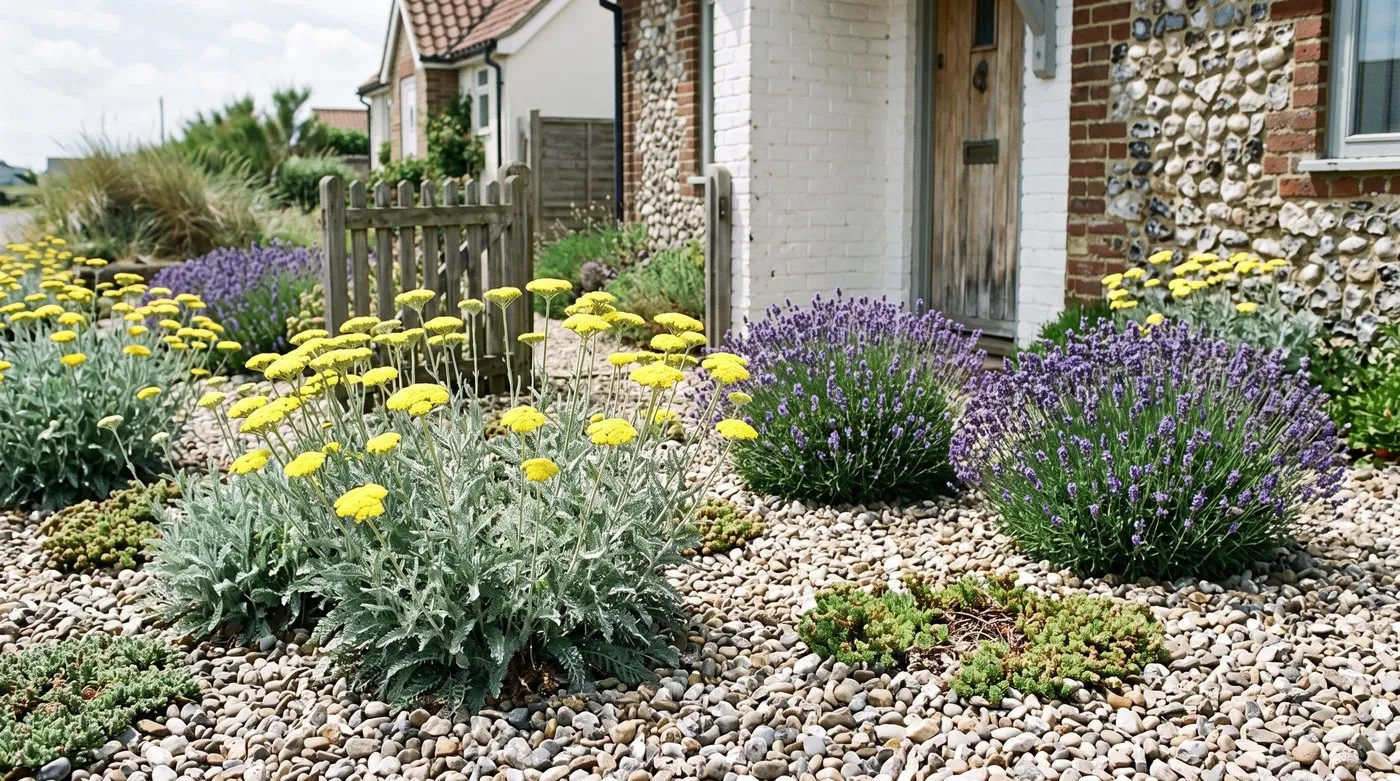
Sun, gravel and lean soil keep yarrow compact, so it stands up on its own without staking.
The soil should be well-drained and not too rich. Poor, stony, sandy or chalky soil gives compact plants that stand up on their own. Rich, moist soil makes them soft and floppy. It’s one of the good plants for chalky soil. Yarrow copes with windy, open spots too, though the tallest types may need a little support.
It’s a natural for a gravel garden, where the sharp drainage and reflected heat suit it perfectly. It also fits into drought-tolerant planting once it’s settled in.
How to plant yarrow
Plant pot-grown yarrow in spring or autumn. Spring is better on heavy soil, so the roots can settle before winter.
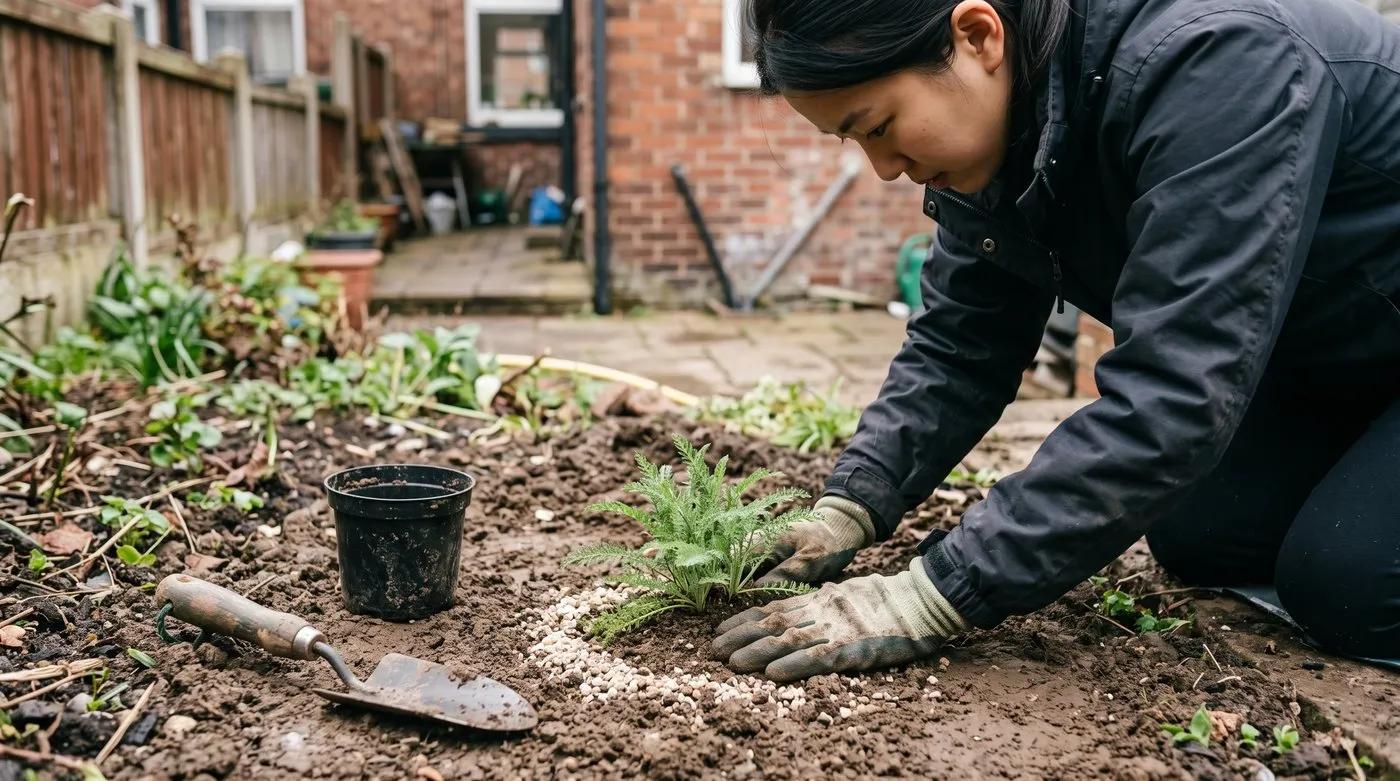
Keep the crown level with the soil and add a ring of grit on clay, so the base stays dry over winter.
- Dig a hole the same depth as the pot and twice as wide.
- Don’t add compost or manure. On clay, mix grit into the soil you put back.
- Set the plant with its crown level with the soil, never deeper.
- Space garden varieties 45-60cm apart, and tall ‘Gold Plate’ types 60-75cm apart.
- Water in, then water weekly in dry spells for the first month or so.
A collar of grit around the base helps keep the crown dry over winter. Once settled, yarrow rarely needs watering.
How to divide yarrow
Divide yarrow every three years or so, in early spring as new shoots appear, or in autumn on lighter soils. Without dividing, clumps go woody and bare in the middle and flower less.
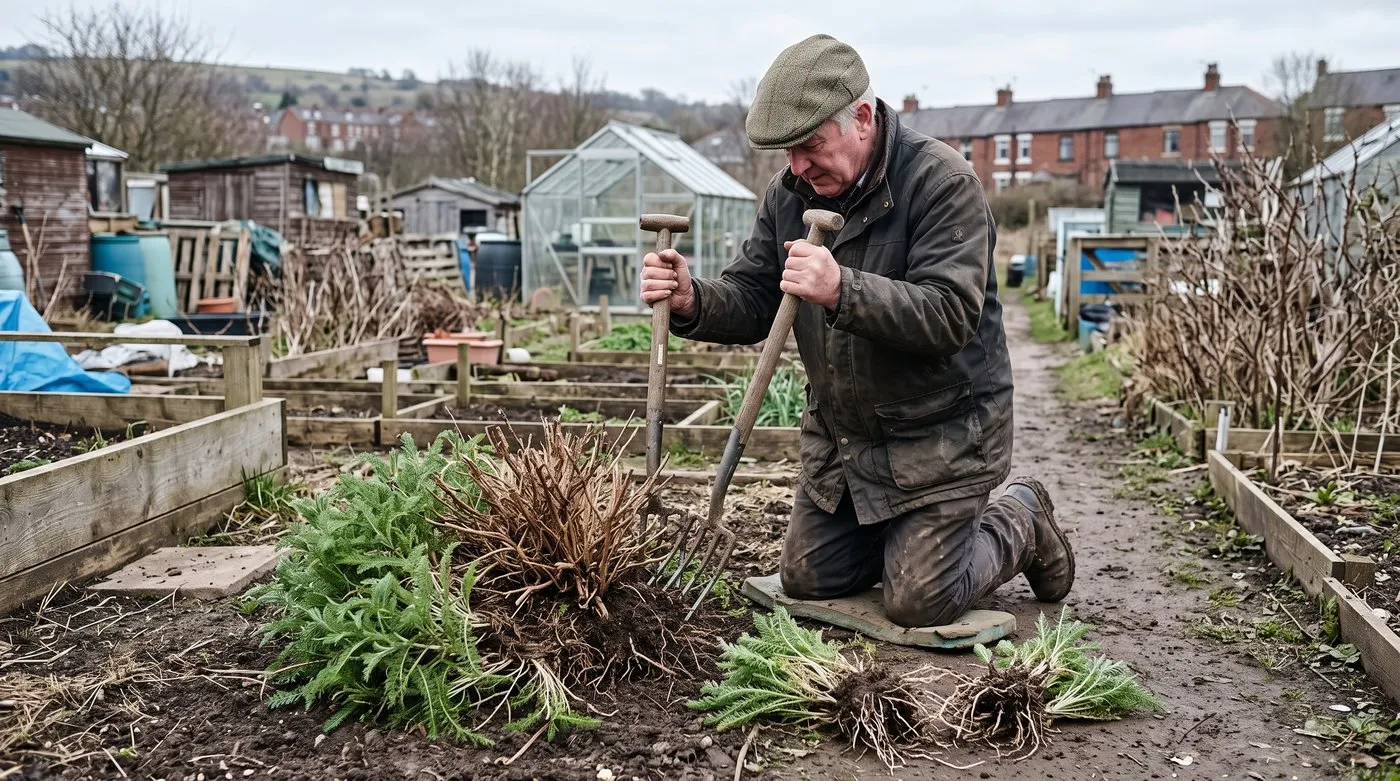
Keep the lively outer pieces and throw away the tired woody middle. Each piece soon makes a new clump.
- Lift the whole clump with a garden fork.
- Pull or cut it into fist-sized pieces, each with healthy shoots and fresh roots.
- Throw away the woody middle.
- Replant the best pieces straight away, at the same depth.
- Water once, then leave them to it.
Dividing also stops the clump spreading into its neighbours, and gives you spare plants to share.
How to grow yarrow from seed
The wild species and some seed strains, such as ‘Summer Berries’ mixes, are easy from seed. Sow in spring on the surface of moist seed compost and don’t cover, as the seed needs light. Keep at about 15-20C. Prick out into small pots, then harden off and plant out once they’re a good size.
Seed-grown plants may not flower well until their second summer. Named varieties like ‘Moonshine’ don’t come true from seed, so grow those from divisions.
Using yarrow in prairie and gravel planting
Yarrow’s flat flower heads contrast beautifully with spiky and airy plants. That makes it a key plant in prairie-style and naturalistic borders.
Plant it in drifts of five to seven among ornamental grasses such as stipa and miscanthus. Add spires of salvia and verbascum, and the cones of echinacea. In a gravel garden, pair ‘Moonshine’ with lavender and sedums. Keep to plants that like the same sun and sharp drainage. Watering thirsty neighbours will make the yarrow soft and floppy.
How to cut and dry yarrow
Yarrow is good fresh and dried. For the vase, cut stems in the cool of the morning when the flowers are fully open. Strip the lower leaves and stand them in clean water. They usually last about a week.
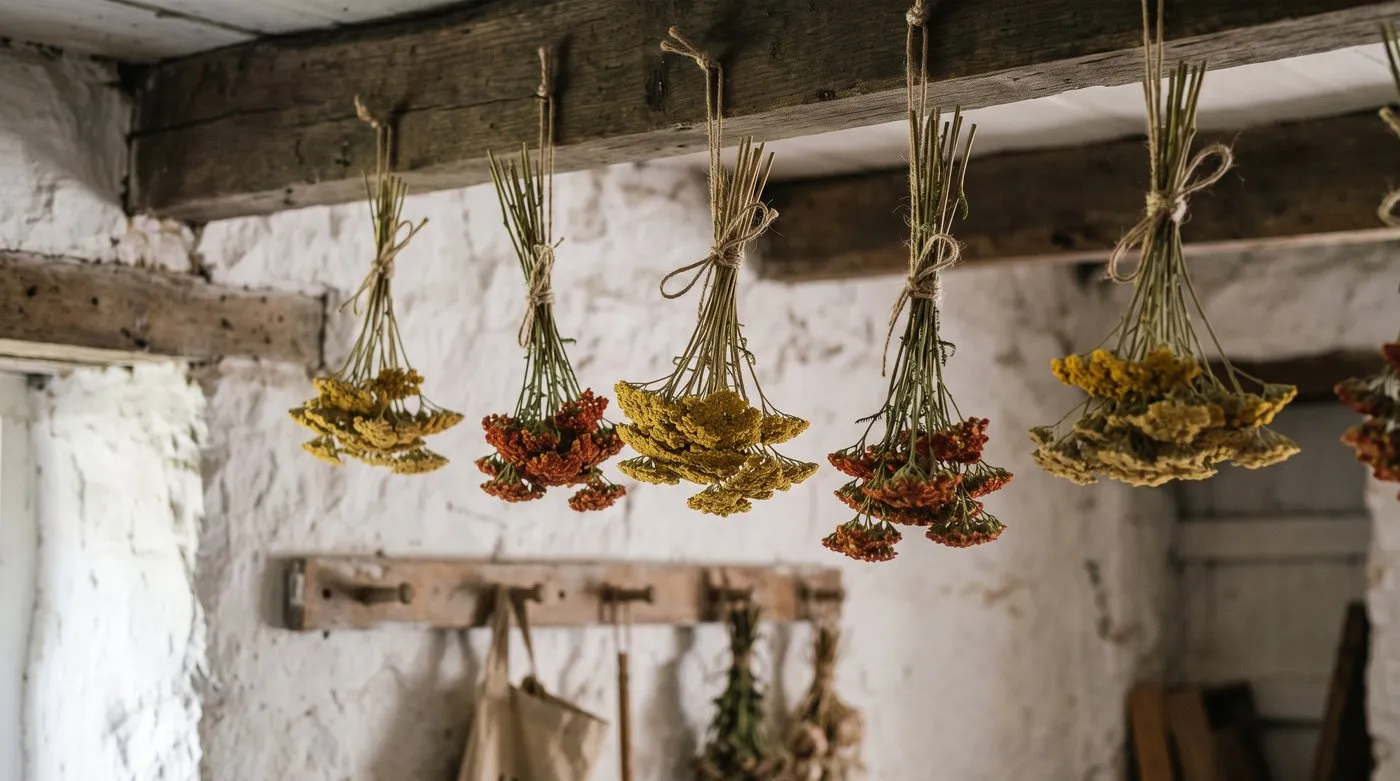
Hang small bunches upside down somewhere warm and airy. Yellow yarrow keeps its colour best.
For drying, cut stems at full colour, before any florets turn brown. Strip the leaves, tie in small bunches and hang them upside down somewhere warm, dry, dark and airy. They take about two to three weeks. Yellow varieties keep their colour best. Reds and pinks fade to softer shades, which can be lovely too. For more ideas, see the best flowers for cutting.
What wildlife does yarrow attract?
Yarrow’s flat heads are landing pads for insects. Hoverflies, soldier beetles, small bees and butterflies all visit through summer. That makes it a great choice for bee-friendly borders and wildlife gardens.
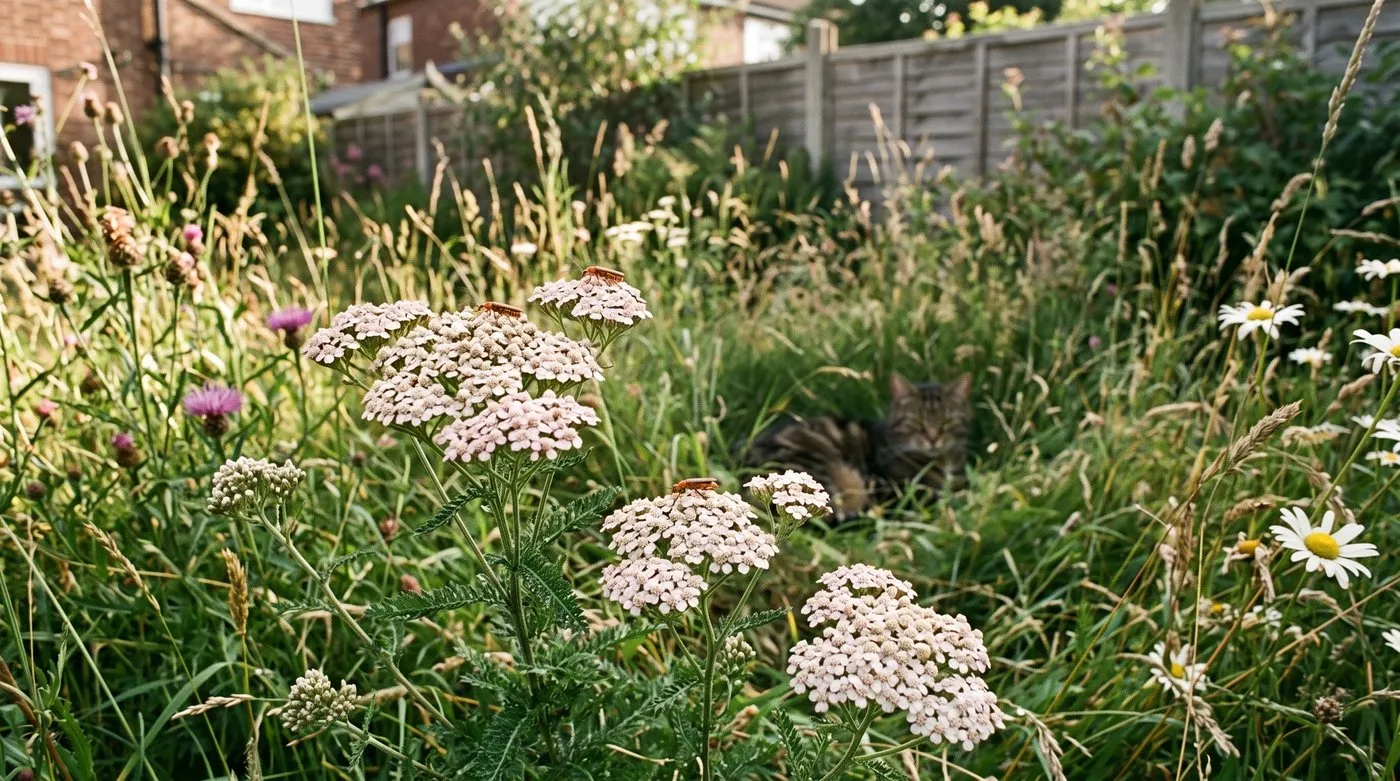
Wild yarrow is happiest in a meadow patch, where its spreading habit is welcome and insects make good use of it.
The wild species also suits a wildflower lawn or meadow patch, where its spreading habit is welcome rather than a nuisance.
Pet note: yarrow can upset a cat’s or dog’s stomach if eaten. It’s rarely a problem, but keep an eye on plant-chewing pets.
Common yarrow problems
- Bare middle: the clump is congested. Divide it.
- Floppy stems: too much shade, rich soil or crowding. Move to sun, stop feeding and divide.
- Powdery mildew: a white coating on lower leaves in late summer. Remove the worst leaves and give plants space. Most plants shrug it off.
- Aphids: sometimes cluster on shoot tips in spring. Hoverflies and ladybirds usually deal with them. Squash or hose off heavy clusters.
- Spreading too far: the wild species can run. Keep it in meadow areas and divide garden varieties to keep them in bounds.
Yarrow growing calendar
| Month | What to do |
|---|---|
| March | Divide congested clumps. Cut back old stems as new growth starts |
| April | Sow seed. Plant new pot-grown plants |
| May | Plant out young plants. Water new plants in dry spells |
| June to July | First flowers. Cut stems for the vase or drying |
| August | Deadhead to keep flowers coming |
| September | Last flowers. Plant or divide on light soil |
| October to February | Leave some seed heads standing for winter structure |
Common mistakes with yarrow
- Planting in shade. Yarrow needs full sun to stay compact and flower well.
- Feeding or rich soil. It gives soft, floppy growth. Leave the fertiliser in the shed.
- Never dividing. Clumps go bare in the middle after a few years.
- Wet winter soil. Add grit on clay and keep the crown at soil level.
- Growing the wild species in a tidy border. It spreads. Put it in a meadow patch instead.
Browse more sun-loving perennials in the plants section. Now you know how to grow yarrow, read the guide to growing coreopsis for another long-flowering partner for a sunny border.
Frequently asked questions
How often should I divide yarrow?
Every three years or so, in early spring or autumn. Lift the clump, keep the healthy outer pieces and throw away the woody middle. Replant at the same depth. Spring is better on heavy soil.
Does yarrow grow in clay soil?
Yes, if you improve drainage around the plant. Mix grit into the planting area and plant slightly proud of the soil. Wet winter soil is the main risk, so a raised bed or mound helps.
Is yarrow native to the UK?
Yes, Achillea millefolium is a common UK wildflower. It grows wild in grassland, meadows, verges and lawns across the country. Most colourful garden yarrows are bred from it or from related species.
Can I grow yarrow from seed?
Yes, yarrow is easy from seed sown in spring. Sow on the surface of moist compost, as the seed needs light. Named varieties don’t come true from seed, so divide those instead.
Why has my yarrow stopped flowering?
Usually the clump is congested and needs dividing. Too much shade or rich soil can also give leaves instead of flowers. Divide it, replant in a sunny spot and stop feeding.
How do I dry yarrow for flower arrangements?
Cut stems when the flowers are fully open, then hang them upside down. Strip the leaves, tie small bunches and hang them somewhere warm, dry and airy for two to three weeks.
Is yarrow invasive?
The wild species can spread quickly by underground stems. It suits meadows and wild areas best. Garden varieties spread more slowly and are easy to keep in check by dividing.
Our team produces practical UK gardening guidance from source research, contributor records and established horticultural practice. Editorial standards are overseen by Matt W.