
Key takeaways
- Chaenomeles flowers from late winter to spring, often before the leaves
- It is fully hardy and copes with most soils, sun or part shade
- Prune straight after flowering, as next year's flowers form on older wood
- It trains well against a wall, including a north or east-facing one
- The hard autumn fruit is too sour to eat raw but makes lovely jelly
- Watch for fireblight, as it's related to apples and pears
Chaenomeles, or flowering quince, brightens the garden when little else is in flower. Its red, pink, white or orange blossom opens on bare branches from late winter into spring. It is tough, easy to grow and happy on a cold wall where many shrubs would struggle.
You may also know it as japonica, an old garden name. As a bonus, it bears small, fragrant fruit in autumn that makes lovely jelly. This guide covers choosing a variety, planting, training it on a wall, pruning and dealing with the few problems it gets.
Types of Chaenomeles grown in UK gardens
Three types are commonly grown. They differ mainly in size and flower.
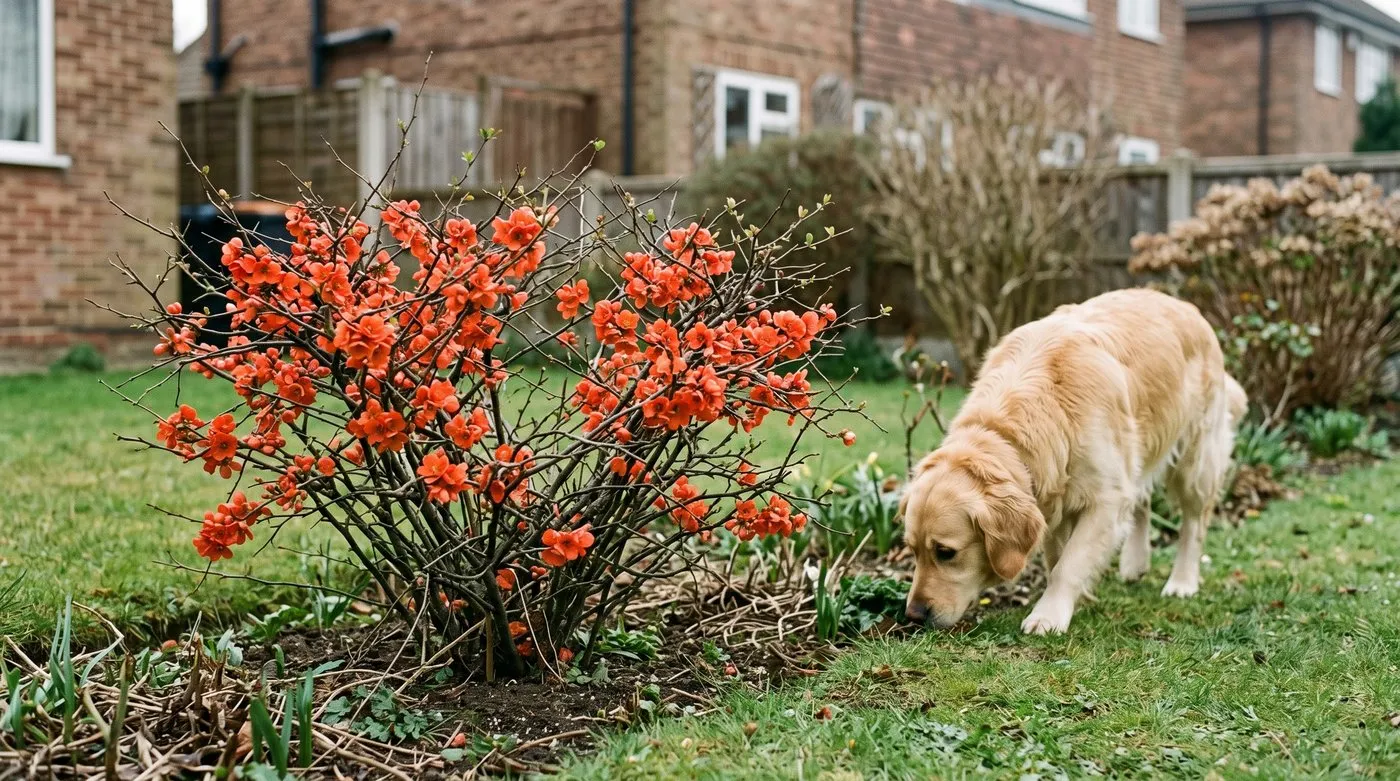
Chaenomeles japonica stays low, so it fits neatly at the front of a border or along a path.
- Chaenomeles japonica is the smallest, around 1m tall, with orange-red flowers. It suits the front of a border or a low hedge.
- Chaenomeles speciosa is the largest, up to about 3m, with bigger flowers. It is the classic choice for training on a wall.
- Chaenomeles × superba is a cross between the two, usually about 1-1.5m. Many popular garden varieties belong here.
All three have spiny stems, so wear gloves when you prune.
The best Chaenomeles varieties
These varieties are widely sold and reliable.
| Variety | Type | Flowers | Rough height |
|---|---|---|---|
| ’Crimson and Gold’ | C. × superba | Deep red with gold stamens | 1m |
| ’Pink Lady’ | C. × superba | Rose-pink | 1.5m |
| ’Knaphill Scarlet’ | C. × superba | Orange-scarlet | 1.5m |
| ’Cameo’ | C. × superba | Double, peachy-pink | 1m |
| ’Geisha Girl’ | C. speciosa | Double, apricot | 1.5m |
| ’Nivalis’ | C. speciosa | Pure white | 2.5m |
| ’Moerloosei’ | C. speciosa | Pink and white | 2.5m |
For a small garden or a low hedge, choose one of the × superba varieties. For covering a big wall, choose a speciosa type such as ‘Nivalis’ or ‘Moerloosei’.

‘Crimson and Gold’ brings rich red flowers to a front garden in early spring, right alongside the daffodils.
Where and when to plant Chaenomeles
Plant Chaenomeles from autumn to early spring, while it is dormant. Container-grown plants can go in at other times if you water them well.
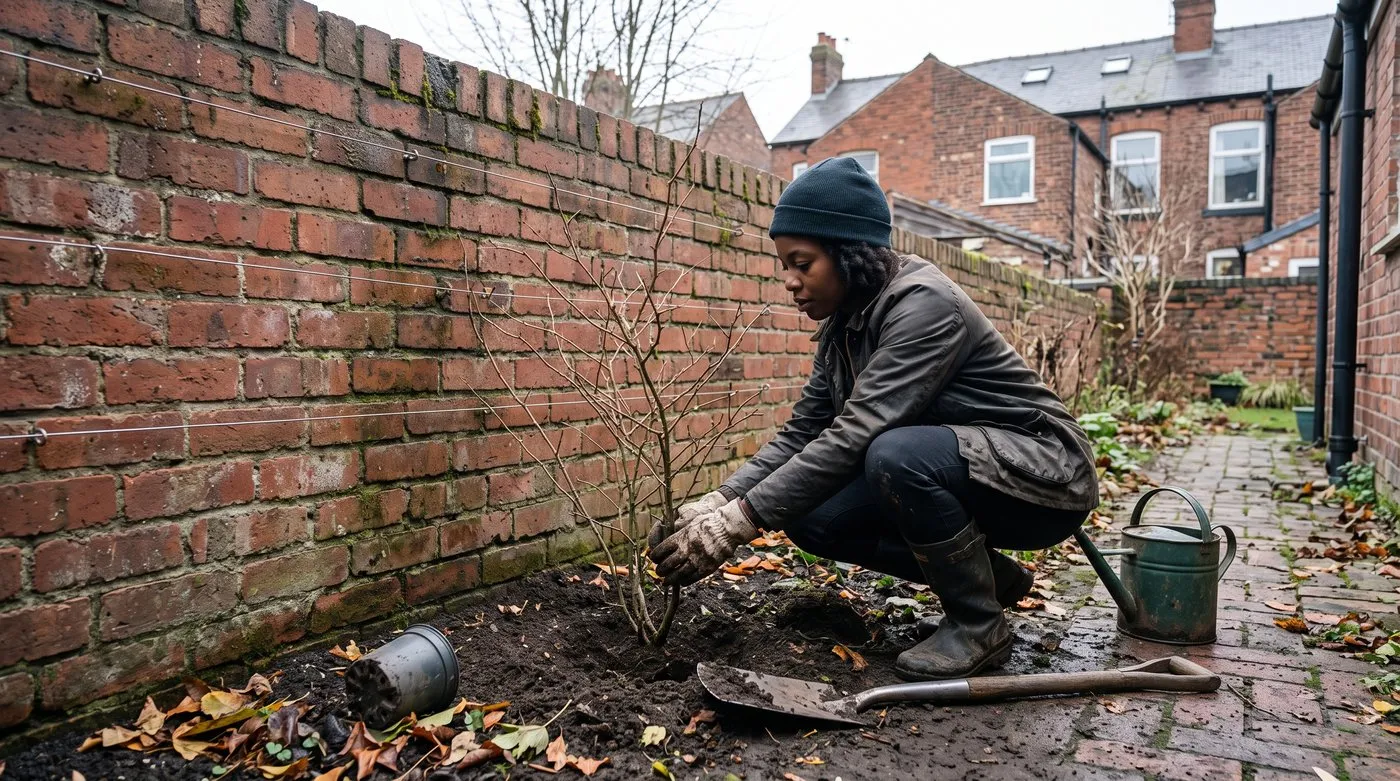
Plant about 30cm out from the wall, where the soil stays moister, then tie shoots back to the wires.
It grows in almost any soil that isn’t waterlogged, including clay. On very chalky soil the leaves can turn yellow, so add plenty of organic matter. It flowers best in sun, but still flowers well in part shade or against a north or east-facing wall. A cold wall just means flowers open a little later.
To plant:
- Dig a hole twice as wide as the rootball and as deep.
- Loosen the soil in the base of the hole.
- Set the plant at the same depth it was in the pot.
- Backfill, firm gently with your heel and water well.
- Mulch round the plant, keeping the mulch off the stems.
For a wall-trained plant, set it 25-30cm out from the wall. The soil right next to a wall stays dry, so this gives the roots a better start. Water it well through its first summer.
How to train Chaenomeles against a wall
Chaenomeles is one of the easiest shrubs to train flat against a wall. It responds well to pruning and naturally makes flat sprays of growth.
Set up supports first. Fix horizontal wires to the wall with vine eyes, about 30cm apart. Keep them a few centimetres away from the wall so you can tie shoots in easily.
Build a framework. In the first year or two, tie strong shoots to the wires, fanning them out to left and right like the ribs of a fan. Remove any shoots growing straight out from the wall or towards it.
Prune every year after flowering. Shorten side shoots to two or three buds from the main framework. This keeps the plant tidy and close to the wall, and encourages flowers along the branches. Tie in any new long shoots where you need to fill gaps.
The same ideas apply to training fruit trees. Our guide to fan training fruit trees goes into more detail.

Shorten side shoots to a few buds straight after flowering. The plant then has all summer to make next year’s flower buds.
When and how to prune Chaenomeles
Prune Chaenomeles straight after flowering, usually in late spring. Its flower buds form during the summer before, so winter pruning cuts them off.
For a free-standing shrub:
- Cut back the shoots that have just flowered to a strong bud or side shoot.
- Remove dead, damaged or crossing stems.
- On older shrubs, take a few of the oldest stems down to the base each year to keep the plant young.
For a wall-trained plant, shorten side shoots to two or three buds, as above. You can lightly trim long new shoots again in summer to keep the shape neat.
To rescue an overgrown shrub, remove about a third of the oldest stems at the base after flowering. Repeat over the next two years. The plant keeps flowering while it renews itself. Our guide to pruning shrubs explains renewal pruning in more detail.
Picking Chaenomeles fruit and making jelly
Chaenomeles fruit looks like small, hard apples. Pick it in autumn, once it turns yellow and smells fragrant. It is too hard and sour to eat raw, but it is lovely cooked.
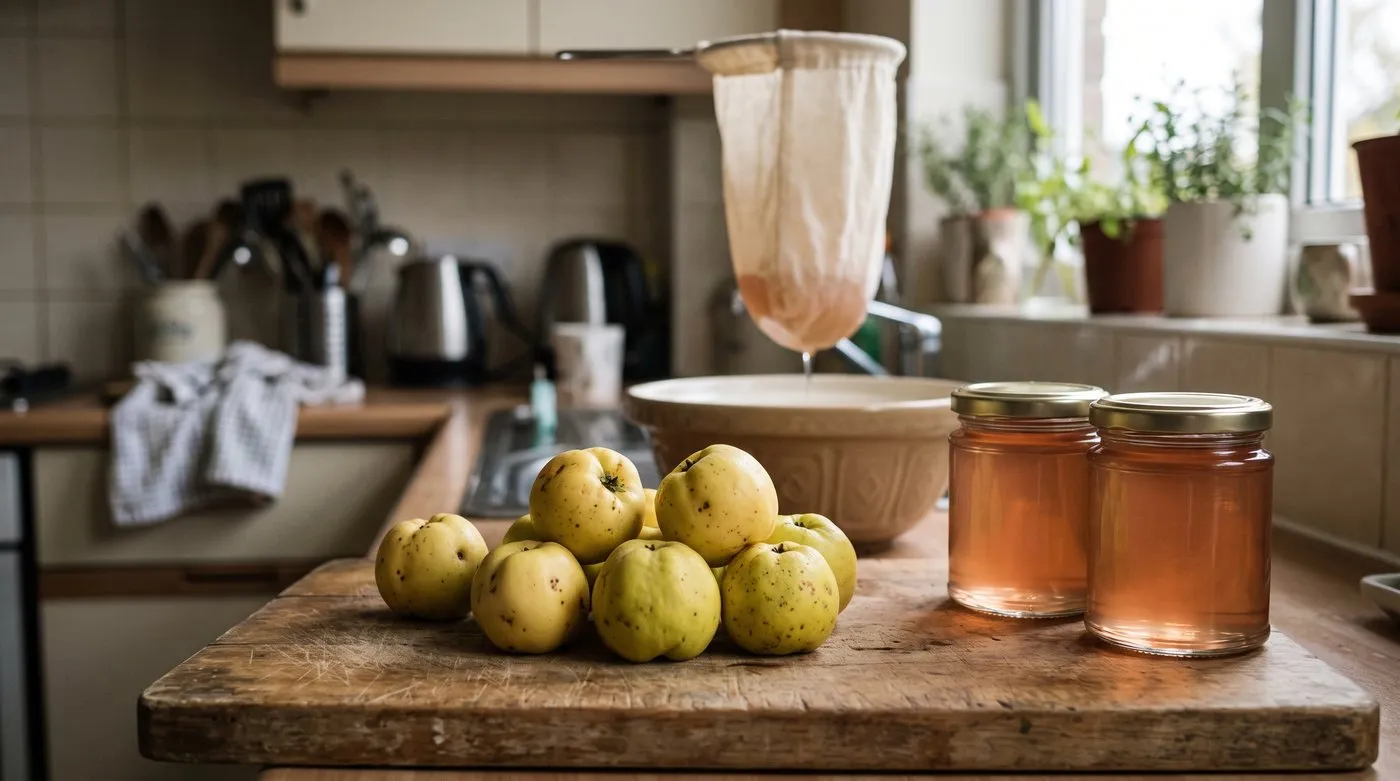
The fruit is small and rock hard, but it makes a jelly that sets beautifully.
The fruit is naturally high in pectin, so it makes a jelly that sets well. To make it:
- Wash and roughly chop the fruit.
- Simmer it in a pan with enough water to just cover, until soft.
- Strain the pulp through a jelly bag overnight. Don’t squeeze, or the jelly turns cloudy.
- Measure the juice and add 450g of sugar for every 600ml.
- Boil hard until it reaches setting point, then pour into sterilised jars.
Not every plant fruits heavily. If you mainly want fruit, a true quince tree is a better bet. See our guide on how to grow quince trees.
Growing Chaenomeles as a low hedge
The smaller varieties make a pretty, spiny informal hedge. It flowers in early spring and its thorns help deter people cutting through.
Plant about 45cm apart from autumn to early spring. After planting, cut the stems back by about half to encourage bushy growth from the base. Trim lightly each year after flowering. Our hedge planting guide covers spacing and soil preparation.
Chaenomeles is deciduous, so the hedge is bare twigs in winter until the flowers open.

Mixing orange and pink varieties makes a cheerful hedge. Its spiny stems also make a good barrier.
Chaenomeles pests and diseases
Chaenomeles is mostly trouble-free. Three problems are worth knowing.
Aphids cluster on soft new shoots in spring. Ladybirds and other predators usually clear them. Hose off the worst clusters or squash them by hand.
Scale insects show up as raised brown bumps on the stems. Sticky honeydew and black sooty mould on the leaves below are clues. Scrape off small numbers with a soft brush, and prune out badly affected stems.
Fireblight is a bacterial disease of the apple and pear family. Shoots and flowers suddenly blacken and wilt, as if scorched. Cut affected stems well back into healthy wood. Clean your secateurs with disinfectant between cuts and bin or burn the prunings.

Brown bumps on stems and sooty mould on the leaves below are signs of scale insects.
Common Chaenomeles mistakes
- Pruning in winter. This removes the flower buds. Prune just after flowering.
- Planting in deep shade. It copes with part shade but flowers poorly under heavy tree cover.
- Planting right against a wall. The soil there is dry. Plant 25-30cm out.
- Never pruning. Unpruned shrubs get tangled and flower less.
- Tying shoots to nails in the mortar. Wires are kinder to walls and much easier to work with.
Chaenomeles care calendar
| Month | What to do |
|---|---|
| January-February | Early varieties start flowering. Cut a few stems to open indoors |
| March-April | Main flowering. Plant container-grown shrubs |
| May | Prune after flowering. Tie in new shoots on wall plants |
| June-July | Water young plants in dry spells. Check for scale and aphids |
| August-September | Watch for fireblight. Trim long shoots on wall plants |
| October | Pick ripe, fragrant fruit for jelly |
| November-December | Plant new shrubs. Check wall ties after windy weather |
Gardener’s tip: Cut a few stems in bud in late winter and stand them in a vase indoors. The warmth brings the flowers out early.
Plants to grow with Chaenomeles
Pick partners that shine at other times of year, or that join in with the early show.
- At its feet: hellebores, snowdrops, dwarf daffodils and primroses.
- On the same wall: a summer-flowering clematis that you prune hard in late winter. See our guide to growing clematis.
- Nearby: other early shrubs. Our guide to growing forsythia covers another bright spring flowerer.
For more ideas, see our early spring flowers guide, or browse the plants hub.
Now you know how to grow Chaenomeles, read our guide to the best flowering shrubs for UK gardens to find partners for every season.
Frequently asked questions
When does Chaenomeles flower in the UK?
Usually from February to April, depending on variety, weather and site. Plants on warm, sheltered walls flower earlier, while those on cold walls open later. Some start in mild spells in January, and others carry on into May.
Can you eat Chaenomeles fruit?
Yes, once cooked, but it is too hard and sour to eat raw. It makes good jelly, jam or fruit cheese, and it sets well. Pick the fruit in autumn once it turns yellow and smells fragrant.
When should I prune Chaenomeles?
Prune straight after flowering, usually in late spring. Pruning in winter removes the buds that would have flowered. On wall-trained plants, shorten side shoots to a few buds. Remove dead, diseased or crossing stems at the same time.
How do I train Chaenomeles against a wall?
Plant it about 25-30cm from the wall and fix horizontal wires. Tie strong shoots in a fan across the wires. Each year after flowering, shorten side shoots and remove shoots growing straight out from the wall. It takes a few years to cover a wall.
What pests affect Chaenomeles?
It’s generally trouble-free, but watch for aphids, scale and fireblight. Aphids may cluster on new shoots, and scale insects show as brown bumps on stems. Fireblight makes shoots blacken and wilt as if scorched. Cut these back into healthy wood, cleaning tools between cuts.
Is Chaenomeles the same as a quince tree?
No, they are related but different plants. Chaenomeles is a spiny flowering shrub with small fruit. True quince, Cydonia oblonga, is a small tree grown mainly for its large fruit.
Our team produces practical UK gardening guidance from source research, contributor records and established horticultural practice. Editorial standards are overseen by Matt W.


